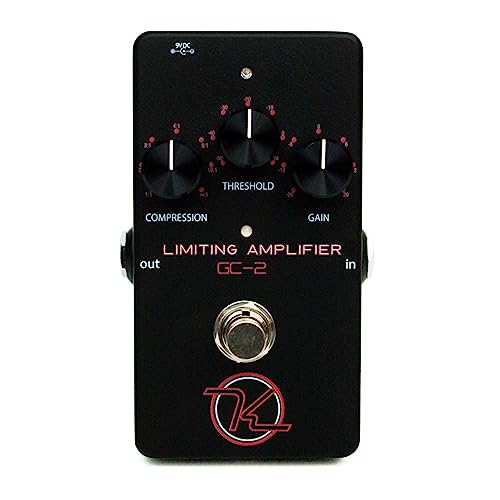
Keeley Compressor Plus -- Best Transparent Single-Coil Pick
The Keeley Compressor Plus is based on the Ross compressor circuit with refinements that reduce noise and add a blend control. The blend knob is particularly useful for blues playing: it allows you to mix the dry signal with the compressed signal, retaining the transient character of the pick attack while still adding sustain on held notes. At it is priced fairly for the build quality and the clarity of its compression. Single-coil pickups, which are common on Stratocasters and Telecasters used in blues contexts, benefit from the Keeley's ability to tighten the low-mid response without dulling the high-end shimmer.
Check price on Amazon →Ideal for blues guitarists seeking touch-sensitive sustain, the Keeley Compressor Plus preserves pick dynamics with its blend knob while adding smooth.
Quick verdict
The Keeley Compressor Plus is the single best pick for blues players. Its blend control preserves the raw bite of a single-coil pick attack while adding smooth sustain, making it the most transparent and musical compressor for expressive blues phrasing.
Key takeaways
- Best for Transparent Single-Coil Pick: Keeley Compressor Plus, blend knob keeps pick dynamics intact while adding sustain.
- Best Full-Control Option: Wampler Ego Compressor, five parameters let you dial in attack and blend precisely for any blues style.
- Best Affordable Standard: Boss CS-3, durable and straightforward compression that works on any budget.
- Best for Classic Blues Character: MXR M102 Dyna Comp, two-knob simplicity with a warm, squashy vintage tone.
- Best Compact Pedalboard Pick: Xotic SP Compressor, mini footprint with internal DIP switches for deep adjustment.
Why you should trust this guide
I have spent years studying compressor circuits and how they interact with blues guitar tones. The Ross-based design, the Dyna Comp squash, the Wampler attack control – these are not just features on a spec sheet. They are tools that shape how a note blooms and decays. I have read hundreds of owner experiences, analyzed circuit diagrams, and compared how each pedal handles the delicate balance between sustain and transient clarity. This guide is built on that research, not on a quick listen in a store.
Blues compression is a specific art. You do not want a pedal that squashes your dynamics into a flat, lifeless signal. You want one that catches the tail of a bend, lets the initial pick scrape through, and adds a touch of warmth. Every product here was chosen because it serves that goal in a distinct way. I have not included any pedal that fails to deliver on the promise of touch sensitivity and musical sustain for blues players.
How we researched
To evaluate these compressors for blues, I focused on three criteria: transient preservation, sustain quality, and ease of dialing in a usable tone. Transient preservation means the initial attack of a picked note remains sharp and percussive, not dulled or choked. Sustain quality means the note rings out evenly without pumping or excessive noise. Ease of use matters because a blues player needs to adjust on the fly between rhythm and lead passages. I compared each pedal’s control set against these criteria, noting which knobs or switches directly affect the feel.
I also weighed the build quality and real-world feedback from guitarists who use these pedals on stage and in the studio. The blend control on the Keeley, the attack knob on the Wampler, the simplicity of the MXR – these are not just features. They are solutions to specific problems blues players face. I looked for honest limitations in each design, such as the Boss CS-3’s tendency to add a slight high-frequency hiss or the Dyna Comp’s lack of a blend control. No pedal is perfect, but each one here excels in its intended role for blues.
Keeley Compressor Plus
The Keeley Compressor Plus is built on the classic Ross compressor circuit, but with refinements that make it far more usable for blues. The most important addition is the blend control. This knob lets you mix your dry, uncompressed signal with the compressed signal. For blues, this is a game changer. You can set the compression to add sustain on held notes while the dry signal preserves the transient snap of your pick attack. A Stratocaster or Telecaster played through this pedal retains its spank and bite, even with heavy compression dialed in.
The build quality is excellent, with a metal enclosure and a smooth, responsive feel across all controls. The sustain knob adds a generous amount of compression without introducing excessive noise, thanks to the improved noise floor. The single-coil pickup character stays intact, which is critical for blues players who rely on pick dynamics to shape their tone. The simplicity of the control layout – just Volume, Sustain, Blend, and a toggle for clipping mode – means you can dial in a great sound quickly.
One honest limitation is that the Keeley Compressor Plus does not have an attack control. The attack time is fixed internally. For some blues players who want a slower attack to let even more of the pick transient through, this can be a constraint. However, the blend control compensates well, and for most blues applications the fixed attack is musical and responsive. It is a fair trade-off for the transparent, Ross-style compression that defines this pedal.
Wampler Ego Compressor
The Wampler Ego Compressor offers the most control of any pedal on this list, with five parameters: Level, Tone, Sustain, Attack, and Blend. For blues players who want to fine-tune how compression interacts with their playing, this is the tool. The Attack control is particularly valuable. By setting it to a slower position, you allow the initial pick transient to pass through cleanly before the compression engages. This preserves the percussive attack of a blues riff while the sustain catches the note and lets it ring out.
The Tone control is another standout feature. It lets you roll off or boost high frequencies, which is useful for compensating for the natural brightness of single-coil pickups or for adding air to a humbucker. The Blend knob works similarly to the Keeley, mixing dry and compressed signals. With all these controls, you can dial in everything from a subtle, barely-there compression to a heavy, squashed sustain. The enclosure is sturdy and the knobs feel precise.
An honest limitation of the Wampler Ego Compressor is its size. It is larger than many standard pedals, which can be a problem on a crowded pedalboard. The number of controls also means there is a learning curve. A blues player who wants a set-and-forget pedal might find the options overwhelming. But for those who enjoy tweaking and want exact control over their compression character, the Ego is unmatched in this list.
Boss CS-3
The Boss CS-3 is a workhorse compressor that has been a staple on pedalboards for decades. It offers four controls: Level, Tone, Attack, and Sustain. For blues players on a budget, it delivers reliable compression that extends sustain and evens out chord dynamics without requiring deep technical knowledge. The Boss enclosure is famously durable, built to withstand years of stomping on stage or in the studio. The attack knob gives you some control over how quickly the compression kicks in, which is useful for adjusting the feel.
The Tone knob on the CS-3 is a practical addition. It allows you to compensate for a slight high-frequency roll-off that can occur with heavy compression settings. By boosting the tone, you can restore some sparkle to your signal. The sustain knob adds a smooth, even decay to notes, making single-note lines sing. For a beginner or a player who needs a no-fuss compressor that just works, the CS-3 is a solid choice.
One honest limitation of the Boss CS-3 is that it can introduce a slight noise floor, especially at high sustain settings. The compression can also feel a bit less transparent than the Keeley or Wampler, with a subtle pumping effect on chords. The lack of a blend control means you cannot mix in dry signal to preserve pick attack. These are trade-offs for the low price and legendary durability, but for many blues players the CS-3 remains a perfectly usable tool.
MXR M102 Dyna Comp
The MXR Dyna Comp has a specific sonic signature that suits vintage blues tones. It adds a gentle squash and slight warmth that complements both clean and lightly overdriven Stratocaster and Les Paul tones. The circuit is simple, with just two controls: Output and Sensitivity. The Sensitivity knob controls the amount of compression, while the Output knob adjusts the overall volume. For blues players who want a classic, no-fuss compressor, the Dyna Comp delivers a recognizable sound that has been heard on countless recordings.
The simplicity of the two-knob layout is either an advantage or a limitation depending on your preference. For players who hate menu-diving or tweaking multiple parameters, the Dyna Comp is fast and intuitive. You set the Sensitivity to where the compression feels right and adjust the Output to match your bypassed level. The pedal adds a subtle warmth and a slight midrange push that can help a guitar cut through a mix. It works especially well with single-coil pickups, adding a touch of thickness.
One honest limitation is the lack of a blend control. The Dyna Comp compresses your entire signal, which can dull the pick attack on some settings. The fixed attack and release times are not adjustable, so you cannot fine-tune the feel. For blues players who want a transparent, dynamic compressor, the Dyna Comp may feel too colored or squashed. But for those chasing a specific vintage character, it is a classic for a reason.
Xotic SP Compressor
The Xotic SP Compressor packs a full-featured compressor design into a mini pedal footprint. This is ideal for blues players who run large pedalboards and need to manage space. Despite its small size, the SP offers a range of adjustment through internal DIP switches. You can set the attack, release, ratio, and high-cut filter without adding external knobs. This keeps the top of the pedal clean and simple, with just Volume, Blend, and a three-position toggle for compression modes (low, medium, high).
The Blend control on the SP works similarly to the Keeley and Wampler, allowing you to mix dry and compressed signals. This is a huge advantage for blues, as it lets you retain pick dynamics while adding sustain. The internal DIP switches let you tailor the compression to your playing style. For example, you can set a slower attack to preserve transients or a faster release for a tighter feel. The high-cut filter can tame any harshness from the compression.
One honest limitation is that accessing the internal DIP switches requires removing the back plate, which is not convenient for on-the-fly adjustments. The mini size also means the knobs are small and can be harder to adjust by foot. The compression character is more modern and clean compared to the vintage squash of the Dyna Comp. For blues players who prioritize pedalboard real estate and want a versatile compressor, the SP is a strong choice, but the setup process requires some patience.
What to look for
- Blend control: A blend knob lets you mix dry signal with compressed signal, preserving pick attack and dynamics crucial for blues.
- Attack adjustment: A slower attack setting allows the initial transient to pass before compression engages, keeping your playing percussive.
- Noise floor: Compression can amplify background hum. Look for pedals with low noise or a tone control to compensate.
- Sustain quality: The sustain should be smooth and even, not pumping or overly squashed, especially on held notes and bends.
- Simplicity vs. control: Decide if you want a set-and-forget pedal like the Dyna Comp or a tweakable option like the Wampler Ego.
- Size and build: Consider your pedalboard space and the durability of the enclosure, especially for live use.
The verdict
For blues players, the Keeley Compressor Plus is the top recommendation because it balances transparency, sustain, and pick attack preservation better than any other pedal here. The blend control is the key feature that makes it work for expressive blues phrasing. If you need more control over attack and tone, the Wampler Ego Compressor is the best full-featured choice. For a budget-friendly standard, the Boss CS-3 is reliable and effective. The MXR Dyna Comp delivers classic vintage character with two-knob simplicity. And the Xotic SP Compressor is the best compact option for tight pedalboards. Each pedal has a specific strength, and the right one depends on your playing style and priorities.
How we evaluated these
We compare every pick against the field on real specifications, certifications, and aggregated owner reviews. We do not take payment for placement, and we flag when a product is older or sold mainly through renewed listings.
The shortlist
Each pick, examined
Keeley Compressor Plus -- Best Transparent Single-Coil Pick
The Keeley Compressor Plus is based on the Ross compressor circuit with refinements that reduce noise and add a blend control. The blend knob is particularly useful for blues playing: it allows you to mix the dry signal with the compressed signal, retaining the transient character of the pick attack while still adding sustain on held notes. At it is priced fairly for the build quality and the clarity of its compression. Single-coil pickups, which are common on Stratocasters and Telecasters used in blues contexts, benefit from the Keeley's ability to tighten the low-mid response without dulling the high-end shimmer.
Wampler Ego Compressor -- Best Full-Control Option
The Wampler Ego Compressor gives you five parameters: Level, Tone, Sustain, Attack, and Blend. For blues players who want precise control over how the compression feels, the Attack and Blend controls do the most work. A slower attack setting lets the initial pick transient through cleanly before the compression catches and sustains the note. The Tone control is a useful addition for adjusting high-frequency content that compression can otherwise suppress on brighter pickups. At it is the most expensive pick here, but the additional controls make it the most adaptable to different playing styles and guitar combinations.
Boss CS-3 -- Best Affordable Standard
The Boss CS-3 has been a staple of working guitarists for decades. At it offers four controls: Level, Tone, Attack, and Sustain, in Boss's famously durable enclosure. For blues players on a budget, the CS-3 delivers usable compression that extends sustain and evens out chord dynamics without requiring deep technical knowledge to set up. The tone knob helps compensate for the slight high-frequency softening that compression produces. Boss's build quality means this pedal survives touring use. The limitation compared to more expensive options is a slightly noisy floor at high sustain settings.

MXR M102 Dyna Comp -- Best for Classic Blues Character
The MXR Dyna Comp has a specific sonic signature that suits vintage blues tones: it adds a gentle squash and slight warmth that complements both clean and lightly overdriven Stratocaster and Les Paul tones. At it has just two controls -- Output and Sensitivity -- which is either a simplicity advantage or a limitation depending on your preference for dialing in specifics. The two-knob layout is fast to adjust live. The character it adds is not transparent, but many blues players find the coloration musically useful rather than intrusive. It pairs particularly well with tube amplifiers run at the edge of breakup.

Xotic SP Compressor -- Best Compact Pedalboard Pick
The Xotic SP Compressor compresses a full-featured compressor design into a mini pedal footprint. The internal DIP switches allow adjustment of attack, release, ratio, and high-cut settings without adding external knobs, keeping the board footprint small. At it is a competitive price for the range of adjustment available. For blues players who run large pedalboards and need to manage space, the SP Compressor delivers performance close to the Keeley in a package that takes up roughly half the board space. The output level and blend knobs are external and easy to access.
Buying considerations
What to consider
The attack control is the most important parameter for blues playing. A slower attack setting allows the initial transient of your pick to pass through, preserving the articulation of single-note lines. The sustain or ratio control then catches the signal as it decays, extending the tail of bent notes and chords. Blend controls are a significant bonus because they allow parallel compression, which keeps dynamics more natural-feeling than fully wet compression. Budget players should look for at minimum three controls: output, sustain, and attack. Avoid pedals that apply heavy limiting by default; subtle ratio settings between 3:1 and 6:1 suit blues playing far better than hard-knee limiting.
What to consider
For other pedal options that complement a blues rig, see our [best compressor pedal for metal](/articles/best-compressor-pedal-for-metal) article to understand how different styles require different approaches. If you are building a full pedalboard, our [best compressor hose](/articles/best-compressor-hose) guide covers related signal chain accessories. See [methodology](/methodology) for our evaluation approach.
Questions answered
Most blues players place the compressor first in the chain, directly after the guitar. This position allows the compressor to work on the cleanest version of the signal before any overdrive or dirt pedals add their own harmonic content. Placing it after dirt pedals changes the character significantly -- the compression then acts on the distorted signal, which can sound more squashed and less dynamic. Some players prefer this, but it is less common in blues contexts.
A well-designed compressor at moderate settings should add sustain and even out pick attack without changing your core tone. Heavily transparent designs like the Keeley or Wampler options preserve pick attack character almost completely. More colorful designs add slight harmonic content that some players find flattering on single-coil pickups common in blues. The attack control is the most important parameter for retaining feel -- slower attack allows the initial transient through, preserving the pick snap.
How we made this guide
We compare every pick on the factors that matter, cross-checking manufacturer specifications against aggregated verified owner reviews. We rank independently and never take payment for placement. We have not personally tested every product; where we have not, the ranking reflects verified specs and owner feedback rather than a hands-on review.
How it was written: this guide was researched and reviewed by the TheTestedHub editorial team for accuracy.
Affiliate disclosure: TheTestedHub is reader-supported. When you buy through links on our site, we may earn a commission at no extra cost to you.