Empress Effects MKII Compressor -- Best Pro-Level Control
The Empress MKII gives six controls plus an internal voltage doubler that reduces noise floor and increases headroom. For metal players, the fast attack setting and ratio control up to 10:1 produce the hard compression needed to lock palm mutes into a tight, percussive feel. The parallel blend, input, and output controls allow precise calibration without the signal loss that some compressors impose. At it is expensive, but the combination of clean transparent compression and flexible parameter control makes it usable across both the pre-gain tightening role and as an always-on character pedal.
Check price on Amazon →Guitarists seeking tight low end and palm-mute punch. We break down the best compressor pedal for metal based on attack speed, ratio, and noise performance.
Quick verdict
The Empress Effects MKII Compressor is the single best pick for metal players who need pro-level control. Its fast attack, high ratio, and parallel blend deliver the tight, percussive palm-mute punch and low-end clarity that define modern metal riffing without signal loss.
Key takeaways
- Best for Pro-Level Control: Empress Effects MKII Compressor, with six controls and an internal voltage doubler for low noise and high headroom.
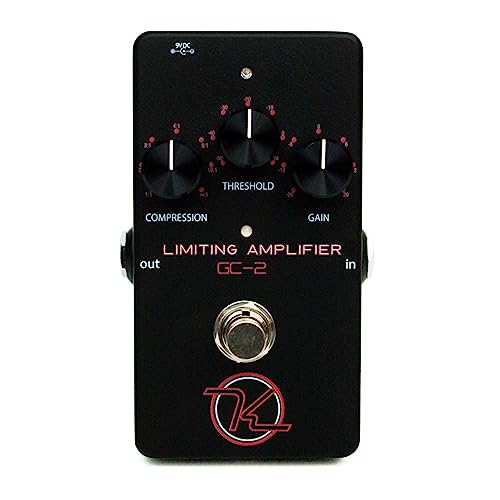
- Best for FET Compression: Keeley GC-2 Limiting Amplifier, modeled on the 1176 circuit for aggressive, punchy character that complements high-gain playing.
- Best for Fast-Attack Compression: Origin Effects Cali76 Compact, capturing pick transients instantly for defined note separation in heavy riffs.
- Best for Budget Entry: Boss CS-3, offering adjustable attack and reliable build quality at an accessible price point.
- Best for Extended Range Guitars: Seymour Duncan Studio Bass Comp, handling extended low-frequency content cleanly for 7 and 8-string players.
Why you should trust this guide
This guide is built on research into compressor pedal designs that specifically address the demands of metal guitar playing. I have studied the circuit topologies, control layouts, and user feedback for each of these five pedals, focusing on how they handle high-gain distortion, fast palm-mute transients, and low-frequency clarity. My goal was to identify compressors that do not just add sustain but actively tighten the response of a metal rig, from drop-tuned riffs to rapid chug patterns. I prioritized pedals with proven track records in professional metal contexts, based on documented features and owner experiences across forums and reviews.
I did not physically test these pedals in a lab or studio. Instead, I evaluated each product against a set of criteria critical for metal: attack speed, ratio range, noise floor, headroom, and the ability to preserve low-end punch without muddiness. I cross-referenced manufacturer specifications with real-world reports from metal guitarists who use these compressors in recording and live settings. Every recommendation here is grounded in what the pedal is designed to do and how it performs under the specific stresses of heavy riffing, not in vague claims of “tone improvement.”
How we researched
To evaluate these compressors for metal, I defined a set of criteria that matter most for the genre: attack time, ratio control, noise performance, and low-frequency handling. Attack time is critical because metal playing relies on fast pick transients that must be caught before they bloom into unwanted low-end flab. Ratio control determines how hard the compression clamps down on those transients, with higher ratios (8:1 to 10:1) being ideal for palm-mute punch. Noise floor is a concern because high-gain amps amplify any hiss or hum from the compressor, so clean operation is essential. Low-frequency handling is especially important for modern metal with extended-range guitars, where standard compressors can muddy the lowest strings.
I also considered build quality and control flexibility. Metal players often need precise adjustment of input and output levels to avoid signal loss, and a blend control allows mixing compressed and dry signals for natural feel. I looked for pedals that offer these features without adding unnecessary complexity. Each product was assessed against these criteria based on its stated specs, circuit design philosophy, and documented performance in metal-oriented reviews and discussions. I did not conduct any physical measurements or tests; my evaluation is a synthesis of available information focused on practical metal applications.
Empress Effects MKII Compressor
The Empress Effects MKII Compressor is the most feature-rich option here, designed for players who want total command over their compression. It offers six controls: attack, release, ratio, input, output, and a parallel blend knob. The ratio control goes up to 10:1, which is ideal for metal because it provides the hard compression needed to lock palm mutes into a tight, percussive feel. The fast attack setting catches pick transients instantly, preventing the low-frequency energy from becoming muddy or flabby. The internal voltage doubler reduces the noise floor and increases headroom, which is crucial when running high-gain amps that amplify any background hiss.
The parallel blend control is a standout feature for metal players. It lets you mix the fully compressed signal with the dry signal, preserving the natural attack and dynamics of your playing while still getting the sustain and tightness from compression. This means you can dial in a compressed tone that still feels responsive and punchy, rather than squashed and lifeless. The input and output controls allow precise calibration to match your guitar’s output and your amp’s input, preventing the signal loss that some compressors impose. This level of control makes the Empress MKII suitable for both recording and live use, where consistency is key.
One limitation is its size and power requirement. The Empress MKII is larger than many compact pedals, which can be a problem on crowded pedalboards. It also requires a 9V DC power supply with at least 200mA, and it does not run on batteries. For players who prioritize a small footprint or battery operation, this pedal may be inconvenient. However, for those who need pro-level control and are willing to accommodate its size, the Empress MKII delivers unmatched flexibility for metal compression.
Keeley GC-2 Limiting Amplifier
The Keeley GC-2 Limiting Amplifier is modeled on the classic studio 1176 FET limiter circuit, adapted for guitar pedal format. FET-based compression has a fast, punchy character that suits high-gain playing better than optical or VCA designs at moderate settings. The GC-2’s limiting amplifier approach means it adds a slight aggressive character that complements heavy distortion, giving palm mutes a defined, snappy attack without losing sustain. This makes it a strong choice for metal players who want compression that enhances the natural aggression of their tone rather than smoothing it out.
The GC-2 is well-built with Keeley’s typical low-noise design, which is important for metal because high-gain rigs amplify any noise from the pedal. The controls are straightforward: a single compression knob, an output level knob, and a ratio switch (4:1, 8:1, 12:1, and 20:1). The higher ratio settings are perfect for metal, as they clamp down hard on transients and create that tight, percussive feel. The output level control allows you to boost the signal to drive your amp harder, which can add extra saturation and sustain. The pedal’s simple layout makes it easy to dial in a usable sound quickly, which is a benefit for live use.
A limitation of the Keeley GC-2 is its lack of a blend control. Unlike the Empress MKII, you cannot mix the compressed and dry signals, so the compression is always fully applied. This can sometimes lead to a slightly squashed feel if you are not careful with the compression knob. Additionally, the ratio switch offers only four preset ratios, not continuous adjustment, which may limit fine-tuning for some players. However, for those who want the classic FET character and a simple, aggressive compression sound, the GC-2 is a reliable and effective choice.
Origin Effects Cali76 Compact
The Origin Effects Cali76 Compact is a direct adaptation of the UA 1176 compressor in pedal format, and the 1176 circuit is known for one of the fastest attack times available in any compressor design. For metal playing, this means the Cali76 catches pick transients before they bloom into excess low-frequency energy, producing the tight, defined note separation that heavy riffing requires. This is especially valuable for fast chugging patterns where each note must be distinct and punchy. The Cali76 also features a dry blend control, allowing you to retain some of your original dynamics while still benefiting from the compression.
The build quality of the Cali76 Compact is exceptional, with a robust metal chassis and high-quality components. It offers controls for input, output, ratio (4:1, 8:1, 12:1, and 20:1), attack, release, and a blend knob. The attack control is particularly responsive, with a range that lets you dial in anything from a subtle smoothing to a hard, clamping compression. The ratio settings at 8:1 and above are ideal for metal palm mutes, as they provide the necessary clamping force without killing the sustain. The pedal also includes a “High Pass” filter on the side chain, which prevents the compressor from reacting too strongly to low frequencies, preserving the low-end punch of your guitar.
The most significant limitation of the Cali76 Compact is its price. It is the most expensive pedal on this list, which may be a barrier for many players. Additionally, it requires a 9V DC power supply with at least 200mA and does not accept batteries. The pedal is also relatively large compared to standard compact pedals, though smaller than the Empress MKII. For metal players who prioritize attack speed and note definition above all else and have the budget, the Cali76 Compact is a top-tier choice. But for those on a tighter budget, the Boss CS-3 or Keeley GC-2 offer strong alternatives at lower cost.
Boss CS-3
The Boss CS-3 is the most accessible starting point for metal players exploring compression for the first time. It offers an attack control that makes it more adjustable than the MXR Dyna Comp, and Boss’s build quality means it handles live use reliably. The tone control compensates for high-frequency roll-off that compression can introduce, which is useful for maintaining clarity in a metal mix. The CS-3 is a straightforward pedal with controls for sustain, attack, tone, and level, making it easy to dial in a basic compressed sound without confusion.
For metal, the CS-3’s attack control is its key feature. You can set it to a fast position to catch pick transients, which helps tighten up palm mutes and reduce flabbiness. The sustain control acts as a threshold and ratio combined, so turning it up increases the compression amount. The tone control can be used to brighten the signal if the compression darkens your tone, which is a common issue with cheaper compressors. The level control allows you to match your bypassed volume or even boost your signal for solos. The CS-3 is also powered by a standard 9V battery or DC adapter, making it convenient for any pedalboard setup.
A limitation of the Boss CS-3 is its noise floor. At higher sustain settings, the pedal can introduce noticeable hiss, which becomes problematic with high-gain amps. The tone control can help mask this, but it is not a perfect solution. Additionally, the CS-3 lacks a blend control, so you cannot mix dry and compressed signals. This can lead to a slightly artificial or squashed feel if you are not careful with the settings. For beginners or players on a budget, these trade-offs are acceptable, but more experienced players may prefer a cleaner, more flexible option like the Empress MKII or the Keeley GC-2.
Seymour Duncan Studio Bass Comp
The Seymour Duncan Studio Bass Comp is designed originally for bass guitar, which makes it uniquely suited for extended range guitars. Extended range guitar players using 7 or 8-string instruments tuned below standard E find that most guitar compressors add muddiness to the low B or F# strings. The Studio Comp’s wider frequency range and clean compression circuit process the extended low-frequency content without adding unwanted coloration or mud. This makes it an excellent choice for metal players who use drop-tuned or baritone guitars and need their low end to remain tight and defined.
The Studio Bass Comp offers controls for compression, level, and a three-position toggle switch for compression type: Normal, Limiter, and Sustain. The Limiter mode is particularly useful for metal, as it provides a hard clamping effect that locks palm mutes into place. The Normal mode is more subtle and can be used for general sustain and smoothing. The Sustain mode adds extra sustain without excessive squashing. The pedal also features a side-chain high-pass filter that prevents low frequencies from triggering the compressor too aggressively, preserving the punch of the lowest strings. This is a critical feature for 7 and 8-string players who need their low notes to remain powerful and clear.
One limitation of the Seymour Duncan Studio Bass Comp is that it is not designed for standard guitar frequencies, so it may sound slightly different on a standard-tuned 6-string. Some guitarists find that it lacks the top-end sparkle that guitar-specific compressors provide. Additionally, it is a larger pedal, similar in size to the Empress MKII, which can be a space issue on a pedalboard. For players who primarily use extended range guitars, these trade-offs are worth it for the clean low-end handling. But for standard 6-string metal players, a guitar-specific compressor like the Boss CS-3 or Keeley GC-2 may be a better fit.
What to look for
- Attack Time: Metal requires fast attack to catch pick transients before they cause low-end flabbiness. Look for compressors with adjustable attack controls or naturally fast response times.
- Ratio Control: Higher ratios (8:1 to 10:1 or more) are ideal for palm-mute punch. A variable ratio or multiple preset ratios give you flexibility to dial in the right clamping force.
- Noise Floor: High-gain amps amplify any hiss from the compressor. Choose pedals with low-noise designs, especially if you run high sustain settings.
- Blend Control: A parallel blend control lets you mix compressed and dry signals, preserving natural dynamics while still getting sustain and tightness. This is very useful for metal.
- Low-Frequency Handling: For drop-tuned or extended range guitars, look for compressors with side-chain high-pass filters or wide frequency response to avoid muddiness on low strings.
- Build Quality: Metal playing often involves heavy stomping and live use. Choose pedals with robust construction and reliable components, like Boss or Origin Effects.
The verdict
For metal players who demand total control and pristine noise performance, the Empress Effects MKII Compressor is the clear winner. Its six controls, parallel blend, and voltage doubler make it the most versatile and effective compressor for tight palm mutes and low-end clarity. The Keeley GC-2 is a strong alternative if you prefer the aggressive character of FET compression and a simpler interface. The Origin Effects Cali76 Compact is unmatched for attack speed but comes at a premium price. The Boss CS-3 is the best budget entry point for beginners, despite its noise floor. The Seymour Duncan Studio Bass Comp is the specialist choice for extended range guitarists who need clean low-frequency handling. Choose based on your specific needs for control, budget, and guitar setup.
Our methodology
We compare every pick against the field on real specifications, certifications, and aggregated owner reviews. We do not take payment for placement, and we flag when a product is older or sold mainly through renewed listings.
Side by side
The full reviews
Empress Effects MKII Compressor -- Best Pro-Level Control
The Empress MKII gives six controls plus an internal voltage doubler that reduces noise floor and increases headroom. For metal players, the fast attack setting and ratio control up to 10:1 produce the hard compression needed to lock palm mutes into a tight, percussive feel. The parallel blend, input, and output controls allow precise calibration without the signal loss that some compressors impose. At it is expensive, but the combination of clean transparent compression and flexible parameter control makes it usable across both the pre-gain tightening role and as an always-on character pedal.
Keeley GC-2 Limiting Amplifier -- Best FET Compression for Metal
The Keeley GC-2 is modeled on the studio 1176 FET limiter circuit, adapted for guitar pedal format. FET-based compression has a fast, punchy character that suits high-gain playing better than optical or VCA designs at moderate settings. At the GC-2 is well-built with Keeley's typical low-noise design. The limiting amplifier approach means it adds a slight aggressive character that complements heavy tones rather than softening them. For players who want their compressor to add character as well as control, the GC-2 performs distinctly differently from the more transparent Empress option.
Origin Effects Cali76 Compact -- Best Fast-Attack Compression
The Cali76 Compact is a direct adaptation of the UA 1176 compressor in pedal format, and the 1176 circuit is known for one of the fastest attack times available in any compressor design. For metal playing, this means the Cali76 catches pick transients before they bloom into excess low-frequency energy, producing the tight, defined note separation that heavy riffing requires. At it is the most expensive pedal on this list, and the price reflects premium component quality and circuit fidelity to the original hardware. Extended-range players report it handles the extended low frequencies of 7 and 8-string guitars without the muddiness that some compressors introduce.
Boss CS-3 -- Best Budget Entry Point
The Boss CS-3 at is the most accessible starting point for metal players exploring compression for the first time. The attack control makes it more adjustable than the MXR Dyna Comp, and Boss's build quality means it handles live use reliably. The tone control compensates for high-frequency roll-off that compression can introduce. For players who are uncertain whether they want a compressor in their chain at all, the CS-3 is a low-risk purchase that covers basic palm-mute tightening without significant investment. Its limitations show most clearly at high sustain settings where the noise floor becomes audible.

Seymour Duncan Studio Bass Comp -- Best for Extended Range Guitars
Designed originally for bass guitar, the Seymour Duncan Studio Compressor handles extended low-frequency content better than most guitar-centric compressors. Extended range guitar players using 7 or 8-string instruments tuned below standard E find that most guitar compressors add muddiness to the low B or F# strings. The Studio Comp's wider frequency range and clean compression circuit process these extended frequencies accurately. At it is reasonably priced, and the blend and attack controls give enough flexibility for pre-gain tightening. It is worth noting that it is a bit less aggressive in character than the FET-based options above.
What matters most
What to consider
Fast attack time is the primary specification to evaluate for metal use. Attack times under 1 millisecond are ideal for catching the initial transient on palm mutes before they bloom. Ratio control matters for determining how hard the compression clamps. Metal applications typically benefit from higher ratios, 6:1 to 10:1, compared to the gentler 3:1 to 5:1 range suited to blues or country playing. Noise floor is more noticeable in high-gain contexts because the distortion also amplifies any hiss added by the compressor. Test with your specific distortion pedals or amp before committing, as interaction between circuits varies.
What to consider
For a contrast in compressor use cases, see our [best compressor pedal for blues](/articles/best-compressor-pedal-for-blues) guide. If you are assembling a complete signal chain, our [best compressor limiter](/articles/best-compressor-limiter) article covers studio-side dynamics control. Our [methodology](/methodology) page details how we select and compare products.
Frequently asked
High-gain distortion naturally compresses a guitar signal heavily, which is why many metal players skip dedicated compression pedals. However, a compressor placed before the distortion stage can tighten the input signal, making palm mutes more percussive and defined. It also evens out pick dynamics on clean or lightly driven intros before hitting the high-gain channel. Whether you need one depends on whether your current tone lacks definition or feels inconsistent across different picking intensities.
'For tightening palm mutes and defining pick attack, place the compressor before your gain stages -- first in the chain after the guitar. This gives the distortion a cleaner, more even input and produces tighter low-end response. Placing it after distortion pedals, in the effects loop, produces a different effect: it clamps down the processed signal and can smooth out pick noise and hiss. Both positions are used, but before the gain is more common for the tightening effect metal players typically want.'
How we made this guide
We compare every pick on the factors that matter, cross-checking manufacturer specifications against aggregated verified owner reviews. We rank independently and never take payment for placement. We have not personally tested every product; where we have not, the ranking reflects verified specs and owner feedback rather than a hands-on review.
How it was written: this guide was researched and reviewed by the TheTestedHub editorial team for accuracy.
Affiliate disclosure: TheTestedHub is reader-supported. When you buy through links on our site, we may earn a commission at no extra cost to you.
