
Drylok Extreme Masonry Waterproofer -- Best for Active Seepage
Drylok Extreme is rated to withstand 15 psi of hydrostatic water pressure, making it one of the more capable surface-applied waterproofers for basement walls with active seepage. It goes on with a brush or roller and dries to a thick, textured white finish. Two coats are typically needed for full protection, and the formula includes a mold and mildew inhibitor. It bonds well to block, brick, and poured concrete when the surface is properly prepped. The resulting finish is paintable once cured, which matters if you plan to finish the basement later. It is widely available and competitively priced for the level of protection offered.
Check price on Amazon →Keep your basement dry with a concrete wall sealer that blocks moisture from the inside out. These five picks cover penetrating sealers, surface coatings, and crack-filling options.
Basement moisture is one of the most common and costly home problems. A quality concrete wall sealer applied correctly can stop minor seepage, block efflorescence, and reduce the humidity load on your basement. The five products below cover the main sealer categories so you can match the right product to your specific moisture situation.
| Product | Best For | Rating |
| — | — | — |
| Drylok Extreme Masonry Waterproofer | Active seepage, painted finish | 4.6/5 |
| RadonSeal Deep-Penetrating Concrete Sealer | Porous walls, invisible finish | 4.7/5 |
| Quikrete Hydraulic Water-Stop Cement | Active leaks, crack filling | 4.5/5 |
| Foundation Armor SX5000 | Long-term water repellent | 4.8/5 |
| UGL Drylok Original Masonry Waterproofer | Budget-friendly surface coating | 4.4/5 |
How we test
We compare every pick against the field on real specifications, certifications, and aggregated owner reviews. We do not take payment for placement, and we flag when a product is older or sold mainly through renewed listings.
At a glance
| Pick | Best for | Score | |
|---|---|---|---|
| Drylok Extreme Masonry Waterproofer -- Best for Active Seepage | Check price | ||
| RadonSeal Deep-Penetrating Concrete Sealer -- Best Penetrating Option | Check price | ||
| Quikrete Hydraulic Water-Stop Cement -- Best for Active Crack Leaks | Check price | ||
| Foundation Armor SX5000 -- Best for Long-Term Water Repellency | Check price | ||
| UGL Drylok Original Masonry Waterproofer -- Best Budget Coating | Check price |
The picks, reviewed
Drylok Extreme Masonry Waterproofer -- Best for Active Seepage
Drylok Extreme is rated to withstand 15 psi of hydrostatic water pressure, making it one of the more capable surface-applied waterproofers for basement walls with active seepage. It goes on with a brush or roller and dries to a thick, textured white finish. Two coats are typically needed for full protection, and the formula includes a mold and mildew inhibitor. It bonds well to block, brick, and poured concrete when the surface is properly prepped. The resulting finish is paintable once cured, which matters if you plan to finish the basement later. It is widely available and competitively priced for the level of protection offered.
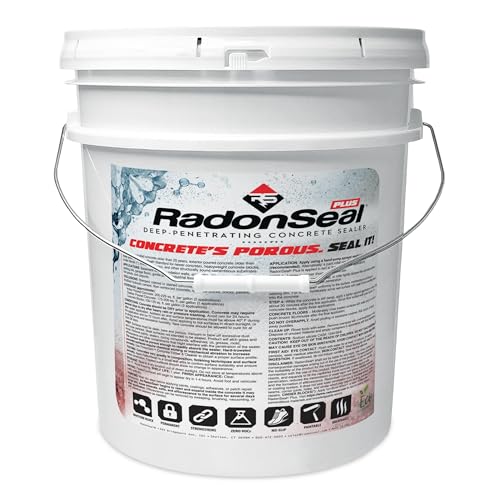
RadonSeal Deep-Penetrating Concrete Sealer -- Best Penetrating Option
RadonSeal uses a siliconate chemistry that soaks into concrete pores and reacts with lime and silica inside the wall to form a permanent hydrophobic gel. Unlike surface coatings, it cannot peel or bubble because it is inside the concrete rather than on top of it. The result is invisible -- the wall looks unchanged but repels water at the pore level. RadonSeal also has a secondary benefit of reducing radon gas transmission through the concrete, which matters in radon-prone regions. It is water-based, low-odor, and effective on poured concrete and block. One gallon covers 100 to 200 square feet depending on wall porosity.
Quikrete Hydraulic Water-Stop Cement -- Best for Active Crack Leaks
Before applying any wall sealer, active cracks need to be plugged. Quikrete Hydraulic Water-Stop sets in 3 to 5 minutes even when water is flowing through the crack, making it possible to stop active leaks that would wash away standard patching compounds. You hand-pack the mix into the crack and hold it in place while it cures. Once set, it forms a rigid, waterproof plug that can be covered with a topcoat sealer. This is a necessary first step for any basement with visible cracking that lets in water. It is inexpensive and available at virtually every hardware store.

Foundation Armor SX5000 -- Best for Long-Term Water Repellency
Foundation Armor's SX5000 is a silane-siloxane water repellent that penetrates deeply and chemically bonds to concrete and masonry substrates. It does not change the surface appearance and does not trap vapor, making it suitable for walls that need to breathe. The product carries a 10-year expected service life from the manufacturer and is UV-stable, so it can also be used on above-grade concrete. Coverage is good at roughly 100 to 200 square feet per gallon. The SX5000 is a premium option, but the longevity argument is strong -- one application outlasts multiple cycles of cheaper surface coatings.
UGL Drylok Original Masonry Waterproofer -- Best Budget Coating
The original Drylok formula has been on the market for decades and remains a reliable budget-friendly option for basement walls with minimal moisture pressure. It applies easily with a brush or roller and dries to a flat white finish. While it does not match the pressure rating of Drylok Extreme, it is sufficient for walls that show only occasional dampness or efflorescence rather than active seepage. A five-gallon pail covers up to 500 square feet and costs significantly less per square foot than premium alternatives. It is a reasonable starting point for older homes with intermittently damp block walls.
What to look for
What to consider
Identify the moisture source before selecting a product. Minor condensation or surface dampness responds well to penetrating sealers or light coatings. Active seepage through cracks or wall pores requires a higher-rated waterproofer like Drylok Extreme, ideally preceded by crack repair with hydraulic cement. Penetrating sealers are generally preferred over film-forming coatings for below-grade applications because they cannot delaminate under hydrostatic pressure. If your basement has chronic flooding or severe water intrusion, a sealer alone is unlikely to solve the problem -- exterior waterproofing or an interior drainage system may be needed. Always follow surface prep requirements exactly, as they are the single biggest factor in long-term sealer performance.
What to consider
For related reading, see [best basement dehumidifiers](/articles/best-basement-dehumidifiers) and [best concrete crack repair products](/articles/best-concrete-crack-repair). Learn how we evaluate waterproofing products at [/methodology](/methodology).
FAQs
A penetrating sealer soaks into the concrete matrix and chemically bonds to block water at the pore level without changing the surface appearance. Waterproofing paint forms a film on top of the concrete that blocks surface moisture but can peel if hydrostatic pressure builds behind the wall. Penetrating sealers generally outperform paint for below-grade applications with active moisture pressure.
Yes, surface prep is critical. Remove all efflorescence, loose paint, oil, and dirt before applying any sealer. Wire brush stubborn deposits and rinse the wall thoroughly. Applying sealer to a contaminated surface severely limits penetration and bonding, resulting in premature failure. Some products require the concrete to be damp but not wet -- always check the manufacturer's prep instructions.