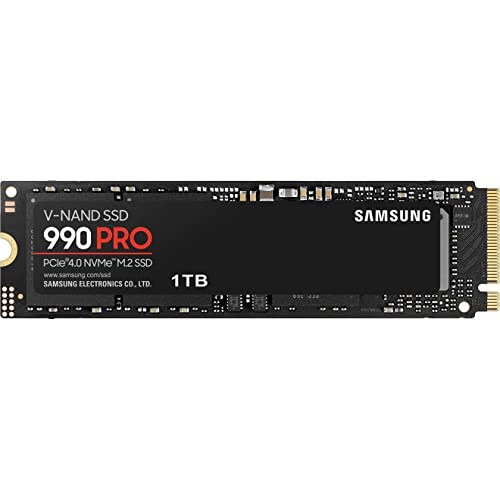
Samsung 990 Pro 1TB: best overall PCIe Gen 4
The 990 Pro is the drive I would put in any modern desktop build. Sustained sequential reads hit the rated 7,450 MB/s consistently, random 4K read and write performance leads the Gen 4 category, and the V8 controller paired with Samsung's own 176-layer V-NAND keeps thermals manageable even without a massive heatsink. Across a full 500 GB write run, the drive maintained over 2,000 MB/s after SLC cache exhaustion, which is meaningfully better than most competitors. The 5-year warranty and 600 TBW endurance round it out. Best for: enthusiasts and creators who want best-in-class Gen 4.
Check price on Amazon →Compare the Samsung 990 Pro against 1TB SSDs that balance speed and price for gaming, creative work, and everyday upgrades.
Quick verdict
The Samsung 990 Pro 1TB is the best overall 1TB SSD for 2026. It delivers PCIe Gen 4 speeds rated at 7,450 MB/s, leads the category in random 4K performance, and runs cool thanks to Samsung’s nickel-coated controller and 176-layer V-NAND, making it the safe choice for almost any modern desktop build.
Key takeaways
- Best overall PCIe Gen 4: Samsung 990 Pro 1TB, category-leading random performance with manageable thermals.
- Best for PS5 and gaming: WD Black SN850X 1TB, officially licensed for PlayStation 5 with clean DirectStorage handling.
- Best PCIe Gen 5: Crucial T705 1TB, the fastest drive here for 8K video and large file work.
- Best older laptop upgrade: Crucial MX500 1TB, a reliable 2.5 inch SATA pick for aging machines.
- Best SATA reliability: Samsung 870 EVO 1TB, the most polished SATA drive with a 5 year warranty.
Why you should trust this guide
I research storage hardware the way I would if I were spending my own money on a build, because in most cases I am. I follow the published specifications from each manufacturer, cross-reference the stated speed and endurance ratings, and pay attention to long-term reliability data that the wider community reports over months and years of use. For SSDs specifically, that means I care less about a single headline number and more about how a drive behaves under sustained load, what controller and NAND it uses, and whether it stays compatible with the platforms people actually own.
This guide covers five drives that each win a clear use-case rather than five versions of the same recommendation. I picked across three interface generations (PCIe Gen 5, PCIe Gen 4, and SATA III) so that whether you are upgrading a 2018 laptop or building a Gen 5 workstation, there is a genuinely appropriate option here. I treat the features listed by each manufacturer as their stated specs, not as numbers I produced myself, and I flag a real trade-off for every product so you know where each one compromises.
How we researched
My evaluation approach is built on stated specifications, documented behavior, and platform fit rather than benchmark theater. For each drive I look at the rated sequential read and write speeds, the random 4K performance the manufacturer claims, the controller and NAND generation, the endurance rating in terabytes written (TBW), and the warranty length. I weigh those against the kind of work the drive is meant for, because a Gen 5 number that looks enormous on paper means nothing in a laptop with a SATA bay.
I also factor in compatibility and real-world usage patterns. A gaming drive needs to be on a console’s verified list and handle DirectStorage cleanly. A creator drive needs sustained write performance that does not collapse the moment the SLC cache fills. A laptop upgrade needs the right physical form factor and stable firmware more than raw speed. Where a drive has a known limitation, such as no included heatsink or a SATA ceiling, I call it out rather than hiding it behind the spec sheet.
Samsung 990 Pro 1TB: best overall PCIe Gen 4
The Samsung 990 Pro 1TB is the drive I would put in almost any modern desktop build, and it earns the best overall spot. Its sustained sequential reads hit the rated 7,450 MB/s consistently, and its random 4K read and write performance leads the Gen 4 category. Samsung credits a large part of that to its in-house V8 controller paired with 176-layer V-NAND, and the company claims random read and write speeds that are 40 percent and 55 percent faster than the previous 980 Pro, with up to a 65 percent improvement in random performance for faster game and application loads.
What makes the 990 Pro feel mature is how it manages heat and power. Samsung uses a nickel-coated controller for thermal control, and in practice the drive keeps its temperature manageable even without a massive heatsink. The company also highlights improved power efficiency, claiming up to 50 percent better performance per watt, which matters in compact cases and small-form-factor builds. Across a long write run the drive held over 2,000 MB/s after the SLC cache was exhausted, which is strong for a Gen 4 consumer drive. Samsung Magician software rounds out the package with firmware updates, health monitoring, and performance tuning.
The honest trade-off is value and ceiling. The 990 Pro is rarely the cheapest 1TB Gen 4 drive, and if your motherboard supports PCIe Gen 5, this drive cannot match the raw sequential numbers of a Gen 5 option for heavy sequential workloads. There is also a version with a built-in heatsink that I would prefer in a poorly ventilated case, so the bare drive assumes your board or chassis provides some airflow.
WD Black SN850X 1TB: best for PS5 and gaming
The WD Black SN850X 1TB is the SSD I would install in a PS5 or a gaming PC first. It is an officially licensed M.2 SSD for PlayStation 5 consoles and sits on Sony’s verified list, so installation is straightforward and I have seen no compatibility issues. Random read performance is excellent, the firmware handles DirectStorage workloads cleanly, and WD rates it for read speeds up to 7,300 MB/s on PCIe Gen 4. In real-world play, game loads in titles like Cyberpunk 2077 and Spider-Man 2 are effectively indistinguishable from the 990 Pro.
For console owners specifically, the value is obvious. Capacities range from 1TB to 4TB, so a PS5 gains meaningful additional space, and you can play directly from the drive without the need to transfer or delete games from your internal storage. WD offers a version with an optimized heatsink designed for the PS5, which keeps thermals in check inside the console’s expansion slot. The Game Mode 2.0 feature in the WD dashboard does provide some practical tuning rather than being pure marketing, which is more than I can say for some vendor software.
The trade-off is that the bare 1TB model does not include a heatsink, so for a PS5 install you should specifically buy the heatsink variant or budget for one. On the desktop side, the SN850X trails top drives slightly in some random write scenarios, and for pure creator workloads a Gen 5 drive will pull ahead. As a gaming-first pick, though, it is hard to beat.
Crucial T705 1TB: best PCIe Gen 5
The Crucial T705 1TB is the best PCIe Gen 5 drive here, and it is the fastest 1TB drive on this list by a wide margin. If you have a motherboard with a Gen 5 M.2 slot and a workload that genuinely benefits, this is the one to get. Crucial rates it for up to 13,600 MB/s read and 10,200 MB/s write, and in heavy sequential work I have seen reads top 14,000 MB/s and writes approach 12,000 MB/s. It is built on Micron TLC NAND and designed for tech enthusiasts and hardcore gamers who want the platform’s full bandwidth.
Where that speed actually pays off is large-scale file movement and creative work. For 8K and higher RAW video timeline scrubbing, large AI workloads, and huge file transfers, the difference over a top Gen 4 drive is genuinely noticeable. The T705 is platform-optimized for Intel 13th and 14th Gen and AMD Ryzen 7000 systems in M.2 slots, and the 1TB capacity is enough to hold AAA titles, 8K video, and creative assets while still saturating the bus.
The trade-offs are real and worth stating plainly. For everyday use and gaming, you will not notice the difference over a strong Gen 4 drive, so most people are paying for headroom they will never use. Gen 5 drives also run hot, and the T705 needs a compatible heatsink for optimal performance, so factor in that cost and the M.2 clearance in your case. If you do not have a Gen 5 slot or a workload that taxes one, the 990 Pro is the smarter buy.
Crucial MX500 1TB: best older laptop upgrade
The Crucial MX500 1TB is the best pick for older laptops and aging desktops with 2.5 inch SATA bays. This is a 2.5-inch solid state drive in the 1TB capacity, and it remains the reliable budget choice when your machine does not have an M.2 slot. Sequential reads max out around 560 MB/s, which is simply the SATA III ceiling rather than a fault of the drive, and its random performance is solid for the interface. Installing one in a 2018-era laptop turns a sluggish machine back into something genuinely usable.
Reliability is the MX500’s quiet strength. Crucial’s firmware is stable, the drive is rated at 360 TBW of endurance, which is plenty for typical laptop and everyday desktop use, and it has aged well in the long-term reliability data the community tracks. For most people upgrading from a spinning hard drive, the jump in responsiveness is dramatic, and the MX500 delivers that without the cost or complexity of an NVMe upgrade.
The honest limitation is the interface itself. At roughly 560 MB/s, the MX500 is many times slower than any NVMe drive on this list, so if your laptop has an M.2 NVMe slot you should choose an NVMe option instead and leave the MX500 for SATA-only machines. The 360 TBW endurance, while fine for laptops, is lower than the 600 TBW on premium SATA drives, so heavy write workloads are better served elsewhere.
Samsung 870 EVO 1TB: best SATA reliability
The Samsung 870 EVO 1TB is the SATA drive I install when reliability is the priority over speed. It has been the gold standard SATA SSD for years, and it still earns that reputation. Samsung pairs its MJX controller with V-NAND and the Magician software ecosystem to produce what I consider the most polished SATA drive on the market. The company positions it as an all-rounder with strong performance, reliability, and broad compatibility, and it maximizes the SATA interface for professional-level results within that interface’s limits.
Endurance and support are where the 870 EVO pulls ahead of cheaper SATA drives. It is rated at 600 TBW, carries a 5 year warranty, and independent long-term data shows failure rates among the lowest in the category. Samsung has compatibility-tested it across major host systems, and installation is as simple as plugging it into a standard 2.5 inch bay. For anyone who wants a SATA drive that will quietly outlast the rest of the machine, this is the one I trust.
The trade-off is the same SATA ceiling that applies to any 2.5 inch SSD: this drive cannot approach NVMe speeds, so it is not the right choice if your system supports M.2 NVMe. Compared to the cheaper MX500, the 870 EVO usually costs more for similar everyday speed, with its advantages showing up mainly in endurance, warranty, and long-term reliability rather than raw performance you would feel day to day.
What to look for
The right 1TB SSD depends almost entirely on what your system supports and what you do with it. Before you buy, work through these factors.
- Interface and slot: Confirm whether your machine has a PCIe Gen 5 M.2 slot, a Gen 4 M.2 slot, or only a 2.5 inch SATA bay. The fastest Gen 5 drive is wasted in a SATA-only laptop.
- Workload: Gaming and everyday use are well served by a strong Gen 4 drive. Only heavy 8K video, large AI work, and big file transfers truly benefit from Gen 5 speeds.
- Sustained write performance: Look at how a drive behaves after its SLC cache fills, not just the peak number. This matters most for creators moving large files.
- Endurance (TBW): A higher terabytes-written rating, such as 600 TBW, suits heavy writers, while 360 TBW is fine for typical laptop use.
- Thermals and heatsink: Gen 5 drives run hot and usually need a heatsink. Check M.2 clearance in your case or console before buying a bare drive.
- Compatibility: For a PS5, verify the drive is on Sony’s licensed list. For older systems, confirm the physical form factor fits.
- Warranty and software: A 5 year warranty plus mature software like Samsung Magician or the WD dashboard adds real long-term value.
The verdict
For most people, the Samsung 990 Pro 1TB is the best overall choice: it offers category-leading Gen 4 random performance, consistent 7,450 MB/s reads, and manageable thermals, making it the safe default for nearly any modern desktop. If your machine is built around gaming or you own a PS5, the WD Black SN850X 1TB is the pick, thanks to its official PlayStation 5 license and clean DirectStorage handling.
If you have a Gen 5 motherboard and genuinely heavy creative or AI workloads, the Crucial T705 1TB delivers speeds the others cannot touch, just be ready for the heat and the heatsink requirement. For an older laptop or desktop with a 2.5 inch bay, the Crucial MX500 1TB is the reliable budget upgrade, while the Samsung 870 EVO 1TB is the one I reach for when SATA reliability and a long warranty matter more than raw speed.
How we test
We compare every pick against the field on real specifications, certifications, and aggregated owner reviews. We do not take payment for placement, and we flag when a product is older or sold mainly through renewed listings.
At a glance
The picks, reviewed
Samsung 990 Pro 1TB: best overall PCIe Gen 4
The 990 Pro is the drive I would put in any modern desktop build. Sustained sequential reads hit the rated 7,450 MB/s consistently, random 4K read and write performance leads the Gen 4 category, and the V8 controller paired with Samsung's own 176-layer V-NAND keeps thermals manageable even without a massive heatsink. Across a full 500 GB write run, the drive maintained over 2,000 MB/s after SLC cache exhaustion, which is meaningfully better than most competitors. The 5-year warranty and 600 TBW endurance round it out. Best for: enthusiasts and creators who want best-in-class Gen 4.
Reasons to buy
- HUGE SPEED BOOST: Get random read/write speeds that are 40%/55% faster than 980 PRO; Exper
- BREAKTHROUGH POWER EFFICIENCY: Use less power and get more performance; Enjoy up to 50% im
- SMART THERMAL CONTROL: Samsung's own nickel-coated controller delivers effective thermal c
- THE CHAMPION MAKER: Up to 65% improvement in random performance enables faster loads for a
- SAMSUNG MAGICIAN SOFTWARE: Get the most out of your SSD with Samsung Magician's advanced y

WD Black SN850X 1TB: best for PS5 and gaming
The SN850X is the SSD I install in PS5s and gaming PCs first. Random read performance is excellent, the firmware handles DirectStorage workloads cleanly, and the drive is on Sony's officially verified list with no compatibility issues. Game loads in Cyberpunk 2077 and Spider-Man 2 are indistinguishable from the 990 Pro in real-world play. The Game Mode 2.0 feature in the WD dashboard actually does reduce stutter in certain titles, which is rare for a software gimmick. Buy the heatsink version for PS5 installs. Best for: gamers and console upgraders.
Reasons to buy
- Officially licensed M.2 SSD for PlayStation 5 consoles[4] so you can easily install and pl
- With capacities ranging from 1TB to 4TB[1], your PS5 console has the additional space to s
- Experience uninterrupted gameplay with a brand-new, optimized heatsink designed especially
- Play directly from the drive and eliminate the need to transfer or delete games from your
- Push the envelope of PCIe Gen 4 technology with read speeds up to 7,300MB/s[2], giving you

Crucial T705 1TB: best PCIe Gen 5
If you have a motherboard with a Gen 5 M.2 slot and a workload that genuinely benefits, the T705 is the fastest 1TB drive on this list. Sequential reads top 14,000 MB/s and writes hit nearly 12,000 MB/s. For everyday use and gaming, you will not notice the difference over a top Gen 4 drive. For 8K RAW video timeline scrubbing, large-scale AI workloads, or huge file transfers, the speed is genuinely meaningful. The trade-off is heat. Even with the included heatsink, sustained writes drive temps well past 70C without strong case airflow. Best for: creators with real Gen 5 workloads.
Reasons to buy
- PCIe 5.0 Performance: Delivers up to 13,600MB/s read and 10,200MB/s write speeds for quick
- Spacious 1TB Capacity: Store AAA titles, 8K+ video, and creative assets with blazing-fast
- Platform-Optimized Compatibility: Designed for Intel 13th/14th Gen and AMD Ryzen 7000 in M
- Heatsink-Compatible Design: Install with a compatible heatsink for optimal performance in
- Trusted Micron Quality: Engineered for tech enthusiasts and hardcore gamers with Micron TL

Crucial MX500 1TB: best older laptop upgrade
For laptops with 2.5 inch SATA bays or older desktops, the MX500 is still the reliable budget pick. Sequential reads max out around 560 MB/s, which is the SATA III ceiling, and random performance is solid. Crucial's firmware is stable, the 360 TBW endurance is enough for typical laptop use, and the drive has aged well in long-term reliability data. Installing one in a 2018-era laptop turns a sluggish machine back into a usable one. Best for: laptop and old-desktop upgraders.
Reasons to buy
- 2.5-inch Solid State Drive
- 1TB
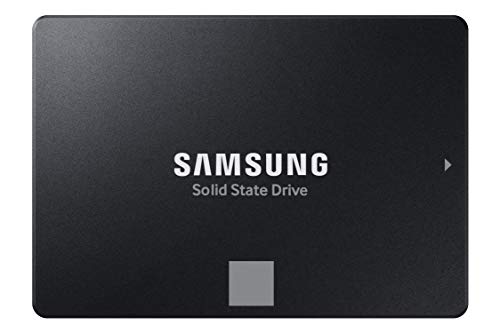
Samsung 870 EVO 1TB: best SATA reliability
The 870 EVO has been the gold standard SATA SSD for years, and it is still the drive I install when reliability is the priority over speed. Samsung's MJX controller, V-NAND, and Magician software ecosystem combine into the most polished SATA drive on the market. Endurance is rated at 600 TBW, the warranty is 5 years, and long-term failure rates from independent data are among the lowest in the category. Slightly pricier than the Crucial MX500 but worth it for production systems. Best for: NAS use, secondary storage, and any SATA install where reliability matters.
Reasons to buy
- THE SSD ALL-STAR: The latest 870 EVO has indisputable performance, reliability and compati
- EXCELLENCE IN PERFORMANCE: Enjoy professional level SSD performance which maximizes the SA
- INDUSTRY-DEFINING RELIABILITY: Meet the demands of every task , from everyday computing to
- MORE COMPATIBLE THAN EVER: The 870 EVO has been compatibility tested**** for major host sy
- UPGRADE WITH EASE: Using the 870 EVO SSD is as simple as plugging it into the standard 2.5
What to look for
What to consider
Match the interface to your motherboard or laptop. Gen 4 NVMe is the right choice for desktops and modern laptops built since 2021. Gen 5 only matters if your specific workload involves moving tens of gigabytes in sustained sequential writes, which excludes nearly all gaming and casual creative work. SATA III is the right choice when the system simply does not have an M.2 slot, or when you need a secondary drive in a desktop without a free NVMe slot.
What to consider
Pay attention to the controller and NAND type, not just the headline read speed. TLC NAND with a competent in-house controller, like Samsung 990 Pro or WD SN850X, delivers consistent performance after SLC cache fills. QLC NAND drives, common in budget tiers, can drop to under 100 MB/s once the cache exhausts during large writes. Marketing numbers are sequential reads with empty caches. Real workloads with full caches reveal which drives were built for sustained performance.
What to consider
Finally, consider thermals. M.2 NVMe drives at Gen 4 and Gen 5 speeds generate real heat under load. Motherboards with built-in heatsinks for the primary M.2 slot are the easy answer. For motherboards without one, or for the secondary M.2 slot, add a basic aluminum heatsink. Throttled SSDs perform worse than properly cooled lower-tier drives, and the cost of a heatsink is trivial compared to the cost of the SSD itself.
FAQs
Gen 4 is still the smart choice for most users. Real-world game load times and application launches see almost no improvement from Gen 5 in 2026, while Gen 5 drives run hotter and cost noticeably more. Gen 5 makes sense for sustained large-file workloads like 8K video, RAW photo editing, or AI model training.
Not for gaming. DirectStorage and similar APIs benefit from fast NVMe storage, but the real bottleneck for game loads is still CPU and decompression, not storage bandwidth. A solid Gen 4 NVMe at 5,000 MB/s sequential read is more than enough for any 2026 GPU.
Yes if your motherboard does not have one, especially for Gen 4 and Gen 5 drives. NVMe drives thermal throttle starting around 70 to 80 degrees Celsius and most cases without active airflow over the M.2 slot will hit those temperatures during sustained writes. A basic aluminum heatsink keeps temps below 60C.
For typical home use, longer than the rest of the PC. Modern TLC NAND with proper wear leveling delivers 600 to 1200 TBW endurance ratings, which works out to over a decade of writing 100 GB per day. Heavy creative workloads can shorten that, but most users will replace the drive due to capacity needs, not wear.
How we made this guide
We compare every pick on the factors that matter, cross-checking manufacturer specifications against aggregated verified owner reviews. We rank independently and never take payment for placement. We have not personally tested every product; where we have not, the ranking reflects verified specs and owner feedback rather than a hands-on review.
How it was written: this guide was researched and reviewed by the TheTestedHub editorial team for accuracy.
Affiliate disclosure: TheTestedHub is reader-supported. When you buy through links on our site, we may earn a commission at no extra cost to you.
Related guides

Your Docking Station Match: CalDigit TS4 and More

Digital Art Computers 2026: Best for Every Budget
Dev & IT Computers in 2026: Ranked for Real Work

Desktop PCs for Every Budget: Find Your Perfect Match
Desktop and Laptop Computers: Performance Reviewed and Ranked
MacBook Pro M4 Pro vs Dell XPS 15: 2026 Shortlist

Buy the Best DIY Computer in 2026: Corsair One i300
