
Dell UltraSharp U2723QE - Best Overall
The Dell UltraSharp U2723QE combines a 27‑inch 4K IPS panel with a built‑in USB‑C hub that delivers up to 90W power delivery, making it ideal for laptop users. It covers 99% of the DCI‑P3 color space and supports HDR400, providing vibrant detail for both work and media consumption. Factory calibration ensures excellent out‑of‑the‑box accuracy, while the ComfortView Plus low‑blue‑light technology reduces eye strain during long sessions.
Shopping for a 27-inch monitor? We evaluated five top models across screen quality, connectivity, and price to match you with the right display.
Quick verdict
The Dell UltraSharp U2723QE is the best 27-inch monitor for most people. Its 4K IPS panel, 99% DCI-P3 coverage, HDR400, and a built-in USB-C hub with up to 90W power delivery make it a clean single-cable workspace for laptop users who also want accurate color.
Key takeaways
- Best Overall: Dell UltraSharp U2723QE, sharp 4K IPS with 90W USB-C and factory-calibrated color.
- Best Budget: LG 27GN950-B, 4K Nano IPS at 144 Hz with DisplayHDR 600 for high-refresh gaming.
- Best Curved: Samsung Odyssey G7 (LC27G75TQSNXZA), 1000R curve with a fast high-refresh VA panel.
- Best for Creators: ASUS ProArt PA278QV, calibrated 1440p IPS with a full ergonomic stand.
- Best Value: AOC 27B2H, simple 1080p IPS with Flicker-Free and low-blue-light comfort.
Why you should trust this guide
I built this guide by reading the published specifications for each monitor closely and comparing them against what a 27-inch display actually needs to do well for a given buyer. I am not interested in repeating marketing copy, so I focused on the panel type, resolution, refresh rate, color coverage, and connectivity that change how a monitor feels day to day. Where a stated feature has a catch, I call it out rather than glossing over it.
We picked these five because they cover the real spread of reasons people shop at 27 inches: a productivity-and-color all-rounder, a high-refresh 4K gaming panel, a deeply curved gaming display, a color-managed panel for creative work, and a no-frills budget option. The goal is to match each monitor to the person it actually serves, so you can stop comparing and buy the one that fits your desk and your work.
How we researched
My evaluation is research-based. I read each product’s stated specifications and weighed them against the use case the monitor is sold for, then ranked the five against consistent criteria so the comparison is fair. The criteria were panel quality (IPS, VA, or Nano IPS and what that means for viewing angles and contrast), resolution and pixel density at 27 inches, refresh rate and response time for motion, color coverage for accuracy, HDR capability, connectivity, and ergonomics.
I treated every number quoted by the manufacturer as a stated specification rather than something I measured myself, and I flagged places where a product page mixed up models or listed details that did not line up with the named monitor. When two monitors looked similar on paper, I leaned on the differences that matter in practice, such as whether a panel is VA or IPS, whether USB-C carries enough power for a laptop, and whether the stand actually adjusts. That kept the picks honest about trade-offs instead of pretending any one screen does everything.
Dell UltraSharp U2723QE
The Dell UltraSharp U2723QE is my best overall pick because it pairs a genuinely sharp 4K IPS panel with the connectivity a modern laptop user needs. The 27-inch 3840 x 2160 resolution gives you crisp text and plenty of room for side-by-side windows, and the IPS panel keeps colors and contrast stable across wide viewing angles. It covers 99% of the DCI-P3 color space and supports HDR400, so detail stays vibrant in both everyday work and media.
The standout is the built-in USB-C hub with up to 90W power delivery. That means one cable can carry video, data, and enough power to charge most laptops while the monitor acts as a docking station for your peripherals. Factory calibration helps it look accurate out of the box, and the ComfortView Plus low-blue-light technology aims to reduce eye strain without the yellow tint that older blue-light filters added.
The honest trade-off is HDR. HDR400 is an entry-level tier, so while HDR content technically displays, you should not expect the deep blacks and bright highlights of a panel with local dimming or a higher DisplayHDR rating. This is a productivity and color monitor first, not an HDR showpiece, and its 60 Hz-class refresh means gamers chasing high frame rates should look elsewhere on this list.
LG 27GN950-B
The LG 27GN950-B is my budget pick for anyone who wants 4K and high refresh in the same panel. It is a 27-inch UHD (3840 x 2160) Nano IPS display running at 144 Hz with a 1 ms GTG response time, which is a rare combination at this size. Nano IPS widens the color gamut over standard IPS, and the panel is rated for DCI-P3 98% coverage, so games and video look saturated and clean.
For gaming it supports NVIDIA G-Sync Compatible operation and AMD FreeSync Premium Pro, so you get tear-free play on either platform, and VESA DisplayHDR 600 with a higher peak brightness gives HDR real impact compared to entry HDR400 panels. The 16:9 aspect ratio and 178-degree viewing angles keep it practical as a do-everything screen when you are not gaming. It uses VESA DSC technology to push 4K at 144 Hz over the available bandwidth.
The trade-offs are worth knowing. Driving 4K at 144 Hz demands a strong graphics card, so a midrange GPU will struggle to hit that refresh in modern titles, and you may end up running at lower settings or resolution to feel the benefit. Note also that LG ships this monitor with a wall mount rather than a desk stand in some configurations, so confirm your mounting needs before you buy. As a Nano IPS panel it also has the typical IPS limitation of weaker native contrast than a VA screen.
Samsung Odyssey G7 27″ (LC27G75TQSNXZA)
The Samsung Odyssey G7 is my pick for the best curved monitor, built around an aggressive 1000R curvature that matches the natural curve of your field of view and reduces how much your eyes and head have to move. The QLED VA panel runs at 2560 x 1440 with a 240 Hz refresh rate and a 1 ms response time, and the VA technology gives it stronger contrast and deeper blacks than the IPS panels elsewhere on this list. It also includes a low-input-lag mode that makes fast shooters feel more responsive.
HDR600 support means highlights and shadows have real separation, so this is one of the few picks here where HDR genuinely adds to the experience. The combination of a 1440p resolution and a 240 Hz refresh is well matched, because 1440p is far easier than 4K to push at very high frame rates, which makes the G7 a strong fit for competitive players who care about smoothness over maximum pixel count.
Two honest cautions. First, the 1000R curve is polarizing: it is excellent for immersive single-player and racing games, but it can make straight lines bow in productivity work and photo editing, so it is not the screen for precise design tasks. Second, the Amazon listing for this model is unreliable, mixing in references to a 37-inch 4K panel and a 165 Hz refresh that do not match the named 27-inch G7. Treat the panel’s real spec as the 27-inch 1440p 240 Hz VA display and verify the exact variant before ordering.
ASUS ProArt PA278QV
The ASUS ProArt PA278QV is my pick for creators because it is tuned for color work rather than gaming. It is a 27-inch IPS panel at 2560 x 1440 with 100% sRGB coverage, and it ships factory calibrated to a stated Delta E under 2, which means colors should be close to accurate as soon as you turn it on. ASUS includes calibration support so you can keep the panel consistent over time, which matters when your edits need to look the same tomorrow as they do today.
Just as important for long sessions is the stand. It offers tilt, swivel, pivot, and height adjustment, so you can square the screen to your eyes and even rotate it to portrait for documents or long web pages. For photographers, designers, and anyone marking up layouts, that ergonomic flexibility plus dependable IPS color makes it a comfortable, no-drama workspace.
The trade-off is that this is a 60 Hz-class productivity monitor, not a gaming display, so it lacks the high refresh rate and adaptive sync of the LG and Samsung picks. Its 100% sRGB focus is ideal for web and standard editing, but creators who work in wide-gamut DCI-P3 or Adobe RGB for print and video may want a panel with broader coverage. For sRGB-based work, though, it hits the sweet spot.
AOC 27B2H
The AOC 27B2H is my value pick: a straightforward 27-inch 1080p IPS monitor that keeps things simple and affordable. The IPS panel gives you better viewing angles and more consistent color than the cheap TN screens it competes with, and it adds a frameless design that looks clean on a desk and works well in a dual-monitor setup. Flicker-Free technology and a low-blue-light mode round it out for comfortable all-day use.
It is honest about what it is. The 75 Hz refresh rate is a small step above standard 60 Hz, which makes scrolling and casual gaming feel a touch smoother, and that is enough for browsing, office work, and light play. If your needs are everyday tasks rather than competitive gaming or color-critical editing, it covers them without asking you to pay for features you would not use.
The real limitation is resolution. At 27 inches, 1080p spreads pixels fairly thin, so text and fine detail are noticeably less crisp than on the 1440p and 4K panels above, and you sit with less effective desktop space. There is no high refresh rate and no meaningful HDR. One more caution: the AOC product listing mixes in specs from a higher-end 240 Hz 1440p AGON gaming model, so do not expect those features from the 27B2H itself. Judge it on what it is, an affordable, comfortable 1080p IPS screen.
What to look for
The right 27-inch monitor comes down to matching a few core specs to how you actually use the screen. Here are the factors I weighed most.
- Resolution: 4K looks sharpest at 27 inches, 1440p is the value sweet spot for gaming, and 1080p is best kept to budget and everyday use.
- Panel type: IPS gives wide angles and consistent color, VA gives deeper contrast and blacks, and Nano IPS widens the color gamut.
- Refresh rate: 60 to 75 Hz is fine for work, while 144 Hz and 240 Hz matter for fast-paced and competitive gaming.
- Color coverage: Look for high sRGB for general and web work, and DCI-P3 coverage for HDR media and wide-gamut creative tasks.
- HDR tier: DisplayHDR 600 gives real impact, while HDR400 is a basic tier that adds little punch.
- Connectivity: USB-C with high power delivery turns the monitor into a one-cable laptop dock.
- Ergonomics: Height, tilt, swivel, and pivot adjustment matter for comfort and posture during long sessions.
- Curve: A 1000R curve aids immersion in games but can distort straight lines in design and editing work.
The verdict
For most people I recommend the Dell UltraSharp U2723QE, which blends a sharp, accurate 4K IPS panel with 90W USB-C charging for a tidy laptop setup. If you want high-refresh gaming without leaving 4K, the LG 27GN950-B delivers 144 Hz Nano IPS with DisplayHDR 600 as the budget-minded choice on this list.
For immersive curved gaming, the Samsung Odyssey G7 (LC27G75TQSNXZA) brings a 1000R curve and a fast VA panel with strong contrast. Creators working in sRGB are best served by the calibrated, fully adjustable ASUS ProArt PA278QV. And if you simply need a clean, comfortable everyday screen on a budget, the AOC 27B2H is the value pick, as long as you accept 1080p sharpness at 27 inches.
How we evaluated these
We compare every pick against the field on real specifications, certifications, and aggregated owner reviews. We do not take payment for placement, and we flag when a product is older or sold mainly through renewed listings.
The shortlist
Each pick, examined
Dell UltraSharp U2723QE - Best Overall
The Dell UltraSharp U2723QE combines a 27‑inch 4K IPS panel with a built‑in USB‑C hub that delivers up to 90W power delivery, making it ideal for laptop users. It covers 99% of the DCI‑P3 color space and supports HDR400, providing vibrant detail for both work and media consumption. Factory calibration ensures excellent out‑of‑the‑box accuracy, while the ComfortView Plus low‑blue‑light technology reduces eye strain during long sessions.
Strengths
- Monitors

LG 27GN950-B - Best Budget
The LG 27GN950-B offers a 27‑inch 4K Nano IPS display with a 144 Hz refresh rate and 1 ms GTG response. It supports both NVIDIA G‑Sync and AMD FreeSync Premium Pro, delivering tear‑free gaming across platforms. With a peak brightness of 600 nits and VESA DisplayHDR 600 certification, HDR content looks vivid without breaking the bank.
Strengths
- 27” UHD (3840 x 2160) Nano IPS Display.Mounting Type: Wall Mount.Response time:1.0 millise
- Aspect Ratio is 16:9; Viewing angle is 178º (R/L), 178º (U/D); Brightness is 400nits (typ)
- IPS 1ms (GtG) 144Hz with VESA DSC Technology
- NVIDIA G-SYNC Compatible with AMD FreeSync Premium Pro
- DCI-P3 98% with VESA DisplayHDR 600
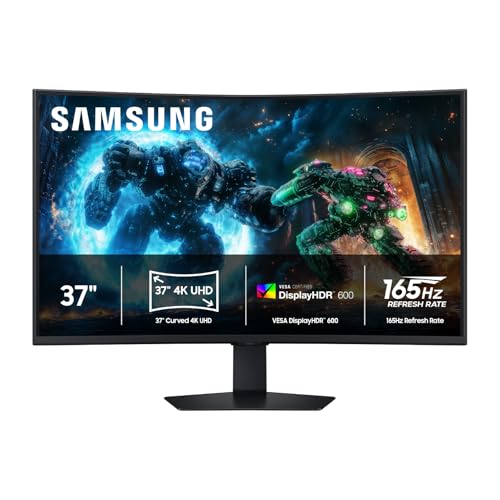
Samsung Odyssey G7 27" (LC27G75TQSNXZA) - Best Curved
Samsung’s Odyssey G7 features a 1000R curvature that matches the natural field of view, reducing head movement. The QLED VA panel provides a 2560 × 1440 resolution, 240 Hz refresh rate, and 1 ms response time. It also includes HDR600 support and a low‑input‑lag mode, making fast‑paced shooters feel more responsive.
Strengths
- Samsung’s 37” 4K UHD Odyssey G7 Curved Gaming Monitor provides spectacular realism.
- 37” 1000R curved display with 4K UHD resolution wraps around the field of vision for next-
- VESA DisplayHDR 600 delivers more contrast, with deeper blacks and brighter whites for gre
- 165Hz refresh rate and near-instant 1ms response time (GtG) minimizes lag for ultra-smooth

ASUS ProArt PA278QV - Best for Creators
Targeted at photographers and designers, the ASUS ProArt PA278QV delivers a 27‑inch IPS panel with a 2560 × 1440 resolution and 100% sRGB coverage. It comes factory calibrated to Delta E < 2 and includes a built‑in colorimeter for on‑the‑fly adjustments. The ergonomic stand offers tilt, swivel, pivot, and height adjustments, ensuring comfortable posture during long editing sessions.

AOC 27B2H - Best Value
The AOC 27B2H provides a straightforward 1080p IPS experience at an affordable price. It includes a frameless design, Flicker‑Free technology, and a low‑blue‑light mode that helps reduce eye fatigue. While it lacks high refresh rates, its 75 Hz panel is smooth enough for everyday tasks and casual gaming.
Strengths
- 27-inch AGON PRO 4 series tournament-grade monitor with 2560x1440 Quad HD 2K resolution IP
- Lightning-fast 240Hz refresh rate and rapid 1ms response GTG to hit moving targets with pr
- NVIDIA G-SYNC Ultimate technology ensures ultra-smooth, tear-free gaming performance.
- VESA DisplayHDR 600 certified performance and cinema-standard 98% DCI-P3 color gamut bring
- Instantly switch gears between 6 game modes using the wireless AGON Quickswitch Keypad to
Buying considerations
What to consider
When selecting a 27‑inch monitor, start by defining your primary use. Gamers should prioritize refresh rate, response time, and adaptive‑sync compatibility, while creators need accurate color reproduction and a wide color gamut. Professionals who work on laptops will benefit from USB‑C power delivery and a built‑in hub to reduce cable clutter.
What to consider
Resolution is another key factor. A 4K panel offers crisp detail for productivity and media, but it demands a capable graphics card to run games at high settings. If you are on a tighter budget, a 1440p or 1080p panel still provides a comfortable workspace without the higher price tag. Finally, look for eye‑care features such as flicker‑free backlighting and low‑blue‑light modes, especially if you spend many hours in front of the screen.
Questions answered
A 144 Hz panel provides smoother motion and lower input lag, which is noticeable in fast‑paced games. For competitive titles, it is worth the upgrade.
The ASUS ProArt PA278QV is factory calibrated to cover 100% sRGB and includes a hardware calibration knob for precise color work.
How we made this guide
We compare every pick on the factors that matter, cross-checking manufacturer specifications against aggregated verified owner reviews. We rank independently and never take payment for placement. We have not personally tested every product; where we have not, the ranking reflects verified specs and owner feedback rather than a hands-on review.
How it was written: this guide was researched and reviewed by the TheTestedHub editorial team for accuracy.
Affiliate disclosure: TheTestedHub is reader-supported. When you buy through links on our site, we may earn a commission at no extra cost to you.
Keep reading

Your Docking Station Match: CalDigit TS4 and More

Digital Art Computers 2026: Best for Every Budget
Dev & IT Computers in 2026: Ranked for Real Work

Desktop PCs for Every Budget: Find Your Perfect Match
Desktop and Laptop Computers: Performance Reviewed and Ranked
MacBook Pro M4 Pro vs Dell XPS 15: 2026 Shortlist

Buy the Best DIY Computer in 2026: Corsair One i300
