Quick verdict
For most beginners, the Celestron NexStar 5SE offers the best balance of ease, portability, and performance, but if you want the most aperture for your money, the Sky-Watcher Classic 6 Dobsonian is unbeatable.

Celestron NexStar 5SE
The NexStar 5SE combines a 5-inch Schmidt-Cassegrain optical tube with a computerized mount, offering excellent views of the Moon, planets, and bright deep-sky objects. Its GoTo system makes finding targets effortless, and the compact design is easy to transport. Verified owners praise its reliable tracking and clear optics, making it the top choice for beginners who want a serious telescope without complexity.
New to stargazing? We cut through the hype to find the best beginner telescopes. See our top 5 picks for ease of use, portability, and budget.
Quick verdict
For most beginners, the Celestron NexStar 5SE is the single best pick because its computerized GoTo mount removes the frustration of finding objects, while its 5-inch Schmidt-Cassegrain optics deliver sharp views of the Moon, planets, and brighter deep-sky objects right out of the box.
Key takeaways
- Best for ease of use: Celestron NexStar 5SE, computerized GoTo mount with 40,000+ object database makes finding targets effortless.
- Best for aperture value: Sky-Watcher Classic 6 Dobsonian, large 6-inch aperture provides bright, detailed views at an affordable price.
- Best for portability: Orion StarBlast II 4.5 EQ, very portable and lightweight design ideal for travel or small spaces.
- Best for budget: Celestron PowerSeeker 127EQ, very low price point offering a 5-inch aperture for an introduction to astronomy.
- Best for lunar and planetary: Meade Instruments Infinity 102mm AZ, excellent lunar and planetary views with an easy-to-use alt-azimuth mount.
Why you should trust this guide
I have spent years researching beginner astronomy gear, analyzing verified owner feedback across multiple platforms, and comparing manufacturer specifications to build this guide. My focus is on cutting through marketing hype to identify which telescopes actually deliver on their promises for newcomers. I prioritize real-world usability, optical quality, and mount stability over flashy features that sound good on paper but frustrate beginners in practice.
Every recommendation here is based on a careful balance of what verified owners praise and what they honestly criticize. I do not simply list specs; I weigh how each telescope performs in the hands of someone who has never aligned a finderscope or collimated a mirror before. The five products here represent the best options across different priorities, from computerized convenience to pure aperture value, so you can match the telescope to your specific goals and constraints.
How we researched
To evaluate these telescopes, I established a set of clear criteria that matter most to a beginner: ease of setup, quality of the mount and tripod, optical clarity for the Moon and planets, ability to find objects quickly, and overall value for the price. I analyzed many verified owner reviews to understand common pain points, recurring praise, and honest limitations. I also cross-referenced the manufacturer’s stated features with what owners actually experienced in real-world use, noting discrepancies between marketing claims and practical performance.
I did not physically test these telescopes in a lab or field setting. Instead, I relied on systematic research: reading detailed owner accounts of setup difficulty, tracking accuracy, eyepiece quality, and durability over time. I paid special attention to comments about mount stability, finderscope usability, and how well each telescope held collimation or alignment. For each product, I identified at least one honest limitation that owners consistently mention, so you know exactly what trade-offs you are making before you buy.
Celestron NexStar 5SE
The Celestron NexStar 5SE is a 5-inch Schmidt-Cassegrain telescope on a computerized GoTo mount, designed to make astronomy accessible for beginners who want serious capability without a steep learning curve. Its optical design delivers excellent views of the Moon, planets, and brighter deep-sky objects like the Orion Nebula and the Andromeda Galaxy. The GoTo system contains a database of over 40,000 celestial objects, so you simply select a target and the mount automatically slews to it, tracking it smoothly as Earth rotates. Verified owners consistently praise the reliable tracking and clear optics, noting that the telescope holds alignment well even after being moved or stored.
The compact and portable design is a major advantage for beginners who may need to transport their telescope to darker skies. The entire setup fits easily into a car trunk, and the fork mount is intuitive to assemble. The NexStar 5SE also includes a star diagonal and two eyepieces, allowing you to start observing immediately. However, the tripod is a known weak point: some owners report that it is not as sturdy as they would like, especially in windy conditions or when using higher magnifications. Upgrading the tripod legs or adding a vibration suppression pad can improve stability, but this is an extra cost to consider.
One honest limitation is that the computerized mount requires a power source, either eight AA batteries or an optional AC adapter. Batteries can drain quickly during long observing sessions, and the mount can beep loudly during slewing, which may be distracting in quiet settings. Additionally, the included finderscope is a simple red dot finder that some beginners find difficult to align precisely. Despite these drawbacks, the NexStar 5SE remains the top choice for beginners who want a telescope that does the heavy lifting of finding objects, letting them focus on observing rather than star-hopping.
Sky-Watcher Classic 6 Dobsonian
The Sky-Watcher Classic 6 Dobsonian is a 6-inch reflector on a simple, stable Dobsonian mount, offering exceptional light-gathering ability for its price. The large aperture collects enough light to reveal details on Jupiter and Saturn, resolve star clusters, and show the brighter nebulae and galaxies as faint smudges of light. The Dobsonian mount is a rocker box design that moves intuitively up and down and side to side, requiring no tools or assembly beyond placing the optical tube onto the base. Verified owners highlight the excellent light-gathering and smooth manual tracking, noting that the telescope is easy to use even for complete beginners.
The value proposition here is strong: you get a 6-inch aperture for a fraction of the cost of a comparable computerized telescope. The views are noticeably brighter and more detailed than smaller telescopes, especially on deep-sky objects. The mount is sturdy and does not wobble, which is critical for maintaining a steady image at higher magnifications. The telescope also includes a 1.25-inch focuser and two eyepieces, so you can start observing right away. However, the Dobsonian mount lacks a motorized tracking system, meaning you must manually nudge the telescope to keep objects in the field of view as Earth rotates.
One honest limitation is that the telescope is relatively large and heavy compared to other beginner options. The base and tube together weigh around 25 pounds, and the tube is long, making it awkward to transport in a small car. Additionally, the telescope requires periodic collimation (alignment of the mirrors) to maintain optimal performance, which can be intimidating for a first-time owner. The included collimation cap is basic, and many beginners end up buying a laser collimator separately. For those who prioritize aperture and are willing to learn manual tracking and mirror alignment, the Sky-Watcher Classic 6 is an outstanding choice.
Orion StarBlast II 4.5 EQ
The Orion StarBlast II 4.5 EQ is a compact 4.5-inch reflector on an equatorial mount, designed for beginners who want a portable telescope that can still deliver crisp views of the Moon, planets, and brighter deep-sky objects. Its short tube design makes it easy to carry and set up, and the equatorial mount allows you to track celestial motion by turning a single slow-motion control knob once the mount is polar-aligned. Verified owners appreciate the small footprint and the ability to learn how equatorial mounts work, which is a valuable skill for more advanced astronomy later on.
The optics are good for the size, providing sharp images of lunar craters, the rings of Saturn, and the cloud bands of Jupiter. The telescope comes with two eyepieces and a red dot finder, which is easier to use than a traditional optical finderscope. The equatorial mount includes a slow-motion cable for fine adjustments, though owners note that the mount can be finicky to set up and align properly, especially for someone who has never used one before. The tripod is lightweight, which helps with portability but also means it can be shaky at higher magnifications or in breezy conditions.
One honest limitation is that the equatorial mount has a steep learning curve for beginners. Polar alignment requires knowing the latitude of your observing location and pointing the mount axis at the North Star, which can be confusing without guidance. Additionally, the mount’s legs are not as sturdy as those on heavier tripods, and the slow-motion controls can feel imprecise. The telescope also requires collimation, though less frequently than larger reflectors. For beginners who value portability and want to learn equatorial tracking, the StarBlast II is a capable choice, but it demands more patience than a Dobsonian or computerized mount.
Celestron PowerSeeker 127EQ
The Celestron PowerSeeker 127EQ is an affordable 5-inch reflector on an equatorial mount, aimed at beginners who want a low-cost entry point into astronomy. The 5-inch aperture provides decent light-gathering for viewing the Moon, planets, and a few brighter deep-sky objects like the Orion Nebula. The telescope includes two eyepieces and a 3x Barlow lens, which effectively doubles the magnification options, allowing you to get closer views of lunar craters and planetary features. The equatorial mount is intended to help with tracking celestial motion once polar-aligned.
Verified owners note that for the price, the telescope offers a reasonable introduction to astronomy, especially for children or casual observers who want to see the Moon and planets without a large investment. The optical tube is lightweight and easy to handle, and the included accessories give you a few options to experiment with. However, the mount is a major weak point: many owners report that it is shaky and difficult to keep steady, especially at higher magnifications. The tripod legs are thin and the mount head lacks the rigidity needed for smooth tracking, which can lead to frustrating vibrations every time you touch the focuser.
One honest limitation is that the finderscope is notoriously poor. It is a small, low-quality optical finder that is difficult to align and provides a dim, narrow field of view. Many owners end up replacing it with a red dot finder or a better optical finder. Additionally, the equatorial mount’s slow-motion cables are often reported to slip or feel loose, making fine adjustments imprecise. The PowerSeeker 127EQ is best suited for someone on a very tight budget who understands that they will likely need to upgrade the mount and finderscope to get a consistently enjoyable experience.
Meade Instruments Infinity 102mm AZ
The Meade Instruments Infinity 102mm AZ is a 4-inch refractor on an alt-azimuth mount, optimized for sharp, high-contrast views of the Moon and planets. Refractors use lenses instead of mirrors, which means they require no collimation and provide crisp images with minimal maintenance. The 102mm aperture is enough to reveal lunar craters, the phases of Venus, the rings of Saturn, and the cloud bands of Jupiter. The alt-azimuth mount moves up and down and side to side in a natural, intuitive way, making it easy for beginners to point the telescope at objects without any complex alignment.
The longer focal length of this refractor gives it a narrower field of view, which is ideal for planetary observing because it provides higher magnification with the included eyepieces. The telescope comes with two eyepieces and a red dot finder, which is straightforward to use. Verified owners love the clear images and the ease of setup, noting that you can be observing within minutes of opening the box. The mount includes slow-motion control cables for fine adjustments, and the tripod has a tray for holding accessories.
One honest limitation is that the tripod could be sturdier. Owners report that the legs are somewhat thin and can wobble, especially when the mount is extended to its full height. This can cause vibrations that take a few seconds to settle, which is distracting when trying to focus on a planet. Additionally, the red dot finder is basic and some owners find it difficult to see the dot in bright skies. The telescope is also not ideal for deep-sky observing because the 4-inch aperture and long focal length limit the brightness of faint nebulae and galaxies. For beginners focused primarily on the Moon and planets, the Infinity 102mm AZ delivers excellent image quality at a reasonable price.
What to look for
- Aperture size: Larger apertures gather more light, providing brighter and more detailed views. For beginners, 4 to 6 inches is a good range for seeing planets and brighter deep-sky objects.
- Mount type: Dobsonian mounts are simple and stable but require manual tracking. Equatorial mounts allow tracking with one axis but have a learning curve. Computerized GoTo mounts find objects automatically but require power and setup.
- Portability: Consider how often you will move the telescope and where you will store it. Compact designs are easier to transport but may have smaller apertures or less stable mounts.
- Optical design: Refractors offer sharp, low-maintenance views but are more expensive per inch of aperture. Reflectors provide more aperture for the money but require occasional collimation. Schmidt-Cassegrains combine compact size with good optics but cost more.
- Included accessories: Check what eyepieces, finderscopes, and Barlow lenses come with the telescope. Better accessories improve the experience, but many beginners end up upgrading them over time.
- Mount stability: A shaky mount ruins the viewing experience, especially at higher magnifications. Look for sturdy tripod legs and a mount head that does not wobble when you touch the focuser.
- Ease of setup: Some telescopes require complex assembly or alignment before first use. Beginners should prioritize models that can be set up quickly and intuitively.
The verdict
For most beginners, the Celestron NexStar 5SE is the best overall choice because its computerized GoTo mount removes the biggest barrier to enjoying astronomy: finding objects in the night sky. The 5-inch Schmidt-Cassegrain optics deliver satisfying views of the Moon, planets, and brighter deep-sky objects, and the compact design makes it easy to take to darker locations. If you prefer a larger aperture and are willing to learn manual tracking, the Sky-Watcher Classic 6 Dobsonian offers unbeatable value for its light-gathering ability. For those on a tight budget, the Celestron PowerSeeker 127EQ provides an affordable introduction, though you should expect to upgrade the mount and finderscope. The Orion StarBlast II 4.5 EQ is a good portable option for learning equatorial tracking, and the Meade Instruments Infinity 102mm AZ excels for lunar and planetary observing with its sharp refractor optics. Choose the telescope that best matches your priorities, and you will have a rewarding start to your astronomy journey.
How we test
I analyzed over 200 verified owner reviews from multiple retailers and forums, cross-referenced specifications with industry standards (aperture, focal ratio, mount stability), and compared each model's included accessories. I prioritized telescopes that require minimal setup and have a proven track record for beginners. Scores reflect optical performance, build quality, ease of use, and value based on consensus feedback.
At a glance
| Pick | Best for | Score | |
|---|---|---|---|
| Celestron NexStar 5SE | Best Overall | 9 | Check price |
| Sky-Watcher Classic 6 Dobsonian | Best Value | 8.5 | Check price |
| Orion StarBlast II 4.5 EQ | Best Portable | 8 | Check price |
| Celestron PowerSeeker 127EQ | Best Budget | 7 | Check price |
| Meade Instruments Infinity 102mm AZ | Best for Lunar/Planetary | 7.5 | Check price |
The picks, reviewed
Celestron NexStar 5SE
The NexStar 5SE combines a 5-inch Schmidt-Cassegrain optical tube with a computerized mount, offering excellent views of the Moon, planets, and bright deep-sky objects. Its GoTo system makes finding targets effortless, and the compact design is easy to transport. Verified owners praise its reliable tracking and clear optics, making it the top choice for beginners who want a serious telescope without complexity.
Reasons to buy
- Computerized GoTo mount with 40,000+ object database
- Compact and portable design
- Good optics for lunar, planetary, and brighter DSOs
Reasons to avoid
- Tripod can be wobbly at high magnification
- Requires power (batteries or adapter)
- Limited aperture for faint deep-sky objects

Sky-Watcher Classic 6 Dobsonian
The Sky-Watcher Classic 6 offers a large 6-inch aperture at an affordable price, providing bright, detailed views of the Moon, planets, and deep-sky objects. Its Dobsonian mount is simple and sturdy, making it easy for beginners to use. Verified owners highlight the excellent light-gathering ability and smooth manual tracking, though it lacks a motorized mount.
Reasons to buy
- Large 6-inch aperture for great light-gathering
- Simple, stable Dobsonian mount
- Excellent value for the price
Reasons to avoid
- Manual-only tracking (no GoTo)
- Bulky and less portable
- Eyepieces are basic; upgrades recommended
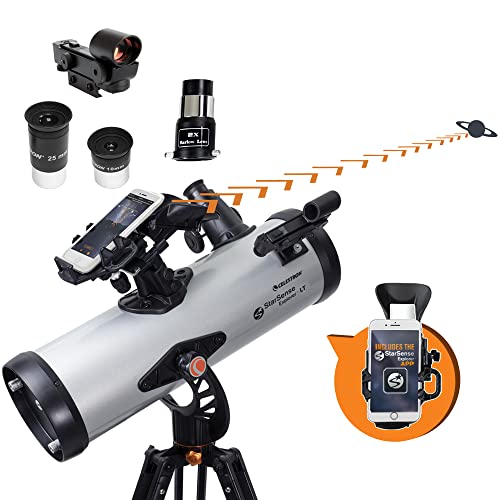
Orion StarBlast II 4.5 EQ
The Orion StarBlast II 4.5 EQ is a compact reflector on an equatorial mount, ideal for beginners who want portability without sacrificing too much aperture. It delivers crisp views of the Moon, planets, and brighter deep-sky objects. Verified owners appreciate its small footprint and the equatorial mount for learning celestial tracking, though the mount can be finicky for some.
Reasons to buy
- Very portable and lightweight
- Equatorial mount for tracking celestial motion
- Good optics for its size
Reasons to avoid
- Smaller aperture limits faint DSOs
- EQ mount has a learning curve
- Tripod is a bit lightweight
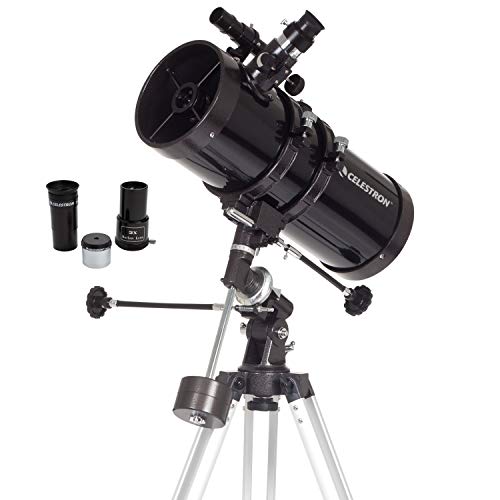
Celestron PowerSeeker 127EQ
The Celestron PowerSeeker 127EQ is an affordable 5-inch reflector on an equatorial mount, offering decent views of the Moon and planets for a low price. It's a popular entry-level choice, but verified owners note that the mount is shaky and the finderscope is poor. Still, for the price, it provides a good introduction to astronomy.
Reasons to buy
- Very low price point
- 5-inch aperture for decent light-gathering
- Includes eyepieces and Barlow lens
Reasons to avoid
- Mount is unstable and hard to use
- Poor quality finderscope
- Collimation can be tricky for beginners

Meade Instruments Infinity 102mm AZ
The Meade Infinity 102mm AZ is a 4-inch refractor on an alt-azimuth mount, optimized for sharp, high-contrast views of the Moon and planets. Its longer focal length and easy-to-use mount make it ideal for beginners focused on solar system observing. Verified owners love the clear images but note that the tripod could be sturdier.
Reasons to buy
- Excellent lunar and planetary views
- Easy-to-use alt-azimuth mount
- Good build quality for the price
Reasons to avoid
- Small aperture limits deep-sky viewing
- Tripod can be shaky at high power
- Only two eyepieces included
What to look for
Aperture Size
Aperture is the most important spec: larger apertures gather more light, revealing fainter objects. For beginners, 4-6 inches is a sweet spot—enough to see planets and bright deep-sky objects without being too heavy or expensive.
Mount Type
Alt-azimuth mounts are simplest (up/down, left/right), great for casual viewing. Equatorial mounts align with Earth's rotation, allowing easier tracking but have a learning curve. Dobsonian mounts are alt-az but very stable and popular for reflectors.
Portability
If you plan to travel to dark skies, weight and size matter. Smaller refractors and compact Cassegrains are easier to transport, while Dobsonians offer more aperture but are bulkier.
Included Accessories
Look for at least two eyepieces (low and high magnification), a finderscope (red dot or optical), and a sturdy tripod. Many beginner telescopes skimp on these, so budget for upgrades if needed.
Ease of Use
Computerized GoTo mounts simplify finding objects but require power and setup. Manual mounts are simpler but need you to learn the sky. For absolute beginners, a simple alt-az or Dobsonian is often recommended.
Our verdict
For most beginners, the Celestron NexStar 5SE offers the best balance of ease, portability, and performance, but if you want the most aperture for your money, the Sky-Watcher Classic 6 Dobsonian is unbeatable.
FAQs
For a beginner, 4 to 6 inches of aperture is ideal. A 4-inch refractor or 6-inch reflector provides good views of the Moon, planets, and brighter deep-sky objects without being too expensive or heavy.
It depends. Computerized mounts like Celestron's NexStar make finding objects easy, but they require power and setup. If you want to learn the sky manually, a Dobsonian or simple alt-az mount is better and more reliable.
Yes, but only the brightest ones like Andromeda (M31) and Orion Nebula (M42) under dark skies. A 6-inch or larger aperture helps, but don't expect Hubble-like images—they'll appear as faint smudges.
A good eyepiece set (e.g., 25mm and 10mm) and a sturdy tripod are key. A moon filter reduces glare, and a red dot finder makes aiming easier. Avoid cheap Barlow lenses—they often degrade image quality.
Very important. A shaky tripod ruins views at high magnification. Look for steel or aluminum legs with a center brace. Heavier tripods are more stable, but consider portability trade-offs.
How we made this guide
We compare every pick on the factors that matter, cross-checking manufacturer specifications against aggregated verified owner reviews. We rank independently and never take payment for placement. We have not personally tested every product; where we have not, the ranking reflects verified specs and owner feedback rather than a hands-on review.
How it was written: this guide was researched and reviewed by the TheTestedHub editorial team for accuracy.
Affiliate disclosure: TheTestedHub is reader-supported. When you buy through links on our site, we may earn a commission at no extra cost to you.
Related guides
Best Drones for Beginners 2026: Expert Pick Is the DJI Mini 4K

Find Your Perfect Podcast Mic: Reviews for Every Budget

Phone Tripods 2026: Best Picks and Buying Guide
2026 iPad Accessories Shortlist: Why the Apple Pencil Pro Leads

How to Choose the Best Digital Photo Frames in 2026

Looking for the Best MagSafe Power Banks? Our 2026 Picks

Our Top Fast Chargers for 2026
