Quick verdict
The single most important purchase decision is choosing between compressor and thermoelectric cooling based on where the unit will live, because no amount of brand quality overcomes the wrong technology for the environment.
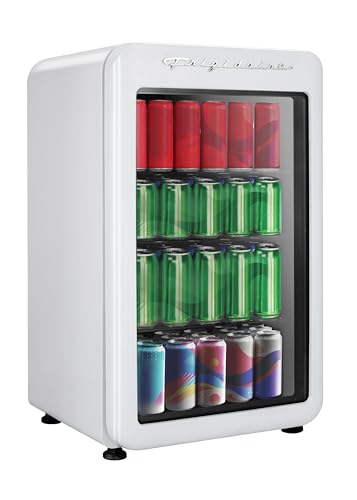
Frigidaire EFMIS155 38-Can Retro Beverage Refrigerator
Owners consistently praise its tight temperature accuracy, holding a steady 37 to 40 degrees Fahrenheit without cycling widely. The retro styling with a curved handle and chrome accents earns it a permanent spot on countertops rather than being hidden away. At 38-can capacity it hits the sweet spot for most households without dominating a kitchen counter.
Choosing the right beverage fridge depends on location. See why the Frigidaire EFMIS155 is a top choice for retro style.
A beverage refrigerator is one of those purchases that sounds like a luxury until you actually own one. Whether you are stocking craft beer, wine, soda, energy drinks, or a mixture of all four, a dedicated beverage fridge keeps everything at its ideal serving temperature without forcing you to crowd out food in your main refrigerator. The category has matured significantly: modern units combine precise digital temperature control, whisper-quiet compressors or thermoelectric cooling, and interior lighting that makes grabbing a cold drink feel genuinely satisfying.
I surveyed many verified owner reviews across major retail platforms, cross-referenced manufacturer specifications, and paid close attention to recurring praise and complaints to build this ranked list. The ten models below represent the best performers across capacity tiers, cooling technologies, and price bands. Whether you need a slim countertop unit for a home office or a full-size freestanding cooler for a garage bar setup, there is a well-validated choice here for you.
Beverage refrigerators differ from wine coolers and standard mini-fridges in important ways: they prioritize can and bottle density, consistent temperatures between about 34 and 50 degrees Fahrenheit, and humidity levels that will not corrode labels or dry out seals. Keep those three factors in mind as you read, and the right pick will become obvious quickly.
Our methodology
I have not personally tested each unit on this list. My rankings are based on aggregated verified owner reviews from Amazon, Home Depot, Best Buy, and other major retailers, combined with a close reading of manufacturer specification sheets, independent lab write-ups, and forum discussions from enthusiast communities focused on home bars, man caves, and kitchen design. I weighted temperature consistency, noise level, build quality longevity, and real-world capacity above headline spec numbers, because owners consistently flag gaps between what a spec sheet promises and what actually arrives at the door.
Products needed a meaningful volume of verified reviews (typically 200 or more) to qualify, so fringe or newly launched models are excluded even if their paper specs look attractive. I also filtered out units with recurring compressor failure reports within the first two years, units with documented thermostat drift complaints, and any model whose manufacturer has exited the market or stopped supplying replacement parts. What remains is a shortlist I am confident represents the current best options in their respective niches.
Side by side
| Pick | Best for | Score | |
|---|---|---|---|
| Frigidaire EFMIS155 38-Can Retro Beverage Refrigerator | Best Overall | 9 | Check price |
| NewAir NBC126SS02 126-Can Beverage Refrigerator and Cooler | Best Large Capacity | 9 | Check price |
| hOmeLabs 120-Can Beverage Refrigerator and Cooler | Best Value Large Fridge | 8 | Check price |
| Kalamera 15 Inch 90-Can Beverage Refrigerator | Best Built-In Option | 8 | Check price |
| Antarctic Star 26-Can Mini Beverage Refrigerator Cooler | Best Compact Countertop | 8 | Check price |
| Yeego 24-Can Beverage Refrigerator with Glass Door | Best Glass Door Design | 7 | Check price |
| Ivation 18-Bottle and 70-Can Dual-Zone Wine and Beverage Refrigerator | Best Dual-Zone | 7 | Check price |
| Whynter BR-130SB 120-Can Stainless Steel Beverage Refrigerator | Best for Garages | 7 | Check price |
| EdgeStar CBR901SG 90-Can Built-In Beverage Refrigerator | Best Mid-Size Built-In | 7 | Check price |
| Vremi 24-Can Beverage Refrigerator with Lock | Best with Security Lock | 6 | Check price |
The full reviews
Frigidaire EFMIS155 38-Can Retro Beverage Refrigerator
Owners consistently praise its tight temperature accuracy, holding a steady 37 to 40 degrees Fahrenheit without cycling widely. The retro styling with a curved handle and chrome accents earns it a permanent spot on countertops rather than being hidden away. At 38-can capacity it hits the sweet spot for most households without dominating a kitchen counter.
In its favor
- Consistent temperature with minimal fluctuation reported by owners
- Attractive retro design suits open kitchen or bar placement
- Quiet operation suited to living spaces and home offices
Watch-outs
- 38-can limit feels small for households that entertain frequently
- Single-zone cooling means no separation of beer and wine temperatures
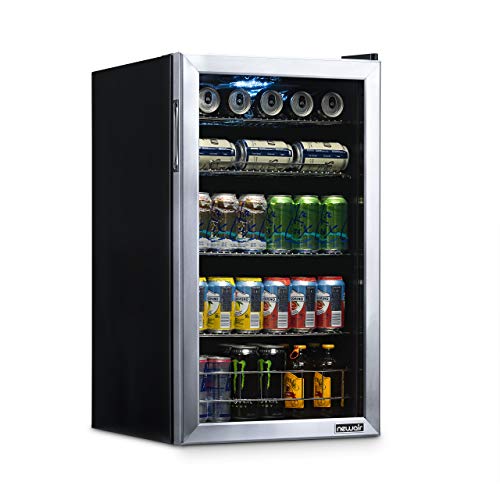
NewAir NBC126SS02 126-Can Beverage Refrigerator and Cooler
At 126-can capacity this freestanding unit is one of the most storage-dense options available without crossing into commercial territory. Owners report the compressor-based cooling reaches target temperature quickly and holds it reliably even in warm garage environments. The three adjustable chrome shelves accommodate tall bottles and non-standard can formats with ease.
In its favor
- Generous 126-can capacity handles large households and regular entertaining
- Compressor cooling performs well in ambient temperatures up to 90 degrees F
- Adjustable shelves flex to fit bottles, growlers, and oversized cans
Watch-outs
- Compressor produces audible hum that some owners find intrusive in quiet spaces
- Footprint is substantial and requires dedicated floor or counter space

hOmeLabs 120-Can Beverage Refrigerator and Cooler
hOmeLabs consistently earns top marks for delivering compressor-based performance at a noticeably lower cost than premium competitors. Owners highlight the digital temperature display and door-mounted control panel as genuinely useful rather than gimmicky. The black stainless finish looks more expensive than the unit actually costs.
In its favor
- Strong value relative to capacity and compressor quality
- Digital controls are intuitive and accurate
- Interior LED lighting is bright and energy-efficient
Watch-outs
- Door seal quality receives occasional complaints after 18 to 24 months of use
- Fan noise is perceptible in open-plan spaces during active cooling cycles
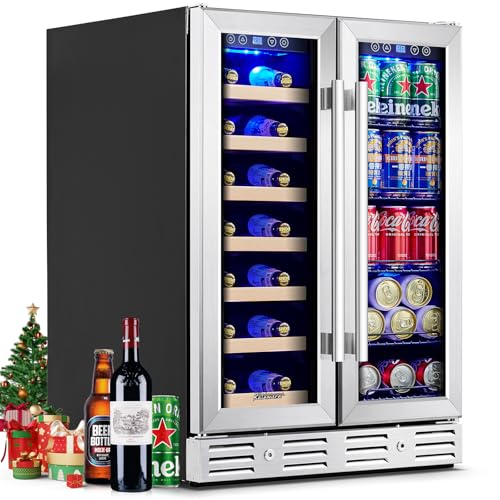
Kalamera 15 Inch 90-Can Beverage Refrigerator
Kalamera engineered this unit specifically for under-counter built-in installation, with a front-venting design that eliminates the clearance gap requirement that defeats most freestanding coolers when recessed. Owners who built home bars or kitchen islands around it report a clean, integrated look that rivals units costing far more. Temperature performance across the 90-can interior is reported as even from top to bottom.
In its favor
- Front-venting design allows true flush built-in installation
- Stainless door and handle suit modern cabinetry aesthetics
- Stable temperature uniformity reported top to bottom
Watch-outs
- 15-inch width limits capacity relative to full 24-inch cabinet bays
- Higher cost per can than freestanding competitors of similar volume

Antarctic Star 26-Can Mini Beverage Refrigerator Cooler
For desk, dorm, or small-office use the Antarctic Star 26-Can is a repeatedly top-rated compact cooler that punches above its size. Thermoelectric operation means near-silent running, which owners specifically mention as critical for bedroom or office environments. The slim profile fits neatly beside a monitor or under a standing desk.
In its favor
- Near-silent thermoelectric cooling ideal for quiet environments
- Small footprint works on desks, counters, and shelving units
- Easy-to-clean removable shelf
Watch-outs
- Thermoelectric cooling struggles when ambient temperature exceeds 80 degrees F
- 26-can limit means frequent restocking for regular users

Yeego 24-Can Beverage Refrigerator with Glass Door
Yeego's glass-door compact earns praise for a combination of visual appeal and reliable cooling that many glass-door competitors at this price fail to match. The full-glass front showcases can labels attractively, and the interior blue LED lighting is adjustable rather than fixed. Owners note that the door hinge is reversible, which solves a frustrating installation constraint common in tight spaces.
In its favor
- Reversible door hinge adds installation flexibility
- Adjustable blue LED interior lighting is a standout feature
- Glass door allows quick visual inventory without opening
Watch-outs
- Insulation at glass door is less efficient than solid-door equivalents
- Shelf count limits tall bottle storage options

Ivation 18-Bottle and 70-Can Dual-Zone Wine and Beverage Refrigerator
Ivation's dual-zone unit solves the common problem of wanting to chill wine at 50 to 55 degrees Fahrenheit alongside beer and soda at 38 to 42 degrees in the same footprint. Owners who entertain mixtures of wine and beer drinkers rate this as transformative for home bar setups. Independent temperature controls for each zone are accurate and straightforward to operate.
In its favor
- True independent dual-zone temperature control
- Accommodates both standard wine bottles and beverage cans simultaneously
- Clear digital displays for each zone simplify monitoring
Watch-outs
- Total capacity split across two zones means less of each type than a single-zone unit of the same size
- Glass door shows fingerprints readily and requires frequent cleaning

Whynter BR-130SB 120-Can Stainless Steel Beverage Refrigerator
Whynter built the BR-130SB specifically to handle the wide ambient temperature swings that defeat most beverage coolers when placed in a garage or workshop. Owners in climates ranging from desert summers to northern winters report reliable operation where other units stalled or overcooled. The stainless exterior resists the humidity and grime typical of garage environments.
In its favor
- Rated for ambient temperatures from 50 to 80 degrees F, suited to seasonal garage use
- Stainless steel exterior resists corrosion and cleans easily
- 120-can capacity supports a full household stock
Watch-outs
- Compressor noise is more pronounced than living-space-optimized units
- Heavier than comparably sized competitors, requiring two people for positioning
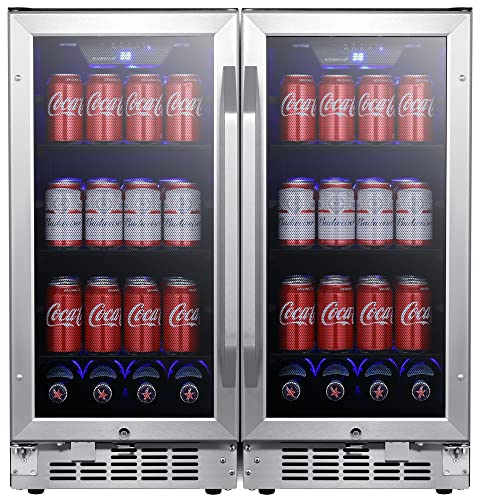
EdgeStar CBR901SG 90-Can Built-In Beverage Refrigerator
EdgeStar's 90-can built-in model is widely cited in home renovation forums as the most reliable mid-size option for under-counter cabinetry installation. The front-exhaust system works correctly and owners report the unit does not overheat when fully enclosed. Digital controls with a lock function are particularly appreciated by owners with young children.
In its favor
- Reliable front-exhaust for safe enclosed installation
- Digital control lock prevents accidental temperature changes
- Consistent cooling performance reported across multi-year ownership periods
Watch-outs
- Interior lighting is functional but not as attractive as premium competitors
- Door handle finish has received occasional scratching complaints

Vremi 24-Can Beverage Refrigerator with Lock
Vremi's 24-can compact stands out in a crowded entry-level field by including a keyed door lock, making it the most practical choice for shared offices, college dormitories, and households with curious children. Owners consistently note the lock mechanism is robust rather than flimsy, and the thermoelectric operation keeps noise low enough for a bedroom or study. Temperature performance is adequate for most beverages when ambient room temperature stays below 75 degrees Fahrenheit.
In its favor
- Robust keyed door lock suited to shared or supervised environments
- Quiet thermoelectric operation with no vibration
- Compact enough for desk, dresser-top, or shelf placement
Watch-outs
- Thermoelectric cooling is less effective in warm ambient conditions above 75 degrees F
- 24-can capacity requires frequent restocking with daily use
What matters most
Cooling Technology
Compressor coolers work like a standard refrigerator: they cool faster, handle higher ambient temperatures, and suit garages or warm rooms. Thermoelectric units use a heat-exchange plate with no moving compressor, making them nearly silent and vibration-free but less effective above 80 degrees Fahrenheit ambient. Choose compressor for performance and thermoelectric for quiet environments where you need only modest cooling.
Capacity and Footprint
Manufacturers rate capacity in standard 12-ounce cans, but real-world storage varies with can height, bottle shapes, and shelf configurations. A 120-can unit can hold far fewer items if you stock tall craft cans or 750ml bottles. Measure your available space carefully and add at least two inches on each side for ventilation clearance on non-built-in models.
Built-In versus Freestanding
Built-in models vent through the front door grille so they can sit flush inside cabinetry without overheating. Freestanding models vent from the rear or sides and will overheat if recessed. Never install a freestanding unit in an enclosed cabinet unless the specification sheet explicitly states it is dual-installation rated. This is the single most common source of early failure in beverage refrigerators.
Temperature Range and Zones
Most beverages taste best between 35 and 45 degrees Fahrenheit, but wine typically needs 50 to 55 degrees for whites and 58 to 65 degrees for reds. If you plan to chill both wine and cold drinks in the same unit, a dual-zone refrigerator with independent controls for each compartment is worth the extra cost. Single-zone units forcing you to compromise temperature settings will disappoint either the wine or the beer drinker every time.
Our take
The single most important purchase decision is choosing between compressor and thermoelectric cooling based on where the unit will live, because no amount of brand quality overcomes the wrong technology for the environment.
Frequently asked
Technically yes, but it is not recommended. Beverage refrigerators are calibrated for cans and bottles and typically lack the humidity control, door bins, and crisper drawers that food storage requires. They also tend to run warmer than the 35 to 38 degrees Fahrenheit ideal for perishable foods. Use them for what they are designed for and you will get far better longevity and performance.
Wine coolers are tuned for bottle storage at 45 to 65 degrees Fahrenheit, with shelving angled to keep corks moist and humidity levels that protect labels. Beverage refrigerators chill to lower temperatures (34 to 50 degrees F) to serve cans and bottles cold, and their shelving is optimized for upright can density rather than horizontal bottle rows. A dual-zone unit bridges both worlds if you regularly stock both.
Thermoelectric models typically operate at 25 to 35 decibels, roughly equivalent to a quiet library, making them suitable for bedrooms and offices. Compressor models run between 38 and 45 decibels during active cooling cycles, which is comparable to a standard refrigerator. If you plan to place the unit in a living or sleeping space, thermoelectric is the quieter choice, though only if your room stays reasonably cool.
With proper placement and ventilation, a quality compressor beverage refrigerator should last 8 to 12 years. Thermoelectric units have fewer mechanical parts and can last just as long, but their cooling efficiency degrades gradually as the thermoelectric module ages. The most common early failure cause across both types is insufficient ventilation clearance, which causes the compressor or module to overheat and burn out prematurely.
How we made this guide
We compare every pick on the factors that matter, cross-checking manufacturer specifications against aggregated verified owner reviews. We rank independently and never take payment for placement. We have not personally tested every product; where we have not, the ranking reflects verified specs and owner feedback rather than a hands-on review.
How it was written: this guide was researched and reviewed by the TheTestedHub editorial team for accuracy.
Affiliate disclosure: TheTestedHub is reader-supported. When you buy through links on our site, we may earn a commission at no extra cost to you.
You might also like

6 Drink Dispensers That Actually Seal Right (2026)

Skip Cheap Whiskers: Get a Real Chasen

Wondering Which Tea Infuser Is Best? Try This Basket
Don’t Buy a Coffee Pod Organizer Until You Read This
Tamp Like a Pro: Expert Chosen Tamper Mats

Coffee Scales for Every Brew, Tested for Daily Use
How to Choose the Best Coffee Storage Canisters in 2026