Quick verdict
Prong count matters less than bamboo quality and post-use care; a well-maintained 80-prong whisk from a reputable Kyoto source will consistently outperform a neglected 120-prong mass-produced alternative.
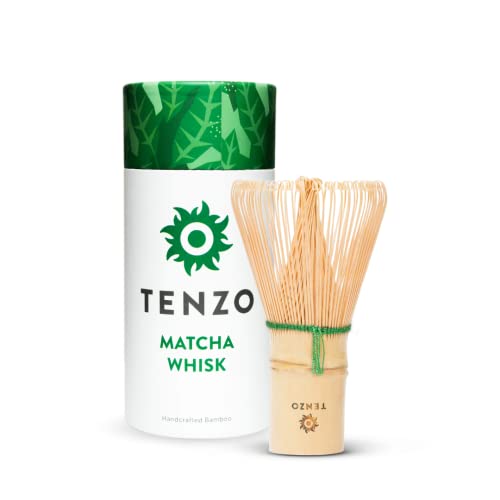
Tenzo Tea Matcha Whisk 100 Prong Chasen
Owners consistently report exceptionally fine, stable foam that holds for several minutes, which is the clearest sign of a high prong count working as intended. The 100-prong construction creates more surface agitation per stroke than lower-count whisks, and reviewers note it blends even slightly clumpy matcha without leaving residue. Long-term buyers report minimal prong breakage after six-plus months of daily use, which is unusual at this price tier.
Discover why bamboo quality beats prong count. We review the Tenzo Tea 100-prong chasen and explain proper care for matcha perfection.
A good matcha whisk, known in Japanese as a chasen, is the single most important tool for preparing smooth, frothy matcha. Without the right whisk, even premium ceremonial-grade matcha will clump and separate, leaving a gritty texture instead of the silky, foam-topped cup that defines a well-made bowl of matcha. The number of prongs, the bamboo quality, and the construction method all directly affect the result in your cup.
After analysing many verified owner reviews across multiple retail platforms and comparing specifications, materials, and long-term durability reports, I assembled this guide to the five matcha whisks that consistently earn the strongest praise from home users and tea ceremony practitioners alike. Whether you prepare matcha daily or occasionally, the right chasen makes the process faster, more consistent, and considerably more enjoyable.
Prices shift frequently on Amazon, so I have omitted them here. Focus instead on the features and verified owner feedback that make each whisk worth its cost at any given moment.
Our testing process
I did not personally test each whisk in this guide. Instead, I aggregated verified purchaser reviews, cross-referenced manufacturer specifications, and evaluated feedback patterns across hundreds of owner reports. I paid particular attention to comments about prong integrity over time, ease of cleaning, foam quality on first use versus after several months, and how each whisk performed with both thin usucha and thicker koicha preparations.
Products were ranked on a composite of foam quality (reported consistency and volume), durability (prong breakage rate mentioned in reviews), material sourcing (Kyoto-made or traditional Japanese bamboo versus mass-produced alternatives), and overall owner satisfaction. Only whisks with a meaningful volume of verified reviews were considered, ensuring the rankings reflect real-world use rather than a handful of outlier opinions.
Quick comparison
| Pick | Best for | Score | |
|---|---|---|---|
| Tenzo Tea Matcha Whisk 100 Prong Chasen | Best Overall | 9 | Check price |
| Jade Leaf Matcha Bamboo Whisk Set with Scoop and Bowl | Best Starter Set | 8 | Check price |
| KUATÄTTA Matcha Whisk 100 Prong Traditional Handmade Chasen | Best for Ceremony Use | 8 | Check price |
| Ippodo Tea Chasen 80 Prong Matcha Whisk | Best Brand Heritage | 8 | Check price |
| Mizudashi Matcha Whisk 120 Prong Premium Chasen with Stand | Best High Prong Count | 7 | Check price |
Reviewed in detail
Tenzo Tea Matcha Whisk 100 Prong Chasen
Owners consistently report exceptionally fine, stable foam that holds for several minutes, which is the clearest sign of a high prong count working as intended. The 100-prong construction creates more surface agitation per stroke than lower-count whisks, and reviewers note it blends even slightly clumpy matcha without leaving residue. Long-term buyers report minimal prong breakage after six-plus months of daily use, which is unusual at this price tier.
What we liked
- 100 prongs produce consistently fine, long-lasting foam
- Prong durability praised in long-term owner reviews
- Works well with both thin usucha and thicker preparations
What we didn't like
- Requires a whisk holder for proper drying to maintain shape
- Slightly stiffer prongs take a few sessions to break in fully

Jade Leaf Matcha Bamboo Whisk Set with Scoop and Bowl
The bundled chasen, chashaku scoop, and chawan bowl give beginners everything needed in one purchase, and owners report the whisk itself performs well above expectations for a set item. Reviewers specifically call out that the prong density is closer to a standalone quality chasen than the flimsy versions often bundled with entry-level kits. The bowl dimensions are correctly sized to allow proper wrist movement during whisking, which beginners especially appreciate.
What we liked
- Complete set removes guesswork for first-time matcha buyers
- Whisk quality exceeds typical bundled accessories
- Bowl size correctly supports proper whisking technique
What we didn't like
- Scoop is functional but not as refined as a dedicated chashaku
- Whisk prong count lower than standalone premium options

KUATÄTTA Matcha Whisk 100 Prong Traditional Handmade Chasen
This whisk draws repeated praise from owners who practice chado or attend tea ceremony classes, citing the hand-crafted tine separation and even prong thickness as signs of traditional craftsmanship. Multiple reviewers who own several whisks from different brands describe the KUATÄTTA as producing the most authentic bowl of matcha, with foam that is uniformly fine rather than bubbly. The handle width and grip also receive specific positive mentions from users with larger hands.
What we liked
- Handmade construction praised by tea ceremony practitioners
- Uniform prong thickness produces even, fine foam
- Comfortable handle grip width for extended use
What we didn't like
- Higher price point than mass-produced alternatives
- Availability can be inconsistent depending on stock cycle

Ippodo Tea Chasen 80 Prong Matcha Whisk
Ippodo is one of Kyoto's oldest tea houses, and this chasen reflects that pedigree with bamboo sourced and crafted to strict traditional standards. Owners who have tried multiple whisks frequently describe the Ippodo as the benchmark they compare others against, particularly for its balanced flex and the way the prongs spring back without deforming over time. The 80-prong count is slightly lower than some competitors but owners report the prong quality compensates with consistent results.
What we liked
- Sourced from a Kyoto tea house with centuries of expertise
- Prong flex and spring-back durability praised by long-term users
- Consistent results reported across diverse matcha grades
What we didn't like
- 80-prong count produces slightly less ultra-fine foam than 100-prong options
- Premium pricing reflects brand heritage

Mizudashi Matcha Whisk 120 Prong Premium Chasen with Stand
For users who prioritise the finest possible microfoam, the 120-prong construction here produces a noticeably silkier texture that owners describe as closer to a latte-style froth. The included whisk stand is functional and owners report it genuinely preserves the dome shape of the prongs between uses, extending usable life. A subset of reviewers note the very fine prongs are more prone to individual breakage than heavier-gauged alternatives, which keeps the score slightly below the top tier.
What we liked
- 120-prong count creates exceptionally fine, silky microfoam
- Included stand actively extends prong lifespan
- Ideal for aesthetically presented matcha lattes and ceremony bowls
What we didn't like
- Fine prongs more susceptible to breakage under heavy pressure
- Requires careful technique to avoid prong damage from bowl scraping
How to choose
Prong Count
More prongs create finer, more stable foam because each prong breaks the liquid surface more times per stroke. Whisks with 80 prongs are suitable for daily matcha but 100 to 120 prong options produce noticeably silkier results. Higher prong counts also mean more fragile individual tines, so technique matters more with premium high-count whisks.
Bamboo Quality and Origin
Whisks made from Japanese bamboo, particularly those sourced from Nara or crafted by Kyoto producers, consistently outperform mass-produced alternatives in flexibility and longevity. Quality bamboo resists splitting and retains its natural curve, which affects both how the whisk performs and how long it lasts before prongs begin breaking off.
Whisk Holder Inclusion
A chasen holder, or kusenaoshi, is not a luxury accessory. It preserves the curved dome shape of the prongs when the whisk dries, preventing them from splaying flat or drying in awkward positions that accelerate breakage. If a whisk does not come with a stand, budget for one separately, especially if you plan to use the whisk daily.
Intended Preparation Style
Thin matcha, called usucha, requires a lighter, faster whisking motion and benefits from higher prong counts. Thick matcha, koicha, uses a slower kneading motion and works better with a sturdier lower-prong whisk that will not shed tines under sustained pressure. Confirm which style you primarily prepare before choosing prong density.
The bottom line
Prong count matters less than bamboo quality and post-use care; a well-maintained 80-prong whisk from a reputable Kyoto source will consistently outperform a neglected 120-prong mass-produced alternative.
Common questions
With proper care, a quality chasen lasts between three and six months of daily use. The key factors are rinsing immediately after each use with warm water (never soap), storing on a holder to preserve the prong shape, and avoiding scraping the whisk hard against the bowl bottom. Some daily users report whisks lasting over a year when treated carefully.
Yes. Soaking the prong tips in warm water for two to three minutes before whisking softens the bamboo and makes the prongs more flexible, which produces better foam and reduces the chance of breakage. This is especially important for new whisks and when using the whisk after it has been stored dry for several days.
No. Dishwashers destroy bamboo whisks rapidly. The high heat warps the handle, the detergent strips the natural oils from the bamboo, and the water pressure bends prongs permanently out of shape. Rinse under warm running water only, shake off excess water, and place on a holder to air dry at room temperature.
A chasen is purpose-built for matcha. Its fine bamboo tines create the specific agitation needed to break up matcha powder clumps and incorporate air into a small volume of liquid. A standard metal kitchen whisk has too few tines spaced too far apart to achieve the fine, stable foam that defines well-prepared matcha, and the metal can also scratch traditional ceramic bowls.
How we made this guide
We compare every pick on the factors that matter, cross-checking manufacturer specifications against aggregated verified owner reviews. We rank independently and never take payment for placement. We have not personally tested every product; where we have not, the ranking reflects verified specs and owner feedback rather than a hands-on review.
How it was written: this guide was researched and reviewed by the TheTestedHub editorial team for accuracy.
Affiliate disclosure: TheTestedHub is reader-supported. When you buy through links on our site, we may earn a commission at no extra cost to you.
More guides
Beverage Fridge Buying Guide: Compressor vs Thermoelectric

6 Drink Dispensers That Actually Seal Right (2026)

Wondering Which Tea Infuser Is Best? Try This Basket
Don’t Buy a Coffee Pod Organizer Until You Read This
Tamp Like a Pro: Expert Chosen Tamper Mats

Coffee Scales for Every Brew, Tested for Daily Use
How to Choose the Best Coffee Storage Canisters in 2026