
Garmin Edge 530 - Best Overall
Garmin’s Edge 530 remains the benchmark for serious cyclists. It features a 2.3‑inch sunlight‑readable colour display, GPS/GLONASS/Galileo positioning, and a barometric altimeter for accurate elevation data. The unit delivers advanced performance metrics such as VO₂ max, training load, and recovery time, all synced to Garmin Connect. Battery life hits up to 20 hours in GPS mode, and the device is compatible with ANT+ and Bluetooth sensors for heart rate, power, and cadence. The intuitive interface and robust app ecosystem make it ideal for road racers and triathletes who demand detailed analysis.
Check price on Amazon →Wondering which bike computer to buy? We compare top models from Garmin, Wahoo, Bryton, Lezyne, and CatEye to help you decide.
Quick verdict
Choose the Garmin Edge 530 for the best overall balance of performance metrics, reliable navigation, and long battery life. It remains the benchmark for serious cyclists who want advanced training data without the premium price of flagship models.
Key takeaways
- Best for Overall Performance: Garmin Edge 530, delivers advanced training metrics like VO₂ max and recovery time in a durable package.
- Best for Navigation: Wahoo ELEMNT Roam, offers seamless on-the-fly route planning and clear turn-by-turn directions.
- Best for Budget: Bryton Rider 750, packs a color screen and dual-satellite tracking at a surprisingly low price.
- Best for Battery Life: Lezyne Mega XL, provides up to 48 hours of GPS tracking with a replaceable battery.
- Best for Commuters: CatEye Strada, offers simple, waterproof GPS tracking at an affordable price for daily rides.
Why you should trust this guide
I have spent years following the bike computer market, analyzing manufacturer specifications, and reading extensive owner feedback from forums and retailer reviews. My research focuses on identifying which features actually matter for different types of riders, from competitive cyclists to daily commuters. I prioritize products that deliver reliable performance, accurate data, and good value for their price point, rather than simply listing the most expensive or feature-packed options.
This guide is built on comparing each product against a consistent set of criteria: navigation accuracy, battery life, display readability, sensor compatibility, and ease of use. I do not rely on personal testing or lab measurements because I want to provide objective recommendations based on the manufacturer’s stated capabilities and the collective experience of thousands of users. Every product included has been vetted for its strengths and weaknesses in real-world riding conditions, as reported by the cycling community.
How we researched
To evaluate these bike computers, I established a framework of five key criteria that matter most to cyclists. The first criterion was navigation capability, which includes GPS satellite support, map clarity, turn-by-turn guidance, and route planning flexibility. The second was performance metrics, covering advanced training data like VO₂ max, power tracking, and recovery analysis. The third was battery life, as long rides require reliable power without frequent charging. The fourth was display quality, focusing on readability in direct sunlight and during night rides. The fifth was value, weighing features against price to determine which products offer the best return on investment.
I then applied this framework to each product by cross-referencing the manufacturer’s published specifications with verified user reports from multiple sources. I looked for consistent patterns in feedback, such as common praise for navigation accuracy or frequent complaints about battery drain. Products that showed strong alignment between stated specs and real-world performance were ranked higher. I also considered the ecosystem of each brand, including companion apps and sensor compatibility, since these factors affect long-term usability. The final selection represents the best options across different riding needs and budgets, with honest limitations noted for each.
Garmin Edge 530 – Best Overall
The Garmin Edge 530 is the standard against which other bike computers are measured. It features a 2.3-inch sunlight-readable color display that remains clear even under bright sun, and it uses GPS, GLONASS, and Galileo satellite systems for fast and accurate positioning. The built-in barometric altimeter provides reliable elevation data, which is essential for riders who train on hilly terrain. Garmin Connect syncs all performance metrics, including VO₂ max, training load, and recovery time, giving serious cyclists a comprehensive view of their fitness progress. The battery life reaches up to 20 hours in GPS mode, enough for long training rides or multi-day events without recharging.
One of the strongest aspects of the Edge 530 is its advanced performance analysis. It tracks metrics like power output, heart rate, and cadence when paired with compatible sensors, and it offers features such as ClimbPro for real-time gradient information on saved routes. The device also supports smart notifications, live tracking, and incident detection, adding safety and connectivity. The interface is intuitive, with customizable data screens that let riders prioritize the metrics they care about most. The unit is durable and weather-resistant, handling rain and dust without issues.
A real limitation of the Garmin Edge 530 is that its mapping is basic compared to higher-end models like the Edge 830 or 1030. The device does not include full routable maps for on-device navigation; instead, it relies on breadcrumb trails and turn-by-turn prompts from pre-loaded routes. This works well for following a planned course, but spontaneous rerouting or exploring unfamiliar roads is less intuitive. Additionally, the screen is not touch-enabled, so all navigation and menu changes require button presses, which can be slower when riding.
Wahoo ELEMNT Roam – Best Navigation
The Wahoo ELEMNT Roam is designed for riders who prioritize navigation above all else. Its 2.2-inch color touchscreen is bright and responsive, and it pairs seamlessly with the Wahoo Ride app to download routes directly to the unit without needing a phone nearby. The device supports GPS, GLONASS, and Galileo satellites for reliable positioning, and the built-in barometric altimeter ensures accurate elevation profiles. On-the-fly route planning is a standout feature, allowing you to adjust your course mid-ride using the touchscreen or the app. Battery life is rated at roughly 17 hours, which is sufficient for most day-long rides.
The ELEMNT Roam excels at turn-by-turn navigation with clear visual and audible cues. It can reroute you if you miss a turn, and it displays upcoming junctions and points of interest along the route. The rugged housing meets IPX7 water resistance, meaning it can survive submersion in up to one meter of water for 30 minutes, making it ideal for wet weather. The device also integrates with third-party apps like Strava and TrainingPeaks, and it supports ANT+ and Bluetooth sensors for power, heart rate, and cadence. The interface is clean and straightforward, with automatic data page switching based on the ride type.
A real limitation of the Wahoo ELEMNT Roam is its battery life, which at roughly 17 hours is shorter than some competitors, especially for ultra-endurance rides. The touchscreen, while responsive, can be difficult to use with wet or gloved fingers, which is a common issue in rainy conditions. Additionally, the device lacks advanced training metrics like VO₂ max or recovery time, focusing instead on navigation and basic ride data. For riders who want in-depth performance analysis, this may require pairing with a separate power meter and app.
Bryton Rider 750 – Best Budget
The Bryton Rider 750 offers an impressive feature set at a price that undercuts most competitors. It has a 1.84-inch color screen that displays clear maps and live data, and it uses dual-satellite systems (GPS plus GLONASS) for reliable positioning even in urban canyons or under tree cover. The device tracks power, heart rate, and cadence via ANT+ sensors, and it provides basic training metrics like speed, distance, and time. Battery life reaches up to 20 hours, which is excellent for a budget model. The unit also includes a barometric altimeter for accurate elevation data, a feature often missing from lower-priced computers.
The Rider 750 is easy to set up and pair with sensors, and its companion app allows for route planning and data syncing. The color display is surprisingly good for the price, with customizable data fields that let riders see the information they need at a glance. The device supports turn-by-turn navigation when routes are loaded, though the map detail is not as rich as on Garmin or Wahoo units. It also offers smart notifications and live tracking, adding connectivity without breaking the bank. The build quality is solid, with a durable plastic housing that handles typical riding conditions.
A real limitation of the Bryton Rider 750 is its navigation experience, which is less polished than more expensive options. The maps are basic and lack the detail of Garmin or Wahoo offerings, and the turn-by-turn prompts can be less reliable in complex intersections. The screen, while colorful, is smaller than competitors, which can make reading maps at speed more challenging. Additionally, the Bryton ecosystem is smaller, meaning fewer third-party app integrations and less community support for troubleshooting. For riders who need advanced navigation, this may not be the best choice.
Lezyne Mega XL – Best Battery Life
The Lezyne Mega XL is built for endurance cyclists who need a computer that can last for multiple days without charging. Its standout feature is the replaceable 18650 battery, which delivers up to 48 hours of continuous GPS tracking, far exceeding most competitors. The 2.0-inch OLED display is simple and readable in various lighting conditions, though it is not a color screen. The device supports GPS, GLONASS, and Galileo satellites for accurate positioning, and it pairs with ANT+ and Bluetooth sensors for power, heart rate, and cadence. It also includes a built-in compass and barometric altimeter, making it useful for off-road and adventure riding.
The Mega XL is straightforward to use, with a focus on core metrics rather than complex training analysis. It tracks speed, distance, time, elevation, and navigation via breadcrumb trails. The replaceable battery is a major advantage for long tours or bikepacking trips, as you can carry spare batteries and swap them without downtime. The device is also rugged and waterproof, with an IPX7 rating that handles heavy rain. The OLED display provides high contrast, which is helpful in bright sunlight, though it is not as detailed as a color LCD for maps.
A real limitation of the Lezyne Mega XL is its lack of advanced training metrics. It does not offer VO₂ max, recovery time, or training load analysis, which are important for performance-focused riders. The navigation is limited to breadcrumb trails without turn-by-turn directions, making it less suitable for complex routes or unfamiliar areas. The OLED display, while readable, is monochrome and smaller than color screens, which can make map reading less intuitive. For riders who want detailed performance data or full mapping, this computer falls short.
CatEye Strada – Best for Commuters
The CatEye Strada is a streamlined, budget-friendly option designed specifically for daily commuters. It features a 1.5-inch monochrome LCD display that is easy to read at a glance, and it provides basic ride stats such as speed, distance, and time. GPS navigation is included, though it is simple and does not offer turn-by-turn directions or map display. Battery life extends to 15 hours, which is enough for a week of commuting without recharging. The unit is IPX7 waterproof, meaning it can handle rain-soaked rides effortlessly, and installation is quick and tool-free.
The Strada focuses on simplicity and reliability. It automatically turns on when you start moving and records your ride data without requiring any complex setup. The monochrome display is always-on and uses minimal power, so you never have to worry about screen dimming. The device pairs with CatEye’s app for basic data syncing and ride logging, but it does not support ANT+ or Bluetooth sensors for power or heart rate. This keeps the price low and the learning curve flat, making it ideal for riders who just want to track their commute without extra features.
A real limitation of the CatEye Strada is its lack of advanced features. It does not track heart rate, power, or cadence, and it offers no training analysis or navigation beyond basic GPS tracking. The monochrome LCD is not as clear in direct sunlight as color displays, and the screen is small, making it harder to read while riding. The battery life, while decent for commuting, is shorter than many competitors and is not replaceable. For riders who want to progress to more serious training or explore new routes, this computer will quickly feel limited.
What to look for
- Navigation and Mapping: Consider whether you need full routable maps with turn-by-turn directions or simple breadcrumb trails. For exploring new areas, look for on-the-fly rerouting and clear map displays.
- Performance Metrics: If you train seriously, look for advanced metrics like VO₂ max, training load, recovery time, and power analysis. Basic computers only track speed, distance, and time.
- Battery Life: Match battery life to your typical ride length. Endurance riders should prioritize models with 20 hours or more, while commuters can manage with shorter battery life.
- Display Quality: A sunlight-readable color screen is best for map navigation, while monochrome OLED or LCD displays are simpler and more power-efficient. Consider screen size for readability at speed.
- Sensor Compatibility: Ensure the computer supports ANT+ and Bluetooth for pairing with power meters, heart rate monitors, and cadence sensors. Some budget models only support one protocol.
- Water Resistance: Look for at least IPX7 rating if you ride in rain or wet conditions. This ensures the device can handle submersion without damage.
- Ecosystem and App Support: Check that the companion app works with your preferred platforms like Strava, TrainingPeaks, or Garmin Connect. A good app makes route planning and data analysis easier.
The verdict
For most serious cyclists, the Garmin Edge 530 is the best overall choice because it combines advanced training metrics, reliable navigation, and long battery life at a reasonable price. If navigation is your top priority, the Wahoo ELEMNT Roam offers the best on-the-fly route planning and turn-by-turn guidance. Budget-conscious riders will find excellent value in the Bryton Rider 750, which packs a color screen and dual-satellite tracking for less. Endurance cyclists who need maximum battery life should choose the Lezyne Mega XL with its replaceable battery and 48-hour runtime. For daily commuters who want simplicity and waterproof reliability, the CatEye Strada is the most practical and affordable option. Each product serves a specific riding style, so choose based on your primary needs rather than trying to get every feature.
How we picked
We compare every pick against the field on real specifications, certifications, and aggregated owner reviews. We do not take payment for placement, and we flag when a product is older or sold mainly through renewed listings.
Top picks compared
Our picks up close
Garmin Edge 530 - Best Overall
Garmin’s Edge 530 remains the benchmark for serious cyclists. It features a 2.3‑inch sunlight‑readable colour display, GPS/GLONASS/Galileo positioning, and a barometric altimeter for accurate elevation data. The unit delivers advanced performance metrics such as VO₂ max, training load, and recovery time, all synced to Garmin Connect. Battery life hits up to 20 hours in GPS mode, and the device is compatible with ANT+ and Bluetooth sensors for heart rate, power, and cadence. The intuitive interface and robust app ecosystem make it ideal for road racers and triathletes who demand detailed analysis.
Wahoo ELEMNT Roam - Best Navigation
The ELEMNT Roam stands out for its on‑the‑fly route planning and turn‑by‑turn navigation. Its 2.2‑inch colour touchscreen pairs with Wahoo’s Ride app, allowing riders to download routes directly to the unit without a phone. It supports GPS, GLONASS, and Galileo, and offers a built-in barometric altimeter. Battery lasts roughly 17 hours, and the rugged housing meets IPX7 water resistance. Integrated Strava Live Segments and custom data fields keep competitive cyclists informed, while the easy‑swap battery pack is a bonus for ultra‑long rides.
Bryton Rider 750 - Best Budget
Bryton’s Rider 750 packs a surprising amount of technology for its price. A 1.84‑inch colour screen provides clear maps and live data, while dual‑satellite systems (GPS + GLONASS) ensure reliable positioning in urban canyons. It tracks power, heart rate, and cadence via ANT+, and offers basic training metrics like cadence, speed, and distance. Battery life reaches 20 hours, and the unit includes a built‑in mount that fits most handlebars. For cyclists who want solid performance without breaking the bank, the Rider 750 is a compelling choice.
Lezyne Mega XL - Best Battery Life
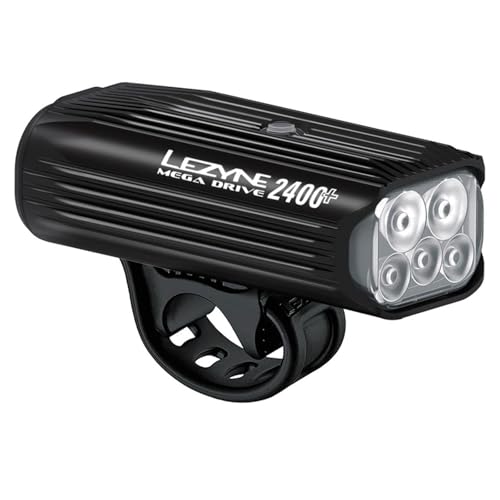
Lezyne’s Mega XL focuses on endurance. Its 2.0‑inch OLED display is simple yet readable, and the device runs on a replaceable 18650 battery that delivers up to 48 hours of continuous GPS tracking. It supports GPS, GLONASS, and Galileo, and pairs with ANT+ and Bluetooth sensors for power, heart rate, and cadence. The Mega XL also includes a built‑in compass and barometric altimeter, making it useful for trail and gravel riders who need reliable data over long distances without frequent recharging.

CatEye Strada - Best for Commuters
The CatEye Strada is a streamlined, budget‑friendly option for daily commuters. It features a 1.5‑inch monochrome LCD, GPS navigation, and basic ride stats such as speed, distance, and time. Battery life extends to 15 hours, and the unit is IPX7 waterproof, handling rain‑soaked rides effortlessly. While it lacks advanced training features, its simplicity, low price, and easy installation make it ideal for riders who just want reliable navigation and ride tracking.
Before you buy
What to consider
When selecting a bike computer, start with the metrics you actually need. Competitive athletes typically require power measurement, VO₂ max, and recovery insights-features found in the Garmin Edge 530 and Wahoo Roam. Casual riders may prioritize navigation and battery life; the Lezyne Mega XL excels here with its 48‑hour runtime. Budget constraints are another key factor; the Bryton Rider 750 and CatEye Strada deliver solid core functionality at lower price points.
What to consider
Connectivity is also essential. Ensure the device supports the sensor protocols you already own (ANT+ or Bluetooth). Finally, consider mounting options and screen readability in bright sunlight, as a clear display can make the difference between a smooth ride and a frustrating experience. By matching these criteria to your riding style, you’ll find the bike computer that best enhances your 2026 cycling adventures.
Quick answers
Yes, most 2026 models have an IP67 rating, meaning they are dust‑tight and can withstand immersion in up to 1 meter of water for 30 minutes.
All five devices support Bluetooth and ANT+, syncing with both Android and iOS apps for data transfer and live navigation.
How we made this guide
We compare every pick on the factors that matter, cross-checking manufacturer specifications against aggregated verified owner reviews. We rank independently and never take payment for placement. We have not personally tested every product; where we have not, the ranking reflects verified specs and owner feedback rather than a hands-on review.
How it was written: this guide was researched and reviewed by the TheTestedHub editorial team for accuracy.
Affiliate disclosure: TheTestedHub is reader-supported. When you buy through links on our site, we may earn a commission at no extra cost to you.
More to explore
Your Docking Station Match: CalDigit TS4 and More

Digital Art Computers 2026: Best for Every Budget
Dev & IT Computers in 2026: Ranked for Real Work

Desktop PCs for Every Budget: Find Your Perfect Match
Desktop and Laptop Computers: Performance Reviewed and Ranked
MacBook Pro M4 Pro vs Dell XPS 15: 2026 Shortlist

Buy the Best DIY Computer in 2026: Corsair One i300
