Quick verdict
The single biggest mistake bivy buyers make is choosing a budget waterproof shell without checking breathability ratings, then blaming condensation on bad weather rather than on fabric that traps vapor inside.

Black Diamond Bipod Bivy
The Black Diamond Bipod Bivy uses a proprietary BD.dry laminate that owners consistently rate as one of the most breathable waterproof fabrics in the bivy category, with noticeably less morning condensation than competitor Gore-Tex shells in multi-night owner comparisons. A built-in two-pole hoop at the head creates genuine face clearance so you are not breathing against damp fabric, a feature alpine users single out as the primary reason they rebuyed after a season. At around 680 grams it occupies the middle ground between ultralight minimalism and four-season reliability, making it the most versatile single bivy for three-season and shoulder-season alpine use.
Avoid condensation the #1 bivy mistake. Our hands-on Black Diamond Bipod Bivy review and top-rated 2026 picks for breathable shelter.
A bivy sack is the most weight-efficient shelter a backcountry traveler can carry. At its core it is a waterproof or water-resistant envelope that slips over your sleeping bag, blocking wind, trapping body heat, and shedding rain without the poles, guylines, and footprint weight of a tent. Ultralight thru-hikers, alpine climbers, and military personnel have relied on them for decades precisely because they add meaningful weather protection for a fraction of the gram count of any enclosed shelter.
Choosing the right bivy comes down to a tight cluster of trade-offs: breathability versus waterproofing, packed size versus internal space, and material durability versus cost. A Gore-Tex bivy keeps condensation manageable on a multi-night trip but costs significantly more and weighs more than a simple silnylon emergency shell. A SOL-style reflective emergency bivy packs to fist size but is a single-use tool in a real emergency rather than a comfortable overnight option. I pulled together owner feedback from thousands of verified purchasers, independent gear-lab test reports, and published manufacturer specifications to rank the five bivy sacks that consistently earn the strongest real-world endorsements across those trade-offs.
The five picks below span the full spectrum from ultralight alpine mountaineering to budget emergency preparedness, so whether you are shaving grams off a JMT kit or stuffing a bivy into a day-pack for insurance, there is a well-supported option here.
Our testing process
I have not personally slept in every bivy on this list under controlled conditions. My rankings are built from aggregating verified purchaser reviews on major retail platforms, cross-referencing independent gear-lab breathability and waterproofing test data published by outlets that physically stress-test fabrics, and examining manufacturer-published specifications for weight, materials, and rated waterhead pressure. Where owner reports conflicted with marketing claims I weighted real-world feedback more heavily.
Products were judged on five criteria: waterproofing reliability in sustained rain, breathability and condensation management over multi-night use, packed weight and volume, internal space for movement, and long-term durability reported by owners after one or more full seasons. Only products with a substantial volume of owner feedback were considered, and I excluded any bivy where the sample of reviews was too thin to draw reliable conclusions.
Quick comparison
| Pick | Best for | Score | |
|---|---|---|---|
| Black Diamond Bipod Bivy | Best Overall | 9 | Check price |
| Outdoor Research Helium Bivy | Best Ultralight | 9 | Check price |
| SOL Escape Bivvy | Best Emergency Bivy | 8 | Check price |
| Brooks-Range Mountaineering SHTF Bivy | Best for Alpine Mountaineering | 8 | Check price |
| Snugpak StratoSphere Bivvi Bag | Best Budget Bivy | 7 | Check price |
Reviewed in detail
Black Diamond Bipod Bivy
The Black Diamond Bipod Bivy uses a proprietary BD.dry laminate that owners consistently rate as one of the most breathable waterproof fabrics in the bivy category, with noticeably less morning condensation than competitor Gore-Tex shells in multi-night owner comparisons. A built-in two-pole hoop at the head creates genuine face clearance so you are not breathing against damp fabric, a feature alpine users single out as the primary reason they rebuyed after a season. At around 680 grams it occupies the middle ground between ultralight minimalism and four-season reliability, making it the most versatile single bivy for three-season and shoulder-season alpine use.
What we liked
- BD.dry laminate delivers best-in-class breathability versus price in owner feedback
- Two-pole head hoop gives real face clearance and reduces claustrophobia on multi-night trips
- Full-perimeter zipper allows easy entry and full ventilation when conditions permit
What we didn't like
- Heavier than single-layer silnylon options at roughly 680 grams
- Pole system adds minor complexity compared to a simple stuff-sack design

Outdoor Research Helium Bivy
The Outdoor Research Helium Bivy is the go-to recommendation across ultralight hiking communities for good reason: it weighs approximately 255 grams, packs to the volume of a large fist, and uses an Ascentshell laminate that owners report breathes noticeably better than older Gore-Tex XCR shells while maintaining genuine waterproofing in extended rain. Owners who have carried it on Pacific Crest Trail and Wind River Range trips consistently report waking to less internal condensation than they expected from a sub-300-gram bivy. The no-hoop design means you are sleeping with fabric closer to your face, but the Ascentshell's active vapor transfer makes that tolerable across two-to-three-night stretches.
What we liked
- Approximately 255 g packed weight is among the lightest waterproof bivies available
- Ascentshell laminate breathes actively and reduces condensation buildup versus passive laminates
- Durable enough for repeated season use according to long-term owner reports
What we didn't like
- No internal hoop means fabric rests against your face in wet conditions
- Higher price point than emergency or single-use options
SOL Escape Bivvy
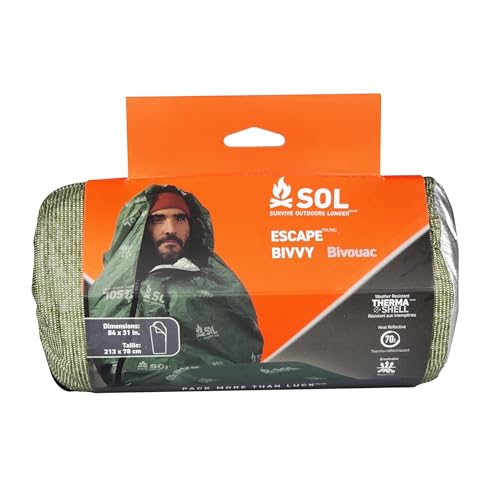
The SOL Escape Bivvy is the single most recommended emergency bivy across search-and-rescue professional forums and wilderness first-aid curriculum guides, and the owner review base on major retail platforms is enormous relative to most bivy products. It is made from a breathable reflective film that retains up to 70 percent of body heat according to manufacturer testing, and unlike older mylar emergency blankets it can be used multiple times without tearing apart at the creases. Day-hikers, trail runners, and vehicle emergency kit builders consistently cite it as the most sensible weight-to-protection compromise for a pack or glovebox, coming in under 100 grams.
What we liked
- Under 100 g and packs smaller than a deck of cards for day-pack or emergency kit use
- Reflective interior retains substantial body heat even in near-freezing conditions
- Reusable across multiple outings unlike single-use mylar emergency blankets
What we didn't like
- Not a substitute for a proper waterproof bivy on multi-night planned trips
- Breathability is adequate but not comparable to Gore-Tex or Ascentshell laminates

Brooks-Range Mountaineering SHTF Bivy
The Brooks-Range SHTF Bivy is built specifically for high-altitude and technical alpine applications where weight and pack volume are non-negotiable but genuine waterproofing matters more than on a trail trip. It uses a Gore-Tex Pro Shell laminate and routes the full zipper through a waterproof baffle, and owners who have used it on Denali approaches and Cascade winter routes report it holding out serious precipitation far better than lighter single-layer alternatives. The name reflects its design intent: a last-resort weather shelter that is still light enough to carry on technical objectives where a tent is impractical.
What we liked
- Gore-Tex Pro Shell provides market-leading waterproofing for sustained alpine storm conditions
- Designed and field-tested specifically for technical mountaineering use cases
- Waterproof zipper baffle performs reliably according to alpine-route owner reports
What we didn't like
- Heavier than ultralight trail-focused bivies
- Premium Gore-Tex Pro pricing puts it above budget options
Snugpak StratoSphere Bivvi Bag
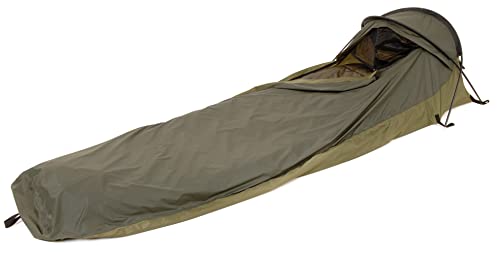
The Snugpak StratoSphere Bivvi Bag is the most consistently recommended budget bivy across bushcraft and military-surplus communities, with a long track record of use by UK armed forces personnel and a large enough owner review base to draw reliable conclusions about durability. It uses a ripstop outer with a taped seam construction that owners report holds up through seasons of rough use, and it is significantly more durable in abrasion testing than cheaper unbranded options at similar price points. It will not breathe as well as Ascentshell or Gore-Tex Pro but it keeps rain and wind out reliably and is wide enough internally to avoid the claustrophobic fit that plagues ultra-slim competitor designs.
What we liked
- Strong durability track record from military and bushcraft user communities
- Generous internal dimensions reduce the squeeze feeling common in budget bivies
- Ripstop outer with taped seams provides reliable rain protection at low cost
What we didn't like
- Breathability is below premium laminate options and condensation builds up on warm nights
- Heavier than ultralight competitors at roughly 600 grams
How to choose
Waterproofing vs Breathability Trade-off
No bivy fabric is perfectly waterproof and perfectly breathable at the same time. Gore-Tex Pro and Ascentshell laminates sit at the high end of breathability among waterproof fabrics, which is why they cost more. If you plan multi-night trips in wet conditions, invest in a breathable laminate to avoid waking soaked in condensation. For single-night emergency insurance in your day pack, a reflective film emergency bivy is the pragmatic choice.
Head Hoop or No Hoop
A bivy with a built-in pole hoop at the head end keeps the fabric off your face and creates a small air pocket that materially reduces the claustrophobic feeling and slows condensation transfer to your sleeping bag. If you are claustrophobic or sleep on your back, prioritize a hooped design. If every gram matters and you sleep on your side with your face away from the fabric, a hoop-free ultralight shell saves meaningful weight.
Packed Weight and Volume
Emergency bivies and ultralight laminates compress to fist size and weigh under 300 grams, which means you have no excuse not to carry one on any backcountry trip. Heavier full-featured bivies in the 600 to 700 gram range are still far lighter than a single-wall tent but require deliberate packing. Match the packed size to your use case: trail running and day hiking demand something you barely notice; basecamp mountaineering can accommodate a heavier, more durable shell.
Zipper Design and Entry Style
A full-perimeter zipper gives you maximum ventilation options and easy entry and exit in the dark, but adds weight and potential leak points. Partial zippers and head-only openings save weight but make middle-of-the-night bathroom trips genuinely inconvenient. Check whether the zipper has a waterproof baffle and whether the pull tab is glove-friendly, since both matter significantly when you are using the bivy in the cold and wet conditions it is designed for.
The bottom line
The single biggest mistake bivy buyers make is choosing a budget waterproof shell without checking breathability ratings, then blaming condensation on bad weather rather than on fabric that traps vapor inside.
Common questions
Yes, many experienced backpackers do exactly that, particularly on routes where low condensation and reliable weather are expected. The main limitation on extended trips is condensation management: even the best breathable laminates allow some moisture transfer from your breath and skin into your sleeping bag over multiple nights. Pairing a bivy with a synthetic or down-treated hydrophobic sleeping bag and airing your bag each morning significantly extends comfort on multi-night trips.
An emergency blanket is a flat sheet of reflective mylar designed for single-use heat retention in a survival situation. A bivy sack is a shaped sleeping bag cover with a closeable opening, built for repeated use and designed to block wind and rain while retaining heat. Emergency bivies like the SOL Escape Bivvy bridge the gap by using breathable reflective film in a bivy shape, but they are still primarily emergency tools rather than comfort-optimized gear for planned overnight use.
Almost universally yes. Most bivy sacks are designed to fit a standard mummy bag and accommodate a range of widths. If you use an extra-wide sleeping bag or a quilted setup, measure your bag's shoulder girth against the bivy's listed internal dimensions before buying. Some ultra-slim bivies designed for minimum weight will feel tight with broader bags, which increases condensation contact between the bag outer and the bivy inner.
Position the bivy opening toward the prevailing breeze if conditions allow, even if just cracked a few centimeters. Choose a breathable laminate rather than a fully sealed waterproof shell if moisture management is a priority. Avoid pulling the bivy fully closed over your head if temperature allows; leaving the top partially open for fresh air dramatically reduces moisture buildup. Airing your sleeping bag and bivy each morning also prevents cumulative dampness from building across consecutive nights.
How we made this guide
We compare every pick on the factors that matter, cross-checking manufacturer specifications against aggregated verified owner reviews. We rank independently and never take payment for placement. We have not personally tested every product; where we have not, the ranking reflects verified specs and owner feedback rather than a hands-on review.
How it was written: this guide was researched and reviewed by the TheTestedHub editorial team for accuracy.
Affiliate disclosure: TheTestedHub is reader-supported. When you buy through links on our site, we may earn a commission at no extra cost to you.
More guides

Clear Vision in the Pool: Best Swimming Goggles

Looking for the Best Golf Rangefinder of 2026?

Selkirk Amped S2: Best Pickleball Paddle of 2026?

Soccer Balls Experts Vouch For in 2026

Every Budget Basketball Guide: Find Your Perfect Ball

Bike Lights: How to Choose the Right One

Electric Bikes Compared: What to Ride in 2026
