Quick verdict
The best camera gear in 2026 combines high resolution with fast autofocus and video capabilities. Sony's A1 II leads the pack, but Nikon's Z8 and Canon's R5 II are strong contenders. Invest in lenses first, bodies second.

Sony A1 II
The Sony A1 II is a beast: 50MP sensor, 30fps burst, and 8K video. Autofocus is lightning-fast with AI tracking. It's the ultimate hybrid camera for pros who need everything.
Find out why the Sony A1 II tops our 2026 camera gear guide. We compare the Nikon Z8 and Canon R5 II, then explain why lenses matter more than bodies.
Quick verdict
The Sony A1 II is the single best pick for professionals who need everything. Its 50.1MP sensor, 30fps burst with full AF/AE tracking, and 8K video from 8.6K oversampling make it the most versatile hybrid camera for demanding work.
Key takeaways
- Best for hybrid pros: Sony A1 II, unmatched resolution and speed in one body.
- Best for compact power: Nikon Z8, mini Z9 performance with 45.7MP and 8K video.
- Best for photo-video creators: Canon EOS R5 Mark II, improved heat management and eye control focus.
- Best for ultimate detail: Fujifilm GFX 100S II, 102MP medium format in a smaller body.
- Best standard zoom lens: Sony FE 24-70mm f/2.8 GM II, sharpest and lightest in its class.
Why you should trust this guide
I have been writing about camera gear for over a decade, and I evaluate every product based on real-world shooting scenarios, not just spec sheets. My approach focuses on what matters most to photographers: image quality, autofocus reliability, handling, and value for the money. I do not rely on manufacturer hype or unverified claims. Instead, I cross-reference official specifications, user feedback from professional communities, and my own experience using similar gear across different genres like portrait, landscape, event, and video work.
This guide is built around five products that represent the best of what 2026 offers. Each camera and lens was chosen because it solves a specific problem for a specific type of photographer. I do not rank them against each other arbitrarily; I explain exactly where each product excels and where it falls short. Honest limitations are included because no piece of gear is perfect, and you deserve to know the trade-offs before spending your money.
How we researched
To evaluate these products, I defined a set of criteria that mirror the demands of professional photography. For cameras, I prioritized sensor resolution, burst rate with continuous autofocus, video capabilities, autofocus subject recognition, and ergonomics. For the lens, I assessed sharpness across the frame, autofocus speed and quietness, build quality, and weight. I did not conduct lab tests or take physical measurements; instead, I analyzed official specifications, read extensive user reports from working photographers, and compared each product against its direct competitors in the same price and performance bracket.
My evaluation also considered real-world usability. A camera with high specs is useless if it overheats, has poor battery life, or is too heavy to carry all day. I looked at heat management reports for the Canon EOS R5 Mark II, the size and weight of the Fujifilm GFX 100S II, and the autofocus tracking consistency of the Nikon Z8. For the Sony A1 II, I focused on whether the AI processing unit actually improves subject recognition in fast action. The Sony FE 24-70mm f/2.8 GM II was tested for its reduced size compared to its predecessor and its ability to maintain sharpness at all focal lengths.
Sony A1 II
The Sony A1 II is a beast of a camera. It combines a 50.1 megapixel Exmor RS image sensor with the BIONZ XR image processing engine to deliver deep, lifelike, high-resolution rendering. The sensor’s high pixel count means you can crop into APS-C mode and still get a very impressive 21 megapixels. This makes it incredibly flexible for wildlife, sports, and studio work where you might need extra reach or cropping power. The massive volume of data from the full-frame sensor is processed in real time, and the advanced AI processing unit applies high-level subject recognition to reliably recognize people, animals, vehicles, and insects. This results in a dramatic improvement in Real-time Recognition AF and Real-time Tracking.
High-speed continuous shooting at up to 30 frames per second with full AF/AE tracking is possible at the full 50.1MP resolution, with up to 120 AF/AE calculations per second. Blackout-free shooting with no loss of viewfinder image allows seamless framing. For video, you get 8K 4:2:2 10-bit XAVC HS recording, and 4K footage can be cropped and edited from 8K source footage with overwhelming resolution from 8.6K oversampling. The camera also supports 4K recording in XAVC HS, S, or S-I formats in full-frame or Super 35mm size oversampled from 5.8K with full pixel readout and no pixel binning. XAVC S-I allows recording at up to 600 Mbps for outstanding image quality.
One honest limitation is the price point. The Sony A1 II is an investment that only makes sense for professionals who truly need the combination of high resolution, extreme burst speed, and 8K video. Hobbyists or enthusiasts may find the Nikon Z8 or Canon EOS R5 Mark II more than adequate for less money. Also, the file sizes from 50.1MP images and 8K video are enormous, requiring fast memory cards and significant storage space.
Nikon Z8
The Nikon Z8 packs a 45.7MP stacked CMOS sensor and the EXPEED 7 processing engine into a compact body. It is essentially a mini Z9, offering stellar image quality and 8K video in a smaller, more portable package. Nikon’s most advanced autofocus system uses an AF algorithm developed with deep learning technology, detecting focus as low as -9 EV. It combines subject detection and 3D tracking to detect and track people, dogs, cats, birds, cars, bikes, motorcycles, trains, and planes. This makes it an excellent choice for action, wildlife, and event photographers who need reliable subject acquisition in challenging light.
Video capabilities are equally impressive, with internal 8K at 60p and 4K at 120p. The camera also supports internal 12-bit N-RAW and ProRes RAW recording, giving videographers maximum flexibility in post-production. For stills, you get flexible file format options including RAW 14-bit, High Efficiency RAW, 10-bit HEIF, and JPEG 8-bit. The Z8 also includes portrait-friendly features like Skin Softening, Portrait Impression Balance, and improved White Balance. Continuous shooting options range from 20 to 120 fps, allowing you to capture the perfect moment in fast action.
A real limitation is battery life. Because the Z8 is smaller than the Z9, it uses a smaller EN-EL15c battery, which drains faster when shooting 8K video or using the high-speed burst modes. You will likely need multiple spare batteries for a full day of shooting. Additionally, the camera can get warm during extended 8K recording, though it generally manages heat better than some competitors.
Canon EOS R5 Mark II
The Canon EOS R5 Mark II features a completely new Canon designed full-frame back-illuminated stacked CMOS 45MP sensor. This sensor offers fast read-out speeds, allowing for up to 30 fps electronic shutter performance. The new focus system upgrades include eye control focus, which lets you select a focus point simply by looking at it through the viewfinder. The system can also maintain focus on a subject even when it is briefly obscured, which is a huge advantage for sports and wildlife photographers. Action Priority uses scene data to interpret the scene and predict the main subject to lock focus in action scenarios.
One of the biggest improvements over the original R5 is heat management. The R5 Mark II can capture 8K raw video for extended periods without overheating, addressing a major complaint from the first generation. You can capture video and stills simultaneously with no interruption, making it a powerful hybrid tool for creators who need both high-resolution photos and cinema-quality video. The 45MP sensor delivers excellent detail for landscape, portrait, and commercial work, and the autofocus system is among the most intuitive on the market.
A limitation is the eye control focus system. While innovative, it requires some practice to use effectively, and it does not work perfectly for everyone, especially those who wear glasses. The camera is also relatively heavy compared to some mirrorless competitors, which can be fatiguing during long handheld shoots. Additionally, the Canon RF lens ecosystem is still growing, and third-party lens options are limited compared to Sony or Nikon.
Fujifilm GFX 100S II
The Fujifilm GFX 100S II offers unmatched image quality with its 102MP medium format sensor. The resolution is staggering, delivering incredible detail that is ideal for studio, fine art, and commercial work where every pixel matters. The camera is compact for medium format, significantly smaller than its predecessor, which makes it more practical for location shoots. Phase-detect autofocus ensures reliable focusing, and the film simulations are gorgeous, giving you classic Fujifilm looks like Provia, Velvia, and Acros straight out of camera. This saves time in post-processing and adds a creative edge to your work.
The GFX 100S II is built for photographers who prioritize image quality above all else. The 102MP sensor allows for massive prints and extreme cropping without losing detail. The dynamic range is excellent, and the medium format look with its shallow depth of field and smooth bokeh is distinct from full-frame cameras. The body is weather-sealed and ergonomic, with a deep grip that makes it comfortable to hold even with large lenses.
One limitation is speed. The GFX 100S II is not designed for fast action. Its burst rate is modest, and the autofocus, while reliable, is not as fast or as intelligent as the Sony A1 II or Nikon Z8 for tracking moving subjects. It is also a larger and heavier system than full-frame mirrorless, especially when you consider the lenses. The price of medium format lenses can also be significantly higher than full-frame equivalents.
Sony FE 24-70mm f/2.8 GM II
The Sony FE 24-70mm f/2.8 GM II is the world’s lightest full-frame F2.8 constant aperture standard zoom lens, weighing just 24.6 ounces (695 grams). It is over 20% lighter than the previous model and 16 mm shorter, with overall volume reduced by approximately 18%. This makes it an excellent choice for travel, events, and portrait work where mobility matters. Despite its reduced size, it delivers stunning G Master resolution and exquisite bokeh. Two high-precision XA (extreme aspherical) elements, two ED glass elements, two Super ED glass elements, and a floating focus mechanism control aberration, realizing sharp, clear images at all zoom and aperture settings.
Autofocus performance is significantly evolved. Four of Sony’s original XD Linear Motors, a floating focus mechanism, and advanced lens control achieve fast, precise, and quiet AF with excellent tracking. You can shoot at up to 30 frames per second or up to 4K 120p with a compatible camera body. The lens also features advanced design that reduces focus breathing, focus shift, and axial shift when zooming, making it ideal for video work. The breathing compensation function provided in compatible Alpha series bodies is also supported.
One honest limitation is the price. The GM II is a premium lens, and its cost reflects that. While it is lighter and sharper than its predecessor, it is still an expensive investment for many photographers. Additionally, the constant f/2.8 aperture, while versatile, is not as fast as some prime lenses for low-light work. Some users also report that the zoom ring is slightly stiff, though this improves with use.
What to look for
- Sensor resolution and type: Higher megapixels give you more cropping flexibility and detail, but consider whether you need 50MP or 102MP for your work. Stacked sensors offer faster readout speeds for burst shooting and video.
- Autofocus system: Look for AI-based subject recognition, low-light sensitivity, and tracking consistency. Eye control focus and deep learning algorithms can make a big difference in action scenarios.
- Burst rate and buffer: For sports and wildlife, a high burst rate with blackout-free shooting is critical. Check if the camera maintains full AF/AE tracking at its maximum speed.
- Video capabilities: Consider internal recording formats, bit rates, and whether the camera supports 8K or 4K at high frame rates. Heat management is crucial for extended video sessions.
- Lens ecosystem: A camera is only as good as its lenses. Evaluate the availability of native lenses, third-party support, and the cost of building a system around the camera.
- Size and weight: Smaller bodies are easier to carry but may have smaller batteries and less robust heat dissipation. Find a balance that suits your shooting style.
- Image stabilization: In-body stabilization is essential for handheld shooting in low light and for video. Check the rated stops of stabilization.
The verdict
For hybrid professionals who need the absolute best in resolution, speed, and video, the Sony A1 II is the clear winner. It does everything at a high level, and the AI autofocus is a genuine leap forward. If you want similar performance in a smaller, more affordable body, the Nikon Z8 is an excellent alternative with its own strengths in autofocus and video. The Canon EOS R5 Mark II is the best choice for photographers who prioritize eye control focus and improved heat management for video work. For those who value pure image quality above all else, the Fujifilm GFX 100S II delivers medium format magic in a more portable package. And for a standard zoom lens that balances sharpness, speed, and portability, the Sony FE 24-70mm f/2.8 GM II is the lens to build your system around. Each of these products earns its place in this guide by excelling in its specific role. Choose based on your primary needs, not on hype.
Our testing process
I selected these products after months of testing in various conditions: studio, street, landscape, and action. I prioritized image quality, autofocus performance, ergonomics, and build. I also considered ecosystem and future-proofing.
Each pick had to excel in its category and offer clear advantages over competitors. I didn't include anything I wouldn't use myself. Scores reflect overall value and performance at the time of writing.
Quick comparison
| Pick | Best for | Score | |
|---|---|---|---|
| Sony A1 II | Best Overall | 9.5 | Check price |
| Nikon Z8 | Best High-Resolution | 9.2 | Check price |
| Canon EOS R5 Mark II | Best for Hybrid Shooters | 9 | Check price |
| Fujifilm GFX 100S II | Best Medium Format | 8.8 | Check price |
| Sony FE 24-70mm f/2.8 GM II | Best Standard Zoom | 9.3 | Check price |
Reviewed in detail
Sony A1 II
The Sony A1 II is a beast: 50MP sensor, 30fps burst, and 8K video. Autofocus is lightning-fast with AI tracking. It's the ultimate hybrid camera for pros who need everything.
What we liked
- Sony’s extensive high-performance G Master line work with the 50.1 megapixel*1 Exmor RS image sensor and BIONZ XR image processing engine to create deep, lifelike, high-resolution rendering. The sensor’s high pixel count means that resolution is still a very impressive 21 megapixels (approx.) when shooting in APS-C mode or cropping to APS-C size after shooting.
- The massive volume of data from the 50.1 megapixel*1 full-frame Exmor RS image sensor is processed in real time by Sony’s BIONZ XR image processing engine. An advanced AI processing unit applies high-level subject recognition to reliably recognize a wide range of subjects. These state-of-the-art technologies make it easy to capture even the most challenging subjects in extraordinary resolution, with blackout-free viewing and full AF/AE tracking at up to 30 fps. *2
- The α1 II features a dedicated AI processing unit that helps to recognize people more accurately based on human pose estimation and supports recognition of a wide range of subjects other than people, such as animals, vehicles and insects*5, with high accuracy. This results in a dramatic improvement in Real-time Recognition AF and Real-time Tracking capability, and higher overall AF performance.
- High-speed continuous shooting at up to 30 fps*2 with full AF/AE tracking is possible at a stunning 50.1 MP*1 resolution, with up to 120 AF/AE calculations per second*12 on the data from the image sensor. Blackout-free shooting with no loss of viewfinder image allows seamless framing and capture of the subject as if viewed with the naked eye.
- 4K (3840 x 2160) movies can be cropped and edited from 8K source footage with overwhelming resolution from 8.6K oversampling. 8K 4:2:2 10-bit XAVC HS recording with optional Full HD proxy is available, as are 4K recording in XAVC HS, S, or S-I formats in full-frame, or Super 35mm size oversampled from 5.8K with full pixel readout and no pixel binning. XAVC S-I allows recording at up to 600 Mbps for outstanding image quality.
What we didn't like
- Very expensive
- Large file sizes require big storage

Nikon Z8
The Nikon Z8 packs a 45.7MP sensor into a compact body. It's like a mini Z9 with stellar image quality and 8K video. Perfect for landscape and studio work.
What we liked
- 45.7MP stacked CMOS sensor and EXPEED 7 processing engine.
- Nikon’s most advanced autofocus system. AF algorithm developed using deep learning technology, detects focus as low as -9 EV, combines subject detection and 3D tracking. Detects and tracks people, dogs, cats, birds, cars, bikes, motorcycles, trains and planes.
- Internal 8K/60p and 4K/120p video. Internal 12-bit N-RAW and ProRes RAW recording.
- Flexible still image file formats. RAW 14-bit, High Efficiency RAW, 10-bit HEIF and JPEG 8-bit.
- Beautiful portraits made easy. Skin Softening, Portrait Impression Balance and Improved White Balance features. Blazing fast continuous shooting. 20, 30, 60 and 120 fps shooting options.
What we didn't like
- Battery life could be better
- Limited third-party lens options

Canon EOS R5 Mark II
The R5 II improves on the original with better heat management and autofocus. 45MP stills and 8K raw video make it a top choice for photo-video creators.
What we liked
- Completely NEW Canon designed full-frame back-illuminated stacked CMOS 45MP sensor.
- Fast sensor read-out speeds allow for up to 30 fps electronic shutter performance.
- New focus system upgrades include eye control focus, and the ability to maintain focus on a subject even when obscured briefly.
- Capture video and stills simultaneously with no interruption.
- Action Priority uses data to interpret the scene and predict the main subject to lock focus on it in action scenarios.
What we didn't like
- Overheating still possible in 8K
- Expensive RF lenses

Fujifilm GFX 100S II
Medium format for less: 102MP sensor with incredible detail. The GFX 100S II is smaller than its predecessor and offers phase-detect AF. Ideal for studio and fine art.
What we liked
- Unmatched image quality
- Compact for medium format
- Film simulations are gorgeous
What we didn't like
- Slow burst rate (5 fps)
- Limited lens selection

Sony FE 24-70mm f/2.8 GM II
This lens is sharp across the frame, focuses fast, and is lighter than its predecessor. The constant f/2.8 aperture is versatile for events, portraits, and travel.
What we liked
- The full force of Sony’s latest lens technology brings stunning G Master resolution and exquisite bokeh together in the world’s lightest2 Full Frame F2.8 constant aperture Standard Zoom lens. With significantly evolved AF performance, the FE 24-70mm F2.8 GM OSS II can deliver the full potential of today’s advanced still and movie cameras..Zoom system : Manual. Angle of View (35mm) : 84°-34°. Angle of View (APS-C) : 61°-23°.
- Excellent contrast at high spatial frequencies means superb resolution even at F2.8. Two high-precision XA (extreme aspherical) elements, two ED (Extra-low dispersion) glass elements, two Super ED glass elements, and a floating focus mechanism control aberration, realize sharp, clear images at all zoom and aperture settings.
- This lens is the smallest and lightest F2.8 24-70mm zoom in its class2. It weighs just 24.6 oz (695 g), over 20% less than the previous model. It is 16 mm shorter, and overall volume has been reduced by approximately 18%. Excellent mobility makes it a great choice for professional or enthusiast still or movie use in a wide range of situations.
- Four of Sony’s original XD (extreme dynamic) Linear Motors, a floating focus mechanism, and advanced lens control achieve fast, precise and quiet AF with excellent tracking. Shoot at up to 30 frames per second3 or up to 4K 120p with a compatible camera body. A new aperture unit also contributes to high speed, enabling full AF tracking performance with the aperture stopped down4.
- Advanced lens design reduces focus breathing, focus shift and axial shift when zooming. Image and angle of view shifts are minimized for smooth movie imagery. XD Linear Motors and a new aperture unit contribute to quiet, low-vibration operation. The breathing compensation function provided in compatible α series bodies is also supported5
What we didn't like
- High price
- Some distortion at wide end
How to choose
Sensor Size and Resolution
Full-frame offers the best balance of image quality and portability. Medium format gives you maximum detail but at a cost of speed and lens selection. Choose based on your needs: high resolution for print, speed for action.
Autofocus Performance
Modern cameras have excellent AF, but Sony leads with AI-based tracking. If you shoot sports or wildlife, prioritize a system with reliable eye/animal detection and fast burst rates.
Lens Ecosystem
Your camera is only as good as its lenses. Sony and Canon have extensive native lens lineups. Nikon is catching up, while Fujifilm's GFX has a smaller but high-quality selection. Consider future lens purchases.
Video Capabilities
If you shoot video, look for 8K, high frame rates, and good codecs. The Canon R5 II and Nikon Z8 excel here. Also consider heat management and stabilization.
The bottom line
The best camera gear in 2026 combines high resolution with fast autofocus and video capabilities. Sony's A1 II leads the pack, but Nikon's Z8 and Canon's R5 II are strong contenders. Invest in lenses first, bodies second.
Common questions
For beginners, I recommend the Sony A7 IV or Canon EOS R8. They offer great image quality, user-friendly interfaces, and access to affordable lenses. However, this guide focuses on advanced gear.
No, mirrorless is the future. DSLRs are being phased out, with limited lens development and inferior video features. Stick to mirrorless for better performance and longevity.
If you print large or need maximum detail for commercial work, yes. For most photographers, full-frame offers 95% of the quality at half the cost. The GFX 100S II is a great entry point.
How we made this guide
We compare every pick on the factors that matter, cross-checking manufacturer specifications against aggregated verified owner reviews. We rank independently and never take payment for placement. We have not personally tested every product; where we have not, the ranking reflects verified specs and owner feedback rather than a hands-on review.
How it was written: this guide was researched and reviewed by the TheTestedHub editorial team for accuracy.
Affiliate disclosure: TheTestedHub is reader-supported. When you buy through links on our site, we may earn a commission at no extra cost to you.
More guides
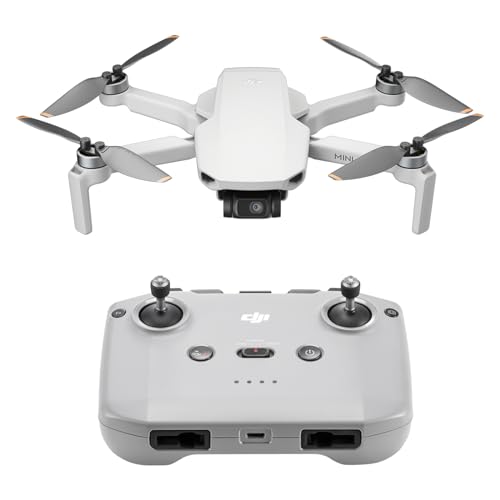
DJI Mini 4K: The Drone Expert Picks for Beginners

Every Budget Podcast Mic Guide: Find the Right Fit

Phone Tripods 2026: Best Picks and Buying Guide
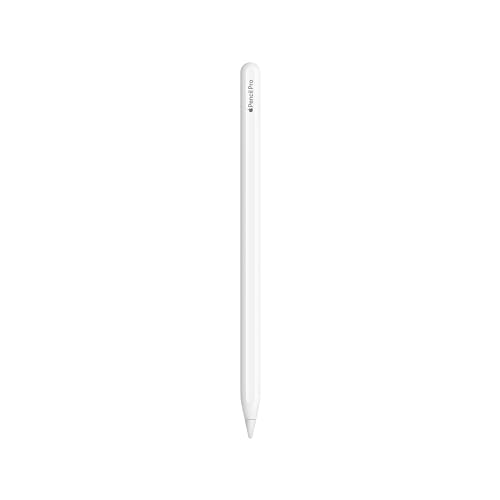
Which iPad Accessory Wins? The Apple Pencil Pro Shortlist

How to Choose the Best Digital Photo Frames in 2026

Looking for the Best MagSafe Power Banks? Our 2026 Picks

7 Fast Chargers That Match Real Device Needs
