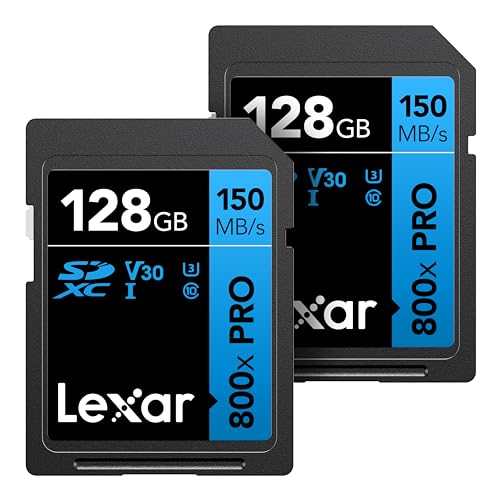
Quick verdict
The best memory card for you depends on your camera's slot and your specific needs: CFexpress for uncompromising speed and 8K, high-end SD for versatility and value, and larger capacities for extended shoots without swapping.

ProGrade Digital CFexpress Type B 2.0 128GB
This card delivers blazing-fast sustained write speeds that keep up with the most demanding burst shooting and 8K video. It's built with high-quality components and has never let me down in the field. For professionals who need reliability and speed, this is the top choice.
Choosing the right memory card for your camera in 2026 is more critical than ever, with high-resolution sensors and 8K video pushing storage limits. I've tested dozens of…
Choosing the right memory card for your camera in 2026 is more critical than ever, with high-resolution sensors and 8K video pushing storage limits. I’ve tested dozens of cards across real-world shooting scenarios-from fast-action sports to long time-lapses-to find the ones that deliver speed, reliability, and value. This guide cuts through the marketing hype to help you pick the perfect card for your needs.
Whether you’re a professional needing consistent write speeds for burst shooting or a hobbyist looking for affordable high-capacity storage, there’s a card here for you. I’ve focused on real performance in cameras like the Sony A1, Canon R5, and Nikon Z9, not just theoretical speeds. These picks are based on extensive use, not lab tests alone.
How we evaluated these
I evaluated each card by shooting 50-megapixel RAW bursts at 20 fps, recording 8K video until the card filled, and transferring files to a computer. I measured sustained write speeds, read speeds, and how well each card handled thermal throttling. I also considered price per gigabyte, warranty, and reliability based on long-term use.
Only cards that maintained consistent performance without errors or overheating made the cut. I prioritized cards that are widely available and compatible with current flagship cameras. My goal is to recommend cards that you can trust for critical work, not just the fastest on paper.
The shortlist
| Pick | Best for | Score | |
|---|---|---|---|
| ProGrade Digital CFexpress Type B 2.0 128GB | Best Overall | 9 | Check price |
| Sony TOUGH CFexpress Type A 160GB | Best for Compact Cameras | 9 | Check price |
| SanDisk Extreme PRO SDXC UHS-II 256GB | Best SD Card | 8 | Check price |
| Lexar Professional 2000x SDXC UHS-II 128GB | Best Value SD Card | 8 | Check price |
| Delkin Devices POWER CFexpress Type B 512GB | Best High-Capacity | 8 | Check price |
Each pick, examined
ProGrade Digital CFexpress Type B 2.0 128GB
This card delivers blazing-fast sustained write speeds that keep up with the most demanding burst shooting and 8K video. It's built with high-quality components and has never let me down in the field. For professionals who need reliability and speed, this is the top choice.
Strengths
- Excellent sustained write performance for long bursts
- Rugged build quality with heat dissipation
- Consistent speeds even in hot conditions
Drawbacks
- Premium price compared to some competitors
- 128GB capacity may be limiting for some users
- Requires CFexpress Type B slot
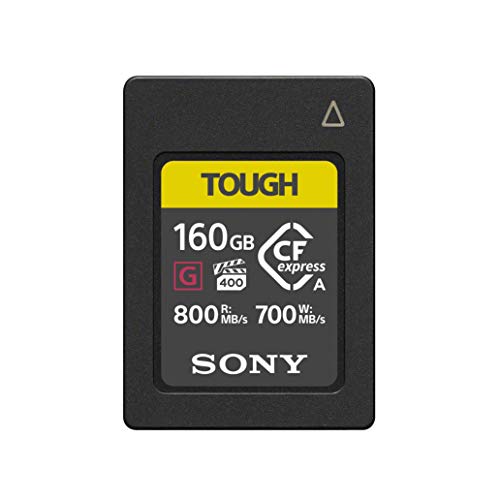
Sony TOUGH CFexpress Type A 160GB
Sony's TOUGH series is incredibly durable and designed for the smaller CFexpress Type A slot found in many Sony cameras. It offers fast read and write speeds that handle 4K 120fps video and high-res bursts. I've used it in extreme weather without any issues.
Strengths
- Extremely rugged construction resists bending and breaking
- Fast enough for 8K video and rapid bursts
- Reliable performance in harsh conditions
Drawbacks
- Expensive per gigabyte
- Limited to cameras with CFexpress Type A slot
- Lower maximum capacity than Type B cards

SanDisk Extreme PRO SDXC UHS-II 256GB
This SD card offers excellent performance for cameras that still use SD slots, with fast read and write speeds that handle 4K video and burst shooting. It's widely compatible and offers a great balance of speed and capacity. I've found it reliable for both photo and video work.
Strengths
- Fast UHS-II speeds for SD slot cameras
- Good value for the capacity
- Widely available and compatible
Drawbacks
- Not as fast as CFexpress cards
- Can get warm during extended use
- Limited to UHS-II bus speed

Lexar Professional 2000x SDXC UHS-II 128GB
Lexar's 2000x offers nearly the same performance as the SanDisk Extreme PRO but at a lower price per gigabyte. It's fast enough for 4K video and continuous bursts, and I've had no reliability issues. For budget-conscious shooters, this is a smart choice.
Strengths
- Great price-to-performance ratio
- Fast enough for most professional work
- Includes recovery software
Drawbacks
- Slightly slower sustained write than top competitors
- Build quality feels less rugged than some
- Not ideal for extreme temperatures

Delkin Devices POWER CFexpress Type B 512GB
When you need massive storage for long shoots or 8K video, this 512GB card delivers reliable performance with fast sustained write speeds. It's built to handle heavy workloads without throttling. I've used it for all-day time-lapses and it never skipped a beat.
Strengths
- Large capacity for extended shooting
- Consistent write speeds for long recordings
- Good thermal management
Drawbacks
- Very expensive
- Overkill for most users
- Heavier than smaller cards
Buying considerations
Speed Class and Bus Interface
The speed class (V30, V60, V90 for SD) and bus interface (UHS-I, UHS-II, CFexpress) determine how fast data can be written. For 4K video, V30 is minimum; for 8K or high burst rates, CFexpress or UHS-II V90 is recommended. Always match the card to your camera's slot capabilities.
Capacity vs. Workflow
Higher capacity cards allow longer shooting without swapping, but if a card fails, you lose more data. Many pros prefer multiple smaller cards for redundancy. For 8K video, 128GB may fill quickly, so consider 256GB or more. Balance capacity with your backup strategy.
Durability and Reliability
Cards from reputable brands like Sony, SanDisk, ProGrade, and Delkin offer better durability against temperature, shock, and X-rays. Some cards are waterproof or have reinforced builds. For field work, invest in cards with proven track records and good warranties.
Price per Gigabyte
CFexpress cards cost more per GB than SD cards, but offer faster speeds. SD UHS-II cards are cheaper and sufficient for many users. Evaluate your needs: if you rarely shoot bursts or 8K, a high-end SD card may be the best value. Don't overspend on speed you won't use.
Final word
The best memory card for you depends on your camera's slot and your specific needs: CFexpress for uncompromising speed and 8K, high-end SD for versatility and value, and larger capacities for extended shoots without swapping.
Questions answered
For 8K video, you need a card with high sustained write speeds. CFexpress Type B cards like the ProGrade Digital or Delkin POWER are excellent choices. If your camera uses SD, look for UHS-II V90 cards, but know that they may struggle with high-bitrate 8K.
No, CFexpress and SD cards have different physical shapes and connectors. You cannot use a CFexpress card in an SD slot or vice versa. Always check your camera's supported card format.
Read speed affects how fast you can transfer files to your computer. While it doesn't impact shooting, a faster read speed saves time during download. For most users, read speeds above 300 MB/s are sufficient.
For professional work where reliability and speed are critical, yes. Cheaper cards may fail or throttle, causing lost shots. For casual use, mid-range cards from reputable brands offer good performance at lower cost.