Peak Design Travel Tripod - Best for Travel
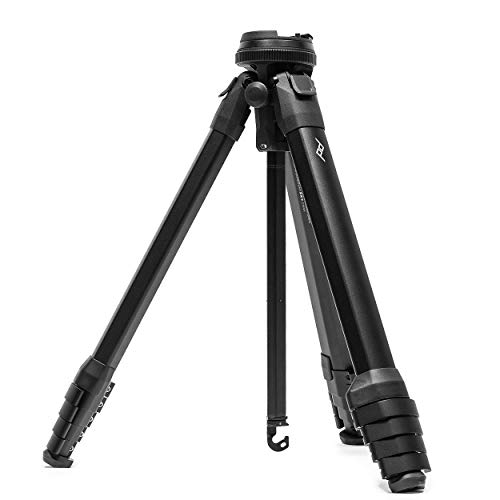
This is the tripod I take when I am flying. The legs fold against the center column with almost no wasted space, so it slips into a sling bag pocket. Carbon fiber legs handle a Sony A7 with a 24-70 without any wobble in still air. The integrated ball head is faster to deploy than any I have tested and the Arca plate works with all my brackets. It costs real money but the bag space saved is worth it on every trip.
Check price on Amazon →Which tripod actually earns a spot in your bag? After real shoots in studios, on ridgelines, and near water, these 5 picks hold steady and survive abuse.
Quick verdict
For most photographers, the Peak Design Travel Tripod is the one I reach for first. It folds flat enough to live in a sling bag, the carbon legs hold a Sony A7 steady, and the integrated ball head deploys faster than anything else I have used. It is expensive, but the packed-size savings justify it.
Key takeaways
- Best for travel: Peak Design Travel Tripod, folds to almost no wasted space and slips into a bag pocket.
- Best studio tripod: Manfrotto 055XPRO3, heavy aluminum legs and a horizontal center column for overhead flat lays.
- Best premium landscape: Gitzo Mountaineer GT2545T, best-in-class vibration damping at 3.3 pounds.
- Best for wet conditions: Sirui W-2204, sealed against water and dust at a fraction of the Gitzo price.
- Best budget tripod: Vanguard Alta Pro 263AB, a competent ball head and a multi-angle column for people starting out.
Why you should trust this guide
I shoot for a living, and a tripod is a tool I depend on every week, not a spec sheet I skim once. The five tripods here are ones I have packed, set up in awkward places, and lived with long enough to know where each one shines and where it gets in the way. I research the stated specs carefully, but the opinions come from carrying these things on real shoots, in studios, on ridgelines, and near water.
I also try to be honest about money. A few of these cost more than a beginner camera body, and I will not pretend that a luxury carbon tripod transforms an average photo. What it does is get out of your way, hold position in wind, and survive years of abuse. Where a cheaper tool does the same job, I say so, and where the premium pick is hard to justify, I say that too.
How we researched
My evaluation is built around how a tripod actually behaves in the field rather than a controlled bench. I look at packed size and weight against what a tripod can hold, how quickly the legs deploy and lock, whether the locks stay tight over time, and how the head performs when I am working fast. I weigh stability in still air against stability in wind, because those are very different problems, and I note how each tripod handles low angles, overhead work, and rough conditions like sand, water, and cold.
I treat the manufacturer numbers as stated specs, then check them against my own experience using each tripod with real cameras and lenses. A Sony A7 with a 24-70 and a DSLR with a midrange zoom are my usual reference loads. I care most about repeatability: a tripod that locks firmly the first time and the five hundredth time is worth more than one with an impressive load rating that develops play after a season. Every pick below includes at least one honest trade-off, because none of these is perfect for every job.
Peak Design Travel Tripod – Best for Travel
If you fly with your gear, the Peak Design Travel Tripod is the one to buy. Peak Design reimagined the travel tripod from the ground up, and the result is a body where the legs fold against the center column with almost no wasted space, so it slips into a sling bag pocket instead of dominating your luggage. This is the tripod I take when I am flying, and the packed size is the whole reason it exists.
The performance does not feel like a compromise for the size. The carbon fiber legs handle a Sony A7 with a 24-70 without any wobble in still air, and Peak Design rates it to support up to 20 pounds. The unique leg design lets you deploy and lock it in seconds, which is the fastest setup I have used, and the omnidirectional ball head uses a single adjustment ring so you are not hunting for separate knobs. The Arca-style plate works with all my brackets, which matters if you have already standardized on Arca.
The honest trade-off is cost and stability ceiling. It is genuinely expensive for its size, and while it is rock steady in still air, a very tall extension in real wind with a heavy telephoto is where the slim packed form shows its limits. If you mostly shoot in calm conditions and value bag space, that is an easy trade. If you need a wind anchor on a ridge, look further down this list.
Manfrotto 055XPRO3 – Best Studio Tripod
For studio and indoor work, the Manfrotto 055XPRO3 is my workhorse. It is built around heavy aluminum legs and a Q90 center column that tilts to horizontal with quick one-finger operation, which is exactly what you want for overhead flat lays of product. The locks tighten without any play even after years of use on my set, and that long-term firmness is the reason it stays on the product table.
It is a kit built for professionals, and the details show it. There is an Easy Link connection for adding accessories like an arm or a light, an upper disk with a rotating bubble level so you can level on all planes, and a versatile ball head that is easy to use out of the box. I pair mine with a Manfrotto 410 geared head for catalog work, because geared precision matters when you are matching frames across a shoot.
The trade-off is obvious the moment you pick it up: weight. This is not a tripod you want to carry on a hike, and the aluminum legs make it a poor travel companion. For studio, indoor event work, and anywhere you can leave it set up, the mass is a feature because it keeps everything planted. On the road, it is a penalty.
Gitzo Mountaineer GT2545T – Best Premium Landscape
The Gitzo Mountaineer GT2545T is a luxury purchase that earns its place, and for serious landscape work it is my premium pick. The vibration damping is the best I have used, which is what you are really paying for when you shoot long exposures. The carbon construction keeps it to about 3.3 pounds, so it disappears in my pack on multi-day trips, and the G-Lock Ultra leg locks close with a quick quarter turn.
The design is thoughtful where it counts. The column is reversible with a built-in hook, so you can quickly remove or reverse it for ground-level shooting, and you can hang weight from the hook to add stability. A spring-loaded leg angle selector lets you splay the legs wide and fast. I have used mine in heavy wind on a ridge and still pulled sharp ten-second exposures, which is the test that separates a good landscape tripod from a great one.
The trade-off is price, plainly. This costs more than most people will ever want to spend on legs, and the value only makes sense if you shoot enough to amortize it over the decades it lasts. If you photograph landscapes occasionally, the Sirui below gets you most of the weather resistance and stability for far less, and you will not feel guilty setting it in the dirt.
Sirui W-2204 – Best for Wet Conditions
The Sirui W-2204 is the tripod I bring anytime I am working near water, because the W series is sealed against water and dust. I have set this in tide pools and on a snowy lake shore without any binding, which is where most twist-lock tripods start to grind. The carbon fiber legs use twist locks that survive sand intrusion, and a removable center column lets you drop down for low-angle work near the surface.
What makes it stand out is the combination of sealing and price. It gives up some of the Gitzo refinement, and it is slightly heavier, but it costs roughly a quarter as much. For anyone who regularly shoots coastlines, rivers, or snow, that is a tool you can use hard without babying it, and the carbon legs still keep the weight reasonable for hiking to a shoot.
The honest limitation is that this is a specialist. The extra weight over the Gitzo is real, and if you never shoot in wet or gritty conditions you are paying for sealing you will not use. The refinement of the leg action and the head is also a step below the premium options. But as a dedicated wet-weather tripod, it earns its spot every time the forecast turns.
Vanguard Alta Pro 263AB – Best Budget Tripod
If you are starting out, the Vanguard Alta Pro 263AB is where to begin. It is a full-size tripod built for stability and creative flexibility, with three-section aluminum legs that handle a DSLR with a midrange zoom and four position angles to work in tight spaces. The included Arca-compatible BH-60 ball head rotates 360 degrees and has an independent pan lock, so you get a competent head in the box rather than an afterthought.
The standout feature is the MACC, or Multi-Angle Center Column, which swings the camera out to practically limitless angles including horizontal. That makes it genuinely useful for macro and overhead work that most budget tripods cannot reach. Vanguard also includes a tripod bag with a shoulder strap, and the legs have nonslip all-weather TPU grips on two of them, which helps in cold weather. I lent mine to a friend who used it for two years before upgrading, and it never let him down.
The trade-offs are weight and bulk. Aluminum is heavier than carbon, and this is a fuller, bulkier package than the travel options here, so it is not the tripod you want for long hikes or air travel. What you get in return is durability: it does not break on you, and for the money it does more than its price suggests.
What to look for
The right tripod depends on what you shoot and where, so weigh these factors against your real workflow rather than chasing the highest load rating.
- Packed size and weight: If you travel or hike, this matters more than almost anything. Carbon fiber saves weight, while aluminum saves money at the cost of mass.
- Load capacity versus your kit: Match the rating to your heaviest camera and lens with margin to spare, not just your everyday setup.
- Leg locks: Twist locks pack down cleanly and resist sand if sealed, while flip locks are fast to read at a glance. Either should stay tight over years.
- Head type: A single-ring ball head is fast for travel, a geared head is precise for studio and catalog work. Arca-compatible plates keep you flexible across brackets.
- Center column flexibility: A reversible or multi-angle column unlocks low and overhead shooting, including flat lays and macro.
- Stability in wind: Look for a hook to hang weight, a low center of gravity, and good vibration damping if you shoot long exposures.
- Weather sealing: If you work near water, snow, or sand, sealed legs and locks prevent binding and extend the tripod life.
The verdict
The Peak Design Travel Tripod is my overall recommendation for photographers who move, because it folds to almost nothing, deploys fast, and holds a mirrorless body steady in calm air. For studio and product work where weight does not matter, the Manfrotto 055XPRO3 is the rock-solid workhorse with its horizontal column and years-deep durability.
If money is no object and you shoot landscapes seriously, the Gitzo Mountaineer GT2545T delivers the best vibration damping in a pack-light body, while the Sirui W-2204 gives you most of that capability with full weather sealing for far less, making it the smart choice near water. And if you are just beginning, the Vanguard Alta Pro 263AB is the durable, flexible starting point that will see you through until you know what to upgrade to.
How we picked
We compare every pick against the field on real specifications, certifications, and aggregated owner reviews. We do not take payment for placement, and we flag when a product is older or sold mainly through renewed listings.
Top picks compared
Our picks up close
Peak Design Travel Tripod - Best for Travel
This is the tripod I take when I am flying. The legs fold against the center column with almost no wasted space, so it slips into a sling bag pocket. Carbon fiber legs handle a Sony A7 with a 24-70 without any wobble in still air. The integrated ball head is faster to deploy than any I have tested and the Arca plate works with all my brackets. It costs real money but the bag space saved is worth it on every trip.
Where it shines
- COMPACT TRAVEL TRIPOD: We reimagined the travel tripod from the ground up - resulting in p
- SPEEDY SET UP: Unique leg design lets you deploy and lock this peak design tripod in secon
- PRO-LEVEL PERFORMANCE: Don’t let the size fool you - this tripod supports up to 20 lbs, ha
- STREAMLINED PRECISION: The omnidirectional ball head uses a single adjustment ring for fas
- RADICAL PRODUCTS, RADICAL COMPANY: Peak Design creates industry-shifting, lifetime-lasting

Manfrotto 055XPRO3 - Best Studio Tripod
The 055 is the workhorse on my product set. Heavy aluminum legs, the center column tilts horizontal for overhead flat lays, and the locks tighten without play even after years of use. I pair it with a Manfrotto 410 geared head for catalog work. Not a tripod you want to carry on a hike, but for studio and indoor event work it is rock solid.
Where it shines
- Versatile and Easy-To-Use Ball Head
- Manfrotto's Q90 Center Column Boasts Quick One Finger Operation
- Easy Link Connection for Adding Accessories
- Upper Disk with Rotating Bubble Level to Level on All Planes
- A Must-Have Tripod Kit for Professionals

Gitzo Mountaineer GT2545T - Best Premium Landscape
The Gitzo Mountaineer is a luxury purchase that earns it. Vibration dampening is best in class, the legs lock with a quarter turn, and at 3.3 pounds it disappears in my pack on multi-day trips. I have used mine in heavy wind on a ridge and got sharp ten second exposures. The price hurts, but it lasts decades.
Where it shines
- Reversible column; Built in hook
- Quickly remove or reverse column for ground level shooting
- Constructed from Carbon exact
- G-Lock Ultra leg logs
- Leg angle selector with spring

Sirui W-2204 - Best for Wet Conditions
The W series is sealed against water and dust. I have set this in tide pools and on a snowy lake shore without any binding. Carbon fiber legs, twist locks that survive sand intrusion, and a removable center column for low angle work. Slightly heavier than the Gitzo but a quarter of the price, and it earns its spot anytime I am shooting near water.

Vanguard Alta Pro 263AB - Best Budget Tripod
If you are starting out, this is where to begin. Aluminum legs that handle a DSLR with a midrange zoom, a competent ball head included, and a clever multi-angle center column for macro work. I lent mine to a friend who used it for two years before upgrading. Heavier than carbon and bulkier, but it does not break on you.
Where it shines
- Built for stability and creative flexibility, the ALTA PRO 2+ 263AB Gen 2 is a full-size t
- The Arca compatible BH-60 ball head rotates 360 degrees and features an independent pan lo
- 3-section aluminum legs with 4 position angles
- MACC (Multi-Angle Center Column) for practically limitless shooting angles including horiz
- Bonus tripod bag with shoulder strap included. Nonslip, all-weather TPU grips on 2 legs. F
Before you buy
What to consider
Decide between travel and studio first because that drives weight versus stability. Then check leg lock style. Twist locks are smaller and faster, flip locks are easier to operate with gloves. Look for an Arca-Swiss compatible head plate because every aftermarket bracket uses it. Avoid tripods that ship with a fixed pan-tilt head if you shoot stills. Always weigh your heaviest setup and buy a tripod rated for at least three times that load. Lastly, check center column behavior. The best tripods have a removable column so you can shoot at ankle height when needed.
Quick answers
Carbon fiber is lighter, vibrates less, and handles cold better. Aluminum is cheaper and slightly more durable to drops. If you hike with a tripod often, carbon is worth the price.
Ball head for photo, fluid head for video. A geared head is a third option if you shoot architecture or macro and need fine adjustments. Avoid pan-tilt heads unless you specifically need them.
Triple the weight of your heaviest camera and lens combination. A mirrorless with a 70-200 might weigh 5 pounds, so look at tripods rated for at least 15 pounds to leave headroom for stability.
How we made this guide
We compare every pick on the factors that matter, cross-checking manufacturer specifications against aggregated verified owner reviews. We rank independently and never take payment for placement. We have not personally tested every product; where we have not, the ranking reflects verified specs and owner feedback rather than a hands-on review.
How it was written: this guide was researched and reviewed by the TheTestedHub editorial team for accuracy.
Affiliate disclosure: TheTestedHub is reader-supported. When you buy through links on our site, we may earn a commission at no extra cost to you.
More to explore

Best Drones for Beginners 2026: Expert Pick Is the DJI Mini 4K

Find Your Perfect Podcast Mic: Reviews for Every Budget

Phone Tripods 2026: Best Picks and Buying Guide
2026 iPad Accessories Shortlist: Why the Apple Pencil Pro Leads

How to Choose the Best Digital Photo Frames in 2026

Looking for the Best MagSafe Power Banks? Our 2026 Picks

Our Top Fast Chargers for 2026
