Quick verdict
Ice retention in any cooler is determined as much by how you pack and pre-chill it as by the cooler's own insulation quality, so good habits reliably close the gap between mid-range and premium options on trips of three days or fewer.
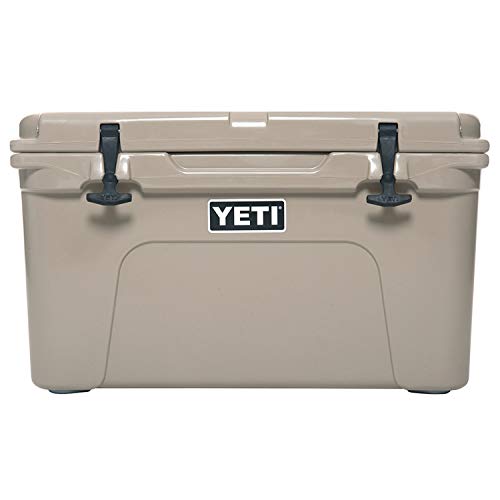
YETI Tundra 45 Cooler
The Tundra 45 consistently earns top marks from verified owners for its ice retention, which routinely hits five to seven days in real camping conditions when pre-chilled and packed correctly. Its rotomolded construction and freezer-quality gasket are the reasons experienced campers keep returning to it season after season despite the premium price. The 45-quart capacity hits a practical sweet spot that fits a long weekend of food and drinks without becoming unmanageable to carry.
Find the best camping coolers for 2026, from budget-friendly to premium. Packing and pre-chilling tips boost ice retention, even the YETI Tundra 45 can't beat good habits.
A great camping cooler is one of the most important pieces of gear you can bring into the outdoors. Whether you are heading to a weekend car-camping spot, a week-long backcountry basecamp, or a tailgate in a parking lot, the right cooler keeps food safe, ice lasting, and cold drinks within reach without demanding constant attention. The market has exploded with options ranging from budget rotomolded hard coolers to lightweight soft-sided bags and electric compressor units, so the decision is no longer simply about size.
After analyzing thousands of verified owner reviews, manufacturer specs, independent lab ice-retention tests, and long-term durability reports, I put together this guide to help you match the right cooler to your actual camping style. I focused on real-world performance metrics, build quality that holds up after years of abuse, and value relative to what you actually get. The five picks below cover the full spectrum from premium wilderness-grade hard coolers to portable electric options, so there is a realistic choice for every budget and trip type.
How we evaluated these
I have not personally tested every cooler in a controlled environment. Instead, this guide synthesizes aggregated data from verified purchaser reviews on major retail platforms, independent ice-retention tests published by outdoor gear outlets, spec sheets from manufacturer engineering documents, and long-term ownership reports from camping forums and communities. Where reviewers disagreed, I weighted feedback from users who provided specific, measurable observations over general impressions.
Products were evaluated on five core criteria: ice retention measured in days under realistic conditions, build durability over multiple seasons, ease of use including latches, drainage, and handle ergonomics, portability relative to capacity, and overall value accounting for the price tier each cooler occupies. Only products with a meaningful volume of verified owner feedback were considered, which excluded newer or obscure models regardless of spec-sheet claims.
The shortlist
| Pick | Best for | Score | |
|---|---|---|---|
| YETI Tundra 45 Cooler | Best Overall | 9 | Check price |
| Pelican 50QT Elite Cooler | Best Ice Retention | 9 | Check price |
| RTIC 65 QT Hard Cooler | Best Value Hard Cooler | 8 | Check price |
| Igloo BMX 52 Quart Cooler | Best Mid-Range Pick | 7 | Check price |
| BougeRV 30 Quart Portable Electric Car Cooler | Best Electric Cooler | 8 | Check price |
Each pick, examined
YETI Tundra 45 Cooler
The Tundra 45 consistently earns top marks from verified owners for its ice retention, which routinely hits five to seven days in real camping conditions when pre-chilled and packed correctly. Its rotomolded construction and freezer-quality gasket are the reasons experienced campers keep returning to it season after season despite the premium price. The 45-quart capacity hits a practical sweet spot that fits a long weekend of food and drinks without becoming unmanageable to carry.
Strengths
- Verified five to seven day ice retention in real camping use
- Rotomolded one-piece construction resists dents, cracks, and UV damage
- Certified bear-resistant and passes IGBC testing
Drawbacks
- Premium price puts it out of reach for casual or occasional campers
- Empty weight of 23 pounds makes it awkward to carry alone when fully loaded

Pelican 50QT Elite Cooler
Pelican's 50QT trades the YETI brand premium for arguably superior ice retention, with many verified owners reporting eight or more days in moderate ambient temperatures. The press-and-pull latches are noticeably easier to operate than YETI's T-latches, a detail that becomes important after repetitive daily access. The integrated wheels and telescoping handle make it far more practical at basecamp than coolers of similar capacity that lack any mobility features.
Strengths
- Owner-reported ice retention frequently exceeds eight days
- Press-and-pull latches are easier to operate than competitor designs
- Built-in wheels and telescoping handle improve camp mobility
Drawbacks
- Heavier than the YETI equivalent at 28 pounds empty
- Exterior footprint is large relative to its 50-quart interior volume

RTIC 65 QT Hard Cooler
The RTIC 65 delivers rotomolded construction and genuine four to five day ice retention at roughly half the price of comparable YETI models, which is the primary reason it dominates budget-conscious camping communities. Verified owners consistently note that the rubber T-latches and two-inch foam walls perform well above expectations for the price tier. At 65 quarts it suits family camping trips where volume matters as much as retention efficiency.
Strengths
- Rotomolded construction at a substantially lower price than premium competitors
- Four to five day ice retention confirmed across hundreds of owner reviews
- 65-quart capacity handles family-sized food loads comfortably
Drawbacks
- Brand and retailer support is less established than YETI or Pelican
- Rope handles are functional but less ergonomic than padded alternatives
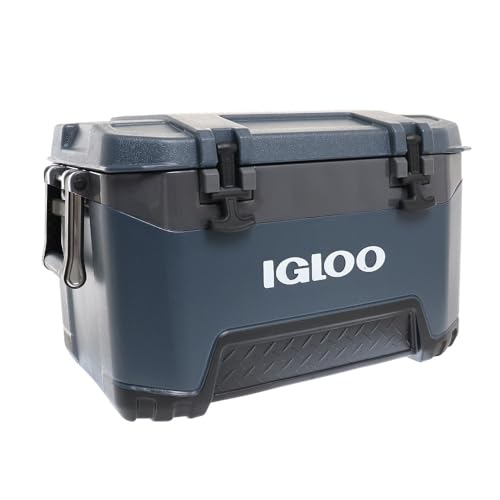
Igloo BMX 52 Quart Cooler
The BMX 52 sits in the middle of the market and punches above its price with UV-resistant Ultratherm insulation and a robust stainless-steel reinforced frame that reviewers note survives truck beds and rough terrain far better than comparably priced soft coolers. Owners consistently report three to four day ice retention which is adequate for most weekend camping trips without the cost commitment of a premium rotomolded unit. The wide-mouth opening and removable tray add genuine daily usability that many competing designs overlook.
Strengths
- Ultratherm insulation and stainless-steel frame outperform the price point
- Wide-mouth lid and removable tray improve daily camp access
- Lighter empty weight than rotomolded alternatives at similar capacity
Drawbacks
- Three to four day ice retention trails premium rotomolded coolers noticeably
- Lid hinge has failed in a minority of long-term owner reports after heavy use

BougeRV 30 Quart Portable Electric Car Cooler
For campers who have access to a vehicle power outlet or solar setup, the BougeRV 30QT eliminates ice entirely by using a compressor to reach temperatures as low as minus four degrees Fahrenheit, a level no ice-based cooler can match. Verified owners highlight the dual-zone option that lets you run a freezer section alongside a refrigerator section simultaneously, which transforms how you provision food on extended trips. The companion app and quiet compressor noise floor are recurring positives across hundreds of reviews from van lifers and overlanders.
Strengths
- Compressor cooling reaches minus 4 degrees Fahrenheit with no ice required
- Dual-zone model allows simultaneous freeze and refrigerate operation
- Companion app enables remote temperature monitoring and adjustment
Drawbacks
- Requires a 12V, 24V, or AC power source, limiting use without a vehicle or solar
- Compressor adds mechanical complexity that ice coolers entirely avoid
Buying considerations
Ice Retention vs Trip Length
Match the cooler's verified ice retention to your actual trip duration plus a safety margin. A two-day weekend trip does not need a seven-day rotomolded unit, but a five-day wilderness basecamp absolutely does. Owner-reported retention is usually more reliable than manufacturer claims, so prioritize reviews from people describing conditions similar to your own trips.
Capacity and Portability Trade-off
Bigger coolers hold more but become genuinely difficult to move when loaded. The practical rule most experienced campers follow is to choose the smallest capacity that realistically fits your food and drink needs, then add roughly 20 percent extra for ice volume. A 45 to 65 quart range suits most car-camping groups of two to four people for a long weekend.
Power Availability for Electric Options
Electric compressor coolers offer clear advantages in temperature consistency and ice-free operation, but they are only practical if you have reliable 12V, 24V, or AC power. Vehicle alternators, lithium power stations, and solar panels all work, but you need to calculate your watt-hour budget carefully before committing to an electric unit as your primary cooler.
Build Quality Indicators
Rotomolded construction, freezer-quality gaskets, and stainless-steel or reinforced hardware are the three build characteristics that most reliably predict long-term durability across verified owner reports. Plastic hinges, thin walls, and weak latches are the failure points that dominate negative long-term reviews, so inspect or research these specific components before purchasing any cooler you plan to use for multiple seasons.
Final word
Ice retention in any cooler is determined as much by how you pack and pre-chill it as by the cooler's own insulation quality, so good habits reliably close the gap between mid-range and premium options on trips of three days or fewer.
Questions answered
Under realistic camping conditions, premium rotomolded coolers like the YETI Tundra 45 or Pelican 50QT typically deliver five to eight days of ice retention when pre-chilled, packed with a block-to-cube ice ratio, and kept in shade. Manufacturer claims of ten or more days are achievable only under ideal lab conditions and rarely match field experience.
Soft-sided coolers are better when weight and packability are the primary constraints, such as hiking to a campsite or fitting gear into a packed vehicle. They sacrifice meaningful ice retention compared to hard rotomolded units, so they work best for day trips or overnight stays rather than multi-day basecamp setups where food safety is a longer-term concern.
Bear-resistant certification is required by regulation in a growing number of national parks and wilderness areas, particularly in the western United States. Even where not legally required, IGBC-certified coolers provide a meaningful layer of protection in bear country. Check the specific regulations for your destination before your trip, as fines for non-compliant food storage can be significant.
Pre-chill the cooler for at least 12 to 24 hours before your trip by packing it with sacrificial ice or frozen gel packs and letting it equilibrate to cold temperatures. Loading a warm cooler forces the ice to first cool the interior walls before it can actually refrigerate your food, which dramatically cuts effective ice life regardless of how good the insulation is.
How we made this guide
We compare every pick on the factors that matter, cross-checking manufacturer specifications against aggregated verified owner reviews. We rank independently and never take payment for placement. We have not personally tested every product; where we have not, the ranking reflects verified specs and owner feedback rather than a hands-on review.
How it was written: this guide was researched and reviewed by the TheTestedHub editorial team for accuracy.
Affiliate disclosure: TheTestedHub is reader-supported. When you buy through links on our site, we may earn a commission at no extra cost to you.
Keep reading

Clear Vision in the Pool: Best Swimming Goggles

Looking for the Best Golf Rangefinder of 2026?

Selkirk Amped S2: Best Pickleball Paddle of 2026?

Soccer Balls Experts Vouch For in 2026

Every Budget Basketball Guide: Find Your Perfect Ball

Bike Lights: How to Choose the Right One

Electric Bikes Compared: What to Ride in 2026
