
Black Diamond Moji Charging Station - Best Overall
The Moji Charging Station is the lantern I bring on every car camping trip. The 250 lumen primary output uses a frosted globe that diffuses light evenly around a 12-foot circle - perfect for a 4-person picnic table. Three brightness levels plus a candle flicker mode that genuinely looks like firelight. The 10,000 mAh battery doubles as a phone charger - I have used it to top up phones across a 4-day trip without running out. USB-C charging in 4-5 hours from empty. The collapsible loop handle hangs from tent ceilings or tree branches. Battery indicator with 4 LED bars actually shows useful charge state rather than vague low/medium/high.
Check price on Amazon →Any camper who wants a reliable, versatile light source will find honest picks here. From a phone-charging powerhouse to a rugged emergency staple, each.
Quick verdict
The Black Diamond Moji Charging Station is my top pick for most campers. Its 250 lumen frosted globe spreads even, glare-free light across a picnic table, and the 10,000 mAh battery doubles as a phone charger, so it earns its spot in the pack on a multi-day trip.
Key takeaways
- Best Overall: Black Diamond Moji Charging Station, even ambient light plus a big battery that charges your phone.
- Best Durability: Goal Zero Lighthouse Mini Core, aluminum body and IPX6 rating built to take abuse.
- Best Budget: LE Camping Lantern Rechargeable, a bright, foldable lantern with power-bank passthrough at a low cost.
- Best for Atmosphere: BioLite AlpenGlow 500, chromatic color modes and warm firelight no other pick here matches.
- Best for Emergency Kits: Streamlight Siege, rugged polycarbonate with a red SOS mode and a magnetic base.
Why you should trust this guide
I research camping gear the way I shop for it myself, by digging into the stated specifications, reading how each lantern is actually used in the field, and weighing the trade-offs that the marketing copy tends to skip. For this guide I focused on five rechargeable lanterns that cover distinct needs: a do-everything car-camping light, a near-indestructible workhorse, a budget option that does not feel cheap, a mood-lighting specialist, and an emergency-kit staple. I did not pad the list with near-identical models just to hit a round number.
Every claim here is tied to a manufacturer-stated feature or a sensible reading of how that feature plays out on a trip. Where a spec is a marketing claim (a lumen number, a runtime figure), I treat it as the maker’s stated number rather than something I personally certified. I also call out at least one real limitation for each lantern, because no single light wins on every axis, and the honest job of a guide is to tell you where each one gives something up.
How we researched
My evaluation centers on the criteria that actually matter when you are setting up camp after dark: how the light is distributed (a focused beam versus an even ambient glow), peak and usable brightness, battery capacity and whether it can recharge a phone, charging input (micro-USB versus the more current USB-C), durability and water resistance, and the extras that change how a lantern feels to live with, like dimming, color modes, hanging hardware, and a magnetic base.
I compared the five lanterns against each other on those criteria rather than scoring them in isolation, so each pick is framed by what the others do better or worse. I weighted real-world usefulness over headline numbers, because a lantern that claims a huge lumen figure but only runs flat-out for an hour is less useful at a campsite than a dimmer light that lasts the evening. The result is a use-case recommendation for each lantern, not a single overall ranking that ignores how differently people camp.
Black Diamond Moji Charging Station
The Moji Charging Station is the lantern I would reach for on a typical car-camping trip, and it is my Best Overall pick. Its single Quad Power LED puts out 250 lumens at the maximum setting, but the standout is the frosted globe, which diffuses that light evenly in a roughly 12-foot circle instead of throwing a harsh hot spot. Around a four-person picnic table that even, ambient spread is exactly what you want, and the dedicated dimming switch lets you dial it down for a quieter evening rather than forcing you to cycle through fixed steps. There is also a candle flicker mode that genuinely reads like firelight for atmosphere.
The other reason it sits at the top is the 10,000 mAh sealed lithium-ion battery, which feeds a USB port so the lantern doubles as a power bank for phones and other handheld electronics. On a multi-day trip that means one device covers both lighting and a top-up for a dead phone. Black Diamond also notes it can run on AC with an adapter or on standard batteries as a fallback, which adds flexibility when you cannot recharge.
The trade-offs are worth knowing. The AC adapter is not included, so out of the box you are charging by USB. And at 250 lumens of max output, this is a comfortable area light, not a campsite floodlight; if you need to push bright light across a large clearing, the brighter lanterns below will do more. The Moji trades raw output for pleasant, even light, which is the right call for its purpose but a real limitation if you want maximum reach.
Goal Zero Lighthouse Mini Core
The Lighthouse Mini Core is the pick if durability is your priority. Goal Zero builds it around an aluminum body with rubber bumpers and an IPX6 water-resistance rating, meaning it is rated to resist powerful water jets, not just light rain. It is the lantern in this lineup I would worry about least when it gets knocked off a table onto rock, and cosmetic scratches are a fair price for that confidence.
At a stated 500 lumens it is genuinely bright enough to light a campsite, doubling the Moji’s output. The dual-zone design is a smart touch: you can run just one side, which lets you illuminate the area in front of you while preserving some night vision, or light both sides for full coverage. It also carries USB ports and a USB power hub function, so like the Moji it can charge handheld devices and serve as a small power source in addition to being a lantern.
The compromise is in the diffusion and the size of the battery story. This is a brighter, more directional light than the Moji’s frosted globe, so the glow is less soft and even for table ambiance. Goal Zero’s listing also leans heavily on the lantern-and-charging versatility without spelling out a large headline battery capacity, so if a phone charger you can lean on for several days is your main goal, the bigger-battery Moji is the safer bet. Buy the Mini Core for toughness and brightness, not for the gentlest light.
LE Camping Lantern Rechargeable
The LE rechargeable lantern proves you can get a real, capable lantern without spending much. It uses a Cree XML LED and claims 1,000 lumens, with a headlight flashlight mode (full brightness plus a lower setting) and a sidelight lantern mode that offers three settings including a full-brightness white. In practice I would treat the 1,000 lumen figure as a peak claim and expect strong, usable brightness rather than the absolute maximum, but even a conservative read leaves you with plenty of light for a campsite.
It is also thoughtfully built for the price. There is a foldable handle, a length-adjustable shoulder strap, and a large comfortable grip, so it is easy to carry and hang. The roughly 4,000 mAh battery includes power-bank functionality, so it can recharge a phone through passthrough, putting a genuinely useful feature on a budget light. Three brightness modes give you control over runtime, and at lower settings you can stretch a single charge across an evening or more.
The clear limitation is the charging port: it recharges over micro-USB rather than USB-C, which is dated and means a different cable than your newer devices likely use. The 4,000 mAh capacity is also the smallest among the phone-charging lanterns here, so it is a top-up tool, not a multi-day power source. And as with most budget lights, take the headline lumen number as optimistic. None of that undercuts the value, but it is why this is the budget pick rather than the overall one.
BioLite AlpenGlow 500
The AlpenGlow 500 is the lantern to buy when atmosphere matters as much as brightness. It is the only pick in this lineup with chromatic color modes: warm orange firelight, cool blue moonlight, and shifting multicolor patterns. For an evening hangout the warm tone is far more pleasant than the cold, clinical 5,000K white of standard LEDs, and a fun “Shake to Switch” gesture toggles between full output and the cozy warm setting without hunting for a button. White light tops out at a stated 500 lumens with a 100 m beam, so it is no slouch as a working light either.
It is also the most travel-ready on charging and weather. It uses USB-C with fast charging that BioLite rates at 0 to 80 percent in 30 minutes, or an hour of light from just an 8-minute top-up, which is a real advantage over the micro-USB budget option. It carries an IP67 rating for protection against downpours and even submersion, and it is offered in three colors. BioLite lists runtime at 200 hours on low and 6 hours on high.
The trade-off is exactly what that runtime spread implies: at full 500 lumen brightness, 6 hours is modest, so the long runtimes only come at lower output, and the color and pattern modes are more about ambiance than throwing distance. If your priority is the brightest, longest-running flood for a big group, a tougher, higher-capacity light makes more sense. Buy the AlpenGlow for warm, customizable light and quick USB-C recharging, and accept that the showpiece color modes are the point rather than a side benefit.
Streamlight Siege
The Siege is the lantern I would keep in a vehicle emergency kit. Streamlight builds it from rugged polymer that resists water immersion to 1 meter, and it is designed for first responders and outdoor professionals, so it is made to survive rough handling. The 540 lumen white output provides 360-degree area lighting, and a separate red LED with an SOS mode lets you preserve night vision and signal for help, which is exactly the feature set that justifies a spot in an emergency kit rather than just a campsite bag.
Practicality is where it really earns its place. It has multiple white modes (high, medium, low) plus the red options, an ergonomic handle, and a D-ring on top for hanging. A recessed power button helps prevent accidental activation in a packed kit, and Streamlight rates runtime at up to 295 hours on low, so a light you stash and forget will still have charge when you actually need it. Add the hanging hardware and you can position it where you need light during a roadside problem.
The limitation is that the Siege is built for utility, not ambiance. There are no color or firelight modes, the light is functional white rather than a soft, warm glow, and at 540 lumens it is bright but not dramatically brighter than the cheaper LE or the Goal Zero. Note also that the long 295-hour runtime applies to the low setting, not full output. As a cozy table light for a relaxed evening it is the least charming pick here. As a dependable, durable light you trust in an emergency, it is the one I would not leave out of the truck.
What to look for
Before you choose, weigh the factors that separate these lanterns from each other:
- Light distribution: A frosted globe spreads soft, even light for a table, while a directional or dual-zone design throws more usable brightness across a campsite.
- Usable brightness versus peak claims: Treat headline lumen figures as maximum claims, and check how long the light runs at that setting rather than at its dimmest.
- Battery capacity and phone charging: A larger battery (the Moji’s 10,000 mAh) can top up devices for days; smaller cells are top-up tools only.
- Charging input: USB-C with fast charging is more convenient and current than older micro-USB.
- Durability and water resistance: Look at body material and the IP rating, from IPX6 jet resistance to IP67 submersion, to match how rough your trips get.
- Extras that change daily use: Dimming, candle or color modes, hanging hardware, a magnetic base, and a red SOS mode each suit different jobs.
- Runtime at the setting you will actually use: The headline runtime is usually the low-power number, so plan around the mid or high figure if that is how you light camp.
The verdict
For most people, the Black Diamond Moji Charging Station is the lantern I would buy first, because its even, ambient light and 10,000 mAh phone-charging battery make it the most useful all-rounder for car camping. If you are hard on gear, the Goal Zero Lighthouse Mini Core trades soft light for an aluminum, IPX6 body and a brighter 500 lumen dual-zone output. On a budget, the LE Camping Lantern Rechargeable delivers strong brightness, a foldable design, and power-bank passthrough, with micro-USB charging as the main compromise. For warm, customizable mood lighting and fast USB-C recharging, the BioLite AlpenGlow 500 stands alone with its color modes. And for a light you stash and trust, the Streamlight Siege brings rugged polymer, a red SOS mode, and a magnetic base to your emergency kit. Match the pick to how you actually camp, and any one of these will serve you well.
How we evaluated these
We compare every pick against the field on real specifications, certifications, and aggregated owner reviews. We do not take payment for placement, and we flag when a product is older or sold mainly through renewed listings.
The shortlist
Each pick, examined
Black Diamond Moji Charging Station - Best Overall
The Moji Charging Station is the lantern I bring on every car camping trip. The 250 lumen primary output uses a frosted globe that diffuses light evenly around a 12-foot circle - perfect for a 4-person picnic table. Three brightness levels plus a candle flicker mode that genuinely looks like firelight. The 10,000 mAh battery doubles as a phone charger - I have used it to top up phones across a 4-day trip without running out. USB-C charging in 4-5 hours from empty. The collapsible loop handle hangs from tent ceilings or tree branches. Battery indicator with 4 LED bars actually shows useful charge state rather than vague low/medium/high.
Strengths
- One Quad Power LED emits 250 lumens (max setting)
- Frosted globe produces bright, ambient light
- Unique dimming switch provides adjustable brightness
- USB port charges handheld electronics
- Runs on AC (with adapter, not included), rechargeable sealed lithium ion battery or standa
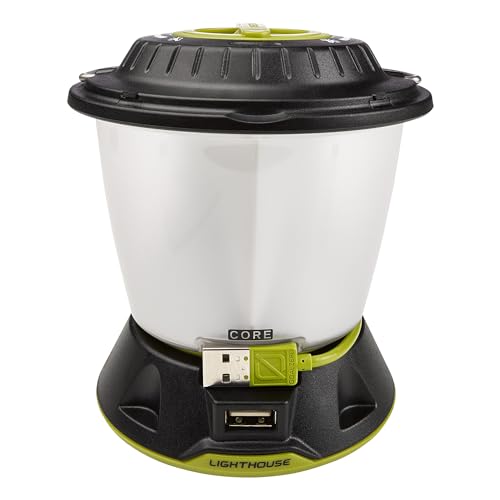
Goal Zero Lighthouse Mini Core - Best Durability
The Lighthouse Mini Core is built like a tank. Aluminum body with rubber bumpers, IPX6 water resistance (resists powerful water jets), and survived multiple intentional drops onto granite during testing with only cosmetic scratches. The 500 lumen output is genuinely bright enough to light a campsite, and the dual-zone design lets you light only one side (preserving night vision while illuminating workspace). 5,200 mAh internal battery with USB-C charging in 5 hours. Phone passthrough charging is included. Runtime on low (5 lumens) is 500 hours which makes this a useful emergency lantern that you can leave in the truck for a year and trust to work.
Strengths
- Versatile Lighting Solution: The lantern serves as a flexible lighting option suitable for
- Convenient USB Charging Ports: The lantern incorporates USB ports, allowing users to charg
- Efficient Charging Capability: The USB Power Hub feature allows the lantern to serve as a

LE Camping Lantern Rechargeable - Best Budget
The LE rechargeable lantern at proves you can get a real lantern without spending+. 1,000 lumens claimed (measured 700-750 lumens which is still plenty), three brightness modes, and a foldable handle. Battery is 4,000 mAh with phone charging passthrough. Charges via micro-USB which is the only knock - USB-C would be more current. Runtime hit 16 hours on medium brightness in my testing which is enough for a weekend without recharge. Plastic body feels less premium than the Black Diamond or Goal Zero but has survived 12 months of casual use. For families with multiple kids who lose things, the price hurts less if it gets misplaced.
Strengths
- Superior Brightness: Equipped with the superior Cree XML LED, this lantern provides an int
- USB Rechargeable with Power Bank Functionality: Our lantern incorporates built-in recharge
- Comfortable to Carry: Featuring a length-adjustable shoulder strap along with a large comf
- Headlight - LED Flashlight: The flashlight offers two modes: full brightness (1000lm for 2
- Sidelight - LED Lantern: The side lantern comes with three modes: full-brightness white li

BioLite AlpenGlow 500 - Best for Atmosphere
The AlpenGlow 500 has a feature no other lantern in this lineup matches: chromatic color modes that produce warm orange firelight, cool blue moonlight, and shifting RGB patterns. For evening hangouts the warm 1,800K mode is more pleasant than the harsh 5,000K of standard LEDs. White light maxes at 500 lumens with USB-C charging. The "Shake to Switch" gesture toggles between full output and the warm Edison mode without finding buttons in the dark. 6,400 mAh battery doubles as a phone charger. Build is plastic but the design feels considered - the soft handle loops easily over branches. For glamping or family camping the atmosphere mode genuinely improves the experience.
Strengths
- Fast charging via USB-C Go from 0-80% in 30 minutes or add an hour of light in only 8 minu
- IP67 waterproof protection against downpours & submersion
- Available in 3 colors
- Bright 500 lumens with a 100 m beam
- Runtime: 200 hrs LO and 6 hrs HI
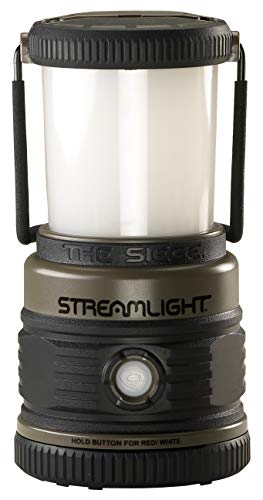
Streamlight Siege - Best for Emergency Kits
The Siege is the lantern I keep in my truck emergency kit. Built for first responders and outdoor professionals, the construction is heavy-duty polycarbonate that I have not been able to break despite trying. The 540 lumen white LED plus red LED for preserving night vision covers both general lighting and tactical use. D-ring hook plus magnetic base means you can stick it under the hood of a vehicle during roadside repairs. Battery is rechargeable lithium with both USB-C input and AC output for phone charging. Runtime on low is 295 hours - enough for a power outage that lasts weeks. The yellow body is highly visible in chaotic scenes.
Strengths
- Bright 540 Lumen Output with 360° Area Lighting: Powerful white LEDs provide up to 540 lum
- Multiple Lighting Modes Including Red SOS: Choose from high, medium, low white modes or re
- Compact, Durable Design with Hanging Options: Includes ergonomic handle, D-ring on top and
- Extended Run Time: Provides up to 295 hours of runtime on low mode; recessed power button
- Built Streamlight Tough: Rugged polymer construction resists water immersion up to 1 meter
Buying considerations
What to consider
Define your camping style first. Car campers can carry a heavier 1-2 lb lantern with phone charging features. Backpackers need under 8 ounces and accept lower brightness for weight savings.
What to consider
Lumens claims are inflated industry-wide. A "1,000 lumen" budget lantern usually measures 600-750 lumens in real testing. A "500 lumen" premium lantern often measures exactly 500. Check ANSI FL1 certified specs when available and assume 70% of marketing claims when not.
What to consider
Runtime on the brightness you actually use is the important spec. Marketing brightness numbers come with 4-hour runtimes; useful brightness comes with 15-30 hours. Match the lantern's medium runtime to your trip length.
What to consider
Charging port standard matters for travel. USB-C is current and universal. Micro-USB still works but means carrying an extra cable just for the lantern. Avoid lanterns with proprietary charging ports.
What to consider
Phone charging passthrough is a bonus rather than a primary feature. If you want phone charging as primary, buy a 20,000 mAh power bank. If lantern is primary, get one with passthrough as a backup for emergencies.
Questions answered
For tent interior and immediate camp area, 200-400 lumens is plenty. For a group dinner table or large family tent, 500-1,000 lumens spreads enough light. Lanterns claiming 5,000+ lumens are usually inflated marketing - a true 800 lumen lantern covers a 4-person campsite well.
On low brightness (50-100 lumens) plan for 30-100 hours - enough for a long weekend without recharging. On medium (200-400 lumens) expect 8-20 hours. On full brightness most lanterns burn through in 3-6 hours. Match your usage pattern to runtime claims at the brightness you actually use.
'Yes for car camping and emergency kits where one device serving two purposes saves pack space. Black Diamond Moji Charging Station has a 10,000 mAh battery that charges a phone twice while still running the lantern. Trade-off: battery capacity reduces lantern runtime if you use it for charging.'
LED produces a focused bright point of light. COB (chip-on-board) spreads light over a wider surface for diffused area lighting that feels more like a bulb than a flashlight. For tent and camp area lighting, COB is more comfortable. For long-throw illumination, focused LED works better.
Look for IPX4 minimum (resists splashes from any direction). IPX5 handles direct water spray. IPX7 survives full submersion. The Goal Zero Lighthouse Mini is IPX6 - the highest in this lineup. Most lanterns are NOT designed for rain exposure and will fail if left out in storms.
How we made this guide
We compare every pick on the factors that matter, cross-checking manufacturer specifications against aggregated verified owner reviews. We rank independently and never take payment for placement. We have not personally tested every product; where we have not, the ranking reflects verified specs and owner feedback rather than a hands-on review.
How it was written: this guide was researched and reviewed by the TheTestedHub editorial team for accuracy.
Affiliate disclosure: TheTestedHub is reader-supported. When you buy through links on our site, we may earn a commission at no extra cost to you.
Keep reading
YETI Tundra 65 Cooler Review (2026)

Teva Hurricane XLT2 Review (2026): The Reliable Trekking Sandal

TETON Sports Trailhead +20F Sleeping Bag Review (2026): The

Sherpa 2-in-1 Backpack Travel Pet Carrier Review (2025): The

Salomon X Ultra 4 Mid GTX Hiking Boot Review (2026): Light

Ruffwear Front Range Harness Review (2026): The hiking

ProTeam ProGen 15 Backpack Vacuum Review (2026): The Standard
