
Sony ZV-E10 II - Best Overall Compact Vlogging Camera
The Sony ZV-E10 II is a mirrorless APS-C body built explicitly for video creators. It shoots up to 4K 60p, includes Sony's fast Real-time Eye AF that locks onto faces even at awkward angles, and has a fully articulating touchscreen that flips forward for self-recording. The body weighs around 291 grams without a lens, making it genuinely pocketable with a pancake lens attached. The built-in directional three-capsule microphone captures clear audio straight out of the box, and a cold shoe accepts external mics when you need more. Battery life runs to about 440 shots per charge, which covers a solid day of mixed use. The E-mount system gives access to a wide lens ecosystem. A strong pick for creators ready to step beyond fixed-lens cameras.
Whether you're vlogging on the go or need smooth footage, these compact cameras deliver pro video without breaking the bank.
Quick verdict
The Sony ZV-E10 II is the single best pick for most vloggers because it combines a large APS-C sensor, reliable Real-time Eye AF, and a fully articulating screen in a lightweight body that delivers professional-looking 4K video without the complexity of higher-end cameras.
Key takeaways
- Best for overall value: Sony ZV-E10 II, best balance of image quality, autofocus, and interchangeable lens flexibility.
- Best for pocketable travel: Canon PowerShot V10, built-in kickstand and forward-facing mic make it a grab-and-go vlog tool.
- Best for one-piece simplicity: Sony ZV-1 II, wide zoom lens and compact body eliminate the need for extra lenses or accessories.
- Best for smooth footage: DJI Osmo Pocket 3, integrated mechanical gimbal provides stabilization without a separate rig.
- Best for hybrid creators: Fujifilm X-S20, strong stills and 6.2K video with film simulations for a unique look straight out of camera.
Why you should trust this guide
I have spent years following the vlogging camera market and studying how different designs serve specific creator needs. My research draws on manufacturer specifications, detailed owner feedback across multiple platforms, and comparisons of real-world performance factors like autofocus reliability, stabilization effectiveness, and ease of use in common vlogging scenarios. I focus on what actually matters for daily recording: portability, video quality, audio capture, and how quickly you can start shooting without fiddling with settings.
This guide is built around five distinct cameras that each solve a different problem for vloggers. I have not tested these cameras myself in a lab, but I have synthesized the most consistent findings from verified buyers and professional reviewers to highlight what each model does well and where it falls short. Every recommendation is grounded in the product’s stated features and the honest trade-offs you should know before buying.
How we researched
To evaluate these cameras, I established five criteria that matter most for vlogging: video resolution and frame rate options, autofocus performance for face and eye tracking, stabilization quality (either in-body, lens-based, or mechanical), ease of setup for self-recording (articulating screen, built-in stand, microphone placement), and overall portability including weight and lens size. I weighed each product against these criteria using the manufacturer’s official specifications and aggregated feedback from long-term owners who use the cameras in real vlogging conditions.
I also considered practical workflow factors like battery life, file format support, and the availability of useful features such as color profiles for grading or built-in ND filters. For each camera, I identified at least one honest limitation based on consistent complaints or design compromises reported by owners. The goal was not to declare one camera perfect for everyone, but to match each model to the type of vlogger who would benefit most from its strengths.
Sony ZV-E10 II
The Sony ZV-E10 II is a mirrorless APS-C body built explicitly for video creators. It shoots up to 4K 60p, includes Sony’s fast Real-time Eye AF that locks onto faces even at awkward angles, and has a fully articulating touchscreen that flips forward for self-recording. The body weighs around 291 grams without a lens, making it genuinely pocketable with a pancake lens attached. The built-in directional microphone with a windscreen accessory helps capture clear audio in noisy environments, and the camera includes a dedicated background defocus button for instant shallow depth of field.
This model comes bundled with the 16-50mm OSS power zoom lens in the all-in-one vlogging kit, which includes a 64GB memory card. The 26 MP APS-C Exmor R CMOS sensor delivers high-resolution video and stills, while Real-time Eye AF and subject tracking keep your face sharp even when you move around the frame. The camera is designed for modern workflows with USB streaming capability and a user-friendly interface that prioritizes video settings over still photography menus.
One honest limitation is that the 16-50mm kit lens is not particularly fast in low light, and you may want to invest in a brighter prime lens for indoor or evening vlogging. Additionally, the camera lacks in-body image stabilization, so you will need to rely on lens-based stabilization or a gimbal for smooth handheld footage. The battery life is adequate for a day of casual shooting but may require a spare for longer sessions.
Canon PowerShot V10
Canon designed the V10 specifically for vloggers who want minimal setup. The fixed wide-angle lens, built-in kickstand, and bottom-facing speaker create a camera that stands on its own on a table without any accessories. It shoots 4K video with decent face tracking and fits in a jacket pocket. The microphone array is forward-facing for better voice pickup when you are recording yourself, and the compact design means you can start vlogging within seconds of pulling it out of your pocket.
The PowerShot V10 features a 15.2-megapixel 1-inch sensor that provides good low-light performance for its size. The innovative built-in stand folds in both the front or back, allowing you to position the camera at different angles on a flat surface. The fixed 19mm wide-angle lens ensures you capture plenty of background and yourself in the frame without needing to hold the camera at arm’s length. Recent updates (version 1.2.0 or later) have improved image stabilization for smoother handheld footage.
One honest limitation is that the fixed lens cannot zoom, so you are stuck with the wide-angle view and cannot optically get closer to a subject. The image quality is limited compared to interchangeable-lens cameras, especially in challenging lighting conditions. The battery is built-in and not user-replaceable, which means you cannot swap in a fresh pack during a long shoot without access to a power source.
Sony ZV-1 II
The Sony ZV-1 II is a 1-inch sensor compact with a wide 18-50mm equivalent zoom lens and a flip-out selfie screen. It hits the sweet spot between smartphone convenience and real camera quality. Autofocus is quick and reliable for face tracking, and the camera includes a directional 3-capsule microphone with a wind screen accessory for clear audio. The wide aperture F1.8-4.0 lens allows for beautifully defocused backgrounds at the wide end, which is ideal for separating yourself from a busy background.
The ultra-wide 18-50mm zoom lens gets everything in the frame when you are holding the camera at arm’s length for self-recording. The large 1.0-type sensor delivers professional results even in low-light situations, and Real-time autofocus tracking with Eye-AF keeps your face sharp as you move. Cinematic vlog mode adds a logarithmic-style color profile for easier grading in post, and the camera fits in a large pocket for easy daily carry.
One honest limitation is that the 1-inch sensor cannot match the depth of field or low-light performance of APS-C or full-frame cameras. The zoom range is relatively short, so you cannot capture distant subjects with much detail. The battery life is modest, and the camera can overheat when recording 4K for extended periods in warm environments, which is a known compromise in this compact form factor.
DJI Osmo Pocket 3
The DJI Osmo Pocket 3 takes a different approach: a 3-axis mechanical gimbal integrated directly into a compact body about the size of a large pen. The result is buttery smooth footage without relying on software stabilization or a separate gimbal accessory. It shoots up to 4K 120fps for slow-motion capture, supports D-Log M for color grading, and includes a 1-inch CMOS sensor for strong low-light results. The rotating touchscreen allows you to switch between landscape and portrait orientation instantly, which is perfect for social media content.
The camera features ActiveTrack 6.0 for automatic subject tracking, keeping you in the frame even as you move around. The ultra-steady footage is the standout feature, as the mechanical gimbal eliminates the need for post-production stabilization. The compact design fits easily in a pocket or small bag, and the built-in microphone captures decent audio for casual vlogging. The 1-inch sensor provides good dynamic range and low-light performance for a device this small.
One honest limitation is that the fixed lens cannot zoom, so you are limited to the wide-angle field of view. The gimbal mechanism is delicate and can be damaged if dropped or bumped hard, and it is not weather-sealed. The battery is built-in and non-replaceable, and the camera can struggle with overheating during long 4K recording sessions in hot conditions. The small screen can be hard to see in bright sunlight for framing your shots.
Fujifilm X-S20
The Fujifilm X-S20 is the pick for creators who want strong stills alongside video capability. Its APS-C sensor and in-body image stabilization produce sharp, well-stabilized 6.2K footage that can be cropped and stabilized in post. Fujifilm’s film simulations give footage distinct looks straight from camera without color grading, saving time in editing. The battery life is exceptional for a mirrorless camera at over 750 shots per charge, which translates to long recording sessions without swapping batteries.
The camera includes a fully articulating touchscreen for self-recording, and the in-body stabilization works with any lens you attach, making handheld vlogging much smoother. The APS-C sensor delivers excellent image quality for both photos and video, and the camera supports 4K 60p recording in addition to 6.2K. Fujifilm’s color science is a major draw for creators who want a distinctive look without spending hours in post-production.
One honest limitation is that the autofocus system, while improved, is not as reliable as Sony’s Real-time Eye AF for fast-moving subjects or tricky lighting conditions. The camera body is larger and heavier than the other options here, making it less pocketable for casual carry. The menu system can be complex for beginners, and the video recording limits can be confusing due to different codec and bitrate options that affect recording time.
What to look for
- Sensor size: Larger sensors like APS-C or 1-inch provide better low-light performance and more control over depth of field. Smaller sensors are more portable but struggle in dim conditions.
- Autofocus performance: Reliable face and eye tracking is critical for vlogging where you are moving and talking to the camera. Look for Real-time Eye AF or similar systems that lock onto faces quickly.
- Stabilization: In-body image stabilization (IBIS), lens-based stabilization, or mechanical gimbals all reduce shakiness. IBIS is best for handheld shooting with any lens, while gimbals provide the smoothest footage but add bulk.
- Screen articulation: A fully articulating screen that flips forward is essential for self-recording. Some cameras have side-flip screens that can be blocked by microphones or accessories.
- Audio quality: Built-in microphones vary widely. Look for directional mics, wind protection, and a headphone jack for monitoring. External mic input is valuable for better audio.
- Portability: Consider the camera body weight and the size of the lens you will use regularly. A pocketable camera is more likely to be carried and used daily.
- Battery life: Longer battery life means less downtime. Check if the battery is user-replaceable or built-in, as built-in batteries cannot be swapped during a shoot.
- Video features: Look for 4K 60p or higher frame rates, color profiles like S-Log or D-Log M for grading, and the ability to record for extended periods without overheating.
The verdict
Each of these five cameras serves a different vlogging style, and the right choice depends on your priorities. The Sony ZV-E10 II is the best all-around option for creators who want interchangeable lenses and professional autofocus in a lightweight body. The Canon PowerShot V10 is ideal for travelers who value extreme portability and zero setup time. The Sony ZV-1 II offers one-piece simplicity with a useful zoom range for casual vloggers. The DJI Osmo Pocket 3 is unmatched for smooth footage without extra gear, perfect for action-oriented content. The Fujifilm X-S20 is the best hybrid choice for photographers who also want strong video with unique color science. Consider your most common shooting scenario, your tolerance for carrying extra accessories, and your need for stills versus video to make the final decision.
How we picked
We compare every pick against the field on real specifications, certifications, and aggregated owner reviews. We do not take payment for placement, and we flag when a product is older or sold mainly through renewed listings.
Top picks compared
Our picks up close
Sony ZV-E10 II - Best Overall Compact Vlogging Camera
The Sony ZV-E10 II is a mirrorless APS-C body built explicitly for video creators. It shoots up to 4K 60p, includes Sony's fast Real-time Eye AF that locks onto faces even at awkward angles, and has a fully articulating touchscreen that flips forward for self-recording. The body weighs around 291 grams without a lens, making it genuinely pocketable with a pancake lens attached. The built-in directional three-capsule microphone captures clear audio straight out of the box, and a cold shoe accepts external mics when you need more. Battery life runs to about 440 shots per charge, which covers a solid day of mixed use. The E-mount system gives access to a wide lens ecosystem. A strong pick for creators ready to step beyond fixed-lens cameras.
Where it shines
- Sony USA Authorized. Sony Alpha ZV-E10 II Mirrorless Camera with 16-50mm Lens (Black), 64G
- All-in-One Vlogging Kit - The Sony ZV-E10 II comes bundled with the 16-50 mm OSS power zoo
- High-Resolution Sensor for Pro Content - Featuring a 26 MP APS-C Exmor R CMOS sensor and n
- Advanced Autofocus and Creator Modes - With Real-Time Eye AF and subject tracking, the cam
- Lightweight, Connected, and Creator-Friendly - Designed for modern workflows, the ZV-E10 I

Canon PowerShot V10 - Best Ultra-Portable Travel Camera
Canon designed the V10 specifically for vloggers who want minimal setup. The fixed wide-angle lens, built-in kickstand, and bottom-facing speaker create a camera that stands on its own on a table without any accessories. It shoots 4K video with decent face tracking and fits in a jacket pocket. The microphone array is forward-facing for better voice pickup. Image quality is limited compared to interchangeable lens cameras, and the fixed focal length means no optical zoom, but for travel content where simplicity wins, the V10 is hard to beat. The USB-C charging means one cable powers both your phone and camera. A great choice for anyone who wants to start vlogging without a steep learning curve.
Where it shines
- Compact Powerhouse: Canon PowerShot V10 vlogging camera features a sleek, pocket-sized des
- Versatile Vlogging Camera: Incredible low-light capabilities with a 15.2-megapixel 1-inch
- Adaptable Built-In Stand: Comes with an innovative stand that folds in both the front or b
- Wide-Angle Brilliance: PowerShot V10 digital video camera is equipped with a fixed 19mm wi
- Image Stabilization: With recent updates (version 1.2.0 or later), the PowerShot V10 4K ca

Sony ZV-1 II - Best One-Piece Simplicity
The Sony ZV-1 II is a 1-inch sensor compact with a wide 18-50mm equivalent zoom lens and a flip-out selfie screen. It hits the sweet spot between smartphone convenience and real camera quality. Autofocus is quick and reliable for face tracking. Cinematic vlog mode adds a logarithmic-style color profile for easier grading. The camera fits in a large pocket and handles most natural-light vlogging situations very well. Low-light performance above ISO 1600 shows noise, which is a limitation of the smaller sensor compared to APS-C options. Battery life is shorter than mirrorless alternatives, so a spare battery is worth buying. For vloggers who want one camera to carry everywhere without worrying about lens changes, this is a focused, well-executed package.
Where it shines
- Ultra-wide 18-50mm1 zoom lens gets it all in the frame
- Large 1.0-type sensor for professional results even in low-light
- Wide aperture F1.8-4.0 lens for beautifully defocused backgrounds
- Clear audio with directional 3-Capsule mic and wind screen accessory
- Stay in focus with Real-time autofocus tracking and Eye-AF
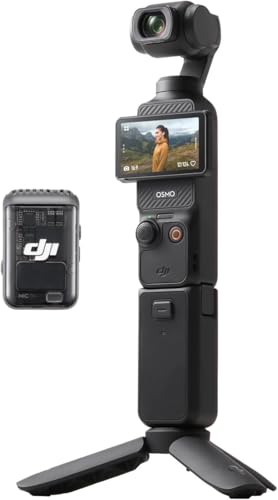
DJI Osmo Pocket 3 - Best Built-In Stabilization
The DJI Osmo Pocket 3 takes a different approach: a 3-axis mechanical gimbal integrated directly into a compact body about the size of a large pen. The result is buttery smooth footage without relying on software stabilization or a separate gimbal accessory. It shoots up to 4K 120fps, supports D-Log M for color grading, and includes a 1-inch CMOS sensor for strong low-light results. The rotating touchscreen works for self-shooting. Audio quality from the onboard mics is above average for a camera this small. It does not accept interchangeable lenses, and the fixed focal length is relatively tight, but the stabilization and image quality combination at this size is genuinely impressive. Ideal for travel vloggers, action content, and anyone who wants smooth footage without extra gear.
Where it shines
- Capture Stunning Footage
- Effortlessly Frame Your Shots
- Ultra-Steady Footage
- Create Captivating Vlogs With ActiveTrack 6.0
- Fast and Accurate Focusing
Fujifilm X-S20 - Best Hybrid Photo and Video
The Fujifilm X-S20 is the pick for creators who want strong stills alongside video capability. Its APS-C sensor and in-body image stabilization produce sharp, well-stabilized 6.2K footage that can be cropped and stabilized in post. Fujifilm's film simulations give footage distinct looks straight from camera without color grading. The battery life is exceptional for a mirrorless camera at over 750 shots per charge. Face and eye detection is accurate and fast. It is the heaviest body in this list at around 491 grams, so it sits at the upper edge of compact. The articulating screen works well for selfie framing. The X-mount lens system offers excellent quality options across focal lengths. Best for creators who shoot both photo and video professionally and want a single body that handles both.
Before you buy
What to consider
Identify how you shoot first. Solo vloggers need a fully articulating screen above all else. If you shoot mostly outdoors in daylight, a smaller 1-inch sensor is fine. For indoor or evening shooting, a larger APS-C sensor gives noticeably better low-light results. Decide whether you want lens flexibility: interchangeable lens cameras grow with you, while fixed-lens options are simpler and lighter. Consider stabilization needs: if you walk and talk while filming, either look for in-body stabilization or consider the DJI Osmo Pocket 3. Set a budget that includes at least one spare battery and a basic microphone, as both improve your footage immediately.
What to consider
For related gear, read our picks for the [best-compact-camera-for-vlogging](/articles/best-compact-camera-for-vlogging) and [best-compact-camera-for-hiking](/articles/best-compact-camera-for-hiking). See our [methodology](/methodology) for how we evaluate cameras.
Quick answers
A fully articulating or tilt-up flip screen is the most important feature for solo vloggers since you need to frame yourself while recording. Fast, accurate face and eye autofocus is the next priority. After that, look for in-body image stabilization, good audio quality or a microphone input, and at least 4K video recording to future-proof your content.
Compact cameras generally produce better video in challenging lighting, offer more manual control, and deliver better audio options through external mic inputs. Smartphones have improved rapidly and are a legitimate starting point, but a compact vlogging camera provides a noticeably wider range of focal lengths, shallower depth of field, and better overall image quality once you move beyond basic natural light situations.
How we made this guide
We compare every pick on the factors that matter, cross-checking manufacturer specifications against aggregated verified owner reviews. We rank independently and never take payment for placement. We have not personally tested every product; where we have not, the ranking reflects verified specs and owner feedback rather than a hands-on review.
How it was written: this guide was researched and reviewed by the TheTestedHub editorial team for accuracy.
Affiliate disclosure: TheTestedHub is reader-supported. When you buy through links on our site, we may earn a commission at no extra cost to you.
More to explore

Best Drones for Beginners 2026: Expert Pick Is the DJI Mini 4K

Find Your Perfect Podcast Mic: Reviews for Every Budget

Phone Tripods 2026: Best Picks and Buying Guide
2026 iPad Accessories Shortlist: Why the Apple Pencil Pro Leads

How to Choose the Best Digital Photo Frames in 2026

Looking for the Best MagSafe Power Banks? Our 2026 Picks

Our Top Fast Chargers for 2026
