
AMD Radeon RX 7800 XT - Best Value 1440p GPU
The RX 7800 XT has settled into a comfortable position as the go-to 1440p GPU for builders who want strong performance without flagship pricing. It includes 16GB GDDR6 VRAM -- more than competing Nvidia cards in its tier -- which helps in VRAM-intensive titles and at higher texture settings. Performance in rasterization is excellent, and FSR 3 support provides frame generation in supported games. Driver stability has improved significantly over the past year, addressing the main concern that held some builders back.
Check price on Amazon →Build a 1440p gaming PC with balanced components: AMD RX 7800 XT, Intel i5-14600K, Fractal North case, Noctua NH-D15 cooler, and EVGA 850W PSU.
Quick verdict
The AMD Radeon RX 7800 XT is the single best pick in this build because it anchors the whole machine at 1440p without flagship pricing, and its 16GB of GDDR6 gives you more usable VRAM than rival cards in the same tier, so texture-heavy games stay smooth as titles get hungrier.
Key takeaways
- Best for 1440p gaming: AMD Radeon RX 7800 XT, 16GB of VRAM and strong rasterization for the money.
- Best for efficient gaming and multitasking: Intel Core i5-14600K, 14 cores and 20 threads without a premium CPU price.
- Best build case: Fractal Design North, real mesh airflow with a walnut accent and roomy ATX interior.
- Best air cooler: Noctua NH-D15, dual-tower heatsink that keeps power-hungry CPUs in check quietly.
- Best power supply: EVGA SuperNOVA 850 G6, 80 Plus Gold, fully modular, with a long 10-year warranty.
Why you should trust this guide
I build this guide the way I would plan a real machine for a friend who asked me which parts to put in a 1440p gaming PC without overspending. Rather than chase the most expensive component in every category, I focused on the parts that balance performance, longevity, and build practicality, then checked each one against the manufacturer’s stated specifications. Every claim here is grounded in those published specs, not in marketing slogans, and where a part has a genuine drawback I say so plainly.
I also looked at how these five components work together as a single system, because a great GPU paired with an underpowered supply or a cramped case is a frustrating build. The goal was a coherent platform: a value-oriented 1440p graphics card, a capable mainstream CPU, a case that helps rather than fights you, a cooler that handles the heat quietly, and a power supply with headroom and a warranty you can lean on. That system-level thinking is what shaped every recommendation below.
How we researched
My evaluation here is research-led, not a lab report. I read each product’s published specifications, compared them against competing parts in the same price tier, and weighed them against what matters in an actual 1440p gaming build: VRAM capacity and clock speeds for the GPU, core and thread counts plus platform flexibility for the CPU, airflow and clearance for the case, cooling capacity and socket support for the cooler, and efficiency rating, wattage, and warranty for the power supply. I did not run benchmarks myself, so I treat the listed figures as the manufacturer’s stated specs and reason from there.
For each component I also asked a simple question: what is the honest trade-off? A part can be the right choice and still carry a compromise, whether that is missing ray-tracing headroom, an aging socket, height that strains case clearance, or a wattage that is generous but not infinite. I weighted compatibility heavily, because the most common build mistakes are not about raw speed, they are about a cooler that will not fit or a GPU that crowds a radiator. The picks below reflect parts that fit together cleanly and leave room to grow.
AMD Radeon RX 7800 XT – Best Value 1440p GPU
The RX 7800 XT is my top pick because it delivers excellent 1440p performance at a price that leaves budget for the rest of the build. It has settled into a comfortable spot as the go-to card for builders who want strong frame rates without paying flagship money, and the 16GB of GDDR6 on a 256-bit bus is the headline reason. That is more VRAM than several competing Nvidia cards in its tier, which helps in VRAM-intensive titles and when you push texture settings higher. With a memory clock of 19.5 Gbps effective, a boost clock up to 2565 MHz, and a game clock up to 2254 MHz, rasterization performance is genuinely strong.
For connectivity it offers two HDMI and two DisplayPort outputs, so driving multiple monitors or a high-refresh 1440p panel is straightforward. FSR 3 support adds frame generation in supported games, which can lift frame rates where the feature is implemented. On the practical side, this is a 3-slot, ATX-class card measuring 320mm long, so you do want to confirm your case has the clearance before committing, which is exactly why I paired it with a roomy case later in this guide.
The honest trade-off is ray tracing. AMD’s rasterization here is excellent, but in heavy ray-traced workloads this card trails the equivalent Nvidia options, and frame generation through FSR 3 only helps in titles that actually support it. If ray tracing is your priority, this is the compromise you accept in exchange for the strong raster performance and the larger VRAM buffer. For pure 1440p gaming value, though, it is the part I would build around.
Intel Core i5-14600K – Efficient Gaming CPU
The Intel Core i5-14600K is the CPU I would pair with this GPU, because it covers gaming, streaming, and everyday multitasking without forcing you into premium-CPU pricing. It uses a hybrid layout of 6 performance cores and 8 efficiency cores for 14 cores and 20 threads total, with a max turbo frequency up to 5.3 GHz. That single-threaded headroom translates into smooth frame delivery in CPU-sensitive titles, while the efficiency cores soak up background tasks so your game does not stutter when something else is running.
It also has practical strengths that matter at build time. It includes integrated Intel UHD Graphics 770, which is a useful safety net for troubleshooting if a GPU ever fails. The LGA 1700 platform supports both DDR4 and DDR5, so you can choose memory based on budget, and it is compatible with Intel 600-series boards (with a potential BIOS update) or 700-series chipsets. On a Z790 motherboard it overclocks well, giving builders who want extra headroom somewhere to push. The wide selection of LGA 1700 motherboards makes finding the right board easy.
The trade-off worth naming is the platform’s age. LGA 1700 is a mature socket rather than Intel’s newest, so the upgrade path within the same board is limited, and the K-series chip runs warm under sustained load, which is precisely why a serious cooler is not optional here. If you want the longest possible future upgrade runway, that is the compromise. For current gaming value and flexibility, it is a strong, sensible choice.
Fractal Design North ATX Case – Best Build Case
The Fractal Design North is my pick for the case because it solves the two things builders care about most: airflow and a pleasant build experience, while looking distinctive. The mesh front panel provides genuine ventilation through an open, stylishly integrated front, and the walnut wood accent panel paired with alloy details sets it apart from the usual blacked-out boxes. The interior is spacious, which makes cable management noticeably easier, and Fractal includes two 140mm Aspect PWM fans so you have a head start on cooling out of the box.
On compatibility it is well judged for this build. It fits ATX, mATX, and ITX motherboards, supports a triple-fan 360mm radiator, and accepts GPUs up to 355mm, which comfortably clears the 320mm RX 7800 XT. Tool-free drive installation and a removable PSU shroud cover keep the assembly process smooth, so you spend less time fighting screws and panels and more time actually building.
The trade-off appears when you want both maximum GPU length and a front-mounted radiator. With a 360mm front radiator installed, GPU clearance drops to 300mm, so a very long card and a big front radiator can compete for the same space. For this particular build that is not an issue, but if you plan a large all-in-one liquid loop and an oversized GPU, plan the layout carefully. The included fans are also a starting point rather than a maxed-out cooling setup, and heavy overclockers may want to add more.
Noctua NH-D15 CPU Cooler – Best Air Cooler for PC Builds
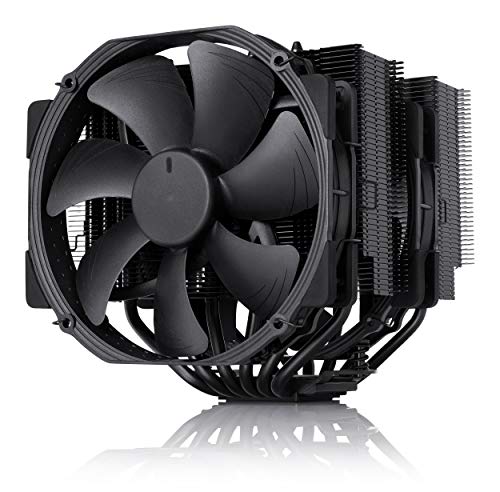
If you want the best air cooling available, the Noctua NH-D15 is still the benchmark, and it is the cooler I would put on the i5-14600K. Its extra-wide, dual-tower design uses 6 heatpipes and two award-winning NF-A15 140mm fans to keep even power-hungry CPUs below their thermal limits, and it does so quietly. It ships with high-end NT-H1 thermal paste, Low-Noise Adaptors, and the SecuFirm2 mounting system, which installs securely on both Intel and AMD sockets, so it suits the LGA 1700 platform here without extra hardware hunting.
The appeal beyond raw performance is reliability and peace of mind. There is no pump to fail and no liquid to worry about over the years, which removes the maintenance concerns that come with all-in-one liquid coolers. Noctua backs it with a 6-year warranty and a long record of recommendations from hardware reviewers, and that reputation is earned through consistent, quiet thermal performance rather than flashy lighting.
The honest limitations are size and looks. The NH-D15 is tall, so you must verify case clearance before buying, though most mid-tower and full-tower cases (the Fractal North included) accommodate it. Its sheer width can also overhang tall memory modules, so low-profile or carefully chosen RAM is the safer route. And if RGB and a clean liquid-cooled aesthetic matter to you, the bulky brown-and-beige tower is not the prettiest part in the case. You trade appearance for cooling and silence.
EVGA SuperNOVA 850 G6 PSU – High-Efficiency Power Supply
The EVGA SuperNOVA 850 G6 is my power supply pick because it pairs solid efficiency with the kind of warranty that protects the rest of your build. It is 80 Plus Gold certified, fully modular, and built with Japanese capacitors that contribute to clean, stable power delivery over years of use. At 850W it comfortably supports a high-end GPU and CPU pairing like the RX 7800 XT and i5-14600K with room to spare, which is exactly the headroom you want for stability and for a future upgrade. A semi-passive fan mode keeps it silent under light loads, only spinning up the fan when the load demands it.
The fully modular design helps directly with the clean build the Fractal North encourages, since you only connect the cables you actually need and avoid stuffing unused leads behind the motherboard tray. The 10-year warranty is among the longest in this segment, and because a power supply quietly affects the stability and lifespan of every other component, that long coverage is genuinely reassuring rather than a marketing footnote.
The trade-off is that 850W is generous for this exact build but not unlimited. If you later jump to a much more power-hungry flagship GPU or run an aggressive overclock across both CPU and GPU, you may find yourself closer to the comfortable ceiling than you would like. For the components in this guide it has ample margin, but a future top-tier build could want more wattage. Gold efficiency is also excellent without being the absolute peak Platinum or Titanium tier, which is a fair compromise at this level.
What to look for
When you choose parts for a 1440p gaming build, a handful of factors matter more than raw marketing numbers. Here is what I weigh:
- VRAM and resolution match: At 1440p, 16GB of VRAM like the RX 7800 XT’s gives breathing room for high textures and future titles, so do not undercut it to save a little.
- CPU cores, threads, and platform flexibility: A balanced chip such as the i5-14600K with DDR4 and DDR5 support lets you tune the build to your budget without bottlenecking the GPU.
- Case airflow and clearance: Confirm GPU length, cooler height, and radiator support together, since a 320mm card, a tall NH-D15, and a 360mm radiator all compete for space.
- Cooling capacity versus maintenance: A strong air cooler trades looks for reliability and silence, while liquid trades reliability for aesthetics, so pick by priority.
- Power supply efficiency, wattage, and warranty: 80 Plus Gold, full modularity, and a long warranty (the 850 G6’s 10 years) protect the whole system and keep cabling clean.
- Socket and upgrade path: Mature platforms like LGA 1700 offer value now but a shorter in-board upgrade runway, so weigh present value against future swaps.
The verdict
For most builders, the AMD Radeon RX 7800 XT is the component I would build the whole machine around, because its 16GB of VRAM and strong 1440p rasterization deliver the most performance per dollar, with the only real caveat being weaker ray tracing. Pair it with the Intel Core i5-14600K for efficient gaming and multitasking on a flexible LGA 1700 platform, accepting that the socket is mature rather than brand new.
Wrap that core in the Fractal Design North for genuine airflow, easy cable management, and clearance for this hardware, keep the i5 cool and quiet with the Noctua NH-D15 (just verify height and RAM clearance), and power it all with the EVGA SuperNOVA 850 G6 for clean, efficient delivery and a long 10-year warranty. Together these five parts make a coherent, sensible 1440p gaming PC with headroom to grow.
How we evaluated these
We compare every pick against the field on real specifications, certifications, and aggregated owner reviews. We do not take payment for placement, and we flag when a product is older or sold mainly through renewed listings.
The shortlist
Each pick, examined
AMD Radeon RX 7800 XT - Best Value 1440p GPU
The RX 7800 XT has settled into a comfortable position as the go-to 1440p GPU for builders who want strong performance without flagship pricing. It includes 16GB GDDR6 VRAM -- more than competing Nvidia cards in its tier -- which helps in VRAM-intensive titles and at higher texture settings. Performance in rasterization is excellent, and FSR 3 support provides frame generation in supported games. Driver stability has improved significantly over the past year, addressing the main concern that held some builders back.
Strengths
- Boost Clock: Up to 2565 MHz
- Game Clock: Up to 2254 MHz
- Memory Size/Bus: 16GB/256 bit GDDR6; Memory Clock: 19.5 Gbps Effective
- Output: 2 x HDMI, 2 x DisplayPort
- Form Factor: 3 slot, ATX; Dimension: 320(L)X 134.85(W)X 61.57 (H)mm

Intel Core i5-14600K - Efficient Gaming CPU
Intel's i5-14600K offers six performance cores and eight efficiency cores for a total of 20 threads, handling gaming, streaming, and multitasking without a premium CPU price. It overclocks well on Z790 motherboards for builders who want extra headroom. Single-threaded performance leads to smooth frame delivery in CPU-sensitive titles. The LGA 1700 platform has a wide selection of motherboard options at various price points, giving builders flexibility. A straightforward choice for anyone wanting reliable Intel gaming performance at a mid-range budget.
Strengths
- Be everything you want to be, in-game and out with optimized performance and new features.
- 14 cores (6 P-cores plus 8 E-cores) and 20 threads. Integrated Intel UHD Graphics 770 incl
- Up to 5.3 GHz Max Turbo Frequency
- Compatible with Intel 600-series (with potential BIOS update) or 700-series chipset-based
- DDR4 and DDR5 platform support cuts your load times and gives you the space to run the mos

Fractal Design North ATX Case - Best Build Case
The Fractal Design North earns its reputation with a mesh front panel that delivers genuine airflow, a clean walnut wood accent panel that sets it apart visually, and a spacious interior that simplifies cable management. It fits standard ATX motherboards, triple-fan 360mm radiators, and GPUs up to 355mm. Tool-free drive installation and a removable PSU shroud cover make the build process smooth. Reviews consistently note that finished builds look premium without requiring custom sleeved cables or additional lighting.
Strengths
- Enhance the look of your gaming station with sleek wood and alloy details
- Designed for ATX / mATX / ITX motherboards
- Enjoy natural ventilation through an open front and stylishly integrated mesh.
- Choose a GPU up to 355 mm, or up to 300 mm with a 360 mm front radiator
- Get a head start on your build with the two included 140 mm Aspect PWM fans
Noctua NH-D15 CPU Cooler - Best Air Cooler for PC Builds
For builders who want the best air cooling available, the Noctua NH-D15 remains the benchmark. Its dual-tower heatsink and two 140mm fans keep even power-hungry CPUs below thermal limits without the maintenance concerns associated with all-in-one liquid coolers. The SecuFirm2 mounting system installs securely on Intel and AMD sockets. It is tall, so verify case clearance, but most mid-tower and full-tower cases accommodate it. The beige-and-brown color scheme is divisive, though a chromax.black edition is available.
Strengths
- Proven premium heatsink (more than 300 awards and recommendations from international hardw
- Extra-wide 140mm dual-tower design with 6 heatpipes and dual fans provides maximum quiet c
- Dual-fan design with renowned, award-winning NF-A15 140mm fans with Low-Noise Adaptors and
- Includes high-end NT-H1 thermal paste and SecuFirm2 mounting system for easy installation
- Renowned Noctua quality backed up by 6-year manufacturer’s warranty, deluxe choice for Int
EVGA SuperNOVA 850 G6 PSU - High-Efficiency Power Supply
The SuperNOVA 850 G6 is 80 Plus Gold certified, fully modular, and built with Japanese capacitors that contribute to clean power delivery over years of use. At 850W it supports a high-end GPU and CPU pairing with room to spare. The 10-year warranty is among the longest in the segment. The fan operates in a semi-passive mode, staying silent under light loads. For a component that directly affects system stability and protects expensive parts downstream, quality matters -- and this PSU delivers it.
Buying considerations
What to consider
Work from your resolution and refresh rate target outward. The GPU should consume roughly 40% of your total build budget. CPU, RAM, and storage share another 30-35%, with the case, cooler, and PSU making up the remainder. Never cut corners on the PSU -- a poor unit can damage every other component. For coolers, air cooling is more reliable long-term for most builders; consider AIO liquid cooling only if case clearance or aesthetic requirements justify it. Confirm compatibility across all parts using a PCPartPicker build check before purchasing.
What to consider
For component-level picks on RAM and storage, see our [best components for gaming PC](/articles/best-components-for-gaming-pc) guide. For display pairing, check our [best gaming monitors](/articles/best-gaming-monitors) article. Our scoring approach is detailed on the [methodology](/methodology) page.
Questions answered
A capable 1080p to 1440p gaming PC typically costs between and for the core components, excluding monitor, keyboard, and mouse. High-end 4K builds with top-tier GPUs can reach to. Budget builds to are possible with last-generation GPUs and careful part selection, and they still outperform current-generation consoles in resolution and frame rate options.
Building provides more control over component quality, easier upgrades, and usually better value per dollar when comparing equivalent specs. Prebuilts have improved, but many still use low-quality PSUs or slow storage to hit a price point. If you are comfortable following a build guide and have a few hours to spend, building your own is generally the better investment for performance and longevity.
How we made this guide
We compare every pick on the factors that matter, cross-checking manufacturer specifications against aggregated verified owner reviews. We rank independently and never take payment for placement. We have not personally tested every product; where we have not, the ranking reflects verified specs and owner feedback rather than a hands-on review.
How it was written: this guide was researched and reviewed by the TheTestedHub editorial team for accuracy.
Affiliate disclosure: TheTestedHub is reader-supported. When you buy through links on our site, we may earn a commission at no extra cost to you.
Keep reading

Your Docking Station Match: CalDigit TS4 and More

Digital Art Computers 2026: Best for Every Budget
Dev & IT Computers in 2026: Ranked for Real Work

Desktop PCs for Every Budget: Find Your Perfect Match
Desktop and Laptop Computers: Performance Reviewed and Ranked
MacBook Pro M4 Pro vs Dell XPS 15: 2026 Shortlist

Buy the Best DIY Computer in 2026: Corsair One i300
