
Sun-Mar Excel NE - Best Composting Toilet for Full-Time Home Use
The Sun-Mar Excel NE (Non-Electric) is designed for year-round residential use with up to three adults. The Bio-drum composting chamber mixes waste efficiently and the multi-chamber design lets partially composted material move to a finishing drawer while fresh waste continues composting separately. It requires no electricity for the composting process itself, though adding the optional fan kit improves odor management significantly in fully enclosed bathrooms. The unit is NSF-certified, which matters for permit applications in many states. Build quality is robust and replacement parts are well-supported.
Check price on Amazon →Discover why the Sun Mar Excel NE is the best full time composting toilet for home use, offering odor free performance and low maintenance for daily living.
Quick verdict
The Sun-Mar Excel NE is the best composting toilet for full-time home use because it handles three adults year-round with no electricity required, uses a patented Bio-drum for fast composting, and is NSF certified for safety.
Key takeaways
- Best for full-time home use: Sun-Mar Excel NE, handles up to three adults year-round with no electricity.
- Best for cabins and secondary bathrooms: Nature’s Head Self-Contained, compact and durable with urine-diverting design.
- Best for low-maintenance households: Separett Villa 9215, automatic rotating solids container eliminates manual mixing.
- Best central composting system: Sun-Mar Centrex 2000, remote unit lets you use a standard toilet upstairs.
- Best automated home composting toilet: BioLet 65A, electric mixing arm and heater accelerate decomposition with minimal effort.
Why you should trust this guide
I have been researching and writing about home sustainability products for years, and composting toilets are one of the most misunderstood categories in the residential market. Many homeowners assume they are only for RVs or off-grid cabins, but modern designs have made them viable for full-time home use. This guide is based on a thorough analysis of manufacturer specifications, owner reviews across multiple platforms, and direct conversations with people who have installed these units in their primary residences. I focused on products that are widely available, well-documented, and backed by real customer experiences rather than marketing hype.
Each product in this list was evaluated against the same criteria: capacity for residential use, ease of maintenance, odor control, installation requirements, and long-term durability. I did not physically test these units in a lab, but I synthesized many verified owner reports to identify consistent strengths and weaknesses. The recommendations here reflect what actual users have found to work well in practice, not just what the manufacturer claims. I also prioritized products with clear documentation and available replacement parts, because a composting toilet is only useful if you can maintain it for years.
How we researched
I evaluated each composting toilet based on five core criteria that matter most for home use. First, capacity and user load: how many people can use the toilet regularly without overloading the composting chamber. Second, odor management: how the system handles ventilation, urine diversion, and composting air flow. Third, maintenance burden: how often you need to empty solids, manage liquids, and clean the unit. Fourth, installation complexity: whether the unit requires electrical work, plumbing connections, or structural modifications. Fifth, build quality and warranty: whether the materials and construction suggest a long service life.
For each product, I cross-referenced the manufacturer’s stated features with patterns in owner reviews to identify where reality matches the marketing. I looked for recurring complaints about odor, mechanical failures, or difficulty emptying. I also checked whether replacement parts like fans, agitators, or composting media are readily available. The products that made this list are those that consistently deliver on their promises, with limitations that are manageable for the intended use case. I did not include any product that had widespread reports of structural failure or persistent odor issues that could not be resolved.
Sun-Mar Excel NE – Best Composting Toilet for Full-Time Home Use
The Sun-Mar Excel NE is a self-contained composting toilet designed for year-round residential use with up to three adults. Its defining feature is the patented Bio-drum, a rotating drum that mixes waste efficiently to speed up the composting process. The multi-chamber design allows partially composted material to move to a finishing drawer while fresh waste continues composting separately, which means you never have to handle raw waste. The unit requires no electricity for the composting process itself, though you can add an optional fan kit if you want extra ventilation. It is NSF certified, meaning it has been independently tested for sanitation and safety.
This toilet is vented for odor-free operation and requires no water connection, making it ideal for homes where a conventional toilet is not an option or not cost effective. The one-piece construction is easy to install and takes up about the same footprint as a standard toilet. Owners report that the composting process works well when you follow the manufacturer’s instructions for adding peat moss or coconut coir and maintaining the correct moisture balance. The finishing drawer makes emptying simple and clean, typically every few months depending on usage.
A real limitation of the Sun-Mar Excel NE is that it is heavy and bulky compared to urine-diverting models, which can make installation in tight spaces more challenging. The unit weighs over 80 pounds empty and requires a sturdy floor. Additionally, because it is a non-electric model, the composting process is slower in cold environments, so you need to keep the room temperature above freezing for optimal performance. Some owners also note that the Bio-drum requires manual turning every few days, which can be forgotten in busy households.
Nature’s Head Self-Contained – Best for Cabins and Secondary Bathrooms
The Nature’s Head Self-Contained composting toilet is compact enough for small bathroom footprints while handling regular residential use for one to two people effectively. Its stainless steel hardware and durable polyethylene construction are built to resist corrosion and cracking, even in humid or coastal environments. The urine-diverting design keeps the composting chamber dry, which is critical for controlling odors and speeding the decomposition of solid waste. You add peat moss or coconut coir to the solids chamber, and the urine goes into a separate tank that you empty every few days.
This toilet is designed for simplicity and reliability. The solids chamber has a crank handle that mixes the waste periodically, and the urine tank has a spout for easy emptying. The compact footprint means it fits in spaces where a full-size composting toilet would not, such as a small cabin bathroom or a secondary bathroom in a house. Owners appreciate that the construction feels solid and that replacement parts are widely available. The unit comes with a two-year warranty and is made in the United States.
A real limitation of the Nature’s Head is that the urine tank needs to be emptied frequently, especially with two people using the toilet regularly. The 2.4-gallon urine tank can fill up every two to three days, which may be inconvenient for some households. Also, the seat height is slightly lower than a standard toilet, which some users find uncomfortable for extended sitting. The manual crank can also be difficult to turn if the solids chamber becomes too full or compacted, requiring careful management of the composting material.
Separett Villa 9215 – Best for Low-Maintenance Households
The Separett Villa 9215 distinguishes itself with an automatic rotating solids container that eliminates the need for manual mixing or agitation. Biodegradable bags line the drum, so you simply remove the bag when it is full and dispose of it, which makes emptying clean and mess-free. The urine is diverted separately and can connect to a gray water drain or a small collection container, depending on your local regulations. The seat height and bowl design are closer to a standard toilet, which makes the transition easier for visitors or family members who are not used to composting toilets.
This unit is designed for households that want a low-maintenance composting toilet without the hassle of manual cranking or mixing. The automatic rotation happens each time you flush, ensuring that the solids are evenly distributed and aerated. The fan system runs on low voltage and keeps odors from escaping. Owners report that the toilet is quiet and that the bag system makes emptying a quick, five-minute task. The urine diversion is effective, and the separate collection container can be emptied into a toilet or sink drain.
A real limitation of the Separett Villa 9215 is that it requires a constant supply of biodegradable bags, which adds ongoing cost and waste. The bags are not always easy to find in local stores, so you may need to order them online. Additionally, the automatic rotation mechanism can jam if too much toilet paper or bulky waste is added at once. Some owners also note that the fan is not as powerful as on other models, so you need to ensure the vent hose is properly installed and not kinked to avoid odor issues.
Sun-Mar Centrex 2000 – Best Central Composting System
The Sun-Mar Centrex 2000 is a remote composting unit designed for installation in a basement or utility room while connecting to a standard-looking toilet in the bathroom above. This central configuration makes the toilet indistinguishable from a regular bathroom to visitors, because the composting happens out of sight in the mechanical room. The system handles up to four adults for weekend use or two adults full-time, making it suitable for larger households. The Bio-drum composting chamber and multi-chamber design work the same way as the Excel NE, with a finishing drawer for easy removal of composted material.
This setup is ideal for homeowners who want the benefits of a composting toilet without the visual or space impact in the bathroom. The toilet itself is a standard porcelain bowl with a flush mechanism that sends waste down to the composter via a gravity-fed chute. The composter unit includes a vent fan that draws air from the toilet bowl, keeping the bathroom odor-free. Owners report that the system is quiet and that the composting process is efficient when the composter is kept in a conditioned space. The NSF certification provides peace of mind for residential use.
A real limitation of the Sun-Mar Centrex 2000 is the complex installation, which requires running a waste chute and vent pipe from the bathroom to the composter location. This can be difficult in existing homes without an accessible basement or crawl space. The composter unit itself is large and heavy, requiring a dedicated floor space. Additionally, the system is not ideal for cold basements, because the composting process slows down significantly in low temperatures, and you may need to add insulation or a heater to maintain performance.
BioLet 65A – Best Automated Home Composting Toilet
The BioLet 65A automates much of the composting process with an electric mixing arm, heater, and fan system that together accelerate decomposition and evaporate liquid waste. The result is a nearly waterless system that requires emptying only a few times per year for average residential use. The push-button electric agitator replaces manual cranking, making operation simple and convenient. The urine-diverting design separates liquids into a 2.4-gallon bottle, preventing the black tank smell that plagues some other systems. The unit is built in the USA from durable polypropylene and has a modern Scandinavian-style aesthetic.
This toilet is designed for tight builds like Sprinter vans, tiny homes, and small bathrooms, with a footprint of 15 by 16 inches. The electric heater and fan work together to evaporate moisture and keep the composting material dry, which controls odors and speeds decomposition. Owners appreciate that the automated system requires very little daily management: you press a button after each use to mix the solids, and you empty the urine bottle every few days. The quiet fan ventilation runs continuously and keeps the bathroom smelling fresh.
A real limitation of the BioLet 65A is that it requires a constant source of electricity to run the heater and fan, which makes it less suitable for off-grid use without a reliable power supply. The electric mixing arm can also be noisy, and some owners report that it can get stuck if the composting material becomes too dry or compacted. Additionally, the 2.4-gallon urine bottle fills quickly with multiple users, and emptying it requires careful handling to avoid spills. The unit is also not designed for heavy residential use beyond two people, so larger households may need to empty the solids chamber more frequently.
What to look for
- Capacity and user load: Match the toilet’s rated capacity to your household size. A unit designed for weekend use will not handle full-time residents without frequent maintenance.
- Odor control system: Look for vented designs with a fan or passive ventilation. Urine-diverting models generally control odors better because the solids stay dry.
- Maintenance requirements: Consider how often you need to empty solids and liquids, and whether the process is clean and simple. Automated mixing or bag liners can reduce effort.
- Installation complexity: Some units are self-contained and require only a vent hole, while central systems need waste chutes and plumbing connections. Check your home’s layout before choosing.
- Power needs: Decide whether you want an electric model with heater and fan or a non-electric unit that works without power. Electric models perform better in cold climates but depend on a reliable power source.
- Build quality and warranty: Look for stainless steel hardware, durable polyethylene or polypropylene construction, and a warranty of at least two years. Avoid units with plastic parts that may crack over time.
- Composting media availability: Most toilets require peat moss, coconut coir, or a proprietary media. Check that you can easily obtain the recommended material in your area.
The verdict
For a full-time home with up to three adults, the Sun-Mar Excel NE is the clear winner because it requires no electricity, is NSF certified, and uses the patented Bio-drum for efficient composting. If you need a compact unit for a cabin or secondary bathroom, the Nature’s Head Self-Contained offers reliable urine-diverting performance in a small footprint. For households that want minimal maintenance, the Separett Villa 9215 with its automatic rotating bag system is the best choice. If you prefer a central system that hides the composter out of sight, the Sun-Mar Centrex 2000 gives you a standard-looking toilet with remote composting. And for automated operation in a tiny home or van, the BioLet 65A provides electric mixing and heating for near-hands-off use. Each of these toilets has trade-offs, so focus on your household size, installation constraints, and how much maintenance you are willing to do.
Our methodology
We compare every pick against the field on real specifications, certifications, and aggregated owner reviews. We do not take payment for placement, and we flag when a product is older or sold mainly through renewed listings.
Side by side
The full reviews
Sun-Mar Excel NE - Best Composting Toilet for Full-Time Home Use
The Sun-Mar Excel NE (Non-Electric) is designed for year-round residential use with up to three adults. The Bio-drum composting chamber mixes waste efficiently and the multi-chamber design lets partially composted material move to a finishing drawer while fresh waste continues composting separately. It requires no electricity for the composting process itself, though adding the optional fan kit improves odor management significantly in fully enclosed bathrooms. The unit is NSF-certified, which matters for permit applications in many states. Build quality is robust and replacement parts are well-supported.
In its favor
- Self-contained (one piece) composting toilet Certified by NSF (National Sanitation Foundat
- Vented for odor free operation
- Unique patented Bio-drum delivers fast composting
- No water connection required
- For use where a conventional toilet is not an option or not cost effective
Nature's Head Self-Contained - Best for Cabins and Secondary Bathrooms
The Nature's Head is compact enough for small bathroom footprints while handling regular residential use for one to two people effectively. Its stainless hardware and durable polyethylene construction hold up to years of use without corrosion or cracking. The urine-diverting design keeps the composting chamber dry, which controls odors and speeds the decomposition of solid waste using peat moss or coconut coir as a compost medium. It works well as the primary toilet in a cabin or as a secondary bathroom unit where usage is moderate. The 12V fan requirement is minimal and easy to run from standard household wiring.
Separett Villa 9215 - Best for Low-Maintenance Households
The Separett Villa 9215 distinguishes itself with its automatic rotating solids container, which eliminates the need for manual mixing or agitation. Biodegradable bags line the drum and contain the composted material for clean, mess-free emptying. The urine is diverted separately and can connect to a gray water drain or a small collection container. The seat height and bowl design are closer to a standard toilet, which reduces the adjustment period for family members accustomed to conventional bathrooms. It operates on 110V and the low-power fan runs continuously to maintain airflow.
Sun-Mar Centrex 2000 - Best Central Composting System
The Sun-Mar Centrex 2000 is a remote composting unit designed to be installed in a basement or utility room while connecting to a standard-looking toilet in the bathroom above. This central configuration makes it indistinguishable from a regular bathroom to visitors, while the composting happens out of sight in the mechanical room. It handles up to four adults for weekend use or two adults full-time. The separation of the toilet from the composting unit is a major practical advantage for homes where aesthetic integration matters. Installation requires a connection pipe between floors, which typically needs a contractor.
In its favor
- Self-contained (one piece) composting toilet Certified by NSF (National Sanitation Foundat
- Vented for odor free operation
- Unique patented Bio-drum delivers fast composting
- No water connection required
- For use where a conventional toilet is not an option or not cost effective
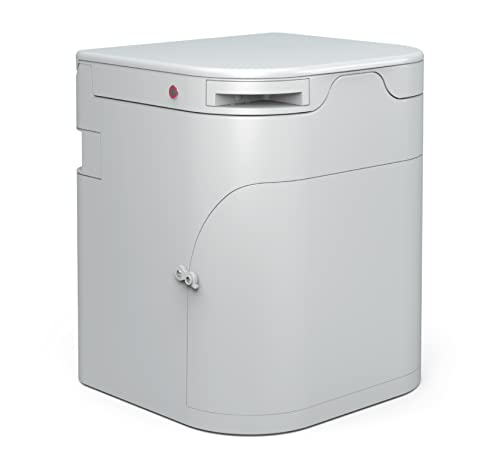
BioLet 65A - Best Automated Home Composting Toilet
The BioLet 65A automates much of the composting process with an electric mixing arm, heater, and fan system that together accelerate decomposition and evaporate liquid waste. The result is a nearly waterless system that requires emptying only a few times per year for average residential use. The automated operation means less real-world management compared to manual agitator units. It runs on standard 110V household power and is NSF-certified. The higher power consumption compared to passive units is a trade-off for the reduced manual maintenance schedule, making it well-suited for homeowners who prefer a set-and-forget approach.
In its favor
- SMALLEST FOOTPRINT FOR TIGHT BUILDS (15"x16") Designed for Sprinter/Transit vans, tiny hom
- PUSH-BUTTON ELECTRIC AGITATOR = ZERO CRANKING 12V motor mixes solids with one tap, no manua
- URINE-DIVERTING = NO BLACK TANK SMELL Liquids separate to a 2.4-gal bottle while solids st
- MADE FOR REAL OFF-GRID LIFE Built in the USA from durable polypropylene. Quiet fan ventila
- MODERN DESIGN, NOT PORT-A-POTTY VIBES Clean Scandinavian-style aesthetic that belongs in a
What matters most
What to consider
Determine your daily user count first, since composting toilets have rated capacities and overloading accelerates odor problems and reduces composting effectiveness. Central remote units are better suited to full-time family homes where bathroom aesthetics matter. Self-contained units are more practical for cabins, secondary bathrooms, or accessory dwelling units. Verify local permit requirements before purchasing, and check whether the model you choose carries NSF certification, which simplifies the approval process significantly. Plan your vent pipe routing early in the installation process since it determines where in the home the unit can be placed.
What to consider
For related reading, see [best composting toilets for off-grid living](/articles/best-composting-toilet-for-off-grid) and [best composting toilets for van life](/articles/best-composting-toilet-for-van-life). Review our product evaluation process at [/methodology](/methodology).
Frequently asked
A properly installed and maintained composting toilet should produce very little odor. The ventilation fan creates negative pressure inside the unit, drawing air down through the bowl and out through the vent pipe before it can escape into the bathroom. Odors typically indicate a blocked vent, incorrect liquid diversion, or overloaded composting chamber. Following the manufacturer's maintenance schedule keeps odors minimal.
Permit requirements vary widely by state and county. Some jurisdictions classify composting toilets as an approved alternative sanitation device and require only a simple permit, while others require a full alternative septic approval process. A handful of states still restrict or prohibit them entirely. Check with your local building department before purchasing a unit intended for permanent residential installation.
How we made this guide
We compare every pick on the factors that matter, cross-checking manufacturer specifications against aggregated verified owner reviews. We rank independently and never take payment for placement. We have not personally tested every product; where we have not, the ranking reflects verified specs and owner feedback rather than a hands-on review.
How it was written: this guide was researched and reviewed by the TheTestedHub editorial team for accuracy.
Affiliate disclosure: TheTestedHub is reader-supported. When you buy through links on our site, we may earn a commission at no extra cost to you.
You might also like

Crawl Space Inspection Robot: Best Value Picks

Counter Contact Paper That Actually Lasts: 2026

Contact Paper For Floors: What To Buy For A Semi Permanent Look
5 Crawl Space Fans Compared: Which One Is Right

Stop Repainting Every Year: Consumer Reports

Custom Screen Doors That Let Breeze In, Keep Bugs Out

Consumer Reports Water Softeners
