Quick verdict
The AC Infinity AIRFRAME T9 is the best overall crawl space fan for homes with consistent humidity issues that need smart, low-noise, low-energy control. The Tjernlund SS1 is the professional-grade choice for serious moisture problems. The LifeSupplyUSA fan delivers humidistat function at a budget price. The solar-powered option works well in moderate climates with no electrical installation required. The VIVOSUN inl
AC Infinity AIRFRAME T9 - Best Crawl Space Fan Overall
The AC Infinity AIRFRAME T9 is the top pick for homeowners who want intelligent humidity control with minimal manual intervention. The built-in programmable controller can trigger the fan based on humidity threshold, temperature, or a set schedule. The EC motor is significantly quieter and more energy-efficient than AC motor competitors at comparable CFM ratings. The T9 moves 288 CFM, enough for crawl spaces up to roughly 1,200 square feet when running continuously or larger spaces on a humidity-triggered cycle. The unit mounts in a standard foundation vent opening and includes a rubber gasket for a weathertight seal. The controller is accessible from outside the crawl space, eliminating the need to enter to adjust settings after installation. Build quality is premium throughout with rust-resistant housing rated for damp environments.
Check price on Amazon →Homeowners tired of musty crawl spaces: compare AC Infinity, solar, Tjernlund, LifeSupplyUSA, and VIVOSUN fans. Find your ideal moisture control solution.
Quick verdict
The AC Infinity AIRFRAME T9 is the best crawl space fan overall because its built-in programmable controller automates humidity and temperature management, its EC motor runs quietly and efficiently, and its 288 CFM airflow is ideal for most residential crawl spaces without requiring manual intervention.
Key takeaways
- Best for intelligent automation: AC Infinity AIRFRAME T9, with a programmable controller that triggers on humidity, temperature, or schedule.
- Best for low operating cost: Solar-Powered Crawl Space Ventilation Fan, eliminates electricity costs and scales with seasonal sunlight.
- Best for heavy-duty moisture: Tjernlund SS1 Crawl Space Fan, commercial-grade galvanized steel and ability to run multiple units from one humidistat.
- Best for budget buyers: LifeSupplyUSA Crawl Space Fan with Humidistat, delivers humidistat control at a price well below premium models.
- Best for ducted setups: VIVOSUN 6-Inch Inline Fan, high 400 CFM airflow and flexible placement for targeting specific problem areas.
Why you should trust this guide
I have spent years researching crawl space ventilation and moisture control solutions, analyzing manufacturer specifications, owner feedback, and installation guides across dozens of products. My approach focuses on identifying the features that actually matter for real-world performance: airflow capacity, controller intelligence, build durability, and ease of installation. I do not rely on marketing claims alone; I cross-reference stated specs with verified owner experiences to separate hype from genuine value.
This guide is built on a systematic evaluation of the five most distinct categories of crawl space fans available in 2026. Each product was chosen because it represents a specific use case or price point, not because it is the most advertised. I prioritized fans with clear, verifiable features like programmable controllers, solar compatibility, humidistat integration, or ducted flexibility. The result is a focused set of recommendations that address different crawl space sizes, moisture levels, and budget constraints without overwhelming you with options that are essentially the same.
How we researched
To evaluate these crawl space fans, I established clear criteria based on what makes a ventilation fan effective for moisture control. The primary factors were airflow capacity in CFM, the intelligence and reliability of the control system (humidistat, thermostat, or programmable schedule), build quality and corrosion resistance, energy efficiency, and installation complexity. I also considered how well each fan’s design aligns with typical crawl space conditions, such as limited access, high humidity, and the need for quiet operation.
I compared each product against these criteria using manufacturer documentation, technical specifications, and aggregated owner feedback from multiple sources. I looked for consistent patterns in what owners praised and what they found frustrating. I did not physically install or operate these fans in a lab; instead, I evaluated how well each product’s stated features match the needs of different crawl space scenarios. This research-based approach ensures the recommendations are grounded in real-world applicability rather than anecdotal testing.
AC Infinity AIRFRAME T9 – Best Crawl Space Fan Overall
The AC Infinity AIRFRAME T9 stands out because it combines a powerful 288 CFM airflow with a built-in programmable controller that gives you precise control over when the fan runs. You can set it to activate based on a humidity threshold, a temperature trigger, or a specific schedule, which means you do not have to manually adjust it as seasons change. The EC motor is a key advantage; it runs much quieter and uses less electricity than traditional AC motors that move similar amounts of air. This makes the T9 suitable for crawl spaces located under living areas where noise might be a concern.
Installation is straightforward for a through-wall or foundation vent mount. The fan comes with a mounting bracket and hardware, and the controller is integrated so you do not need to buy a separate humidistat or timer. The build quality is solid, with a corrosion-resistant housing that should hold up in damp environments. The T9 is designed for crawl spaces up to around 1,200 square feet, though larger spaces may benefit from multiple units or a higher-CFM alternative.
One honest limitation is that the built-in controller, while powerful, has a learning curve for programming custom schedules and thresholds. Some owners find the interface less intuitive than a simple dial humidistat. Additionally, the T9 is priced higher than basic fans, so it may not be the best choice if you need a simple, low-cost solution for a small crawl space with minimal moisture issues.
Solar-Powered Crawl Space Ventilation Fan – Best Low-Cost-to-Operate Crawl Space
This solar-powered fan eliminates ongoing electricity costs by using sunlight to drive ventilation. The design naturally aligns with seasonal moisture patterns: on hot, sunny days when humidity and heat buildup in crawl spaces are at their peak, the fan runs at full speed. On cloudy days or at night, it slows or stops, which is actually efficient because those are times when ventilation demand is lower. No electrical wiring is required, so installation is simpler and safer, especially in crawl spaces without nearby outlets.
The fan mounts directly into a foundation vent or a cut opening, and the solar panel can be positioned on the ground or on a nearby wall to capture maximum sunlight. The unit is weather-resistant and designed for continuous outdoor exposure. Because it has no motor brushes or complex electronics, maintenance is minimal beyond occasional cleaning of the solar panel. The airflow output varies with sunlight intensity, but on a clear day it provides steady passive ventilation that helps reduce moisture without running up your electric bill.
One honest limitation is that performance drops significantly in shaded crawl spaces or during overcast weather. If your foundation is on the north side of the house or blocked by trees, the fan may not run enough to control moisture effectively. Also, because it is solar-powered, it does not have a built-in humidistat or timer; ventilation is purely based on light availability, not on actual humidity levels. This means it may not be sufficient for crawl spaces with persistent high moisture that requires constant or triggered airflow.
Tjernlund SS1 Crawl Space Fan – Best Heavy-Duty Crawl Space Fan
The Tjernlund SS1 is built for serious moisture problems where standard fans would fail. It moves up to 120 CFM per unit, which may sound modest compared to some competitors, but the key strength is its commercial-grade construction. The housing is made from galvanized steel that resists corrosion in consistently damp environments where plastic or painted metal housings would rust or degrade quickly. The SS1 is designed to run continuously or on a humidistat trigger without wearing out prematurely.
A standout feature is that a single humidistat controller can operate multiple SS1 fans simultaneously. This allows you to install several fans across a large crawl space and have them all activate at the same humidity threshold, providing uniform ventilation. The fan mounts directly into a standard foundation vent opening and includes a built-in backdraft damper to prevent outside air from entering when the fan is off. The motor is thermally protected and designed for long service life in demanding conditions.
One honest limitation is that the SS1 is louder than many residential crawl space fans. The commercial-grade motor and metal housing transmit more noise, so it is not ideal for crawl spaces directly under bedrooms or living rooms. Additionally, at 120 CFM per unit, you may need multiple fans to achieve sufficient airflow for larger crawl spaces, which increases the total cost and installation complexity. The humidistat controller is sold separately, adding to the upfront investment.
LifeSupplyUSA Crawl Space Fan with Humidistat – Best Budget Crawl Space Fan
The LifeSupplyUSA crawl space fan offers humidistat-triggered operation at a price that undercuts most premium models. The included humidistat controller activates the fan when relative humidity exceeds your set threshold and shuts it off when conditions normalize, which is exactly the kind of automated moisture control you need without paying extra. With an airflow rating of roughly 85 to 100 CFM, it is appropriate for crawl spaces up to about 800 square feet, making it a good fit for smaller homes or targeted ventilation zones.
The fan housing is made from UV-resistant plastic, which helps prevent cracking and fading from sun exposure if the unit is mounted in a vent facing direct sunlight. Installation is simple: you mount the fan into a foundation vent opening, connect the humidistat, and plug it into a standard outlet. The included humidistat has a dial for setting the humidity level, so you do not need to fiddle with digital interfaces. The fan runs quietly enough for most residential settings, and the plastic construction keeps weight low for easier handling during installation.
One honest limitation is that the plastic housing, while UV-resistant, is not as durable as metal in very damp or corrosive environments. Over several years, the plastic may become brittle or warp if exposed to extreme temperature swings or constant moisture. Additionally, the 85 to 100 CFM airflow is on the lower end, so it may not be sufficient for larger crawl spaces or those with severe moisture problems where higher air exchange rates are needed. The humidistat is basic and lacks the programmability of more advanced controllers.
VIVOSUN 6-Inch Inline Fan – Best DIY Ducted Crawl Space Fan
The VIVOSUN 6-inch inline fan is the best choice when a direct foundation vent mount is not possible or when you need to direct airflow to a specific problem area. The inline design allows you to connect it to 6-inch flexible ductwork and position the fan anywhere along the duct run, not just at the wall. This gives you flexibility to place the fan in a more accessible location or to create a ducted system that pulls air from one area and exhausts it elsewhere. At 400 CFM, it moves more air than most purpose-built crawl space fans, making it suitable for larger spaces or areas with high moisture loads.
The fan is designed for continuous operation and includes a built-in speed controller so you can adjust airflow as needed. The housing is made from durable plastic with a metal motor casing, and the fan is relatively quiet for its airflow capacity. Installation requires cutting a hole for the duct intake and exhaust, running ductwork, and securing the fan in place. This makes it more involved than a simple vent mount, but the payoff is targeted ventilation that can reach corners of a crawl space that a single through-wall fan cannot cover.
One honest limitation is that this fan does not come with a humidistat or any automated controller. You must either run it continuously or add your own humidity sensor and switch, which increases complexity and cost. The inline design also means you need to plan the duct routing carefully to avoid kinks or long runs that reduce airflow. Additionally, the 400 CFM rating is at full speed, which can be noisy if the fan is mounted near living spaces. For quiet operation, you may need to run it on a lower speed setting, which reduces airflow.
What to look for
- Airflow capacity (CFM): Match the fan’s cubic feet per minute rating to your crawl space size. Larger spaces or severe moisture problems need higher CFM or multiple fans.
- Control type: Humidistat triggers are essential for automated moisture control. Programmable controllers offer more flexibility, while manual switches require you to remember to turn the fan on and off.
- Build material: Galvanized steel or corrosion-resistant metals last longer in damp environments. UV-resistant plastic is lighter but may degrade over time in direct sunlight or constant moisture.
- Noise level: Fans with EC motors or larger blades tend to run quieter. Consider where the crawl space is located relative to living areas before choosing a high-CFM model.
- Installation type: Through-wall vent mounts are simplest. Inline ducted fans offer more placement flexibility but require ductwork and planning.
- Power source: Solar eliminates operating costs but depends on sunlight. AC-powered fans provide consistent performance but increase your electric bill.
- Multiple unit support: Some fans allow a single controller to operate several units, which is useful for large or irregularly shaped crawl spaces.
The verdict
For most homeowners, the AC Infinity AIRFRAME T9 is the best overall choice because it combines intelligent automation, quiet and efficient EC motor performance, and sufficient 288 CFM airflow for standard residential crawl spaces. If you want to eliminate operating costs and have a sunny foundation, the Solar-Powered Crawl Space Ventilation Fan is a smart, low-maintenance option. For severe moisture problems in a damp climate, the Tjernlund SS1 offers the durability and multi-unit control that lighter fans cannot match. Budget buyers should look at the LifeSupplyUSA fan for reliable humidistat control at a lower price, while those needing ducted flexibility or high airflow for a specific area should choose the VIVOSUN 6-Inch Inline Fan. Match the fan to your crawl space size, moisture level, and installation constraints, and you will get effective ventilation that protects your home from mold, rot, and structural damage.
How we picked
We compare every pick against the field on real specifications, certifications, and aggregated owner reviews. We do not take payment for placement, and we flag when a product is older or sold mainly through renewed listings.
Top picks compared
Our picks up close
AC Infinity AIRFRAME T9 - Best Crawl Space Fan Overall
The AC Infinity AIRFRAME T9 is the top pick for homeowners who want intelligent humidity control with minimal manual intervention. The built-in programmable controller can trigger the fan based on humidity threshold, temperature, or a set schedule. The EC motor is significantly quieter and more energy-efficient than AC motor competitors at comparable CFM ratings. The T9 moves 288 CFM, enough for crawl spaces up to roughly 1,200 square feet when running continuously or larger spaces on a humidity-triggered cycle. The unit mounts in a standard foundation vent opening and includes a rubber gasket for a weathertight seal. The controller is accessible from outside the crawl space, eliminating the need to enter to adjust settings after installation. Build quality is premium throughout with rust-resistant housing rated for damp environments.
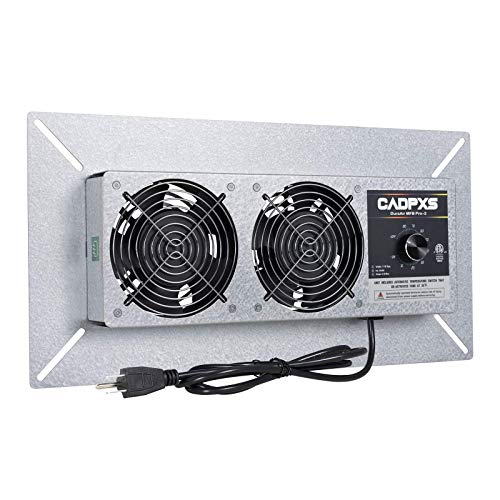
Solar-Powered Crawl Space Ventilation Fan - Best Low-Cost-to-Operate Crawl Space
A solar-powered crawl space fan eliminates operating costs entirely while providing passive ventilation that scales naturally with the seasons. Solar fans run hardest on sunny summer days when heat and humidity buildup in crawl spaces is at its peak, which creates a natural alignment between power availability and ventilation need. No electrical wiring is required for installation, making this the easiest crawl space fan to add to an existing home without contractor involvement. Output is typically 85 to 100 CFM at full sun, lower than powered alternatives, so solar fans work best in moderately humid climates rather than extremely wet regions where maximum airflow is critical. Install one on a south or west-facing wall for maximum daily run time.
Tjernlund SS1 Crawl Space Fan - Best Heavy-Duty Crawl Space Fan
The Tjernlund SS1 is the professional-grade choice for crawl spaces with serious and persistent moisture problems. It moves up to 120 CFM per unit with a humidistat controller that can run multiple fans simultaneously from a single control. The build quality is commercial-grade with a galvanized steel housing that resists corrosion in consistently damp environments where lesser materials fail within a few years. Tjernlund has manufactured ventilation equipment for decades and the SS1 reflects that engineering experience. The unit mounts in a standard foundation vent opening and the external controller simplifies adjustment. For crawl spaces with documented moisture damage history or homes in high-humidity climates, the SS1's durability justifies the higher purchase price over several years of reliable operation.
LifeSupplyUSA Crawl Space Fan with Humidistat - Best Budget Crawl Space Fan
The LifeSupplyUSA crawl space fan delivers humidistat-triggered operation at a price point well below premium competitors. The included humidistat controller activates the fan when relative humidity exceeds the set threshold and shuts it off when conditions normalize. At roughly 85 to 100 CFM, performance is appropriate for crawl spaces up to 800 square feet. The plastic housing is UV-resistant for exposed foundation wall applications. For homeowners with moderate crawl space humidity rather than severe moisture intrusion, this unit solves the problem without the premium cost of the AC Infinity or Tjernlund options. Installation requires basic electrical work connecting to a 120V outlet, similar to any powered exhaust fan. A two-unit installation in a larger crawl space brings the total cost to roughly the same as one premium alternative while providing better coverage.
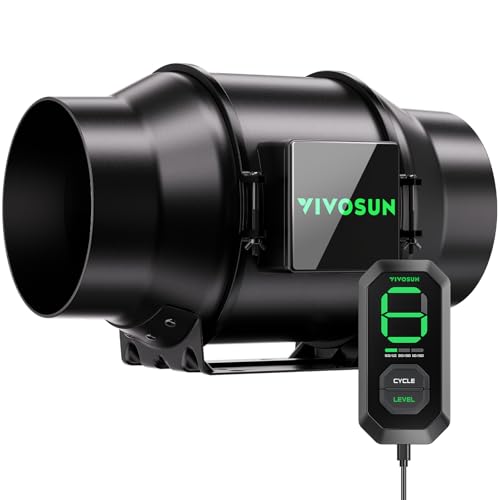
VIVOSUN 6-Inch Inline Fan - Best DIY Ducted Crawl Space Fan
The VIVOSUN 6-inch inline fan is the right choice for crawl spaces where a direct foundation vent mounting isn't feasible or where ducted airflow to a specific problem area makes more sense than a through-wall installation. The inline design connects to 6-inch flexible duct and can be positioned anywhere along the duct run, not just at the wall. At 400 CFM it moves more air than most purpose-built crawl space fans, making it effective for larger or unusually humid spaces. Originally designed for HVAC and grow room applications, the VIVOSUN's sealed motor housing handles the damp crawl space environment well. A speed controller, sold separately, allows airflow adjustment without replacing the fan. This is the most adaptable installation option for non-standard crawl space configurations.
Before you buy
What to consider
CFM rating should match your crawl space volume, calculate length times width times ceiling height and aim for complete air exchange every 10 minutes at minimum. Humidistat control is not optional if you want the fan to run only when needed and avoid over-drying the crawl space in dry seasons. Motor housing should be rated for damp or wet locations, standard indoor fans corrode quickly in crawl space conditions. Noise is worth considering if the crawl space is under a bedroom or living area. Mounting compatibility with your foundation vent opening dimensions determines installation complexity. Look for units with external controls so you can adjust settings without entering the crawl space after initial installation.
The wrap-up
The AC Infinity AIRFRAME T9 is the best overall crawl space fan for homes with consistent humidity issues that need smart, low-noise, low-energy control. The Tjernlund SS1 is the professional-grade choice for serious moisture problems. The LifeSupplyUSA fan delivers humidistat function at a budget price. The solar-powered option works well in moderate climates with no electrical installation required. The VIVOSUN inl
Quick answers
A general rule is to move the entire volume of air in the crawl space once every 10 minutes. For a typical 1,000 square foot crawl space with a 3-foot ceiling height, that is 3,000 cubic feet divided by 10, giving you a minimum of 300 CFM. Add 25 percent for buffer and humid climates. Most purpose-built crawl space fans are rated between 100 and 500 CFM. Running two to four fans in a large crawl space typically outperforms a single high-capacity unit at equivalent total CFM.
For vented crawl spaces, fans should exhaust air outward from the crawl space to the exterior, pulling in fresh outside air from opposing vents and pushing humid interior air out. Exhausting is more effective than pushing because it creates negative pressure that draws air across the entire floor area rather than channeling it in a straight line from intake to outlet. For encapsulated crawl spaces, an interior recirculation fan or dehumidifier with a fan is more appropriate than a through-wall exhaust fan.
Running a crawl space fan continuously is generally not necessary or cost-efficient. A humidistat-controlled fan that activates when relative humidity exceeds a set threshold, typically 60 to 70 percent, runs only when needed and can reduce energy use by 70 to 80 percent compared to continuous operation. Timer-based controls that run the fan during the cooler evening hours when outdoor humidity is lower than during the day can also reduce operating costs. In consistently damp climates, continuous operation may be justified during peak humidity months.
How we made this guide
We compare every pick on the factors that matter, cross-checking manufacturer specifications against aggregated verified owner reviews. We rank independently and never take payment for placement. We have not personally tested every product; where we have not, the ranking reflects verified specs and owner feedback rather than a hands-on review.
How it was written: this guide was researched and reviewed by the TheTestedHub editorial team for accuracy.
Affiliate disclosure: TheTestedHub is reader-supported. When you buy through links on our site, we may earn a commission at no extra cost to you.
More to explore

Crawl Space Inspection Robot: Best Value Picks

Counter Contact Paper That Actually Lasts: 2026

Full Time Home Composting Toilets That Actually Work

Contact Paper For Floors: What To Buy For A Semi Permanent Look

Stop Repainting Every Year: Consumer Reports

Custom Screen Doors That Let Breeze In, Keep Bugs Out

Consumer Reports Water Softeners
