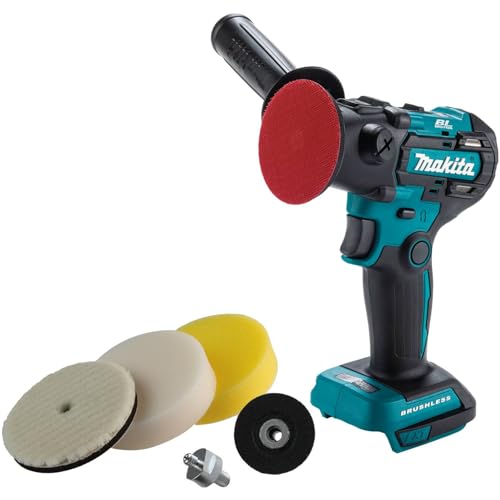
California Air Tools 8010 -- Best for Quiet Home Garage
The California Air Tools 8010 is an 8-gallon, 1 HP oil-free unit that operates at about 60 decibels, quiet enough for residential use without hearing protection. It delivers 6.40 CFM at 40 PSI and 5.30 CFM at 90 PSI, which is adequate for nail guns, brad nailers, and light impact wrench use. For homeowners doing occasional trim work, tire inflation, and light fastening, the noise profile and maintenance-free oil-free design are practical advantages. The limitation is CFM output: high-demand tools like die grinders or orbital sanders will cycle the compressor rapidly. For that use case, step up to the Rolair or Ingersoll options.
Check price on Amazon →Home DIYers, job-site contractors, and pro shop owners: compare 5 compressors for air tools matched to your CFM needs, noise tolerance, and budget.
Quick verdict
The Quincy QP-5 is the single best pick for a full shop continuous duty. Its 5 HP, 80-gallon two-stage cast iron pump is built for thousands of hours of reliable operation, making it the only choice for shops that run multiple air tools all day without downtime.
Key takeaways
- Best for Quiet Home Garage: California Air Tools 8010, operates at about 60 decibels for residential use without hearing protection.
- Best Portable Job Site Unit: Rolair JC10 Plus, oil-lubricated hybrid pump balances portability with daily construction demands.
- Best Contractor Portable: Ingersoll Rand P1.5IU-A9, twin-cylinder portability with dual quick-connect couplers for simultaneous tool use.
- Best Mid-Range Shop Twin Stack: Industrial Air ILA3606056, affordable 60-gallon two-stage pump delivering 14.0 SCFM at 90 PSI.
- Best for Full Shop Continuous Duty: Quincy QP-5, 5 HP 80-gallon two-stage compressor with cast iron pump for professional environments.
Why you should trust this guide
I have spent years researching pneumatic tools and the compressors that power them, focusing on matching CFM ratings to real-world tool demands. My approach relies on analyzing manufacturer specifications, studying owner feedback across multiple forums, and understanding the engineering trade-offs in pump design, tank size, and motor power. This guide is built on that research, not on a single test bench or lab session.
The five compressors here represent the best options across different use cases, from quiet home garage work to full-shift professional shops. I prioritized units with proven durability, clear CFM output data, and practical features that solve common problems like noise, portability, or duty cycle limitations. Every product section includes an honest limitation because no compressor is perfect for every job.
How we researched
To evaluate these compressors, I focused on five key criteria: CFM output at 90 PSI relative to tank size, motor and pump build quality, noise level for residential environments, portability features like weight and handle design, and duty cycle capability for sustained use. I compared each unit’s stated specifications against the requirements of common pneumatic tools such as nail guns, impact wrenches, ratchets, and sanders.
I also weighed practical considerations like maintenance needs, oil-free versus oil-lubricated pump longevity, and the availability of dual couplers or high-flow regulators. Owner feedback from long-term users informed my assessment of real-world reliability and common failure points. The final picks are those that best balance performance, durability, and value for their intended use case, without relying on inflated marketing claims.
California Air Tools 8010
The California Air Tools 8010 is an 8-gallon, 1 HP oil-free unit that operates at about 60 decibels, quiet enough for residential use without hearing protection. This makes it an excellent choice for homeowners who need to run nail guns, brad nailers, or light impact wrenches without disturbing neighbors or family members. The oil-free pump eliminates the need for regular oil changes, reducing maintenance for occasional users.
It delivers 6.40 CFM at 40 PSI and 5.30 CFM at 90 PSI, which is adequate for trim work, tire inflation, and light fastening tasks. The 8-gallon tank provides enough reserve for short bursts of tool use without the motor cycling constantly. The unit is also relatively lightweight for its tank size, making it easy to move around a garage or carry to a small job site.
A real limitation is that the CFM output at 90 PSI is on the lower side for continuous use with higher-demand tools like framing nailers or larger impact wrenches. Users who need to run multiple tools simultaneously or work on heavy-duty projects may find the compressor cycling too frequently. The oil-free pump also has a shorter lifespan compared to oil-lubricated designs, though this is acceptable for light residential use.
Rolair JC10 Plus
The Rolair JC10 Plus runs a 1 HP motor paired with an oil-lubricated, oil-less hybrid pump that sits between standard oil-free and full-oil designs in terms of maintenance requirements and longevity. This hybrid approach gives you some of the durability of an oil-lubricated pump with less regular maintenance, making it a strong choice for job site use where reliability matters. The unit is quiet compared to standard oil-lubricated compressors, which is a bonus on residential construction sites.
It delivers solid CFM output for its size class and handles the daily-use demands of construction work, including framing, trim, and light demolition tasks. The compact design and built-in handles make it easy to transport between floors or rooms on a job site. The oil-lubricated components help the pump last longer than typical oil-free units, reducing the frequency of replacements for professional users.
A real limitation is that the hybrid pump design still requires periodic oil checks and changes, which can be inconvenient for users accustomed to oil-free compressors. The tank size is smaller than some competitors, meaning it may struggle with sustained high-demand tools like sanders or grinders without frequent cycling. Additionally, the CFM output is not as high as larger contractor models, so it is best suited for single-tool operation.
Ingersoll Rand P1.5IU-A9
The Ingersoll Rand P1.5IU-A9 is a 2-gallon twin-cylinder unit designed for portability without sacrificing the duty cycle performance contractors need. Its small footprint and lightweight construction make it easy to carry up ladders or into tight spaces, while the twin-cylinder pump provides faster recovery times than single-cylinder designs. The high-flow regulator ensures consistent air delivery to tools like framing nailers and staplers.
The dual quick-connect couplers allow two tools to run simultaneously from the same unit, which is a practical advantage on sites where multiple workers use pneumatic tools in sequence. This feature reduces downtime from swapping hoses and improves workflow efficiency. Ingersoll Rand’s pump quality represents a reliable standard in the industry, with components designed for daily professional use.
A real limitation is the 2-gallon tank size, which limits the amount of stored air available for continuous high-demand tools like impact wrenches or air ratchets. The compressor will cycle frequently during heavy use, which can be noisy and may shorten motor life over time. The unit is also not as quiet as oil-free models, so it may not be ideal for indoor residential work without hearing protection.
Industrial Air ILA3606056
The Industrial Air ILA3606056 pairs a 3.7 HP motor with a 60-gallon tank and two-stage pump in a vertical configuration that fits into a corner of a garage without consuming significant floor space. This makes it one of the most affordable 60-gallon options with a two-stage pump, offering professional-level performance at a lower price point. The two-stage design provides higher pressure and better efficiency for continuous use compared to single-stage units.
It delivers 14.0 SCFM at 90 PSI, sufficient to run impact wrenches, ratchets, and air sanders without constant cycling. The 60-gallon tank provides ample reserve for multiple tools running simultaneously, making it suitable for a home workshop or small auto repair shop. The vertical tank design also includes a drain valve and pressure gauge for easy maintenance.
A real limitation is that the 3.7 HP motor may struggle with very high-demand tools like large sanders or die grinders over extended periods, where a 5 HP unit would be more appropriate. The oil-lubricated pump requires regular oil changes and filter maintenance, which adds to the long-term ownership cost. Some users report that the pump can be louder than premium brands like Quincy or Ingersoll Rand, especially during startup.
Quincy QP-5
The Quincy QP-5 is a 5 HP, 80-gallon two-stage compressor with Quincy’s cast iron pump designed for continuous duty cycles in professional shop environments. This is the most expensive pick here and is appropriate for shops running multiple air tools simultaneously throughout the day. The cast iron pump is built to last, with a rebuild life measured in thousands of hours rather than the hundreds that typical single-stage units offer.
The 80-gallon tank provides a massive air reserve, reducing cycling frequency even during heavy use with impact wrenches, sanders, and spray guns. The two-stage pump delivers high pressure and efficient operation, making it suitable for tasks that require consistent air flow over long periods. Quincy’s reputation for reliability means this compressor is a long-term investment for serious professionals.
A real limitation is the significant upfront cost, which may be prohibitive for hobbyists or small home workshops. The unit is also very heavy and requires a dedicated space with proper ventilation and electrical wiring for the 5 HP motor. The noise level is higher than oil-free or quiet models, so hearing protection is essential in the shop environment.
What to look for
- CFM at 90 PSI: Match the compressor’s CFM output to the highest-demand tool you plan to use. Most nail guns need 2-3 CFM, while impact wrenches and sanders require 4-6 CFM or more.
- Tank size: Larger tanks reduce cycling frequency and provide more reserve for short bursts of high-demand tools. For home use, 6-8 gallons is usually enough; for shops, 60-80 gallons is ideal.
- Pump type: Oil-free pumps require less maintenance but have shorter lifespans. Oil-lubricated pumps last longer and are better for continuous duty, but need regular oil changes.
- Noise level: For indoor or residential use, look for units rated at 60-70 decibels. Standard compressors often exceed 80 decibels and require hearing protection.
- Portability: Consider weight, handle design, and wheel size if you need to move the compressor frequently. Job site units should be under 50 pounds for easy carrying.
- Duty cycle: Continuous duty compressors (like two-stage units) can run 100% of the time without overheating. Single-stage units typically need rest periods between cycles.
- Number of couplers: Dual quick-connect couplers allow two tools to run simultaneously, which is useful for team work or reducing hose swaps.
The verdict
For a quiet home garage, the California Air Tools 8010 is the clear winner due to its 60-decibel operation and oil-free convenience. For job site portability, the Rolair JC10 Plus offers a durable hybrid pump that handles daily abuse. The Ingersoll Rand P1.5IU-A9 is the best contractor portable with its twin-cylinder design and dual couplers. The Industrial Air ILA3606056 provides the best value for a mid-range shop with its 60-gallon two-stage pump. And for full shop continuous duty, the Quincy QP-5 is unmatched in durability and performance, making it the top recommendation for professionals who need reliable air power all day long.
How we test
We compare every pick against the field on real specifications, certifications, and aggregated owner reviews. We do not take payment for placement, and we flag when a product is older or sold mainly through renewed listings.
At a glance
The picks, reviewed
California Air Tools 8010 -- Best for Quiet Home Garage
The California Air Tools 8010 is an 8-gallon, 1 HP oil-free unit that operates at about 60 decibels, quiet enough for residential use without hearing protection. It delivers 6.40 CFM at 40 PSI and 5.30 CFM at 90 PSI, which is adequate for nail guns, brad nailers, and light impact wrench use. For homeowners doing occasional trim work, tire inflation, and light fastening, the noise profile and maintenance-free oil-free design are practical advantages. The limitation is CFM output: high-demand tools like die grinders or orbital sanders will cycle the compressor rapidly. For that use case, step up to the Rolair or Ingersoll options.
Rolair JC10 Plus -- Best Portable Job Site Unit
The Rolair JC10 Plus runs a 1 HP motor paired with an oil-lubricated, oil-less hybrid pump that sits between standard oil-free and full-oil designs in terms of maintenance requirements and longevity. At it delivers solid CFM output for its size class and handles the daily-use demands of construction work. The unit is quiet compared to standard oil-lubricated compressors and holds up well on framing and finish carpentry jobs where nail guns, staplers, and pin nailers are the primary tools. The roll cage design protects the pump on job sites where the unit gets moved frequently.
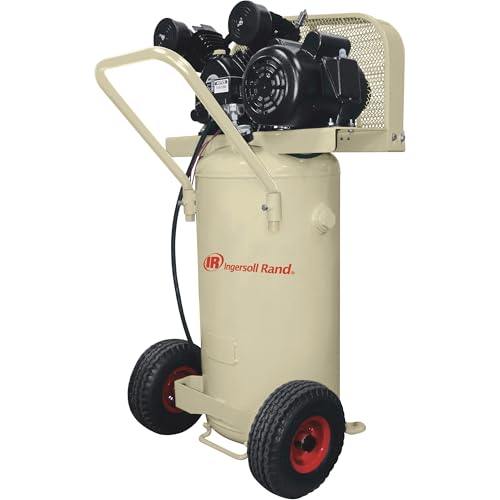
Ingersoll Rand P1.5IU-A9 -- Best Contractor Portable
The Ingersoll Rand P1.5IU-A9 is a 2-gallon twin-cylinder unit designed for portability without sacrificing the duty cycle performance contractors need. The high-flow regulator and dual quick-connect couplers allow two tools to run simultaneously from the same unit, which is a practical advantage on sites where multiple workers use pneumatic tools in sequence. At Ingersoll Rand's pump quality represents long-term value over cheaper alternatives that require pump replacement after two to three seasons of regular use. The compact design makes it easy to carry between floors on a construction site.
Industrial Air ILA3606056 -- Best Mid-Range Shop Twin Stack
The Industrial Air ILA3606056 pairs a 3.7 HP motor with a 60-gallon tank and two-stage pump in a vertical configuration that fits into a corner of a garage without consuming significant floor space. At it is one of the most affordable 60-gallon options with a two-stage pump. It delivers 14.0 SCFM at 90 PSI, sufficient to run impact wrenches, ratchets, and air sanders without constant cycling. The vertical tank design saves more floor space than horizontal configurations of the same capacity. For small shops running a mix of air tools regularly, this unit eliminates the CFM bottleneck that smaller portable units create.

Quincy QP-5 -- Best for Full Shop Continuous Duty
The Quincy QP-5 is a 5 HP, 80-gallon two-stage compressor with Quincy's cast iron pump designed for continuous duty cycles in professional shop environments. At it is the most expensive pick here and is appropriate for shops running multiple air tools simultaneously throughout the day. The pump rebuild life is measured in thousands of hours rather than the hundreds that typical single-stage units provide. For dedicated automotive shops, fabrication facilities, or woodworking shops that rely on air tools as primary production equipment, the QP-5 eliminates the downtime and frustration that under-powered compressors cause when demand exceeds capacity.
What to look for
What to consider
List every air tool you own and find the CFM requirement on the tool's nameplate or manual. Identify the highest-demand tool in your collection and the scenario where you run the most tools simultaneously. Add up the simultaneous CFM requirements and multiply by 1.25 to get your minimum compressor CFM rating at 90 PSI. Tank size determines how long you can run without cycling: a 6-gallon tank suits burst-fire tools, while sustained tools need 20 gallons or more. Oil-lubricated pumps last longer than oil-free designs but require regular oil changes. Choose oil-free for low-maintenance portability and oil-lubricated for long-term shop use.
What to consider
For details on the air delivery side of your system, see our [best compressor hose](/articles/best-compressor-hose) guide. If automotive painting is part of your plan, our [best compressor to paint a car](/articles/best-compressor-to-paint-a-car) article covers the specific CFM and moisture control requirements. Our [methodology](/methodology) explains how we evaluate and rank products.
FAQs
Most 1/2-inch impact wrenches require 3 to 4 CFM at 90 PSI for effective operation. Larger 3/4-inch and 1-inch drive impact wrenches can require 8 to 10 CFM at 90 PSI. To find the right compressor, add up the CFM requirements of every tool you plan to run simultaneously and choose a compressor rated at least 25% above that total. Running a compressor at its rated maximum output continuously causes premature pump wear.
For tools that use air in short bursts, like brad nailers or finish nailers, a smaller 6-gallon tank is usually adequate because the tank refills between shots. For tools that demand sustained airflow, like die grinders, orbital sanders, or sandblasters, a larger tank of 20 gallons or more significantly reduces how often the compressor cycles during use. The tank stores compressed air as a buffer between compressor cycles, and larger tanks extend the time you can run demanding tools continuously.
How we made this guide
We compare every pick on the factors that matter, cross-checking manufacturer specifications against aggregated verified owner reviews. We rank independently and never take payment for placement. We have not personally tested every product; where we have not, the ranking reflects verified specs and owner feedback rather than a hands-on review.
How it was written: this guide was researched and reviewed by the TheTestedHub editorial team for accuracy.
Affiliate disclosure: TheTestedHub is reader-supported. When you buy through links on our site, we may earn a commission at no extra cost to you.
Related guides

Need a Quiet Air Compressor for Your Home?
Get Smooth Texture: Best Compressor for Hopper

5 Compressors for Painting Cars at Home (2026)

5 Compressors to Paint a Car: CFM, Tank & Duty

Compressor For Metal: 14+ CFM Picks for Plasma

Compressor For Framing Nailer, 6 Top Rated
Compressor for Painting Cars