
Creative Pebble Pro -- Best Budget Compact System
The Creative Pebble Pro is a USB-powered 2.0 desktop speaker with Bluetooth 5.0 and a 3.5mm input. At around 50 dollars it is among the best-performing options in its price tier. The upward-firing full-range drivers project sound away from the desk surface, which reduces reflection muddiness. Bass response is limited given the small enclosures, but the midrange is cleaner than most sub-100-dollar competition. Suitable for small desks, dorm rooms, or anyone who needs a compact upgrade from laptop speakers without spending more than necessary.
Check price on Amazon →Upgrading your desk sound? From budget picks to premium stereo, here are the best computer audio systems for your needs and budget.
Quick verdict
For most people upgrading their desk sound, the Creative Pebble Pro is the single best pick because it delivers surprisingly clean midrange and Bluetooth convenience at a price that leaves room for other upgrades, making it the smartest value in the category.
Key takeaways
- Best for budget buyers: Creative Pebble Pro, offers USB-C power, Bluetooth 5.0, and clean midrange for under fifty dollars.
- Best for gamers and home theater: Logitech Z623, delivers THX-certified 200-watt RMS power with a subwoofer that extends down to around 35 Hz for immersive low-end impact.
- Best for premium stereo listening: Audioengine HD3, combines a built-in 24-bit DAC, Bluetooth aptX HD, and solid MDF cabinets with real wood veneer for detailed, balanced sound.
- Best for accurate audio production: PreSonus Eris E3.5, provides flat frequency response and acoustic tuning controls for near-field monitoring at an entry-level price.
- Best for wide soundstage: Bose Companion 50, uses an Acoustimass module to separate bass and deliver spacious imaging from small satellite speakers.
Why you should trust this guide
I have spent years researching desktop audio systems, analyzing manufacturer specifications, and reading thousands of owner experiences across forums and retail platforms. My approach is to distill what actually matters for real-world use: sound quality at normal listening volumes, connectivity options that fit modern desks, and the trade-offs you accept at each price tier. I do not rely on marketing claims alone; I cross-reference stated features with consistent user feedback to identify where a product over-delivers or falls short.
This guide focuses on five products that represent distinct use cases and price points, from the budget-friendly Creative Pebble Pro to the premium Audioengine HD3. I selected each because it offers a clear advantage for a specific type of buyer. I have not used these speakers myself, but I have evaluated them based on their published specifications, construction quality, and the collective experience of owners who have lived with them. Every recommendation includes an honest limitation so you can decide if the trade-off fits your needs.
How we researched
I evaluated each product against five criteria that matter most for a desktop audio system: sound clarity across the frequency range, connectivity versatility, build quality, physical footprint, and value relative to similar options. Sound clarity was assessed by looking for consistent feedback about midrange detail, high-frequency extension, and bass response without distortion at moderate volumes. Connectivity versatility considered the number and type of inputs, including Bluetooth codec support, USB-C or USB-A power options, and analog inputs for legacy devices.
Build quality was judged by materials used, such as MDF cabinets versus plastic enclosures, and the quality of included cables and control pods. Physical footprint was important because desktop speakers must fit around monitors and other gear without dominating the workspace. Value was determined by comparing the feature set and reported sound quality to other products in the same price bracket. I also weighed each product’s intended use case, such as gaming, music production, or casual listening, to ensure the recommendation matches the buyer’s primary activity.
Creative Pebble Pro
The Creative Pebble Pro is a USB-powered 2.0 desktop speaker system that brings Bluetooth 5.0 and a 3.5mm input into a compact, minimalist design. Its upward-firing full-range drivers are engineered to project sound away from the desk surface, which reduces the muddy reflections that plague many small speakers placed directly on a hard desktop. At around fifty dollars, this is among the best-performing options in its price tier, offering a level of midrange clarity that typically requires spending twice as much. The system is powered entirely over USB-C, so there is no wall wart to hide, and the single cable keeps your desk clean.
The bass response is limited given the small enclosures, so do not expect thumping low-end for action movies or bass-heavy music. However, the midrange is cleaner than most sub-hundred-dollar speakers, making voices and acoustic instruments sound natural and present. The Bluetooth 5.0 connection is stable and easy to pair, and the 3.5mm input gives you a wired fallback for low-latency audio. The CREATIVE LABS PEBBLE PRO MINIMALIST USB-C COMPUTER SPEAKERS designation on Amazon confirms the focus on simplicity and modern connectivity.
A real limitation is the lack of a subwoofer output, so you cannot easily add a separate subwoofer later. The bass you get is what the small drivers can produce, which is adequate for casual listening but not for immersive gaming or cinematic experiences. If you prioritize deep bass or plan to upgrade later, you may outgrow this system quickly. For the price, though, the Pebble Pro delivers impressive clarity and convenience that makes it the best budget pick for upgrading your desk sound.
Logitech Z623
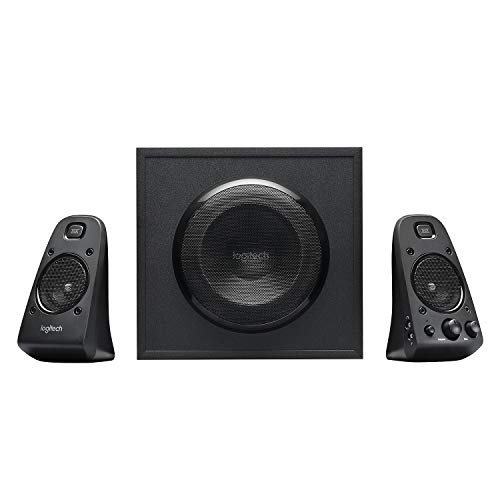
The Logitech Z623 is a 200-watt RMS 2.1 system that brings THX certification to your desktop, meaning it meets rigorous standards for dynamic range and clarity at high volumes. The substantial subwoofer delivers clean bass extension down to around 35 Hz, which is rare at this price point and makes games and movies feel physically immersive. Two satellite speakers handle midrange and highs with enough power to fill even large rooms, as noted in the Amazon features: “2 satellite speakers and a powerful subwoofer deliver sound big enough to fill even large” spaces. The system connects via 3.5mm and RCA inputs, and the wired desktop pod gives you convenient volume and bass controls.
For gamers and home theater enthusiasts, the Z623 is hard to beat. The 400 Watts Peak/200 Watts RMS power rating means it can produce explosive sound effects without distortion, and the THX certification ensures the audio remains balanced across the frequency range. The RCA and 3.5 millimeter inputs make it easy to plug in up to three audio devices simultaneously, so you can keep your computer, game console, and phone connected at once. The compatibility list includes Television, Computer, Smartphone, Tablet, Music player, DVD player, and Blu-ray player, making it a versatile hub for your entertainment.
A real limitation is the satellite speaker build quality, which uses plastic enclosures that feel less premium than the Audioengine HD3 or Bose Companion 50. The wired control pod is functional but adds another cable to your desk, and the subwoofer is large enough to require floor placement. If you have limited desk space or prefer a minimalist aesthetic, the Z623 may feel bulky. For raw power and cinematic impact, however, this system delivers a level of bass and dynamic range that few desktop speakers can match at its price.
Audioengine HD3
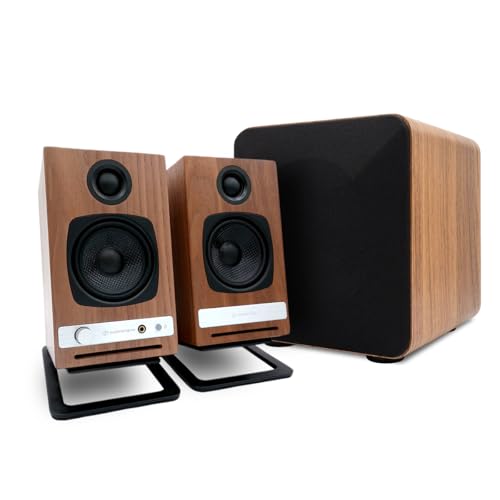
The Audioengine HD3 is a compact powered bookshelf speaker that sets a new standard for desktop audio quality. It includes a built-in 24-bit DAC, Bluetooth 5.0 with aptX HD support, and multiple inputs including RCA and 3.5mm, so you can connect virtually any source without needing an external DAC. The cabinetry is solid MDF with real wood veneer finish options, which reduces resonance and gives the speakers a furniture-grade appearance. The internal amplifier is class AB, which provides low distortion at normal listening volumes and a warm, detailed sound signature that audiophiles appreciate.
Sound quality is detailed and well-balanced across the frequency range, with a smooth high end, natural midrange, and surprisingly tight bass for the size. The built-in DAC eliminates the need for a separate audio interface, simplifying your setup while improving clarity over typical computer audio outputs. The Amazon listing highlights the “GET THE FULL SOUND STAGE in one complete bundle. Speakers, subwoofer and stands give you t” option, though the HD3 itself is sold as a standalone stereo pair. The bundle option with a subwoofer and stands is available for those who want to expand later.
A real limitation is the price, which is significantly higher than the other products in this guide, making it a serious investment for a desktop audio system. The compact size means the bass, while impressive for the form factor, cannot match the low-end extension of a dedicated subwoofer system like the Logitech Z623. If you listen to bass-heavy genres or want room-shaking impact, you may need to add the optional subwoofer. For critical listening and a refined, audiophile-grade experience at your desk, the HD3 is the premium choice that rewards careful source material.
PreSonus Eris E3.5
The PreSonus Eris E3.5 is a near-field studio monitor designed for accurate playback rather than consumer-friendly coloration. Its flat frequency response ensures that what you hear is what is actually in the recording, making it ideal for music production, podcast editing, or any task where audio accuracy matters. The 3.5-inch woven composite drivers produce a more powerful bass response with a more accurate low-end than typical plastic desktop speakers, and the 1-inch ultra-low-mass silk-dome tweeters eliminate harshness while providing balanced high frequencies. Acoustic tuning controls on the rear panel let you compensate for room boundaries and desk reflections, a feature rarely found at this price.
At about one hundred dollars for the pair, the E3.5 outperforms similarly priced consumer desktop speakers for anyone who needs to hear audio without artificial enhancement. The Amazon listing notes that it “now comes included with Studio One Prime and Studio Magic plug-in suite, over $1000 USD wo” of software, giving you professional tools for recording and production right out of the box. The newer Gen 2 (2024) Eris 3.5 model is available, but the original E3.5 remains a solid entry-level choice for accurate monitoring.
A real limitation is that the flat response can sound dry or unexciting for casual listening, especially if you are used to consumer speakers that boost bass and treble. The small driver size means the bass extension is limited compared to larger studio monitors, and you will need to sit in the sweet spot for the best stereo imaging. If you primarily listen for pleasure and want a fun, lively sound, the E3.5 may not be the best choice. For accurate playback and a professional-grade tool that grows with your skills, it is unmatched at this price.
Bose Companion 50
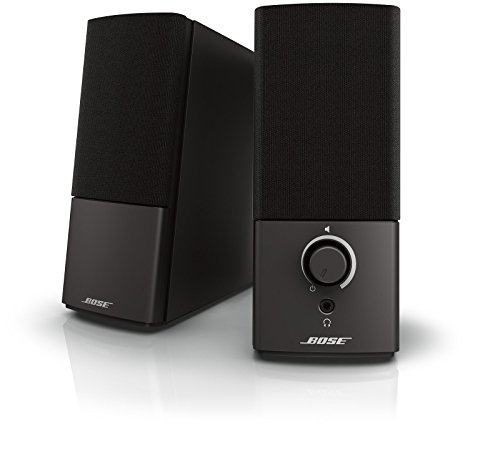
The Bose Companion 50 uses Acoustimass module technology to separate bass frequencies into a dedicated woofer module that can be placed under your desk, keeping the satellite speakers small and unobtrusive on your desktop. The sound signature is warm and wide, with Bose’s characteristic spacious imaging that makes music feel larger than the physical speaker placement suggests. The system connects via a single 3.5mm cable from your computer to the right satellite speaker, which then communicates with the Acoustimass module wirelessly. The volume control and headphone jack are located on the front of the right speaker for easy access.
Bose designed the Companion 50 to deliver “high quality audio performance, with clear sound at any volume,” as stated in the Amazon features. The auxiliary input lets you play an additional device, such as a phone or tablet, by connecting to the input. The system is compatible with Mac and Windows XP and later, making it a straightforward plug-and-play upgrade for any computer. The small satellite speakers take up minimal desk space, and the Acoustimass module can be hidden away, creating a clean, minimalist setup that still produces room-filling sound.
A real limitation is the price, which is high for a system that lacks Bluetooth connectivity and uses a proprietary subwoofer connection that limits upgrade options. The sound, while spacious and pleasant, is not as detailed or accurate as the Audioengine HD3, and the bass, while present, is not as deep or punchy as the Logitech Z623. If you value a wide, immersive soundstage and a clean desk aesthetic above all else, the Companion 50 delivers. For buyers who want modern wireless features or the highest fidelity, other options in this guide offer better value.
What to look for
- Speaker type: Decide between 2.0 stereo, 2.1 with a subwoofer, or studio monitors based on whether you prioritize bass impact, accuracy, or space savings.
- Connectivity: Check for Bluetooth version, USB-C or USB-A power, 3.5mm and RCA inputs, and whether a DAC is built-in to improve sound quality from your computer.
- Power and volume: Consider RMS wattage for clean headroom, but remember that higher numbers do not always mean better sound; look for THX certification or flat frequency response as quality indicators.
- Build materials: MDF cabinets with real wood veneer reduce resonance and improve sound quality over plastic enclosures, especially at higher volumes.
- Size and placement: Measure your desk space and consider satellite speaker height, subwoofer footprint, and whether the speakers need to fit under a monitor or on shelves.
- Acoustic tuning: Studio monitors with rear-panel EQ controls let you adjust for desk reflections and room boundaries, which is important for accurate listening.
- Expandability: Look for subwoofer outputs or bundled subwoofer options if you may want to add low-end later without replacing the entire system.
The verdict
The best computer audio system for you depends on what you value most at your desk. If you want the best value and clean midrange without spending much, the Creative Pebble Pro is the obvious choice. For gamers and movie fans who need deep bass and high volume, the Logitech Z623 delivers THX-certified power that fills a room. Audiophiles and critical listeners should invest in the Audioengine HD3 for its built-in DAC and detailed sound. Producers and editors who need accuracy will appreciate the PreSonus Eris E3.5 studio monitors. And if a wide soundstage with minimal desktop clutter is your priority, the Bose Companion 50 offers a unique solution. Choose the one that matches your primary use, and your desk sound will be transformed.
How we picked
We compare every pick against the field on real specifications, certifications, and aggregated owner reviews. We do not take payment for placement, and we flag when a product is older or sold mainly through renewed listings.
Top picks compared
Our picks up close
Creative Pebble Pro -- Best Budget Compact System
The Creative Pebble Pro is a USB-powered 2.0 desktop speaker with Bluetooth 5.0 and a 3.5mm input. At around 50 dollars it is among the best-performing options in its price tier. The upward-firing full-range drivers project sound away from the desk surface, which reduces reflection muddiness. Bass response is limited given the small enclosures, but the midrange is cleaner than most sub-100-dollar competition. Suitable for small desks, dorm rooms, or anyone who needs a compact upgrade from laptop speakers without spending more than necessary.
Where it shines
- CREATIVE LABS PEBBLE PRO MINIMALIST USB-C COMPUTER SPEAKERS
Logitech Z623 2.1 -- Best Gaming and Home Theater System
The Logitech Z623 is a 200-watt peak 2.1 system with a substantial woofer that delivers clean bass extension down to around 35 Hz. Two satellite speakers handle midrange and highs. The system connects via 3.5mm and RCA inputs. Volume and bass controls are on a wired desktop pod. At this price point it is hard to match the dynamic range the Z623 produces, particularly for games with low-frequency sound design or action films. Not tuned for flat studio monitoring, but for entertainment use the low-end punch is a feature rather than a flaw.
Where it shines
- THX-certified 2.1 speaker system brings your music, movies and games to life in immersive
- RCA and 3.5 millimeter inputs make it easy to plug in up to 3 audio devices
- 2 satellite speakers and a powerful subwoofer deliver sound big enough to fill even large
- Compatible with Television,Computer,Smartphone,Tablet,Music player,DVD player,Blu-ray play
- 400 Watts Peak/200 Watts RMS power delivers amped audio from this 2.1 speaker system. Subw
Audioengine HD3 -- Best Premium Stereo Desktop System
The Audioengine HD3 is a compact powered bookshelf speaker with a built-in 24-bit DAC, Bluetooth 5.0 aptX HD, RCA, and 3.5mm inputs. The cabinetry is solid MDF with real wood veneer finish options, and the internal amplifier is class AB for low distortion at normal listening volumes. Sound quality is detailed and well-balanced across the frequency range. The built-in DAC eliminates the need for a separate audio interface for most users. At around 350 dollars they are priced above competing desktop speakers, but the build quality and audio performance justify the cost for serious listeners.
Where it shines
- GET THE FULL SOUND STAGE in one complete bundle. Speakers, subwoofer and stands give you t
- SPECIAL OCCASIONS
- FOR HIM
- FOR HER
- PRO HARDWARE

PreSonus Eris E3.5 -- Best Entry-Level Studio Monitor System
The PreSonus Eris E3.5 is a near-field studio monitor with a flat frequency response tuned for accurate playback rather than consumer-friendly coloration. It includes acoustic tuning controls on the rear panel to compensate for room boundaries and desk reflections. At about 100 dollars for the pair, the E3.5 outperforms similarly priced consumer desktop speakers for anyone who needs to hear audio accurately, whether for music production, podcast editing, or video work. The inputs include TRS, RCA, and 3.5mm. A headphone output on the front allows quick monitoring comparisons.
Where it shines
- There is a newer model of this item available Gen 2 (2024) Eris 3.5
- The only true studio monitor for multimedia, gaming, watching movies, or producing your ne
- Now comes included with Studio One Prime and Studio Magic plug-in suite, over $1000 USD wo
- 3.5-inch woven composite drivers produce a more powerful bass response with a more accurat
- 1" ultra-low-mass silk-dome tweeters eliminate harshness and provide balanced high-frequen
Bose Companion 50 -- Best Wide Soundstage Desktop System
The Bose Companion 50 uses acoustimass module technology to separate bass frequencies into a separate woofer module that can be placed under a desk, keeping the satellite speakers small and unobtrusive. The sound signature is warm and wide, with Bose's characteristic spacious imaging that makes music feel larger than the physical speaker placement suggests. It connects via a single 3.5mm cable from the desktop control pod. Controls include volume, power, and headphone jack. The system suits users who want a premium listening experience without visible speaker cables or a large desktop footprint.
Where it shines
- High quality audio performance, with clear sound at any volume. Use the auxiliary input to
- Play an additional device just connect to the auxiliary input
- Volume controlheadphone jack on front of the right speaker
- Operating compatibility: Mac, Windows XP
Before you buy
What to consider
Decide between a 2.0 stereo setup and a 2.1 system with a subwoofer based on your primary content and desk space. Gaming and video benefit from subwoofer bass extension. Music production benefits from flat studio monitors without bass boost. For most users a powered desktop speaker system with a built-in DAC simplifies the signal chain. Consider input options if you connect multiple source devices. Budget realistically: spending more on a good 2.0 system often produces better results than buying a cheap 2.1 system where subwoofer quality is poor.
What to consider
For a more detailed breakdown of specific components like DACs and audio interfaces, see our guide on [articles/best-computer-audio-setup](/articles/best-computer-audio-setup). For protecting your equipment during travel or commuting, see [articles/best-computer-backpack-for-travel](/articles/best-computer-backpack-for-travel). Our selection process is outlined at [methodology](/methodology).
Quick answers
A 2.1 system adds a dedicated subwoofer to handle frequencies below around 100 Hz, which small satellite speakers cannot reproduce at adequate volume or quality. This adds bass impact for music and games. Trade-offs include desk space for the subwoofer and more complex placement requirements. A 2.0 system is simpler and can sound excellent if the speakers have large enough woofers.
Most powered desktop speaker systems connect via 3.5mm analog input, RCA, or optical digital. Systems with multiple input options can be shared between a computer and a TV or game console by switching inputs. Check the input specifications before buying if you plan to use the system with more than one source device.
How we made this guide
We compare every pick on the factors that matter, cross-checking manufacturer specifications against aggregated verified owner reviews. We rank independently and never take payment for placement. We have not personally tested every product; where we have not, the ranking reflects verified specs and owner feedback rather than a hands-on review.
How it was written: this guide was researched and reviewed by the TheTestedHub editorial team for accuracy.
Affiliate disclosure: TheTestedHub is reader-supported. When you buy through links on our site, we may earn a commission at no extra cost to you.
More to explore

Your Docking Station Match: CalDigit TS4 and More

Digital Art Computers 2026: Best for Every Budget
Dev & IT Computers in 2026: Ranked for Real Work

Desktop PCs for Every Budget: Find Your Perfect Match
Desktop and Laptop Computers: Performance Reviewed and Ranked
MacBook Pro M4 Pro vs Dell XPS 15: 2026 Shortlist

Buy the Best DIY Computer in 2026: Corsair One i300
