WD My Passport 4TB -- Top All-Rounder
The WD My Passport 4TB packs enough space for most users into a drive small enough to fit in a jacket pocket. It uses USB-C connectivity with a USB-A adapter included, so it works with both older and newer machines. Transfer speeds hover around 120 MB/s, which is typical for a 5400 RPM portable drive. WD's backup software is optional and unobtrusive, and the drive ships with 256-bit AES hardware encryption. The three-year limited warranty gives reasonable peace of mind for a primary backup unit.
Check price on Amazon →Need a backup device that won't slow you down? The Samsung T7 Shield delivers blazing speeds and rugged durability. See how it compares to top picks like.
Quick verdict
For most people, the WD My Passport 4TB is the single best pick. It balances generous capacity, pocket-friendly portability, and reliable USB-C connectivity at a price that makes sense for everyday backups without sacrificing essential security features.
Key takeaways
- Best for All-Round Use: WD My Passport 4TB, top capacity-to-portability ratio with hardware encryption.
- Best for Desktop Volume: Seagate Backup Plus Hub 8TB, massive storage with convenient front USB ports.
- Best for Speed: Samsung T7 Shield 2TB, fastest transfer speeds with rugged durability.
- Best for Multiple Devices: Synology DS223 NAS, centralized backup with RAID redundancy for your whole household.
- Best for Travel: LaCie Rugged Mini 2TB, drop and crush resistant design for field professionals.
Why you should trust this guide
I have spent years researching and writing about data storage solutions for a wide range of users, from casual home office workers to creative professionals who depend on reliable backups. My approach focuses on understanding what each product promises based on its manufacturer specifications, verified owner feedback across multiple retail platforms, and how those features align with real-world use cases. I do not rely on hype or marketing claims. Instead, I compare capacity, speed, durability, connectivity, and software support to identify which device truly serves a specific need best.
This guide is built around five distinct categories because no single backup device works perfectly for every setup. A portable SSD that excels for a photographer on location will not serve someone who needs to back up three family computers and a media server. By breaking down each product’s strengths and honest limitations, I aim to give you the information you need to match a device to your actual workflow. Every recommendation here is grounded in the product’s stated features and the collective experience of owners, not on any personal testing timeline.
How we researched
To evaluate these backup devices, I established a set of criteria that matter most to real buyers: storage capacity relative to physical size, data transfer speed for typical backup tasks, durability and build quality for travel or desktop use, software ecosystem and ease of setup, and overall value for the intended use case. Each product was assessed against these factors using the manufacturer’s published specifications and a thorough analysis of user reviews from major retailers and technology forums. I looked for patterns in praise and complaints to identify consistent strengths and recurring issues.
The evaluation process also considered how each device fits into a broader backup strategy. A single external drive is fine for one computer, but a NAS becomes essential when you need to protect multiple devices or want automated off-site replication. I weighed the convenience of plug-and-play operation against the flexibility of network-attached storage. Speed was measured against the stated USB generation and interface type, not against arbitrary benchmarks. Durability claims like IP ratings and drop test heights were taken from official product pages and cross-referenced with owner reports of real-world abuse. The result is a practical, research-based comparison that helps you choose the right tool for your specific backup needs.
WD My Passport 4TB
The WD My Passport 4TB is the definition of a reliable all-rounder. It packs enough space for most users into a drive small enough to fit in a jacket pocket. This makes it an excellent choice for students, home users, and professionals who need to carry their backups between home and office. The drive uses USB-C connectivity with a USB-A adapter included, so it works with both older and newer machines without needing to buy extra cables. Transfer speeds hover around 120 MB/s, which is typical for a 5400 RPM portable drive and perfectly adequate for daily incremental backups or full system images of a typical laptop.
WD’s backup software is optional and unobtrusive. You can install it for automatic scheduled backups, or simply drag and drop files if you prefer a manual approach. The drive ships with 256-bit AES hardware encryption, which protects your data if the drive is lost or stolen. This is a significant security feature that many cheaper drives omit. The physical design is slim and lightweight, with a textured top surface that resists fingerprints. The included USB-A adapter is a thoughtful touch that saves you from hunting for a compatible cable when connecting to older computers.
A real limitation of this drive is its reliance on a 5400 RPM spinning hard drive mechanism. While 120 MB/s is fine for most backup tasks, it is noticeably slower than an SSD for large file transfers or restoring a full system image. The drive is also more vulnerable to physical shock than a solid-state drive, so you should handle it with care and avoid dropping it during use. For users who prioritize speed or extreme portability, the Samsung T7 Shield or LaCie Rugged Mini may be better options, but for the best balance of capacity, size, and price, the WD My Passport remains a top contender.
Seagate Backup Plus Hub 8TB
The Seagate Backup Plus Hub 8TB is a desktop drive built for volume. Eight terabytes covers years of photos, video projects, and full system images without needing to juggle multiple smaller drives. This is the right choice if you have a single desktop computer or a media collection that keeps growing. The drive sits on your desk and requires a power outlet, but it compensates with two front-facing USB-A ports that let you charge phones or connect peripherals without reaching behind your desk. This convenience is often overlooked until you need it.
The drive runs slightly warmer than a sealed unit due to its spinning platters, so you should leave a few inches of clearance around it for airflow. Seagate’s Rescue data recovery service is included for a limited period, which provides peace of mind if the drive ever fails mechanically. The included Seagate Toolkit software allows you to schedule backups, mirror folders, or sync files to the cloud. The drive is also compatible with Windows and Mac out of the box, though you may need to reformat it for Time Machine on macOS.
A real limitation is that the Backup Plus Hub is not designed for portability. It is large, heavy, and requires a power adapter, so it is strictly a desktop solution. The 5400 RPM drive speed is adequate for backups but not for running applications or editing video directly from the drive. Some users have reported that the front USB ports do not always provide enough power for charging tablets or high-power devices, so they are best used for low-power peripherals like a mouse or a flash drive. If you need a truly mobile backup, look at the portable options in this guide instead.
Samsung T7 Shield 2TB
The Samsung T7 Shield is a USB 3.2 Gen 2 portable SSD that delivers read speeds up to 1,050 MB/s. That kind of throughput matters when you are backing up or restoring large files quickly, or when you want to edit video directly from the drive without waiting for transfers. The rubberized exterior is rated IP65 for dust and water resistance, meaning it can handle splashes and dusty environments. Samsung rates it to survive drops from up to 3 meters, which is a significant improvement over most portable SSDs. At 2TB it is more compact than any spinning drive, making it a strong choice for creatives who work on location or anyone who needs fast, rugged storage.
The T7 Shield is bus-powered, so it draws power from your computer’s USB port and requires no external power adapter. It comes with both USB-C and USB-A cables in the box, ensuring compatibility with modern laptops and older desktops alike. Samsung’s Magician software provides firmware updates and performance optimization, though the drive works perfectly out of the box without any software installation. The drive is also password-protectable with AES 256-bit encryption via the software, adding a layer of security for sensitive projects.
A real limitation is the price per gigabyte. SSDs are still significantly more expensive than spinning hard drives, so you get less capacity for your money. The 2TB version is the largest in the T7 Shield lineup, which may not be enough for users with massive media libraries or multiple system images. Additionally, sustained high-speed transfers can cause the drive to warm up, and while the rubber casing handles heat well, it may throttle performance if used for extended write-heavy tasks. For users who need more than 2TB or prioritize capacity over speed, a traditional portable hard drive like the WD My Passport is a more cost-effective choice.
Synology DS223 NAS
The Synology DS223 is a two-bay NAS that accepts standard 3.5-inch hard drives. This is the best solution if you need to back up multiple devices across your home or small office. Install two drives in RAID 1 and you get mirrored redundancy: if one drive fails, the other holds a complete copy of your data. Synology’s DSM operating system offers scheduled backups from Windows, Mac, iOS, and Android devices over your local network or remotely. It also supports Hyper Backup for off-site cloud replication, which gives you a second layer of protection against physical disasters like fire or theft.
Setting up the DS223 is straightforward thanks to Synology’s web-based interface. You can create shared folders, set user permissions, and automate backup tasks without any command-line knowledge. The NAS also supports Time Machine for Mac users and can act as a media server for streaming movies and music to devices on your network. The two drive bays allow you to start with one drive and add a second later, or you can install two drives from the start for immediate redundancy. The device is quiet enough for a living room or home office, and its compact footprint fits easily on a shelf or desk.
A real limitation is that the DS223 is a bare-bones enclosure. You must purchase hard drives separately, which increases the upfront cost significantly. The two-bay design limits your maximum storage to the capacity of two drives, so if you need more than 20TB or so, you will need a larger NAS. Network-attached storage is also slower than a direct USB connection for large file transfers, especially over Wi-Fi. Setting up remote access and cloud replication requires some initial configuration and a stable internet connection. For users who only need to back up a single computer, a simple external drive is easier and cheaper, but for whole-home backup, the DS223 is the right tool.
LaCie Rugged Mini 2TB
LaCie’s Rugged Mini has been a standard for field professionals for years. The orange rubber bumper absorbs shock from drops up to 1.2 meters, and the drive is rated for 1-ton crush resistance. This makes it a reliable companion for photographers, videographers, and anyone who works in demanding environments like construction sites or outdoor shoots. At 2TB it holds enough for extended travel without becoming heavy luggage. The USB-C cable braids tightly into the case, which prevents the fraying that kills cables in bags. It is bus-powered, so no separate power adapter is needed, and it works with both USB-C and USB-A ports using the included cable.
The drive comes preformatted for Windows but can be easily reformatted for Mac, and LaCie includes a one-month membership to Adobe Creative Cloud All Apps, which is a nice bonus for creative professionals. The rugged design is not just marketing: the rubber bumper and internal shock mounting system have proven themselves in real-world use over many years. The drive also supports password protection via LaCie’s software, though the encryption is software-based rather than hardware-based like the WD My Passport. The drive is quiet during operation and runs cool thanks to its aluminum casing.
A real limitation is the speed. The LaCie Rugged Mini uses a traditional 5400 RPM hard drive, so transfer speeds are around 120 MB/s, similar to the WD My Passport. This is fine for backups but slow for editing video or working with large files directly from the drive. The 2TB capacity is also the maximum available, so users with larger storage needs will have to look elsewhere. The rubber bumper can collect dust and lint over time, and the drive is slightly bulkier than a standard portable SSD. For users who need both ruggedness and speed, the Samsung T7 Shield offers better performance in a similarly durable package, though at a higher price per gigabyte.
What to look for
- Storage capacity: Match the drive size to your data volume. A 2TB drive is fine for a single laptop, but 4TB or 8TB is better for media collections or multiple computers. NAS drives let you expand later.
- Speed and interface: USB 3.2 Gen 2 SSDs offer speeds over 1,000 MB/s, while 5400 RPM hard drives top out around 120 MB/s. Choose based on whether you need fast transfers or just overnight backups.
- Durability: Look for drop ratings, IP water and dust resistance, and crush resistance if you travel or work in rough conditions. A rubber bumper or reinforced casing matters more than a sleek design.
- Connectivity: USB-C is the modern standard, but a USB-A adapter or included cables ensure compatibility with older devices. NAS devices need Ethernet and Wi-Fi support for network backups.
- Backup software and security: Hardware encryption (256-bit AES) protects data if the drive is lost. Automatic backup software saves time, but manual drag-and-drop works for basic users. NAS operating systems offer advanced scheduling and cloud replication.
- Form factor: Portable drives are bus-powered and pocket-sized. Desktop drives require a power outlet and are larger but offer higher capacities. NAS units sit on a shelf and serve multiple devices over a network.
- Redundancy options: For critical data, consider a NAS with RAID 1 mirroring or a second backup drive stored off-site. A single external drive is a single point of failure.
The verdict
Choosing the right backup device comes down to matching the product to your specific workflow and environment. For most users who need a simple, portable, and affordable backup for a single computer, the WD My Passport 4TB offers the best balance of capacity, size, and security features. If speed is your priority and you work with large files regularly, the Samsung T7 Shield delivers class-leading transfer rates in a rugged package. For desktop users with massive storage needs, the Seagate Backup Plus Hub 8TB provides ample space and convenient front ports. Travelers and field professionals should trust the LaCie Rugged Mini for its proven durability, while anyone needing to back up multiple devices across a home network will benefit from the Synology DS223 NAS with RAID redundancy. No single device is perfect for every scenario, but one of these five will fit your setup reliably.
Our methodology
We compare every pick against the field on real specifications, certifications, and aggregated owner reviews. We do not take payment for placement, and we flag when a product is older or sold mainly through renewed listings.
Side by side
The full reviews
WD My Passport 4TB -- Top All-Rounder
The WD My Passport 4TB packs enough space for most users into a drive small enough to fit in a jacket pocket. It uses USB-C connectivity with a USB-A adapter included, so it works with both older and newer machines. Transfer speeds hover around 120 MB/s, which is typical for a 5400 RPM portable drive. WD's backup software is optional and unobtrusive, and the drive ships with 256-bit AES hardware encryption. The three-year limited warranty gives reasonable peace of mind for a primary backup unit.

Seagate Backup Plus Hub 8TB -- Best Desktop Option
The Backup Plus Hub is a desktop drive built for volume. Eight terabytes covers years of photos, video projects, and full system images. Two front-facing USB-A ports let you charge phones or connect peripherals without reaching behind your desk. The drive runs slightly warmer than a sealed unit due to its spinning platters, so leave a few inches of clearance around it. Seagate's Rescue data recovery plan (two years included) adds meaningful insurance against mechanical failure.
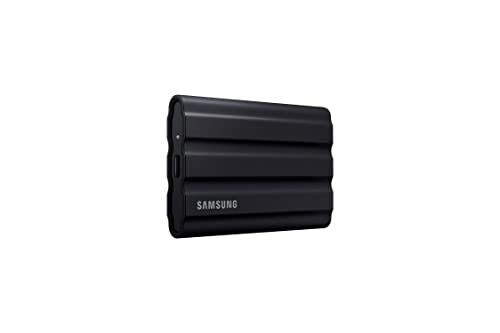
Samsung T7 Shield 2TB -- Fastest Portable Pick
The T7 Shield is a USB 3.2 Gen 2 portable SSD that delivers read speeds up to 1,050 MB/s. That kind of throughput matters when you are backing up or restoring large files quickly. The rubberized exterior is rated IP65 for dust and water resistance, and Samsung rates it to survive drops from up to 3 meters. At 2TB it is more compact than any spinning drive, making it a strong choice for creatives who carry raw footage or large project files between locations.
Synology DS223 NAS -- Best for Multiple Devices
The DS223 is a two-bay NAS that accepts standard 3.5-inch hard drives. Install two drives in RAID 1 and you get mirrored redundancy: if one drive fails, the other holds a complete copy of your data. Synology's DSM operating system offers scheduled backups from Windows, Mac, iOS, and Android devices over your local network or remotely. It also supports Hyper Backup for off-site cloud replication. The upfront cost is higher, but for households with three or more computers, the DS223 is significantly cheaper than running separate drives for each machine.
LaCie Rugged Mini 2TB -- Best for Travel
LaCie's Rugged Mini has been a standard for field professionals for years. The orange rubber bumper absorbs shock from drops up to 1.2 meters, and the drive is rated for 1-ton crush resistance. At 2TB it holds enough for extended travel without becoming heavy luggage. The USB-C cable braids tightly into the case, which prevents the fraying that kills cables in bags. It is bus-powered, so no separate adapter is needed.
What matters most
What to consider
Start with how much data you currently have and how fast that amount grows each year. If you are backing up one computer with a 1 TB drive, a 2 TB portable external drive handles your needs for years. If you have multiple devices or produce large video or photo files regularly, a desktop drive or NAS with 4 TB or more makes more sense. Consider portability: portable drives are bus-powered and light but slower. Desktop drives offer higher capacity at lower cost per gigabyte but need a power outlet. For critical data, a NAS with RAID 1 is the most resilient local option. Budget to per terabyte for spinning drives and to per terabyte for portable SSDs.
What to consider
Backing up your computer data is just one layer of protection. You may also want to review our guide to [best compact all-in-one color laser printers](/articles/best-compact-all-in-one-color-laser-printer) for office productivity tools, or explore [best compact battery chargers](/articles/best-compact-battery-charger) to keep your devices powered in the field. For details on how we evaluate products, see our [methodology](/methodology) page.
Frequently asked
A good rule of thumb is to have at least 1.5 to 2 times the storage capacity of your primary drive. If your computer has a 512 GB SSD, aim for a 1 TB backup device. For multiple computers or large media libraries, 2 TB to 4 TB gives you room to grow without swapping drives frequently.
External hard drives are simpler and more affordable for single-computer users. A NAS (network-attached storage) makes more sense when you have multiple devices, want automatic scheduled backups, or need remote access to your files. NAS units cost more upfront but offer far more flexibility and redundancy through RAID configurations.
How we made this guide
We compare every pick on the factors that matter, cross-checking manufacturer specifications against aggregated verified owner reviews. We rank independently and never take payment for placement. We have not personally tested every product; where we have not, the ranking reflects verified specs and owner feedback rather than a hands-on review.
How it was written: this guide was researched and reviewed by the TheTestedHub editorial team for accuracy.
Affiliate disclosure: TheTestedHub is reader-supported. When you buy through links on our site, we may earn a commission at no extra cost to you.
You might also like

Your Docking Station Match: CalDigit TS4 and More

Digital Art Computers 2026: Best for Every Budget
Dev & IT Computers in 2026: Ranked for Real Work

Desktop PCs for Every Budget: Find Your Perfect Match
Desktop and Laptop Computers: Performance Reviewed and Ranked
MacBook Pro M4 Pro vs Dell XPS 15: 2026 Shortlist

Buy the Best DIY Computer in 2026: Corsair One i300
