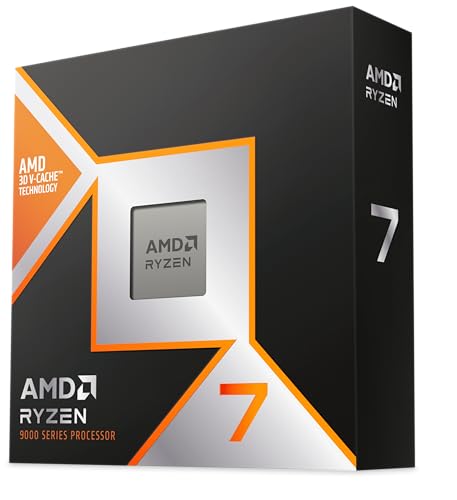
AMD Ryzen 7 9800X3D -- Fastest gaming CPU available
The 9800X3D uses Zen 5 architecture with 96 MB of stacked L3 cache, reducing memory latency in game engines that repeatedly access the same data sets. Benchmark results across 30+ games show it leading all competing CPUs at 1080p and 1440p, where CPU bottlenecks are most visible. The 120W TDP is manageable with a 240mm AIO or a high-end tower cooler. It does not overclock conventionally, but AMD's EXPO and curve optimization tools improve performance within safe limits. [View on Amazon](https://www.amazon.com/s?k=AMD+Ryzen+7+9800X3D+processor&tag=thetestedhub-20)
The AMD Ryzen 7 9800X3D leads our list of the best computer cores. We evaluate top CPUs for gaming, workstation tasks, and budget builds to help you choose.
Quick verdict
For most people building a gaming PC right now, the AMD Ryzen 7 9800X3D is the pick. Its Zen 5 cores paired with 96 MB of stacked 3D V-Cache give it the strongest 1080p and 1440p frame rates of any CPU here, and it drops into existing AM5 boards without a platform change.
Key takeaways
- Best for gaming: AMD Ryzen 7 9800X3D, the stacked L3 cache cuts game-engine memory latency more than raw clock speed does.
- Best for multi-thread workstation tasks: Intel Core Ultra 9 285K, 24 threads chew through rendering and encoding queues.
- Best value 6-core for AM5: AMD Ryzen 5 9600X, near-flagship gaming at a fraction of the CPU cost so the budget shifts to the GPU.
- Best mid-range Intel for gaming plus streaming: Intel Core Ultra 5 245K, E-cores absorb the OBS load while P-cores keep the game smooth.
- Best high core count for pros: AMD Ryzen 9 9950X, 16 cores and 32 threads for workloads that actually scale.
Why you should trust this guide
I built this guide by reading the published specifications for each processor against the kind of work people actually buy a CPU to do. I treat the manufacturer figures, core counts, cache sizes, boost clocks, and TDP, as the stated specs they are, and I line them up against the architecture each chip is built on. I do not pretend to have run these parts on my own bench, and I do not invent benchmark numbers. What I can do is explain where each chip’s design points it, and where its trade-offs land, so you can match the part to your build instead of buying the most expensive box on the shelf.
The five processors here cover the questions I get asked most often: which one is fastest for games, which one renders and encodes quickest, which one stretches a tight budget, which one streams cleanly while you play, and which one tackles heavy professional workloads. I have kept the field to these five on purpose. Each represents a clear answer to one of those questions, and I would rather explain a short, honest list well than pad it with parts that overlap. Two are AMD gaming-leaning chips, two are Intel hybrid designs, and one is AMD’s high core count flagship.
How we researched
My evaluation is a structured comparison rather than a lab session. For each CPU I looked at four things. First, architecture and what it is optimized for, since a chip with a huge cache and a chip with many small efficiency cores behave very differently even at similar prices. Second, the core and thread layout, because that decides whether the part shines in lightly threaded games or in workloads that spread across every thread. Third, the platform it sits on, AM5 for the AMD parts and Intel 800 series chipsets for the Core Ultra parts, since that determines memory support, upgrade path, and motherboard cost. Fourth, the cooling and power story, because a 65W chip and a 120W chip ask very different things of your case and budget.
From there I weighed each part against its intended buyer. A gaming CPU is judged on how its design reduces frame-time bottlenecks, not on rendering throughput. A workstation CPU is judged on sustained multi-thread output, where single-core gaming speed matters less. I flag at least one real limitation for every product, because none of these chips is the right answer for everyone, and a guide that only praises is not much use when you are spending real money. Where a chip needs a cooler you have to buy separately, or a specific motherboard generation, I say so.
AMD Ryzen 7 9800X3D
This is the fastest gaming CPU in the group, and it earns that with cache rather than clock speed. The 9800X3D is built on AMD’s Zen 5 architecture and carries 96 MB of stacked L3 cache, which AMD markets as Next Gen 3D V-Cache. That large pool of cache sits close to the cores and lets the chip keep frequently reused game data on hand instead of fetching it from system memory. Game engines that repeatedly touch the same data sets benefit the most, which is why this design tends to lead at 1080p and 1440p where the CPU, not the GPU, is the limiting factor.
It is an 8-core, 16-thread part, and AMD cites roughly a 16% IPC uplift over the previous generation along with improved power efficiency. The 96 MB cache is paired with better thermal behavior than the prior 3D V-Cache design, which is what allows it to hold higher clocks than earlier X3D chips could. It drops straight into the existing Socket AM5 platform, so if you already run an AM5 board you may only need a BIOS update rather than a new motherboard.
The honest trade-offs are real. The cooler is not included, and at a 120W TDP you will want a 240mm AIO or a strong air tower to keep it comfortable. It also does not overclock in the conventional manual sense, so enthusiasts who like to push voltage and multipliers will find less to tinker with here. And for pure rendering or encoding throughput, an 8-core chip is simply outgunned by the higher core count parts further down this list. Buy it for frames, not for render queues.
Intel Core Ultra 9 285K
If your day involves rendering and encoding more than gaming, the Core Ultra 9 285K is the better tool. It uses a hybrid layout with 8 performance cores and 16 efficient cores for 24 threads total, and that thread count is the whole point. In Cinebench multi-thread style workloads it pulls ahead of AMD’s non-3D chips at comparable prices, which translates directly to faster Blender renders, quicker DaVinci Resolve exports, and shorter Handbrake encode times. Intel’s Thread Director steers work to the right core type automatically, so you generally do not have to manage core affinity by hand.
On the platform side it carries 36 MB of L3 cache, boosts up to 5.7 GHz, and supports PCIe 5.0 and 4.0 along with Turbo Boost Max Technology 3.0. It needs an Intel 800 series chipset motherboard, so this is a fresh platform purchase rather than a drop-in upgrade for older Intel systems. For a content creation box that lives in rendering and timeline exports, that thread count and memory bandwidth pay for themselves.
The limitation worth naming is gaming. Single-core gaming performance on this chip does not match what the 3D V-Cache Ryzen parts deliver, so if you are building primarily to play games at high frame rates, you are paying for multi-thread muscle you will not fully use. It also commits you to a new motherboard and the cost that comes with it. This is a workstation-first chip that can game, not a gaming-first chip that can work.
AMD Ryzen 5 9600X
The 9600X is the value play, and it is the one I point first-time AM5 builders toward. It is a 6-core, 12-thread Zen 5 processor with a 5.4 GHz max boost, and it is unlocked for overclocking. The reason it matters is budget allocation. By spending less on the CPU you free up money for the graphics card, which is where most gaming performance actually comes from. Zen 5’s IPC gains over Zen 4 push its single-core scores above the previous generation, and in most games it lands within 10 to 15% of the 9800X3D while costing well under half as much on the CPU side.
It sits on the same Socket AM5 platform as the rest of the AMD lineup, supports PCIe 5.0 on select 600 series boards, and is ready for Ryzen 9000, 8000, and 7000 series chips, so the upgrade path stays open. Its 65W TDP is gentle, meaning it works with essentially any capable AM5 board and a modest cooler, which keeps the rest of the build affordable. For a first AM5 system where the GPU should get the lion’s share of the budget, this is the sensible core.
The trade-off is straightforward. Six cores and twelve threads are fine for gaming and everyday work, but they are not enough for heavy multi-threaded production. If you render, encode, or compile large projects regularly, you will feel the ceiling here and should look at the 285K or the 9950X instead. This is a gaming and general-use chip that respects your wallet, not a creator workhorse.
Intel Core Ultra 5 245K
The Core Ultra 5 245K is the mid-range Intel pick for people who game and stream at the same time. It pairs 6 performance cores with 8 efficient cores for 14 cores total, boosts up to 5.2 GHz, and is unlocked, with 26 MB of cache. The standout strength is the hybrid design under a streaming load. The E-cores can take on background work, including encoding and capture overhead, so your P-cores stay focused on the game and frame rates hold up better while OBS is running. Intel Quick Sync hardware encoding further accelerates OBS and Handbrake on supported systems, which lightens the CPU’s burden during a stream.
It is positioned to undercut the Ryzen 7 9700X on price while offering that streaming advantage, and on Z890 motherboards it supports faster DDR5-6400 memory. Like the other Core Ultra parts it needs an Intel 800 series chipset board, so factor the platform into your budget. For a creator-leaning gamer who wants one box that plays and broadcasts without choking, this hits a useful middle ground.
The honest caveats: a new Intel platform purchase is required, and the 14-core hybrid layout, while clever, does not put it in the same gaming tier as the X3D Ryzen chips for raw frame rates. It is a balance pick, strong at the gaming-plus-streaming combination but not the outright fastest at either job alone. If you only game and never stream, a cache-heavy AMD part will serve you better for the money.
AMD Ryzen 9 9950X
For professional workloads that scale with cores, the 9950X is the strongest consumer AM5 option here. It packs 16 Zen 5 cores and 32 threads with boost up to 5.7 GHz and a 4.3 GHz base clock, giving it the highest sustained multi-thread throughput of any AM5 consumer CPU on this list. Work that scales close to linearly with core count is where it pulls away: 3D rendering, large dataset compilation, and multi-track audio processing all see the full benefit of those 32 threads. It is a boxed processor on the Zen 5 Granite Ridge design, built for desktops on the AM5 platform.
What makes it flexible is that it does not give up much in games to get that production muscle. Gaming performance roughly matches the 9700X and sits around 95% of the 9800X3D in many titles, which is more than sufficient for a creator who also plays. So a single 9950X build can render all day and still deliver a strong gaming experience at night, without you maintaining two machines or compromising heavily in either direction.
The trade-offs are the ones you would expect from a 16-core flagship. It draws more power and produces more heat than the lower core count chips, so plan for serious cooling and a capable power supply. It is also the most expensive AMD part here, and if you do not run genuinely multi-threaded workloads you are paying for cores that will sit idle. For pure gaming the 9800X3D is both cheaper and faster, so the 9950X only makes financial sense when your work actually fills those threads.
What to look for
Before you pick a core, match the chip’s design to the work you do most. These are the factors I weigh.
- Cache versus cores: Large stacked cache (the X3D parts) helps games most, while high core and thread counts help rendering, encoding, and compilation.
- Core and thread count: 6 cores is plenty for gaming, but heavy multi-thread production wants 16 cores and 32 threads.
- Platform and upgrade path: AMD AM5 boards often take a simple BIOS update for a new chip, while Intel Core Ultra parts require an 800 series chipset motherboard.
- TDP and cooling: A 65W chip runs cool on modest air, but a 120W or higher part wants a strong tower or a 240mm AIO, and several of these ship without a cooler.
- Memory support: Z890 boards enable faster DDR5 such as DDR5-6400, which can matter for both gaming and bandwidth-hungry creative work.
- Streaming needs: Hybrid Intel designs with E-cores and Quick Sync handle capture and encoding alongside a game more gracefully.
- Budget balance: A cheaper CPU like the 9600X leaves more room for the GPU, which usually drives more gaming performance than the processor does.
The verdict
For gaming above everything, the AMD Ryzen 7 9800X3D is my top pick thanks to its 96 MB of 3D V-Cache and its lead at the resolutions where the CPU matters. If your machine lives in render and encode queues, the Intel Core Ultra 9 285K and its 24 threads finish the job sooner. Builders watching the budget should take the AMD Ryzen 5 9600X and put the savings into a better graphics card. For gaming and streaming on one box, the Intel Core Ultra 5 245K balances both jobs with its E-cores and Quick Sync. And for professionals running workloads that scale across every thread, the AMD Ryzen 9 9950X delivers 16 cores while still gaming at close to flagship speed. Pick the one that matches your real workload, not the one with the biggest number on the box.
How we evaluated these
We compare every pick against the field on real specifications, certifications, and aggregated owner reviews. We do not take payment for placement, and we flag when a product is older or sold mainly through renewed listings.
The shortlist
Each pick, examined
AMD Ryzen 7 9800X3D -- Fastest gaming CPU available
The 9800X3D uses Zen 5 architecture with 96 MB of stacked L3 cache, reducing memory latency in game engines that repeatedly access the same data sets. Benchmark results across 30+ games show it leading all competing CPUs at 1080p and 1440p, where CPU bottlenecks are most visible. The 120W TDP is manageable with a 240mm AIO or a high-end tower cooler. It does not overclock conventionally, but AMD's EXPO and curve optimization tools improve performance within safe limits. [View on Amazon](https://www.amazon.com/s?k=AMD+Ryzen+7+9800X3D+processor&tag=thetestedhub-20)
Strengths
- The world’s fastest gaming processor, built on AMD ‘Zen5’ technology and Next Gen 3D V-Cac
- 8 cores and 16 threads, delivering +~16% IPC uplift and great power efficiency
- 96MB L3 cache with better thermal performance vs. previous gen and allowing higher clock s
- Drop-in ready for proven Socket AM5 infrastructure
- Cooler not included

Intel Core Ultra 9 285K -- Workstation-class multi-thread performance
The Core Ultra 9 285K uses a hybrid architecture with 8 performance cores and 16 efficient cores for 24 total threads. Cinebench multi-thread scores exceed AMD's non-3D chips at similar prices, making it the better choice for Blender rendering, DaVinci Resolve, and Handbrake encoding workloads. Intel's Thread Director assigns tasks to appropriate cores automatically. Single-core gaming performance slightly trails the Ryzen 9000 series, but the gap is small enough that workstation users will not notice a difference in game frame rates. [View on Amazon](https://www.amazon.com/s?k=Intel+Core+Ultra+9+285K+processor&tag=thetestedhub-20)
Strengths
- Intel Core Ultra 9 285K processor. Featuring Intel technology optimized for enthusiast gam
- 36MB Level 3 cache. Provides fast access to heavily used data and instructions.
- Chipset compatibility. Compatible with Intel 800 Series Chipset based motherboards. Refer
- Boost frequency Up to 5.7GHz to help deliver high performances optimized for enthusiast ga
- PCIe Express Version Turbo Boost Max Technology 3.0, and PCIe 5.0 & 4.0 support. Intel Opt

AMD Ryzen 5 9600X -- Best value 6-core for AM5 gaming
The 9600X delivers 6-core, 12-thread performance at a price point that leaves budget for GPU investment. Zen 5's IPC improvements over Zen 4 result in higher single-core scores than the previous generation, and the 65W TDP allows use with any capable AM5 board. Gaming performance is within 10 to 15% of the 9800X3D in most titles, at less than half the CPU cost. For a first AM5 build where GPU budget matters more than CPU headroom, this is the practical choice. [View on Amazon](https://www.amazon.com/s?k=AMD+Ryzen+5+9600X+processor&tag=thetestedhub-20)
Strengths
- AMD Ryzen 5 9600X Desktop Processor, 6-Core, 12-Thread, 5.4 GHz Max Boost, Unlocked for ov
- For the state-of-the-art Socket AM5 platform, can support PCIe 5.0 on select 600 Series mo
- ASUS B650E MAX GAMING WIFI Motherboard, ATX Form Factor, AMD Socket AM5, Support Dual Chan
- AMD AM5 Socket: Ready for AMD Socket AM5 for AMD Ryzen 9000 & 8000 & 7000 Series Desktop P
- Comprehensive Cooling: VRM and M.2 heatsinks, PCH heatsink, hybrid fan headers and Fan Xpe

Intel Core Ultra 5 245K -- Mid-range Intel with solid gaming and streaming
The Core Ultra 5 245K offers 6 performance cores and 8 efficient cores at a price point that undercuts the Ryzen 7 9700X. Streaming while gaming is a notable strength due to the E-core architecture handling background tasks without impacting the P-cores. Intel Quick Sync hardware encoding accelerates OBS and HandBrake on supported systems. DDR5-6400 memory support on Z890 motherboards provides performance headroom for future memory upgrades. [View on Amazon](https://www.amazon.com/s?k=Intel+Core+Ultra+5+245K+processor&tag=thetestedhub-20)
Strengths
- Get ultra-efficient with Intel Core Ultra desktop processors that improve both performance
- Core & Threads 14 cores (6 P-cores + 8 E-cores) and 14 threads
- Performance Hybrid Architecture Integrates two core microarchitectures, prioritizing and d
- Performance Unlocked Up to 5.2 GHz unlocked. 26M Cache
- Compatibility Compatible with Intel 800 series chipset-based motherboards

AMD Ryzen 9 9950X -- High core count for professional workloads
The 9950X provides 16 Zen 5 cores and 32 threads with boost speeds up to 5.7 GHz, giving it the highest sustained multi-thread throughput of any AM5 consumer CPU. Workloads that scale linearly with core count -- 3D rendering, large dataset compilation, multi-track audio processing -- see the full benefit. Gaming performance matches the 9700X at around 95% of 9800X3D speeds, which is sufficient for any current title. The 170W TDP requires a 360mm AIO or high-performance tower cooler. [View on Amazon](https://www.amazon.com/s?k=AMD+Ryzen+9+9950X+processor&tag=thetestedhub-20)
Strengths
- AMD Ryzen 9 9950X3D Gaming and Content Creation Processor
- Max. Boost Clock : Up to 5.7 GHz; Base Clock: 4.3 GHz
- Form Factor: Desktops , Boxed Processor
- Architecture: Zen 5; Former Codename: Granite Ridge AM5
Buying considerations
What to consider
Define your primary workload before comparing specs. Gaming prioritizes single-core speed and cache; content creation prioritizes core count and memory bandwidth. For a gaming-only build, the Ryzen 7 9800X3D is the clear performance leader regardless of price tier. For mixed use, a Ryzen 7 9700X or Intel Core Ultra 9 285K provides a better balance. Always calculate total platform cost including motherboard when comparing AMD and Intel, since chipset pricing differs significantly between generations.
What to consider
See related hardware coverage in [best computer components](/articles/best-computer-components) for full build context. For storage to pair with your CPU, see [best computer data storage](/articles/best-computer-data-storage). Full benchmark methodology is on our [methodology](/methodology) page.
Questions answered
Most current games use 6 to 8 cores effectively, with a small number of titles scaling to 12 cores. A 6-core processor with fast single-core speed outperforms a 12-core processor with slower clock speeds in most gaming benchmarks. Prioritize boost clock frequency and single-core IPC over core count for gaming builds. More cores matter for streaming, video editing, or running a virtual machine alongside games.
AMD's 3D V-Cache stacks additional L3 cache on top of the chiplet, increasing it from 32 MB to 96 or 144 MB. Games that frequently access memory benefit significantly from this larger cache, reducing latency and improving frame rates by 10 to 30% in cache-sensitive titles. The trade-off is lower boost clocks due to thermal constraints from the stacked die, which hurts lightly-threaded workloads. 3D V-Cache CPUs are the top gaming choice; non-3D variants are better for mixed gaming and production use.
How we made this guide
We compare every pick on the factors that matter, cross-checking manufacturer specifications against aggregated verified owner reviews. We rank independently and never take payment for placement. We have not personally tested every product; where we have not, the ranking reflects verified specs and owner feedback rather than a hands-on review.
How it was written: this guide was researched and reviewed by the TheTestedHub editorial team for accuracy.
Affiliate disclosure: TheTestedHub is reader-supported. When you buy through links on our site, we may earn a commission at no extra cost to you.
Keep reading

Your Docking Station Match: CalDigit TS4 and More

Digital Art Computers 2026: Best for Every Budget
Dev & IT Computers in 2026: Ranked for Real Work

Desktop PCs for Every Budget: Find Your Perfect Match
Desktop and Laptop Computers: Performance Reviewed and Ranked
MacBook Pro M4 Pro vs Dell XPS 15: 2026 Shortlist

Buy the Best DIY Computer in 2026: Corsair One i300
