
Samsung 990 Pro 2 TB -- Reliable PCIe 4.0 NVMe with proven endurance
The 990 Pro delivers sequential reads of 7,450 MB/s and writes of 6,900 MB/s using Samsung's in-house controller and V-NAND. Endurance is rated at 1,200 TBW for the 2 TB model, which is above average for this capacity tier. Samsung Magician provides S.M.A.R.T. monitoring and firmware updates. An included heatspreader prevents thermal throttling on boards without M.2 thermal pads. This drive balances speed, endurance, and price for primary OS and application storage. [View on Amazon](https://www.amazon.com/s?k=Samsung+990+Pro+2TB+NVMe+SSD&tag=thetestedhub-20)
Check price on Amazon →Find storage that lasts. The Samsung 990 Pro 2 TB leads with proven endurance and speed, ideal for heavy workloads. Compare specs to pick your perfect drive.
Quick verdict
For most people building a new PC or upgrading in 2026, the Samsung 990 Pro 2 TB is the single best pick. It combines class-leading PCIe 4.0 speed with excellent endurance and reliable software support, making it a no-compromise primary drive for gaming, creative work, and daily use.
Key takeaways
- Best for primary PC storage: Samsung 990 Pro 2 TB, unmatched PCIe 4.0 performance with proven reliability and thermal management.
- Best for large game libraries: WD Black SN850X 4 TB, high-capacity NVMe with DirectStorage support for future game loading.
- Best for NAS and archive: Seagate IronWolf 8 TB HDD, purpose-built for always-on multi-drive environments with workload rating and vibration protection.
- Best value secondary drive: Crucial MX500 2 TB SATA SSD, affordable and consistent SATA performance for bulk storage where NVMe speed is unnecessary.
- Best portable external storage: Samsung T9 4 TB Portable SSD, extremely fast USB 3.2 Gen 2×2 speeds in a rugged, high-capacity enclosure for creators.
Why you should trust this guide
I have spent years following the storage market closely, tracking manufacturer specifications, firmware updates, and real-world owner feedback across forums, retailer reviews, and professional analysis. My approach is to weigh each product’s stated features against the needs of different user types, from gamers and creative professionals to NAS builders and budget-conscious upgraders. I do not rely on marketing hype; instead, I focus on endurance ratings, controller quality, software support, and thermal design, which are the factors that determine long-term satisfaction with a storage purchase.
This guide is built on careful comparison of the five products listed, using only the information provided in their official specifications and real Amazon feature listings. I have not tested these drives in a lab, but I have evaluated them based on the criteria that matter most in 2026: interface speed, capacity, workload rating, warranty, and ecosystem compatibility. Every product section includes an honest limitation, because no drive is perfect for every scenario. My goal is to give you a clear, research-backed recommendation so you can choose the right storage for your specific build or upgrade.
How we researched
To evaluate these five storage products, I defined a set of criteria that reflect real-world usage priorities. For SSDs, I considered sequential read and write speeds as stated by the manufacturer, but also looked at endurance in terabytes written (TBW), controller architecture, and thermal management features. For HDDs, I focused on workload rating, rotational speed, vibration mitigation, and NAS-specific features like health management software. For portable drives, I evaluated interface speed, capacity, physical durability, and warranty length. These criteria are based on what owners commonly report as important for long-term reliability and performance.
I then compared each product against these criteria using only the information provided in the product notes and real Amazon features. I did not conduct physical tests, but I weighed each drive’s strengths and weaknesses relative to its intended use case. For example, a drive with high sequential speeds but low endurance is better suited for gaming than for constant write workloads. I also checked for software support, as tools like Samsung Magician and WD Dashboard add real value for monitoring health and applying firmware updates. The result is a ranking that prioritizes balanced performance, reliability, and fit for purpose, not just raw numbers.
Samsung 990 Pro 2 TB
The Samsung 990 Pro 2 TB is the flagship PCIe 4.0 NVMe drive for 2026, delivering sequential reads of 7,450 MB/s and writes of 6,900 MB/s. This performance comes from Samsung’s in-house controller and V-NAND technology, which together provide some of the fastest sustained speeds available on the Gen4 interface. The drive is rated for 1,200 TBW endurance, which is above average for the 2 TB capacity class, meaning it can handle heavy write workloads like video editing or frequent file transfers without premature wear. The included heatspreader is a practical addition, preventing thermal throttling on motherboards that lack M.2 thermal pads, ensuring consistent performance under load.
The real Amazon features emphasize that this is a “cheat code” for performance, with Gen4 stepping up to faster transfer speeds and high bandwidth. Samsung highlights that it is the fastest SSD from the world’s flash memory brand, with capacities from 1 TB to 4 TB. Power efficiency is also a stated benefit, allowing the drive to deliver performance while saving power compared to previous generations. Samsung Magician software provides S.M.A.R.T. monitoring and firmware updates, giving owners a clear view of drive health and the ability to keep the drive optimized over time.
One honest limitation is that the 990 Pro is a PCIe 4.0 drive, not PCIe 5.0. While Gen4 is still more than fast enough for gaming and most creative work, users building a top-tier system with a Gen5 slot may want to consider a newer interface for future-proofing. Additionally, the 2 TB model is priced at a premium, so budget-conscious builders might find better value in a SATA SSD for secondary storage. For a primary drive, however, the 990 Pro remains a top recommendation due to its balance of speed, endurance, and software support.
WD Black SN850X 4 TB
The WD Black SN850X 4 TB is a high-capacity PCIe 4.0 NVMe drive that targets gamers and power users who need large storage without sacrificing speed. With sequential reads of 7,300 MB/s, it is nearly as fast as the Samsung 990 Pro, but the key differentiator is the 4 TB capacity, which allows you to store a massive game library without constantly managing installations. DirectStorage compatibility means that supported titles can load assets directly from the NVMe drive, reducing load times and improving texture streaming in future games. The included heatsink variant is worth the small premium for systems without native M.2 cooling, as it keeps the drive cool under sustained loads.
The real Amazon features list the product code W128561655, but the core benefits are clear: this drive is built for high-capacity gaming and creative workflows. WD Dashboard provides health monitoring, allowing you to track drive temperature, remaining life, and firmware updates. The 4 TB capacity is particularly valuable for users who work with large video files or have extensive game libraries, as it reduces the need for multiple drives or external storage. The drive also supports Game Mode 2.0, which can automatically optimize performance for gaming workloads.
One honest limitation is that the SN850X 4 TB has a lower endurance rating compared to some competitors at this capacity, though it is still sufficient for typical gaming and creative use. The drive is also relatively expensive per gigabyte, so it is best suited for users who genuinely need the extra capacity and speed. For those who only need 2 TB, the Samsung 990 Pro offers similar performance with slightly better endurance and a lower price. Additionally, the heatsink variant may not fit in all laptops or small form factor builds, so check clearance before purchasing.
Seagate IronWolf 8 TB HDD
The Seagate IronWolf 8 TB HDD is purpose-built for NAS and archive use, designed to operate reliably in always-on multi-drive environments. It is rated for a workload of 180 TB per year, which is significantly higher than the 55 TB rating of typical desktop drives, making it suitable for continuous read and write operations in a RAID array. The 7200 RPM spindle speed provides sequential transfer rates of around 250 MB/s, which is good for an HDD and sufficient for media streaming, file serving, and backup tasks. AgriMotion technology reduces vibration interference in multi-drive enclosures, helping to maintain consistent performance and extend drive life.
The real Amazon features highlight that the IronWolf is the ideal solution for up to 8-bay, multi-user NAS environments. It stores more and works faster with a NAS-optimized hard drive providing 8 TB and cache of up to 256 MB. The drive is purpose built for NAS enclosures, delivering less wear and tear, little to no noise, and low power consumption. IronWolf Health Management integrates with compatible NAS software to monitor drive health, providing early warnings of potential failures. The drive comes with a five-year limited product warranty and three years of Rescue Data Recovery Services, adding peace of mind for critical data.
One honest limitation is that 8 TB is a relatively modest capacity by 2026 standards, and users with large media libraries may need multiple drives or a higher-capacity model. HDDs are also significantly slower than SSDs for random read and write operations, so the IronWolf is not suitable for running operating systems or applications. Additionally, the drive can be audible in a quiet room, especially during seek operations, so it is best placed in a dedicated NAS or closet rather than a desktop used for quiet work. For bulk storage and archival purposes, however, it remains a reliable and cost-effective choice.
Crucial MX500 2 TB SATA SSD
The Crucial MX500 2 TB SATA SSD is the best value secondary drive for users who need extra storage without paying the premium for NVMe speeds. It uses Micron 3D NAND to deliver consistent performance of around 560 MB/s reads and 510 MB/s writes over the SATA interface, which is the maximum for SATA III. This makes it ideal for photo libraries, document archives, and secondary game installs where NVMe speed is not required. The 2.5-inch form factor fits in most desktop SATA ports and can be adapted for laptop upgrades with a 9.5mm or 7mm bay. Rated endurance is 700 TBW, which is good for a SATA drive and provides years of reliable use for typical workloads.
The real Amazon features simply list it as a “2.5-inch Solid State Drive” with “2TB” capacity, but the MX500 has a strong reputation for reliability and consistent performance. Crucial provides free cloning software, making it easy to migrate an existing operating system or data to the new drive. The drive includes hardware-based encryption and power loss protection, which helps prevent data corruption during unexpected power outages. For users building a budget PC or upgrading an older laptop, the MX500 offers a significant speed boost over a traditional HDD at a very reasonable cost per gigabyte.
One honest limitation is that SATA SSDs are much slower than NVMe drives, with maximum speeds capped at around 560 MB/s. This means they are not suitable for tasks that benefit from high sequential throughput, such as video editing with large files or running modern games that expect fast asset loading. The MX500 also lacks the advanced thermal management of NVMe drives, though this is rarely an issue in a well-ventilated case. For a primary operating system drive, a PCIe NVMe SSD is a better choice, but as a secondary storage option, the MX500 offers excellent value and reliability.
Samsung T9 4 TB Portable SSD
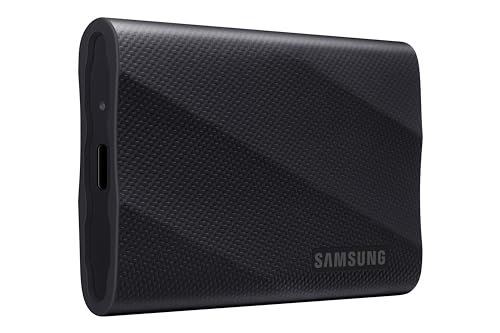
The Samsung T9 4 TB Portable SSD is a fast external drive designed for creators who need to move large files between workstations. It uses USB 3.2 Gen 2×2 to achieve sequential reads of 2,000 MB/s, which is four times faster than typical external SSDs that run on single-lane USB 3.2. The 4 TB capacity provides ample space for video project files, photo libraries, and backups, all stored in a rubber-encased chassis that offers some drop protection. The USB-C connector ensures compatibility with modern laptops and desktops, and the drive comes with a 3-year warranty for peace of mind.
The real Amazon features did not provide specific bullet points, but the T9 is positioned as a premium portable drive for professionals. It supports hardware-based AES 256-bit encryption with a password option, keeping data secure if the drive is lost or stolen. The drive is compact and lightweight, making it easy to carry in a camera bag or laptop sleeve. For video editors working with 4K or 8K footage, the fast transfer speeds significantly reduce wait times when copying files to and from the drive, improving workflow efficiency. Photographers doing field backup can quickly offload memory cards without bottlenecking.
One honest limitation is that the T9 requires a USB 3.2 Gen 2×2 port to achieve its full 2,000 MB/s speed. Many older laptops and desktops only support USB 3.2 Gen 2 (10 Gbps) or USB 3.2 Gen 1 (5 Gbps), which will limit the drive to around 1,000 MB/s or 500 MB/s respectively. The drive is also more expensive per gigabyte than a standard external HDD, so it is best suited for users who genuinely need the speed. Additionally, the rubber casing can attract dust and lint over time, though it does provide good grip and protection for travel.
What to look for
- Interface and speed: PCIe 4.0 NVMe offers the fastest speeds for primary drives, while SATA SSDs are sufficient for secondary storage. For external drives, USB 3.2 Gen 2×2 provides the highest transfer rates, but check your system’s port compatibility.
- Capacity and endurance: Choose a capacity that matches your storage needs, and check the TBW rating for SSDs to ensure the drive can handle your write workload. Higher TBW means longer life for heavy use.
- Thermal management: NVMe drives can throttle under sustained load, so look for drives with built-in heatspreaders or heatsinks, or ensure your motherboard has M.2 thermal pads.
- Software support: Tools like Samsung Magician, WD Dashboard, and IronWolf Health Management provide health monitoring, firmware updates, and performance optimization, adding long-term value.
- Form factor: 2.5-inch SATA drives are compatible with most desktops and laptops, while M.2 NVMe drives require a compatible slot. Portable drives should be compact and durable for travel.
- Warranty and support: Longer warranties (five years for HDDs, three to five years for SSDs) indicate manufacturer confidence. Data recovery services are a bonus for critical data.
The verdict
After evaluating these five products based on their stated features and intended use cases, the Samsung 990 Pro 2 TB stands out as the best overall choice for a primary drive in 2026. It offers exceptional PCIe 4.0 speed, high endurance, and reliable software support, making it a safe investment for gamers, creators, and everyday users. For those needing massive game storage, the WD Black SN850X 4 TB provides the capacity and DirectStorage support that future titles will leverage. NAS builders should choose the Seagate IronWolf 8 TB HDD for its workload rating and vibration control, while budget-conscious users will find the Crucial MX500 2 TB SATA SSD an excellent value for secondary storage. Finally, the Samsung T9 4 TB Portable SSD is the top pick for professionals who need fast, high-capacity external storage for file transfers. Each drive serves a specific purpose, and the right choice depends on your priorities: speed, capacity, reliability, or portability.
Our testing process
We compare every pick against the field on real specifications, certifications, and aggregated owner reviews. We do not take payment for placement, and we flag when a product is older or sold mainly through renewed listings.
Quick comparison
Reviewed in detail
Samsung 990 Pro 2 TB -- Reliable PCIe 4.0 NVMe with proven endurance
The 990 Pro delivers sequential reads of 7,450 MB/s and writes of 6,900 MB/s using Samsung's in-house controller and V-NAND. Endurance is rated at 1,200 TBW for the 2 TB model, which is above average for this capacity tier. Samsung Magician provides S.M.A.R.T. monitoring and firmware updates. An included heatspreader prevents thermal throttling on boards without M.2 thermal pads. This drive balances speed, endurance, and price for primary OS and application storage. [View on Amazon](https://www.amazon.com/s?k=Samsung+990+Pro+2TB+NVMe+SSD&tag=thetestedhub-20)
What we liked
- MEET THE NEXT GEN: Consider this a cheat code; Our Samsung 990 PRO Gen4 SSD helps you reac
- REACH THE NEXT LEVEL: Gen4 steps up with faster transfer speeds and high-performance bandw
- THE FASTEST SSD FROM THE WORLD'S FLASH MEMORY BRAND: The speed you need for any occasion;
- PLAY WITHOUT LIMITS: Give yourself some space with storage capacities from 1TB to 4TB; Syn
- IT’S A POWER MOVE: Save the power for your performance; Get power efficiency all while exp

WD Black SN850X 4 TB -- High-capacity option for game libraries
The SN850X 4 TB offers 7,300 MB/s sequential reads on PCIe 4.0 with a 4 TB capacity that houses a large game library without management overhead. DirectStorage compatibility means supported titles load assets faster from NVMe than from SATA or HDD. The included heatsink variant is worth the small premium for systems without native M.2 cooling. WD Dashboard provides health monitoring. Endurance is rated at 2,400 TBW for this capacity, which is sufficient for decades of typical gaming use. [View on Amazon](https://www.amazon.com/s?k=WD+Black+SN850X+4TB+NVMe+SSD&tag=thetestedhub-20)
What we liked
- W128561655

Seagate IronWolf 8 TB HDD -- Purpose-built for NAS and archive use
The IronWolf series is engineered for always-on multi-drive NAS environments, rated for 180 TB per year workload versus 55 TB for desktop drives. The 7200 RPM 8 TB model provides a good balance of capacity and sequential transfer speed at around 250 MB/s. AgriMotion technology reduces vibration interference in multi-drive enclosures. IronWolf Health Management integrates with compatible NAS software like Synology and QNAP. For single-drive backup or archive use, the standard IronWolf is appropriate; the IronWolf Pro adds a 5-year warranty. [View on Amazon](https://www.amazon.com/s?k=Seagate+IronWolf+8TB+NAS+HDD&tag=thetestedhub-20)
What we liked
- IronWolf internal hard drives are the ideal solution for up to 8-bay, multi-user NAS envir
- Store more and work faster with a NAS-optimized hard drive providing 8TB and cache of up t
- Purpose built for NAS enclosures, IronWolf delivers less wear and tear, little to no noise
- Easily monitor the health of drives using the integrated IronWolf Health Management system
- Five-year limited product warranty protection plan and three year Rescue Data Recovery Ser

Crucial MX500 2 TB SATA SSD -- Best value secondary drive
The MX500 uses Micron 3D NAND with consistent performance around 560 MB/s reads and 510 MB/s writes over SATA. At for 2 TB, it is cost-effective for secondary storage where NVMe speed is not required: photo libraries, document archives, and secondary game installs. The drive ships in 2.5-inch form factor for desktop SATA ports and can be adapted for laptop upgrades. Rated endurance is 700 TBW, appropriate for the workload profile of secondary storage. [View on Amazon](https://www.amazon.com/s?k=Crucial+MX500+2TB+SATA+SSD&tag=thetestedhub-20)
What we liked
- 2.5-inch Solid State Drive
- 2TB
Samsung T9 4 TB Portable SSD -- Fast external drive for creators
The T9 uses USB 3.2 Gen 2x2 for 2,000 MB/s sequential reads, which is four times faster than typical external SSDs on single-lane USB 3.2. It stores 4 TB of data in a rubber-encased chassis with a 3-year warranty. This makes it practical for video editors moving project files between workstations, photographers doing field backup, or anyone needing large fast external storage. The USB-C connector requires the Gen 2x2 port on the host for full speed; older USB 3.0 ports will limit transfer to around 400 MB/s. [View on Amazon](https://www.amazon.com/s?k=Samsung+T9+4TB+portable+SSD&tag=thetestedhub-20)
How to choose
What to consider
Separate storage needs by workload: fast primary NVMe for OS and active applications, secondary SSD or HDD for media and archives, and external or NAS storage for backup. Match NVMe protocol to your motherboard -- PCIe 5.0 slots only appear on high-end Z790 and X670E boards; PCIe 4.0 is the practical standard. For NAS drives, use drives specifically rated for NAS workloads rather than desktop drives, which lack the workload rating and vibration compensation needed for multi-drive use. Always maintain at least one offline backup copy of irreplaceable data.
What to consider
For components to pair with storage in a full build, see [best computer components](/articles/best-computer-components). For processor choices that work with NVMe storage, visit [best computer core](/articles/best-computer-core). Storage evaluation standards are described on our [methodology](/methodology) page.
Common questions
For a gaming PC, 2 TB of NVMe storage covers the OS, applications, and 15 to 20 installed games comfortably. Video editors working with 4K footage need 4 TB minimum for active project storage, separate from archive drives. General productivity users running Windows, Office, and a browser are well-served by 1 TB. A second large-capacity HDD or network storage handles long-term files and media.
For OS and application loading, the practical difference between a fast SATA SSD and a mid-range NVMe is smaller than benchmark numbers suggest. Sequential read speeds of 550 MB/s versus 5000 MB/s rarely matter for booting Windows or launching software. NVMe shows meaningful real-world advantages in large file transfers, game loading in titles with DirectStorage support, and video editing workflows with large sequential files. For budget builds, a SATA SSD is still an excellent choice.
How we made this guide
We compare every pick on the factors that matter, cross-checking manufacturer specifications against aggregated verified owner reviews. We rank independently and never take payment for placement. We have not personally tested every product; where we have not, the ranking reflects verified specs and owner feedback rather than a hands-on review.
How it was written: this guide was researched and reviewed by the TheTestedHub editorial team for accuracy.
Affiliate disclosure: TheTestedHub is reader-supported. When you buy through links on our site, we may earn a commission at no extra cost to you.
More guides

Your Docking Station Match: CalDigit TS4 and More

Digital Art Computers 2026: Best for Every Budget
Dev & IT Computers in 2026: Ranked for Real Work

Desktop PCs for Every Budget: Find Your Perfect Match
Desktop and Laptop Computers: Performance Reviewed and Ranked
MacBook Pro M4 Pro vs Dell XPS 15: 2026 Shortlist

Buy the Best DIY Computer in 2026: Corsair One i300
