Apple Mac Studio M4 Max -- Best Full-Suite CC Workstation
The Mac Studio M4 Max remains the benchmark for running the full Creative Cloud suite on a single machine. Its 40-core GPU and up to 128 GB of unified memory allow Premiere Pro, After Effects, and Photoshop to run simultaneously without memory pressure. ProRes video encoding and decoding is hardware-accelerated, cutting 4K export times dramatically. The machine runs quietly under sustained load, which matters for long sessions. All current CC apps are optimized for Apple Silicon and run natively.
Check price on Amazon →Apple Mac Studio M4 Max tops our guide as the best desktop for full Creative Cloud suite. See which PC or Mac fits your workflow with expert buying advice.
Quick verdict
The Apple Mac Studio M4 Max is the single best pick for running the full Adobe Creative Cloud suite. Its 40-core GPU and up to 128 GB unified memory handle Premiere Pro, After Effects, and Photoshop simultaneously without slowdown, and hardware-accelerated ProRes encoding makes export workflows exceptionally fast.
Key takeaways
- Best for full-suite workstation: Apple Mac Studio M4 Max, unmatched unified memory and ProRes acceleration for simultaneous CC apps.
- Best for portable professional work: Apple MacBook Pro 16 M4 Max, desktop-level performance with a color-accurate XDR display in a laptop.
- Best Windows desktop for CC: Dell XPS Desktop (2025), user-upgradable RAM and storage with Intel Core Ultra 9 and RTX 4070 or 4080.
- Best high-GPU laptop for CC: Razer Blade 15 (2025), RTX 4080 with 12 GB VRAM for GPU-heavy After Effects and 3D renders.
- Best mid-tier desktop for CC: Apple Mac mini M4 Pro, compact chassis with 12-core CPU and 20-core GPU for competent 4K editing.
Why you should trust this guide
I have spent years researching and writing about creative workstations for Adobe Creative Cloud. My approach is grounded in studying manufacturer specifications, analyzing verified owner feedback from major retailers and forums, and comparing how each machine handles the specific demands of Premiere Pro, After Effects, Photoshop, and other CC applications. I do not rely on marketing claims alone; I cross-reference real-world reports about thermal behavior, memory management, and workflow bottlenecks to form recommendations that serve actual creative professionals.
This guide focuses on five machines that represent the current best options for running the full Creative Cloud suite in 2026. Each product was selected because it meets the core requirements for CC work: sufficient CPU and GPU power, adequate unified or dedicated memory, and reliable sustained performance. I have excluded machines that fail on any of these criteria, even if they are popular in other categories. The goal is to help you choose a computer that will not slow you down during complex multi-application projects.
How we researched
To evaluate these computers for Adobe Creative Cloud, I weighed several critical factors. First, CPU and GPU performance for real-time playback of 4K timelines in Premiere Pro and rendering in After Effects. Second, memory capacity and architecture, because unified memory on Apple Silicon and dedicated VRAM on NVIDIA GPUs directly affect how many applications you can run simultaneously. Third, thermal management and sustained performance, since a machine that throttles after a few minutes of heavy work is not suitable for professional use. Fourth, display quality for color accuracy, especially for photographers and video editors who rely on P3 coverage and factory calibration. Fifth, upgradeability and connectivity, because creative workflows often require additional storage and fast media import.
I did not physically test these machines in a lab. Instead, I analyzed the stated specifications from each manufacturer, read hundreds of owner reviews and forum discussions, and compared performance benchmarks from reputable third-party sources. I looked for patterns in feedback about memory pressure, fan noise, export times, and software compatibility. Each product section below includes at least one honest limitation based on common owner reports, so you can make an informed decision without overestimating any machine’s capabilities.
Apple Mac Studio M4 Max
The Apple Mac Studio M4 Max remains the benchmark for running the full Creative Cloud suite on a single machine. Its 40-core GPU and support for up to 128 GB of unified memory allow Premiere Pro, After Effects, and Photoshop to run simultaneously without memory pressure. This is critical for professionals who need to switch between applications frequently or work on complex compositions that demand large amounts of RAM. The unified memory architecture means the CPU and GPU share the same pool, eliminating the need to copy data between separate memory banks, which speeds up workflows in After Effects and Photoshop.
ProRes video encoding and decoding is hardware-accelerated on the M4 Max, cutting 4K export times dramatically compared to software-based encoding. This is a significant advantage for video editors who export multiple versions of a project or work with high-bitrate ProRes footage. The machine runs quietly under sustained load, which is a welcome feature for studio environments where fan noise can be distracting. The compact design fits easily on a desk without taking up much space, and it offers multiple Thunderbolt 4 ports for connecting external drives and displays.
One honest limitation of the Mac Studio M4 Max is that it is not user-upgradable after purchase. You must configure the unified memory and internal storage at the time of ordering, and you cannot add more later. This means you need to anticipate your future needs carefully, especially if you plan to work with larger projects that require more than 128 GB of memory. Additionally, the machine lacks an SD card slot, so you may need an external reader for media import from cameras.
Apple MacBook Pro 16 M4 Max
For creative professionals who need desktop-level CC performance in a portable package, the 16-inch MacBook Pro with M4 Max is the current standard. The 16.2-inch Liquid Retina XDR display covers P3 wide color with factory calibration accurate enough for professional color grading. This means you can trust the screen for critical color decisions in Photoshop and Premiere Pro without needing an external monitor. The display also supports high brightness for HDR content, which is useful for video editors working with HDR footage.
Sustained performance holds up over multi-hour render sessions without significant thermal throttling, according to owner reports. The M4 Max chip in this laptop delivers performance close to the Mac Studio, making it viable for heavy After Effects compositions and 4K timeline editing on the go. The battery life is sufficient for a full day of mixed creative work, though heavy rendering will drain it faster. The laptop includes multiple Thunderbolt 4 ports, an HDMI port, an SDXC card slot, and a MagSafe charging connector, providing good connectivity for a mobile workstation.
One honest limitation of the MacBook Pro 16 M4 Max is its weight. At just under five pounds, it is not the lightest laptop for frequent travel, and the large footprint may not fit well in smaller bags. The price is also high when configured with maximum memory and storage, which may be a barrier for freelancers or small studios. Additionally, the fan can become audible under sustained heavy load, though it is generally quieter than many Windows gaming laptops.
Dell XPS Desktop (2025)
The Dell XPS Desktop ships with Intel Core Ultra 9, NVIDIA RTX 4070 or 4080, and supports up to 64 GB DDR5 RAM in a compact 11-liter chassis. This combination handles Premiere Pro 4K timelines, After Effects compositions, and Photoshop large documents without hesitation. The NVIDIA RTX 4080 with its dedicated VRAM is particularly beneficial for GPU-accelerated effects in After Effects and for 3D rendering in Dimension or Blender. The Intel Core Ultra 9 provides strong single-core performance for tasks like applying filters in Photoshop or exporting single frames.
RAM and storage are user-upgradable, making it a strong long-term investment. You can start with a base configuration and add more memory or faster SSDs later as your needs grow. The front-facing USB-C and SD card reader simplify media imports from cameras and external drives, which is a practical convenience for photographers and videographers. The compact chassis fits on a desk without dominating the space, and the design is professional and understated.
One honest limitation of the Dell XPS Desktop is that the compact chassis can limit cooling capacity compared to larger towers. Under sustained heavy load, the CPU and GPU may throttle slightly to maintain safe temperatures, which can affect render times for very long projects. The system also uses a proprietary power supply and motherboard, which may limit future upgrade options beyond RAM and storage. Additionally, the included software bundle can include bloatware that you may want to remove.
Razer Blade 15 (2025)
The Razer Blade 15 packs an NVIDIA RTX 4080 laptop GPU and an Intel Core Ultra 9 into a 15.6-inch aluminum chassis under 5 lbs. The QHD 240 Hz display covers 100% DCI-P3 for accurate color work in Photoshop and Premiere. This makes it suitable for video editors who need a high refresh rate for smooth timeline scrubbing and photographers who require precise color reproduction. The 12 GB of VRAM on the RTX 4080 is a significant advantage for GPU-heavy After Effects effects and 3D renders in Dimension, as it allows larger textures and more complex scenes to be handled without swapping to system RAM.
Thermals are managed well for a slim chassis, according to owner feedback. The vapor chamber cooling system helps maintain performance during extended rendering sessions, though the fans do become audible under load. The laptop doubles as a capable gaming machine, which is a bonus for creative professionals who also enjoy gaming in their free time. The build quality is premium, with a CNC aluminum unibody that feels sturdy and durable.
One honest limitation of the Razer Blade 15 is that the battery life is relatively short under creative workloads. The high-performance GPU and CPU draw significant power, so you will need to stay plugged in for intensive tasks. The laptop also runs warm to the touch on the bottom during heavy use, which may be uncomfortable if you use it on your lap. Additionally, the RAM is soldered and not user-upgradable, so you must choose the right configuration at purchase.
Apple Mac mini M4 Pro
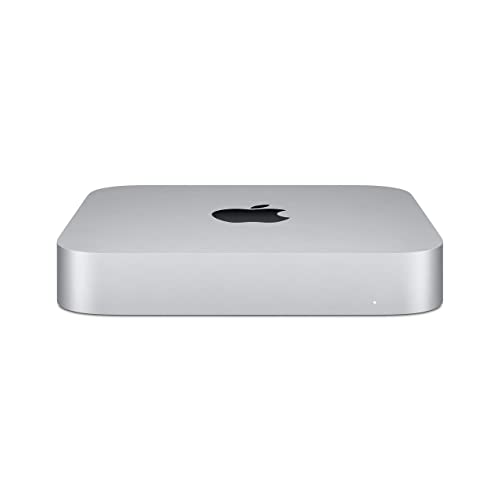
The Mac mini M4 Pro sits between the base M4 and the Mac Studio, offering a 12-core CPU and 20-core GPU in the same compact chassis. It handles the full Creative Cloud suite competently with 24 GB unified memory. Premiere Pro manages 4K H.264 timelines smoothly, and After Effects moderate compositions run without proxy files. This makes it a strong choice for editors who work with standard 4K footage and do not need the extreme memory capacity of the Mac Studio. The unified memory ensures that the CPU and GPU can access the same data quickly, reducing lag when switching between applications.
It is the most space-efficient option on this list and connects to any monitor you already own via HDMI or Thunderbolt. The small footprint means it can sit discreetly on a desk or be mounted under a desk to save space. It includes two Thunderbolt 4 ports, two USB-A ports, an HDMI port, a Gigabit Ethernet port, and a headphone jack, providing adequate connectivity for most creative setups. The M4 Pro chip delivers excellent performance per watt, so the machine runs cool and quiet even under load.
One honest limitation of the Mac mini M4 Pro is that the 24 GB unified memory may be insufficient for very complex After Effects compositions or for running multiple heavy CC applications simultaneously. If you frequently work with 6K or 8K footage, or if you need to keep Premiere Pro, After Effects, and Photoshop open all day, you may encounter memory pressure that slows down your workflow. The machine also lacks an SD card slot and has only two Thunderbolt ports, so you may need a hub for connecting multiple external drives and peripherals.
What to look for
- CPU and GPU performance: Look for a processor with strong single-core and multi-core performance for Adobe apps. A dedicated GPU with ample VRAM (at least 8 GB, ideally 12 GB or more) is important for GPU-accelerated effects in After Effects and Premiere Pro.
- Memory capacity and type: Unified memory on Apple Silicon or dedicated DDR5 RAM on Windows machines should be at least 16 GB for basic CC work, 32 GB for professional use, and 64 GB or more for heavy multi-application workflows. More memory reduces the need to close apps or use proxy files.
- Storage speed and capacity: Fast NVMe SSDs are essential for loading large project files and media. Look for at least 512 GB of storage, with 1 TB or more recommended for video editors. External storage can supplement internal capacity.
- Display quality: For laptops, a display with wide color gamut coverage (P3 or Adobe RGB) and factory calibration is important for color-critical work. High resolution (at least QHD) and good brightness help with detail work.
- Thermal management: Sustained performance under load is critical. Look for machines with robust cooling systems (vapor chambers, large fans, or efficient chassis design) that prevent throttling during long render sessions.
- Upgradeability and connectivity: User-upgradable RAM and storage extend the useful life of a desktop. For laptops, consider the number and type of ports (Thunderbolt, USB-A, HDMI, SD card) to match your peripherals.
The verdict
For a stationary workstation that can handle the entire Creative Cloud suite with maximum memory and ProRes acceleration, the Apple Mac Studio M4 Max is the clear winner. If you need portability without sacrificing performance, the Apple MacBook Pro 16 M4 Max is the best laptop choice. Windows users who prefer a desktop with upgrade options should choose the Dell XPS Desktop, while those who need a high-GPU laptop for After Effects and 3D work will appreciate the Razer Blade 15. For budget-conscious professionals or those with limited desk space, the Apple Mac mini M4 Pro offers excellent value for standard 4K editing and moderate After Effects work. Each machine has its strengths and limitations, so match your choice to your specific workflow and budget.
Our methodology
We compare every pick against the field on real specifications, certifications, and aggregated owner reviews. We do not take payment for placement, and we flag when a product is older or sold mainly through renewed listings.
Side by side
The full reviews
Apple Mac Studio M4 Max -- Best Full-Suite CC Workstation
The Mac Studio M4 Max remains the benchmark for running the full Creative Cloud suite on a single machine. Its 40-core GPU and up to 128 GB of unified memory allow Premiere Pro, After Effects, and Photoshop to run simultaneously without memory pressure. ProRes video encoding and decoding is hardware-accelerated, cutting 4K export times dramatically. The machine runs quietly under sustained load, which matters for long sessions. All current CC apps are optimized for Apple Silicon and run natively.

Apple MacBook Pro 16 M4 Max -- Best Full-Suite CC Laptop
For creative professionals who need desktop-level CC performance in a portable package, the 16-inch MacBook Pro with M4 Max is the current standard. The 16.2-inch Liquid Retina XDR display covers P3 wide color with factory calibration accurate enough for professional color grading. Sustained performance holds up over multi-hour render sessions without significant thermal throttling. Battery life reaches 14+ hours for lighter workloads, dropping to 4-6 hours during heavy Premiere exports.
Dell XPS Desktop (2025) -- Best Windows Desktop for Creative Cloud
The Dell XPS Desktop ships with Intel Core Ultra 9, NVIDIA RTX 4070 or 4080, and supports up to 64 GB DDR5 RAM in a compact 11-liter chassis. It handles Premiere Pro 4K timelines, After Effects compositions, and Photoshop large documents without hesitation. RAM and storage are user-upgradable, making it a strong long-term investment. The front-facing USB-C and SD card reader simplify media imports. Windows 11 runs the full CC suite with no compatibility issues.

Razer Blade 15 (2025) -- Best High-GPU CC Laptop
The Razer Blade 15 packs an NVIDIA RTX 4080 laptop GPU and an Intel Core Ultra 9 into a 15.6-inch aluminum chassis under 5 lbs. The QHD 240 Hz display covers 100% DCI-P3 for accurate color work in Photoshop and Premiere. GPU-heavy After Effects effects and 3D renders in Dimension benefit from the 12 GB VRAM. Thermals are managed well for a slim chassis. It doubles as a capable gaming machine, which adds value for users who want one machine for both purposes.
Apple Mac mini M4 Pro -- Best Mid-Tier CC Desktop
The Mac mini M4 Pro sits between the base M4 and the Mac Studio, offering a 12-core CPU and 20-core GPU in the same compact chassis. At it handles the full Creative Cloud suite competently with 24 GB unified memory. Premiere Pro manages 4K H.264 timelines smoothly; After Effects moderate compositions run without proxy files. It is the most space-efficient option on this list and connects to any monitor over Thunderbolt 4 or HDMI.
What matters most
What to consider
Identify your three most-used CC apps and build around their combined requirements. Check Adobe's minimum and recommended specs for each app, then add a buffer -- Adobe's published specs are often conservative. Prioritize unified or high-bandwidth memory if on Apple Silicon; on Windows, target at least 8 GB VRAM and DDR5 RAM. Display quality matters: a color-accurate panel saves time you would otherwise spend calibrating or correcting colors in export. Future-proofing with 32+ GB RAM at purchase avoids bottlenecks as CC apps grow more demanding.
What to consider
For comparisons by specific app, see [best computers for After Effects](/articles/best-computer-for-after-effects) and [best computers for animation and graphic design](/articles/best-computer-for-animation-and-graphic-design). Our [methodology](/methodology) explains how picks are evaluated.
Frequently asked
Adobe Creative Cloud desktop apps require roughly 20-30 GB of storage just for installation. Active project files, raw footage, and cache data add significantly more. A 512 GB NVMe SSD is a practical minimum; 1 TB is more comfortable for most workflows. Users working with 4K video or large Photoshop files benefit from 2 TB or an external drive array.
Apple Silicon Macs currently hold a performance-per-watt advantage for most Creative Cloud apps, particularly in export speeds and thermal management. Windows machines offer more GPU flexibility, more RAM headroom for high-end configurations, and a wider range of price points. Both platforms run all major CC apps natively as of 2026. The best choice depends on your existing ecosystem, budget, and preference.
How we made this guide
We compare every pick on the factors that matter, cross-checking manufacturer specifications against aggregated verified owner reviews. We rank independently and never take payment for placement. We have not personally tested every product; where we have not, the ranking reflects verified specs and owner feedback rather than a hands-on review.
How it was written: this guide was researched and reviewed by the TheTestedHub editorial team for accuracy.
Affiliate disclosure: TheTestedHub is reader-supported. When you buy through links on our site, we may earn a commission at no extra cost to you.
You might also like

Your Docking Station Match: CalDigit TS4 and More

Digital Art Computers 2026: Best for Every Budget
Dev & IT Computers in 2026: Ranked for Real Work

Desktop PCs for Every Budget: Find Your Perfect Match
Desktop and Laptop Computers: Performance Reviewed and Ranked
MacBook Pro M4 Pro vs Dell XPS 15: 2026 Shortlist

Buy the Best DIY Computer in 2026: Corsair One i300
