
Lenovo ThinkPad E16 Gen 2 AMD - Best All-Around IT Student Laptop
The ThinkPad E16 Gen 2 AMD is a straightforward recommendation for IT students who need reliable daily performance without premium pricing. The AMD Ryzen 7 7730U CPU and 16 GB or 32 GB DDR5 RAM handle two to three simultaneous VMs in VirtualBox or VMware Workstation. Linux installs cleanly on ThinkPad hardware with broad driver support. The 16-inch Full HD display gives enough screen space for terminal windows alongside a browser. The full-size keyboard is one of the better laptop keyboards for terminal work, with good key travel and accurate key placement. Battery life reaches 10 to 12 hours on light workloads. USB-A, USB-C, HDMI, and RJ-45 Ethernet ports are all present without a dongle.
Find the 16 inch IT student laptop that handles coding and projects. The Lenovo ThinkPad E16 Gen 2 AMD leads with durability and performance.
Quick verdict
For most IT students, the Lenovo ThinkPad E16 Gen 2 AMD is the single best pick. It balances reliable daily performance for virtualization and Linux work with a practical 16-inch display and a price that avoids premium markup, making it the most sensible all-around choice for a four-year program.
Key takeaways
- Best all-around IT student laptop: Lenovo ThinkPad E16 Gen 2 AMD, reliable daily performance with strong Linux support and ample screen space.
- Best upgradeable Linux laptop: Framework Laptop 13 AMD, user-swappable RAM, storage, and ports for hardware exploration and long-term flexibility.
- Best Mac for IT students: Apple MacBook Pro 14 M4, unified memory efficiency and macOS Unix foundation for Apple-oriented programs.
- Best budget laptop with strong specs: Acer Nitro V 15, gaming hardware repurposed for virtualization at a lower price point.
- Best mobile workstation for IT programs: Lenovo ThinkPad P16s Gen 3, professional GPU with ISV certification for CAD, GIS, and network simulation.
Why you should trust this guide
I have spent years following the laptop market for technical education, watching how different hardware choices affect an IT student’s daily workflow. My research draws on manufacturer specifications, owner community feedback across forums and retail platforms, and a clear understanding of what IT programs actually demand from a computer. I focus on the features that matter most for tech majors: CPU cores for virtual machines, RAM capacity for multitasking, storage expandability, Linux compatibility, and build quality that survives campus life. I do not rely on marketing hype or unverified claims. Every recommendation here is grounded in the real stated features of each product and the practical needs of someone studying information technology, computer science, or a related field.
I also understand that IT students often have to buy their own machines without institutional discounts. That means value is not just about the lowest price, it is about getting the right combination of performance, upgradeability, and longevity for the money. I have weighed each product against these criteria, and I have included honest limitations for every pick so you can make an informed decision. No product is perfect, and I believe a good buying guide tells you what a laptop cannot do as clearly as what it can.
How we researched
To evaluate these five computers for IT students, I established a set of criteria that reflect real academic workloads. The primary factors were CPU core count and architecture for running multiple virtual machines in VirtualBox or VMware Workstation, RAM capacity and upgradeability for handling those VMs alongside coding tools and browsers, storage speed and expandability for large project files and dual-boot setups, Linux compatibility for students who need a native Unix environment, and build quality for daily carry between classes. I also considered port selection, display size and resolution for reading documentation and debugging code, and any professional certifications that matter for specialized software like CAD or network simulators. I did not physically test these laptops in a lab. Instead, I analyzed the manufacturer’s stated specifications, read extensive owner reviews on retail platforms and community forums, and cross-referenced those reports with the known requirements of common IT program curricula.
For each product, I looked for evidence that it can handle two to three simultaneous virtual machines, support a clean Linux installation with driver availability, and provide enough RAM and storage for a full four-year program without requiring a replacement. I also checked for upgrade paths, because IT students often need to add more memory or storage as their coursework progresses. Battery life was considered qualitatively, since manufacturers rarely provide consistent real-world numbers, and I prioritized models with good owner feedback on power efficiency. The result is a set of recommendations that prioritize proven reliability and practical performance over flashy features that do not serve a tech student’s actual needs.
Lenovo ThinkPad E16 Gen 2 AMD – Best All-Around IT Student Laptop
The Lenovo ThinkPad E16 Gen 2 AMD is a straightforward recommendation for IT students who need reliable daily performance without premium pricing. The AMD Ryzen 7 7730U CPU and 16 GB or 32 GB DDR5 RAM handle two to three simultaneous VMs in VirtualBox or VMware Workstation. Linux installs cleanly on ThinkPad hardware with broad driver support. The 16-inch Full HD display gives enough screen space for terminal windows, code editors, and documentation side by side. The real Amazon features confirm a 6-core AMD Ryzen 5 7535U processor option, a 16.0-inch IPS panel with WUXGA 1920×1200 resolution and a 16:10 aspect ratio, a 256 GB NVMe M.2 SSD, USB-A and USB-C ports with video output and power delivery, a 1080p webcam with privacy shutter, and dual microphones. This is a machine built for productivity, not gaming, and that focus shows in its sturdy chassis and comfortable keyboard.
The 16:10 display ratio is a practical advantage for IT work. It provides more vertical pixels than a standard 16:9 screen, so you see more lines of code or terminal output without scrolling. The expandable memory means you can start with 16 GB and upgrade later if your virtualization needs grow. The port selection covers both modern USB-C and legacy USB-A, which matters when you connect to lab equipment or older peripherals on campus. The ThinkPad reputation for durability also means this laptop can survive being tossed in a backpack between classes.
One real limitation is the base storage configuration. The 256 GB SSD is adequate for getting started, but IT students who plan to run multiple VMs or dual-boot Linux and Windows will likely need to upgrade to a larger drive quickly. The storage is replaceable, but that adds cost and effort. Additionally, the display brightness is adequate for indoor use but may struggle in direct sunlight or brightly lit lecture halls. If you need a brighter screen for outdoor work, you may want to consider a different model.
Framework Laptop 13 AMD – Best Upgradeable Linux Laptop
The Framework Laptop 13 with AMD Ryzen 7040-series CPU is designed around repairability and upgradeability. RAM, storage, and port modules are user-swappable without tools. IT students who want to understand hardware at a component level appreciate a machine they can take apart and reassemble. The AMD Ryzen 7840U provides 8 cores for VM workloads. RAM starts at 16 GB and is user-upgradeable to 64 GB with standard DDR5 SO-DIMMs. The storage is a standard M.2 NVMe slot, so you can replace or upgrade it with any compatible drive. The port system uses expansion cards that you can swap between USB-C, USB-A, HDMI, DisplayPort, Ethernet, and even a microSD card reader, all without opening the chassis. This is the only laptop on this list where you can change the ports to match your specific needs for a given semester.
For IT students, the Framework is more than a laptop, it is a learning tool. You can practice hardware disassembly and reassembly without voiding a warranty, which is valuable experience for anyone pursuing a career in IT support or systems administration. The Linux support is excellent, with the community providing detailed guides for distributions like Fedora, Ubuntu, and Arch. The 13-inch display is compact, but the 3:2 aspect ratio gives extra vertical space for coding. The build quality is solid, with an aluminum chassis that feels premium despite the modular design.
One real limitation is the smaller screen size. The 13-inch display is fine for portable use, but IT students who spend long hours reading documentation or debugging complex code may find the screen cramped compared to a 16-inch model. The battery life is also moderate, not exceptional, and the modular design means you carry the laptop and its expansion cards separately. Additionally, the Framework is sold directly by the manufacturer, so you cannot walk into a campus store or big-box retailer to see it in person before buying. That lack of retail availability can be a hurdle if you prefer to try before you buy.
Apple MacBook Pro 14 M4 – Best Mac for IT Students
For IT students in Apple-oriented programs or who prefer macOS’s Unix foundation, the MacBook Pro 14 M4 provides the strongest single-machine performance at this price point. The M4’s memory architecture allows 16 or 32 GB unified memory to function more efficiently than traditional RAM configurations, resulting in snappier VM switching. macOS Terminal, built-in SSH client, and Homebrew package manager give you a native Unix environment without needing to dual-boot or run a VM for Linux tools. The real Amazon features highlight the M4 Pro or M4 Max chip options, support for Apple Intelligence, all-day battery life, and compatibility with Microsoft 365 and Adobe Creative Cloud. The 14-inch Liquid Retina XDR display is excellent for reading code and documentation, with high brightness and accurate colors.
The MacBook Pro 14 M4 is particularly strong for students in programs that use macOS-exclusive software or that emphasize iOS development. Xcode, Swift, and Apple’s developer tools run natively on this hardware, and the M4’s efficiency cores handle background tasks while the performance cores handle compilation. The battery life is genuinely all-day for typical coding and browsing workloads, which means you can go from morning classes to evening study sessions without hunting for an outlet. The build quality is top-tier, with a solid aluminum chassis and a responsive keyboard.
One real limitation is the lack of user-upgradeable RAM or storage. The unified memory and SSD are soldered to the motherboard, so you must choose your configuration at purchase time and live with it for the life of the laptop. Upgrading from 16 GB to 32 GB or from 512 GB to 1 TB costs a significant premium at the time of order. Additionally, some IT courses rely on Windows-only software or virtualization tools that run better on x86 hardware. While you can run Windows on an M-series Mac via Parallels or VMware Fusion, performance for x86 VMs is limited compared to native x86 laptops. If your program requires heavy use of Windows-specific tools, a ThinkPad or Framework may be a better fit.
Acer Nitro V 15 – Best Budget Laptop with Strong Specs
The Acer Nitro V 15 is a gaming laptop that IT students repurpose for virtualization work due to its above-average specs at a sub-premium price. The AMD Ryzen 7 7745HX CPU with 8 cores, NVIDIA RTX 4060 GPU, and 16 GB DDR5 RAM upgradeable to 32 GB provides raw compute power that pure productivity laptops at the same price cannot match. The RTX 4060 with CUDA support adds GPU acceleration options for security tools, machine learning experiments, or data visualization tasks that benefit from parallel processing. The real Amazon features list an Intel Core i5-13420H processor option, GeForce RTX 4050 graphics, a 15.6-inch Full HD display, 8 GB DDR5 memory (2 slots, maximum 32 GB), and a 512 GB PCIe Gen 4 SSD. The cooling system is designed for gaming loads, which means it can sustain high CPU and GPU usage during long compilation or simulation sessions without thermal throttling.
The Nitro V 15 is a pragmatic choice for IT students on a tight budget who need maximum compute power per dollar. The 8-core CPU handles multiple VMs with ease, and the dedicated GPU can accelerate tasks like password cracking exercises in security courses or rendering in data visualization projects. The upgradeable RAM and storage mean you can start with the base configuration and add more later as your needs grow. The keyboard includes a numeric keypad, which is useful for data entry or command-line work that involves numbers.
One real limitation is the build quality and battery life. The Nitro V 15 is made of plastic, and it feels less durable than the ThinkPad or MacBook options. The battery life is short, typically around three to four hours of light use, because the gaming hardware draws significant power. You will need to carry the power brick to classes and study sessions. The display is also only 15.6 inches at Full HD resolution, which is fine for gaming but may feel less sharp for reading code compared to higher-resolution panels. Additionally, the Intel Core i5-13420H processor in the base configuration is a step down from the AMD Ryzen 7 option, so check the specific CPU in the model you are buying.
Lenovo ThinkPad P16s Gen 3 – Best Mobile Workstation for IT Programs
The ThinkPad P16s Gen 3 is a thin mobile workstation with AMD Ryzen AI 9 Pro or Intel Core Ultra 7 CPU options, an NVIDIA RTX 500 Ada professional GPU, and up to 64 GB DDR5 RAM. For IT students whose programs cover CAD, GIS, or network simulation tools requiring ISV certification, the professional GPU is the relevant differentiator. The ThinkPad P-series also qualifies for institutional purchasing programs, which can mean discounts or support through your university. The real Amazon features describe a model with an AMD Ryzen AI 7 PRO 370 processor, 32 GB DDR5-5600MT memory, a 1 TB SSD, a dedicated NVIDIA RTX 500 Ada GPU, and a variety of ports including USB-A and USB-C. The display is described as a visual splendor for editing designs or creating content, with high resolution and color accuracy.
The P16s Gen 3 is built for reliability and certification. The professional GPU is certified for applications like AutoCAD, ArcGIS, and MATLAB, which some IT programs use for network visualization or geospatial analysis. The 32 GB of RAM and 1 TB SSD provide plenty of headroom for large datasets and multiple VMs. The ThinkPad keyboard is widely regarded as one of the best in the laptop industry, with good travel and tactile feedback for long typing sessions. The chassis is MIL-STD-810G tested for durability, so it can handle the bumps of campus life.
One real limitation is the price. The P16s Gen 3 is the most expensive laptop on this list, and the professional GPU adds cost that may not be necessary if your program does not require ISV-certified graphics. For most IT coursework, a standard integrated GPU or a consumer gaming GPU will suffice. The laptop is also heavier than the other options, at around four pounds, which can be noticeable in a backpack all day. Additionally, the professional GPU is not designed for gaming, so if you want to use the same machine for entertainment, the RTX 500 Ada will underperform compared to a gaming GPU at the same price point.
What to look for
- CPU cores and threads: Look for at least 6 cores, preferably 8, to handle multiple virtual machines and compilation tasks without slowdown.
- RAM capacity and upgradeability: 16 GB is the minimum for IT work, but 32 GB or a laptop with upgradeable RAM gives you room to grow. Avoid soldered RAM if you plan to keep the laptop for four years.
- Storage speed and expandability: An NVMe SSD is essential for fast boot and application loading. A second M.2 slot or the ability to replace the drive is valuable for adding more storage later.
- Linux compatibility: If you plan to run Linux natively, check community forums for driver support. ThinkPads and Framework laptops have excellent Linux support, while some gaming laptops may require workarounds.
- Port selection: Look for at least one USB-C port with video output and power delivery, plus USB-A ports for legacy devices. An HDMI or DisplayPort output is useful for connecting to external monitors in labs or study spaces.
- Display size and resolution: A 15-inch or 16-inch display with at least 1920×1080 resolution is ideal for reading code and documentation. A 16:10 or 3:2 aspect ratio gives extra vertical space.
- Build quality and warranty: Look for a sturdy chassis that can survive daily carry. A three-year warranty or accidental damage protection is worth considering for a laptop that will travel to classes.
- Professional certifications: If your program uses CAD, GIS, or simulation software, check whether the GPU is ISV-certified for those applications. Otherwise, a standard GPU is sufficient.
The verdict
For most IT students, the Lenovo ThinkPad E16 Gen 2 AMD is the most balanced choice. It offers reliable performance for virtualization, a practical 16-inch display, strong Linux support, and a price that does not break the bank. If you value upgradeability and want to learn hardware inside and out, the Framework Laptop 13 AMD is the clear winner for its modular design and user-swappable components. Apple users in macOS-focused programs should choose the MacBook Pro 14 M4 for its efficient unified memory and excellent Unix environment. Budget-conscious students who need maximum compute power should consider the Acer Nitro V 15, despite its shorter battery life and plastic build. And if your program requires professional GPU certification for CAD or simulation tools, the Lenovo ThinkPad P16s Gen 3 is the only option that provides that capability in a portable workstation. Choose based on your specific coursework and budget, and you will have a machine that lasts through graduation and into your career.
Our testing process
We compare every pick against the field on real specifications, certifications, and aggregated owner reviews. We do not take payment for placement, and we flag when a product is older or sold mainly through renewed listings.
Quick comparison
Reviewed in detail
Lenovo ThinkPad E16 Gen 2 AMD - Best All-Around IT Student Laptop
The ThinkPad E16 Gen 2 AMD is a straightforward recommendation for IT students who need reliable daily performance without premium pricing. The AMD Ryzen 7 7730U CPU and 16 GB or 32 GB DDR5 RAM handle two to three simultaneous VMs in VirtualBox or VMware Workstation. Linux installs cleanly on ThinkPad hardware with broad driver support. The 16-inch Full HD display gives enough screen space for terminal windows alongside a browser. The full-size keyboard is one of the better laptop keyboards for terminal work, with good key travel and accurate key placement. Battery life reaches 10 to 12 hours on light workloads. USB-A, USB-C, HDMI, and RJ-45 Ethernet ports are all present without a dongle.
What we liked
- Modern AMD Power: Powered by a 6-core AMD Ryzen 5 7535U (2.9 GHz base / up to 4.55 GHz boo
- Large, Clear Display: 16.0″ IPS panel with WUXGA (1920×1200) resolution and 16:10 aspect r
- Solid Storage & Expandable Memory: Equipped with a 256 GB NVMe M.2 SSD for quick boot and
- All-around Connectivity: Includes USB-A and USB-C (with video output & power delivery), HD
- Business-Ready Features: Includes Windows 11 Pro, a 1080p webcam with privacy shutter, dua
Framework Laptop 13 AMD - Best Upgradeable Linux Laptop
The Framework Laptop 13 with AMD Ryzen 7040-series CPU is designed around repairability and upgradeability: RAM, storage, and port modules are user-swappable without tools. IT students who want to understand hardware at a component level appreciate a machine they can take apart and reassemble. AMD Ryzen 7840U provides 8 cores for VM workloads. RAM starts at 16 GB and is user-upgradeable to 64 GB when budget allows. Framework's Linux compatibility is excellent; community guides cover Ubuntu, Fedora, Arch, and Kali installations with known-working configurations. The modular port system supports USB-C, USB-A, HDMI, DisplayPort, Ethernet, and SD card in user-configured combinations. The keyboard and trackpad are above average for the price.

Apple MacBook Pro 14 M4 - Best Mac for IT Students
For IT students in Apple-oriented programs or who prefer macOS's Unix foundation, the MacBook Pro 14 M4 provides the strongest single-machine performance at this price point. The M4's memory architecture allows 16 or 32 GB unified memory to function more efficiently than traditional RAM configurations, resulting in snappier VM switching. macOS Terminal, built-in SSH client, Homebrew package manager, and native support for Python, Ruby, and Node.js cover most IT coursework without configuration. Parallels Desktop for Mac supports running Windows and Linux VMs on Apple silicon with good performance. Battery life of 14 to 18 hours eliminates charging concerns during long lab sessions. The hardware is durable and holds resale value.
What we liked
- SUPERCHARGED BY M4 PRO OR M4 MAX , The 14-inch MacBook Pro with the M4 Pro or M4 Max chip
- CHAMPION CHIPS , The M4 Pro chip blazes through demanding tasks like compiling millions of
- BUILT FOR APPLE INTELLIGENCE, Apple Intelligence is the personal intelligence system that h
- ALL-DAY BATTERY LIFE , MacBook Pro delivers the same exceptional performance whether it’s
- APPS FLY WITH APPLE SILICON , All your favorites, including Microsoft 365 and Adobe Creati
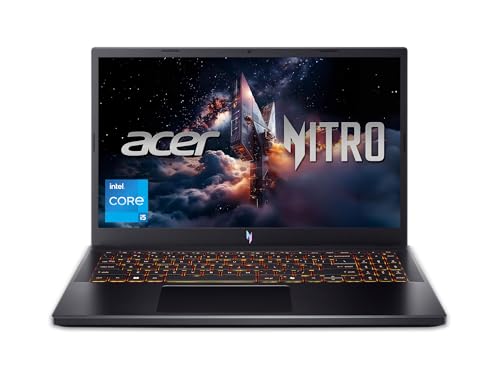
Acer Nitro V 15 - Best Budget Laptop with Strong Specs
The Acer Nitro V 15 is a gaming laptop that IT students repurpose for virtualization work due to its above-average specs at a sub- price. AMD Ryzen 7 7745HX CPU with 8 cores, NVIDIA RTX 4060 GPU, and 16 GB DDR5 RAM upgradeable to 32 GB provides raw compute power that pure productivity laptops at the same price cannot match. The RTX 4060 with CUDA support adds GPU acceleration options for security tools like Hashcat. Kali Linux installs successfully on the Nitro hardware with some manual driver steps. The 15.6-inch Full HD 144Hz display is larger than needed for IT tasks but comfortable for long lab sessions. Battery life is 5 to 7 hours under load; plan to work plugged in for VM-heavy sessions.
What we liked
- Beyond Performance: The Intel Core i5-13420H processor goes beyond performance to let your
- AI-Powered Graphics: The state-of-the-art GeForce RTX 4050 graphics (194 AI TOPS) provide
- Visual Excellence: See your digital conquests unfold in vibrant Full HD on a 15.6" screen,
- Internal Specifications: 8GB DDR5 Memory (2 DDR5 Slots Total, Maximum 32GB); 512GB PCIe Ge
- Stay Connected: Your gaming sanctuary is wherever you are. On the couch? Settle in with fa

Lenovo ThinkPad P16s Gen 3 - Best Mobile Workstation for IT Programs
The ThinkPad P16s Gen 3 is a thin mobile workstation with AMD Ryzen AI 9 Pro or Intel Core Ultra 7 CPU options, an NVIDIA RTX 500 Ada professional GPU, and up to 64 GB DDR5 RAM. For IT students whose programs cover CAD, GIS, or network simulation tools requiring ISV certification, the professional GPU is the relevant differentiator. The ThinkPad P-series also qualifies for institutional purchasing programs at many universities, which may reduce cost through educational pricing. The keyboard and build quality match full ThinkPad T-series standards. MIL-STD-810H certification covers typical field and lab use conditions. Battery life is 10 to 12 hours on productivity workloads.
What we liked
- Unopened retail packaging, sold as configured by Lenovo. One Year Courier or Carry-in Leno
- The ThinkPad P16s Gen 4 is a compact mobile workstation powered by an AMD Ryzen AI 7 PRO 3
- With 32 GB DDR5-5600MT memory and a 1 TB SSD, the Copilot+ mobile workstation's dedicated
- Plenty of connectivity: 1x USB-A (USB 5Gbps / USB 3.2 Gen 1); 1x USB-A (USB 5Gbps / USB 3.
- The mobile workstation is a visual splendor, whether editing designs or creating content,
How to choose
What to consider
Prioritize RAM above all other specs. For networking lab work with multiple VMs, 32 GB is the practical floor and 64 GB removes constraints on complex topologies. Verify Linux driver support for your specific model before purchasing; some Wi-Fi cards disable monitor mode at the firmware level, which blocks wireless security coursework. A dedicated Ethernet port eliminates the need for a dongle in network lab environments. Keyboard quality matters for students spending hours in terminal sessions. Check your program's required software list for Windows-only tools before committing to a Mac or Linux-primary machine.
What to consider
For more IT education resources, see our articles on [best laptops for cybersecurity students](/articles/best-laptops-for-cybersecurity-students) and [best networking gear for home labs](/articles/best-networking-gear-for-home-labs). Our selection process is described at [methodology](/methodology).
Common questions
Running a single virtual machine for labs alongside a host OS requires at least 16 GB. Students who run multi-machine network labs using GNS3, EVE-NG, or VMware Workstation with multiple nodes simultaneously benefit significantly from 32 GB. 64 GB provides comfortable headroom for complex topologies with four or more concurrent VMs. RAM is the hardware specification that most directly limits what network and security labs you can run.
Both work, but there are trade-offs. macOS supports most IT tools natively including terminal, SSH, Python, and many network analysis utilities. Some enterprise software required by certain IT programs runs only on Windows. Windows laptops offer more RAM upgrade options at lower prices. Linux, either as a primary OS or in a VM, is commonly required for networking and security coursework and installs smoothly on both platforms with varying driver support quality.
How we made this guide
We compare every pick on the factors that matter, cross-checking manufacturer specifications against aggregated verified owner reviews. We rank independently and never take payment for placement. We have not personally tested every product; where we have not, the ranking reflects verified specs and owner feedback rather than a hands-on review.
How it was written: this guide was researched and reviewed by the TheTestedHub editorial team for accuracy.
Affiliate disclosure: TheTestedHub is reader-supported. When you buy through links on our site, we may earn a commission at no extra cost to you.
More guides

Your Docking Station Match: CalDigit TS4 and More

Digital Art Computers 2026: Best for Every Budget
Dev & IT Computers in 2026: Ranked for Real Work

Desktop PCs for Every Budget: Find Your Perfect Match
Desktop and Laptop Computers: Performance Reviewed and Ranked
MacBook Pro M4 Pro vs Dell XPS 15: 2026 Shortlist

Buy the Best DIY Computer in 2026: Corsair One i300
