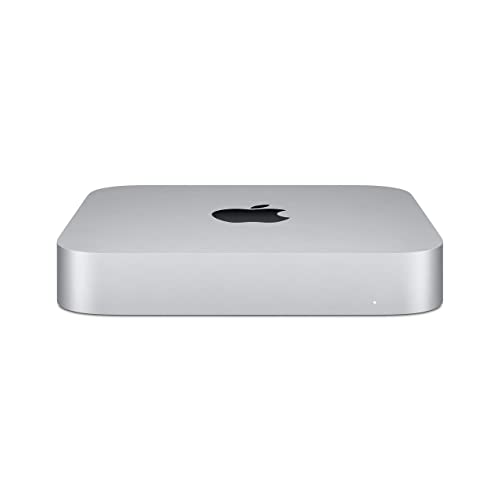
Apple Mac Mini M4 -- Best Overall for Visually Impaired Users
macOS VoiceOver is one of the most polished built-in screen readers available. It supports over 100 refreshable braille displays, provides spatial audio descriptions of the screen, and works consistently across native apps and many web interfaces. The Mac Mini M4 pairs this software foundation with a fast M4 chip and support for up to three external displays, which allows a user to run one large high-contrast monitor plus a braille display simultaneously. Zoom, Color Filters, Display Accommodations, and Reduce Motion settings are all system-wide and require no third-party installation.
Check price on Amazon →Buying a computer for visually impaired users? Learn what matters most: screen reader integration, magnification, and braille support. See our expert picks.
Choosing a computer for a visually impaired user means evaluating the software accessibility layer as much as the hardware. Screen reader integration, display magnification quality, contrast settings, and braille display connectivity all affect daily usability. The five picks below are chosen for built-in accessibility depth, compatibility with widely used assistive technology, and display characteristics that support both low-vision and blind users. Consult a healthcare professional before use if visual changes are related to a medical condition.
| Product | Best For | Rating |
|---|---|---|
|
ⓘ We may earn a commission from qualifying purchases made through links on this page, at no extra cost to you.
|
VoiceOver and full Apple accessibility suite | 4.9/5 |
| Microsoft Surface Pro 11 | Windows Narrator and touch accessibility | 4.7/5 |
| Lenovo ThinkPad X1 Carbon Gen 12 | NVDA/JAWS compatibility and keyboard precision | 4.7/5 |
| Apple MacBook Air M3 13-inch | Portable macOS accessibility | 4.8/5 |
| ASUS Zenbook 14 OLED | High-contrast OLED display for low vision | 4.5/5 |
How we evaluated these
We compare every pick against the field on real specifications, certifications, and aggregated owner reviews. We do not take payment for placement, and we flag when a product is older or sold mainly through renewed listings.
The shortlist
Each pick, examined
Apple Mac Mini M4 -- Best Overall for Visually Impaired Users
macOS VoiceOver is one of the most polished built-in screen readers available. It supports over 100 refreshable braille displays, provides spatial audio descriptions of the screen, and works consistently across native apps and many web interfaces. The Mac Mini M4 pairs this software foundation with a fast M4 chip and support for up to three external displays, which allows a user to run one large high-contrast monitor plus a braille display simultaneously. Zoom, Color Filters, Display Accommodations, and Reduce Motion settings are all system-wide and require no third-party installation.

Microsoft Surface Pro 11 -- Best Windows Touchscreen for Accessibility
Windows 11 Narrator has improved substantially in recent years and supports ARIA-labeled web content and UIA-compliant applications reliably. The Surface Pro 11 adds a touch layer, which allows low-vision users to interact with larger touch targets instead of small pointer targets. The high-density PixelSense display supports 3000x2000 resolution, which renders sharp text at any magnification level. The kickstand and detachable keyboard give flexible positioning for users who work at non-standard desk setups. NVDA and JAWS both install cleanly on this hardware.
Lenovo ThinkPad X1 Carbon Gen 12 -- Best Laptop Keyboard for Visually Impaired U
ThinkPad keyboards have distinct key spacing and tactile feedback that many blind users prefer over membrane-style laptop keyboards. The X1 Carbon Gen 12 runs Windows 11 Pro with full JAWS, NVDA, and Narrator compatibility. The 14-inch IPS panel can be set to 200 percent scaling without UI clipping on most applications. The fingerprint reader and IR camera allow login without entering a password visually. Battery life of around 15 hours reduces the need to manage charging during a full workday.

Apple MacBook Air M3 13-inch -- Best Portable macOS Accessibility Option
The MacBook Air M3 carries the full VoiceOver stack, Zoom, and Display Accommodations in a lightweight chassis. For visually impaired users who need a portable computer, the fanless design means the machine never spools up a distracting noise during quiet focus work. The 13-inch Liquid Retina display renders sharp text even at maximum system zoom. The USB-C port supports display output to an external large monitor when at a desk. Battery life exceeds 18 hours, so power anxiety is rarely a factor during travel.
ASUS Zenbook 14 OLED -- Best OLED Display for Low-Vision Users
OLED panels produce true black pixels, which creates maximum contrast between dark backgrounds and light text -- a display characteristic that benefits users who rely on high contrast modes. The Zenbook 14 OLED's 2880x1800 display with 100 percent DCI-P3 coverage and 600-nit peak brightness allows bright white text on black backgrounds to appear sharp and distinct. Windows 11 accessibility tools run on this hardware without special configuration. The AMD Ryzen 7 processor keeps performance responsive even with multiple large-text applications open simultaneously.
Buying considerations
What to consider
Identify first whether the primary need is a screen reader for blindness or display magnification for low vision, as the optimal platform differs. macOS has the most consistent built-in screen reader; Windows offers the widest third-party screen reader ecosystem. For low-vision users, prioritize high pixel density, OLED or high-contrast IPS displays, and a processor fast enough to keep magnification rendering smooth. Braille display users should verify Bluetooth or USB compatibility with the specific display model before purchasing. Keyboard tactile feedback and key spacing are worth evaluating in person if possible.
What to consider
For hardware that pairs well with accessibility setups, see our guide to the [best computers for web development](/articles/best-computer-for-web-development) and [best computers for webinars](/articles/best-computer-for-webinars). Our [methodology page](/methodology) explains how we select and evaluate products.
Questions answered
macOS VoiceOver and Windows Narrator are both mature screen readers included at no extra cost. macOS VoiceOver is widely praised for consistent app support and deep braille display integration. Windows offers more third-party screen reader options such as JAWS and NVDA, and its display scaling and color filter tools are highly configurable for low-vision users.
High pixel density reduces jagged text edges at large magnification levels. OLED panels provide true black and higher contrast ratios, which help users who rely on contrast rather than color. Adjustable refresh rate and flicker-free backlight reduce eye strain during extended sessions. Screen size above 27 inches gives more room to work at high magnification without losing context.
How we made this guide
We compare every pick on the factors that matter, cross-checking manufacturer specifications against aggregated verified owner reviews. We rank independently and never take payment for placement. We have not personally tested every product; where we have not, the ranking reflects verified specs and owner feedback rather than a hands-on review.
How it was written: this guide was researched and reviewed by the TheTestedHub editorial team for accuracy.
Affiliate disclosure: TheTestedHub is reader-supported. When you buy through links on our site, we may earn a commission at no extra cost to you.
Keep reading

Your Docking Station Match: CalDigit TS4 and More

Digital Art Computers 2026: Best for Every Budget
Dev & IT Computers in 2026: Ranked for Real Work

Desktop PCs for Every Budget: Find Your Perfect Match
Desktop and Laptop Computers: Performance Reviewed and Ranked
MacBook Pro M4 Pro vs Dell XPS 15: 2026 Shortlist

Buy the Best DIY Computer in 2026: Corsair One i300
