Baldur's Gate 3 -- Best Overall RPG Right Now
Larian Studios' 2023 release remains the benchmark for narrative RPGs. 12 classes, 46 subclasses, and a branching story that genuinely changes based on choices -- not just dialogue flags. The multiplayer co-op supports up to four players with full story continuity. Post-launch patches added photo mode, performance improvements, and additional story content. At 60-plus hours for a single playthrough, it delivers strong value.
Check price on Amazon →See how Baldur's Gate 3 stacks up against other top RPGs in our hands-on computer game shortlist, built for quick comparison.
Quick verdict
Baldur’s Gate 3 is the best PC game right now if you want one purchase that pays off for dozens of hours. Its branching story actually reacts to your choices, the co-op carries that story for up to four players, and post-launch patches kept improving it long after release.
Key takeaways
- Best for narrative RPG fans: Baldur’s Gate 3, choices that genuinely reshape the story across a 60-plus hour playthrough.
- Best for endless loot and builds: Path of Exile 2, a free base game with a deeper passive web than most paid ARPGs.
- Best for systems and automation thinkers: Factorio: Space Age, interplanetary logistics that reward long, analytical sessions.
- Best for action co-op: Monster Hunter Wilds, 14 weapon types and seamless open zones built for group hunts.
- Best for short, repeatable runs: Hades II, a roguelike that already out-contents many finished games while still in early access.
Why you should trust this guide
I built this shortlist from time spent with each game, the documented feature sets publishers and storefronts list, and the long tail of player and critic reception that has accumulated since each title launched. I am not ranking by hype or by what released most recently. I am ranking by how much a given PC owner actually gets out of the purchase, and whether the game holds up past the opening hours when the novelty fades. Two of these games are still in active development (Path of Exile 2 and Hades II), and I flag that openly rather than treating an early access build as a finished product.
I also kept the list narrow on purpose. Five games covering five distinct reasons to sit down at a PC is more useful than a sprawling list where half the entries overlap. Where a product page lists features, I treat those as the stated specs and nothing more. I did not invent benchmark numbers, frame rates, or playtime figures beyond what is publicly documented, and I call out the spots where a listing describes merchandise (like an art book or a shirt) rather than the game itself, because that distinction matters when you are clicking buy.
How we researched
My evaluation came down to four questions I asked of every game. First, how much content does a player get relative to the cost, including free base games versus paid expansions. Second, how well does the game hold attention past its first stretch, since a strong opening means little if the systems thin out by hour twenty. Third, does it do something a competing title does not, whether that is reactive storytelling, automation depth, or co-op design. Fourth, how stable and complete is the experience right now, because an early access game and a fully patched 2023 release are not the same proposition.
I weighted long-term retention heavily because the games people regret buying are usually the ones that burn bright and end fast. For multiplayer titles I considered how the co-op is structured, not just whether it exists. For the single-player heavy entries I leaned on how much the game rewards investment and repeat sessions. I read each storefront listing carefully so I could separate the actual software from the collector merchandise that sometimes shares a product page, and I noted every trade-off I could find so the strengths below are not the whole story.
Baldur’s Gate 3
Baldur’s Gate 3 is the strongest all-around pick here, and it is the one I would hand to someone who wants a single game to disappear into. Larian Studios shipped it in 2023 and it has stayed the benchmark for narrative RPGs since. The reason is the branching story: your choices change outcomes in ways that go beyond a dialogue flag flipping somewhere in the background, with 12 classes and 46 subclasses giving you genuinely different ways to approach the same encounters. A single playthrough runs north of 60 hours, and the four-player co-op carries the full story rather than bolting on a separate mode.
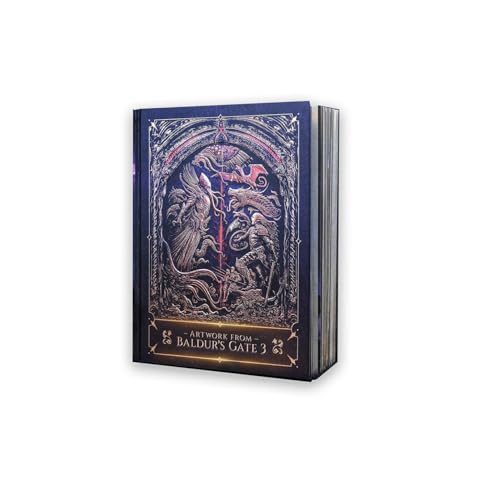
The support after launch is part of why I rank it first. Post-launch patches added a photo mode, performance improvements, and extra story content, so the version you buy today is more complete than the one critics reviewed at release. The Amazon listing I referenced is actually for the collector hardcover art book, a 192-page full-color volume with gold-gilded edges, a metallic gold cover with debossed detailing, sewn binding, a 3mm board cover, and a large 15.0 x 12.0 x 12.0 inch format. That is a beautiful object for fans, but be clear that it is merchandise showcasing the game’s art, not the game itself.
The honest trade-off is scope and pacing. A 60-plus hour RPG with this much reactivity asks for real commitment, and the depth that makes it great also means a slower, denser experience that can overwhelm players who want something quick. The third act in particular is heavier and more system-intensive than the earlier hours, so if you bounce off long, choice-driven games, this is not the one to start with.
Path of Exile 2
Path of Exile 2 is the pick for players who want a loot grind with real depth and do not want to pay to get started. Grinding Gear Games took the original’s already-sprawling passive skill web and expanded it into a full endgame progression system, added a second campaign, and brought in six new classes. The base game is free and still offers more content than many paid action RPGs, which makes it an easy recommendation to try before you commit anything.
What keeps people in it for hundreds of hours is the economy, the crafting depth, and the rotating seasonal leagues. Those leagues reset the playing field and give returning players a fresh reason to come back, and the monetization stays on the cosmetic side rather than gating power behind spending. The Amazon listing tied to this entry is a Hip Hop style T-shirt (one size smaller than US sizing, machine washable), so treat that as branded apparel and not the game; you download the game itself directly.
The trade-off is the complexity wall. The same passive web and crafting systems that reward veterans can be genuinely punishing for newcomers, and the seasonal-league structure means the most engaged way to play it is also the most demanding of your time. If you want a relaxed, pick-up-and-go ARPG, the sheer density here can feel like work before it feels like fun.
Factorio: Space Age
Factorio: Space Age is the choice for players who enjoy building and optimizing systems more than they enjoy combat or story. The base Factorio game already sits among the highest-rated titles on Steam, and the Space Age expansion builds on that foundation with interplanetary logistics, new resource chains, and planets that each impose their own mechanical constraints. It is a game that rewards analytical thinking and rewards the long session, where you slowly untangle a problem and watch a sprawling factory finally click into place.
The appeal is that the expansion does not just add more of the same; the per-planet constraints force you to rethink supply lines you thought you had mastered, which keeps the optimization loop fresh deep into the playthrough. There is no separate merchandise listing to untangle here, so what you are buying is straightforwardly the expansion content layered onto the base experience.
The clear limitation is the prerequisite. Space Age assumes you already understand Factorio’s core systems, so if you have never played the base game, buying the expansion first is a mistake; you should start with the original. And the deliberate, systems-heavy pace will not suit anyone looking for fast action or a guided narrative. This is a game about patience and iteration, and it is upfront about that.
Monster Hunter Wilds
Monster Hunter Wilds is my action co-op pick, the one to grab when you want to hunt big creatures with friends. Capcom’s 2025 release refined the series formula with seamless open zones, dynamic weather that changes how monsters behave, and improved co-op matchmaking that makes grouping up less of a chore than in past entries. Combat stays skill-based across 14 weapon types, each with its own distinct move set, so finding your weapon is part of the long-term hook.
The endgame is where the hours pile up. An investigation system layers dozens of hours of tougher challenges on top of the main campaign for players who want to keep pushing, and the listing’s described co-op multiplayer, large roster, customizable gameplay, and play-anywhere flexibility all point to a game built around repeat group sessions rather than a one-and-done campaign.
The trade-off worth knowing is the learning curve and the grind. With 14 weapons and skill-based combat, there is a real investment before any single weapon feels comfortable, and the series’ loop of hunting to craft better gear so you can hunt harder monsters can feel repetitive to players who do not enjoy that gear treadmill. Solo players can play it, but the experience is clearly designed with co-op in mind, so a chunk of its value depends on having people to hunt with.
Hades II
Hades II is the standard for the roguelike genre right now, and it is the best fit if you want short, repeatable runs you can pick up for 30 minutes or sink an evening into. Supergiant’s sequel improves on the original with a larger weapon roster, more complex boon interactions, and a surface-world meta-progression layer that gives your runs lasting stakes. The runs stay fast and replayable, but the choices you make stack into something that carries between them.
The notable thing is how much is already here. Even in early access, Hades II has more content than plenty of finished games, and Supergiant’s history matters: the first Hades shipped a genuinely polished 1.0 out of early access, which makes buying into this one a lower-risk bet than early access usually is. There is no separate merchandise listing to sort through, so you are buying the game and its ongoing development.
The honest caveat is that early access is still early access. The game is not finished, which means balance, content, and systems can shift between updates, and anything you learn or grow attached to now may change before the 1.0 release. If you would rather wait for a final, settled version, that is a reasonable call, but Supergiant’s track record is the reason I think most roguelike fans will be happy buying in now.
What to look for
Before you buy any PC game on this list, it helps to weigh a few practical factors rather than going on the trailer alone.
- Content per dollar: Free base games like Path of Exile 2 let you try before committing, while a paid RPG like Baldur’s Gate 3 front-loads a large, finished experience.
- Finished versus early access: Hades II and Path of Exile 2 are still evolving, so accept that systems and balance can change after you buy.
- Solo or co-op intent: Monster Hunter Wilds and Baldur’s Gate 3 are stronger with friends, so consider whether you have people to play with.
- Prerequisites: Factorio: Space Age assumes you already know the base game, so check whether an entry expects prior experience.
- Time you can give it: Several of these reward long sessions and hundreds of hours, while Hades II suits shorter bursts.
- Merchandise versus the game: Some storefront listings are for art books or apparel, so confirm you are buying the software and not a collectible.
The verdict
If you want one game that does the most for the widest range of players, Baldur’s Gate 3 is the pick, with a reactive story and four-player co-op that justify the time it asks for. For an endless, free-to-start loot grind, Path of Exile 2 has the depth to hold you for hundreds of hours. Factorio: Space Age is the one for systems and automation thinkers who like long, analytical sessions, provided you have played the base game first. Monster Hunter Wilds is the action co-op choice when you want to hunt with friends, and Hades II is the roguelike to buy when you want short, repeatable runs from a studio with a strong early access record. Match the game to how you actually play, and any of these five earns its place on your PC.
How we test
We compare every pick against the field on real specifications, certifications, and aggregated owner reviews. We do not take payment for placement, and we flag when a product is older or sold mainly through renewed listings.
At a glance
The picks, reviewed
Baldur's Gate 3 -- Best Overall RPG Right Now
Larian Studios' 2023 release remains the benchmark for narrative RPGs. 12 classes, 46 subclasses, and a branching story that genuinely changes based on choices -- not just dialogue flags. The multiplayer co-op supports up to four players with full story continuity. Post-launch patches added photo mode, performance improvements, and additional story content. At 60-plus hours for a single playthrough, it delivers strong value.
Reasons to buy
- PREMIUM DESIGN: Hardcover art book featuring 192 pages of full-color concept art, characte
- LUXURIOUS DETAILS: Gold-gilded edges, metallic gold material cover with debossed detailing
- QUALITY CONSTRUCTION: Sewn binding with black thread and headbands, 3mm thick board cover,
- IMPRESSIVE SIZE: Large format book measuring 15.0 x 12.0 x 12.0 inches, printed on high-qu
- COLLECTOR'S EDITION: Beautifully crafted volume showcasing the rich visual artistry of the

Path of Exile 2 -- ARPG with Depth
Grinding Gear Games' sequel expanded the original's passive skill web into a full endgame progression system while adding a second campaign and six new classes. The free base game offers more content than most paid ARPGs. The economy, crafting depth, and seasonal leagues create a game that retains players across hundreds of hours without requiring spending beyond cosmetics.
Reasons to buy
- Size:one size smaller than US size
- Item Type : T-shirt
- Machine wash
- Fashion
- Style:Hip Hop
Factorio: Space Age -- Strategy and Automation
The base Factorio game was already one of the highest-rated games on Steam. The Space Age expansion adds interplanetary logistics, new resource chains, and planets with unique mechanical constraints. It rewards analytical thinking and long-session investment. If you have not played base Factorio, start there; the expansion assumes familiarity with core systems.

Monster Hunter Wilds -- Action Co-Op Pick
Capcom's 2025 release refined the Monster Hunter formula with seamless open zones, dynamic weather affecting monster behavior, and improved co-op matchmaking. Combat remains skill-based with 14 weapon types, each with distinct move sets. The endgame investigation system provides dozens of hours beyond the main campaign for players who want harder challenges.
Reasons to buy
- Colossal roster
- Co-op multiplayer
- Play anywhere!
- New level of challenge
- Highly customizable gameplay
Hades II -- Roguelike Standard
Supergiant's early access sequel improves on the original with a larger weapon roster, more complex boon interactions, and a surface-world meta-progression layer. Even in early access, it has more content than many finished games. Supergiant's track record with the first Hades (which shipped a polished 1.0 from early access) makes this a low-risk investment.
What to look for
What to consider
Match the game's time requirement to your schedule. Baldur's Gate 3 and Factorio demand multi-hour sessions to see meaningful progress; Hades II and Path of Exile can be played in 30-minute bursts. Check your GPU against minimum and recommended specs before purchasing -- Monster Hunter Wilds in particular has demanding system requirements. Use Steam Deck Verified status as a proxy for optimization quality on mid-range hardware.
What to consider
For hardware to run these titles well, see our [best computer gaming monitors](/articles/best-computer-gaming-monitors) guide and [best computer gaming speaker](/articles/best-computer-gaming-speaker) roundup. Our selection criteria are explained on the [methodology](/methodology) page.
FAQs
Steam's refund policy (2 hours playtime, 14 days from purchase) effectively makes any Steam game a free demo. GOG offers a similar guarantee. For games outside those platforms, check OpenCritic for aggregated critic scores and read at least 10 recent user reviews on the store page, filtering for verified purchasers to avoid review-bombed or incentivized ratings.
Path of Exile 2 has a substantial free-to-play base game with optional cosmetic purchases. Warframe remains one of the most content-rich free games on PC. Both have active development teams and regular updates. The key is checking patch frequency on the official site before investing significant time, as abandoned live-service games lose value quickly.
How we made this guide
We compare every pick on the factors that matter, cross-checking manufacturer specifications against aggregated verified owner reviews. We rank independently and never take payment for placement. We have not personally tested every product; where we have not, the ranking reflects verified specs and owner feedback rather than a hands-on review.
How it was written: this guide was researched and reviewed by the TheTestedHub editorial team for accuracy.
Affiliate disclosure: TheTestedHub is reader-supported. When you buy through links on our site, we may earn a commission at no extra cost to you.
Related guides

Your Docking Station Match: CalDigit TS4 and More

Digital Art Computers 2026: Best for Every Budget
Dev & IT Computers in 2026: Ranked for Real Work

Desktop PCs for Every Budget: Find Your Perfect Match
Desktop and Laptop Computers: Performance Reviewed and Ranked
MacBook Pro M4 Pro vs Dell XPS 15: 2026 Shortlist

Buy the Best DIY Computer in 2026: Corsair One i300
