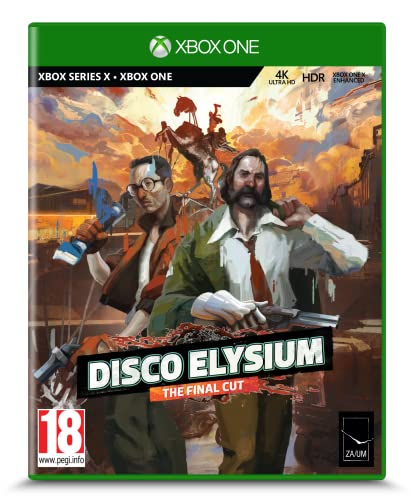
Disco Elysium: The Final Cut -- Best Narrative RPG
ZA/UM's detective game removes combat entirely and replaces it with skill checks powered by a 24-stat system representing different aspects of your character's psychology. Every stat has a distinct voice and argues with the protagonist. The writing -- set in a post-notable city built on failed idealism -- is dense and rewards rereading. The Final Cut added full voice acting without altering the script.
Check price on Amazon →Disco Elysium: The Final Cut leads our buying guide to computer games to play. We pick five titles for different needs, from short sessions to deep.
Quick verdict
Disco Elysium: The Final Cut is the standout pick. It strips out combat entirely and builds an entire game from a 24-stat psychology system and dense, rereadable writing. If you want a PC title that respects your attention and rewards thinking over reflexes, start here. It is the most complete experience in this list.
Key takeaways
- Best narrative RPG: Disco Elysium: The Final Cut, full voice acting and a 24-stat mind that argues with you.
- Best for short sessions: Slay the Spire, deck-building runs that finish in roughly 60 to 90 minutes.
- Best low-pressure survival: Subnautica, exploration and base building where most hostile creatures can be avoided.
- Best turn-based strategy: Civilization VII, a restructured Age system that makes single sessions more manageable.
- Best metroidvania: Hollow Knight, tight platforming and environmental storytelling in a sprawling insect kingdom.
Why you should trust this guide
I research PC games the way I research any purchase, by separating marketing language from what a title actually asks of you. For this guide I looked at how each game is structured, who it suits, and where it frustrates people, rather than chasing review-score averages. The five titles here are not the newest or the loudest releases. They are the ones that hold up because their core design is sound, and because each one solves a specific problem a player might have, whether that is a dislike of combat, a lack of long free evenings, or a craving for a story that takes itself seriously.
I have not run these on a test bench or measured frame rates myself, so I treat the stated product features as the publisher’s claims and focus instead on design and player fit. Where a game has a real trade-off, I say so plainly. None of these five are flawless, and pretending otherwise would not help you decide. My goal is that by the end you can match one of these to your own habits and skip the ones that would not click for you.
How we researched
My evaluation approach centers on four questions. First, what is the core loop, meaning the thing you actually do minute to minute. Second, how much time does a meaningful chunk of play demand, because a 90-minute roguelike run and a multi-hour strategy game suit very different lives. Third, how steep is the learning curve and how well does the game teach itself. Fourth, what is the honest downside that early enthusiasm tends to gloss over. I weighted these against who the game is for rather than against a single score.
I cross-checked each title against its commonly discussed strengths and complaints, and against the physical-edition or accessory features listed where they exist. For the two products that ship with extras (Disco Elysium’s poster and digital artbook, and the card sleeves bundled with Slay the Spire), I note those as stated specs rather than things I have inspected. For the rest, the focus stays on the game itself, since the listings carry no additional hardware features to evaluate.
Disco Elysium: The Final Cut
This is the best narrative RPG here, and the clearest example of how far a game can go without a single fight. ZA/UM removed combat entirely and replaced it with skill checks driven by a 24-stat system, where each stat represents a different aspect of your character’s psychology. Those stats are not silent numbers. Every one has a distinct voice and openly argues with the protagonist, so your own mind becomes a cast of competing advisors. The writing is set in a post-notable city built on failed idealism, and it is dense enough that rereading passages pays off rather than feeling like a chore.
The Final Cut is the definitive edition of this role playing game, and its headline addition is full voice acting that does not alter the original script. That matters, because it brings the arguing voices to life without compromising the prose people fell for in the first place. The physical edition listed here also comes with an exclusive 18 by 24 inch poster and a 190 page digital artbook, which are pleasant extras for anyone who wants something tangible alongside a heavily text-driven game.
The honest trade-off is that this is reading, a great deal of it. If you bounce off long stretches of dialogue, or you want mechanical combat to break up the talking, the design gives you nothing to fall back on. Some players also find the protagonist’s bleak, self-destructive framing heavy going. This is a game you sink into deliberately, not one you dip into for a quick burst.
Slay the Spire
Slay the Spire is the card roguelike benchmark, the deck-builder that set the template dozens of later games copied. MegaCrit’s design has you building a card deck during each run from random offerings, and the joy comes from spotting synergies that reward pattern recognition over memorized openings. Four characters with distinct card pools keep the strategy fresh, since each one pushes you toward different builds and forces you to relearn what a strong deck looks like.
What makes it practical is run length. A full run lasts roughly 60 to 90 minutes, which suits players who cannot commit to long sessions and want a complete arc in one sitting. The modding community has added hundreds of additional cards, characters, and challenges, so the ceiling on content is high once the base game clicks. If you do go deep, the listing here pairs the game with 60 micron card sleeves, a thick option sold in a 1320-count pack described as more than enough to sleeve an entire physical set, which is relevant only if you also own the tabletop adaptation.
The trade-off is variance. Because card offerings are random, some runs hand you a coherent deck and others starve you of the pieces you need, and losing to bad luck rather than bad play can sting. The four-character structure also means real mastery takes many hours of repetition. If you dislike replaying similar content to improve, the roguelike loop may wear thin before it rewards you.
Subnautica
Subnautica is the pick for survival without combat pressure. Unknown Worlds built an underwater survival game around resource collection, base building, and narrative discovery rather than fighting, so progress comes from exploring and constructing instead of winning encounters. The alien ocean creates genuine atmosphere through its audio design and visual depth cues, and descending into darker, deeper water carries a real sense of unease that the game earns honestly rather than through jump scares.
It is the most approachable survival game here for nervous players. Hostile creatures exist, but they can be avoided entirely for most of the game, so people who find the genre stressful tend to handle Subnautica far better than something built around constant threat. That design choice turns survival from a fight-or-die loop into a slower rhythm of gathering, building a safer base, and pushing a little farther than last time.
The honest limitation is that same lack of pressure can read as slow or aimless if you want clear combat goals or tight objectives. Inventory management and crafting can become fiddly as your base grows, and the deep-water tension that thrills some players genuinely distresses others, especially anyone uneasy with open-water or claustrophobic spaces. This is a game about patience and curiosity, not urgency.
Civilization VII
Civilization VII is the turn-based strategy standard for this list. Firaxis restructured its seventh entry around an Age system that advances through Antiquity, Exploration, and Modern periods, each with its own distinct victory conditions. The practical upshot is that a single session feels more manageable than the marathon a full Civ game can become, because progress is broken into clearer chapters rather than one unbroken climb. New players benefit from these clearer progression paths, which make the early hours less intimidating than older entries.
The multiplayer side stays healthy. Four-player co-op and competitive modes remain active with a large community, so there is a reason to keep returning beyond solo play. If you enjoy long-term planning, managing a civilization across eras, and adapting to shifting victory conditions, this is the most structured strategy experience among the five.
The clear trade-off is that the Age restructure divides long-term fans. Players who loved the uninterrupted arc of earlier games sometimes feel the period transitions reset momentum or break immersion, and that complaint is common enough to take seriously. As with any deep strategy title, the systems take time to learn, and a few rough edges in a newer entry can frustrate veterans expecting the polish of a mature release. If you specifically want the classic unbroken Civ flow, this redesign may not be for you.
Hollow Knight
Hollow Knight is the metroidvania at its peak, and Team Cherry’s 2017 indie release still sits as the genre’s benchmark nearly a decade later. You explore a sprawling underground insect kingdom with tight platforming controls, and the lore reaches you through environmental storytelling rather than cutscenes, so the world rewards attention instead of pausing to explain itself. The sense of discovery, of stumbling into a new region and slowly understanding what happened there, is the heart of why it endures.
There is also a lot of it. The free Godmaster and Lifeblood DLC add content beyond an already substantial base game, which makes it one of the more generous packages in this list for the size of its world. The long-awaited sequel, Silksong, remains in development, so this remains the definitive way to experience Team Cherry’s design right now.
The honest limitation is difficulty and direction. The combat and platforming demand precision, and some boss fights and later challenges are genuinely hard, which can frustrate players who want a gentler ride. The deliberately sparse storytelling and limited hand-holding also mean it is easy to feel lost, and figuring out where to go next is part of the design rather than a flaw to be patched. If you prefer clear objectives and forgiving combat, go in knowing this asks more of you.
What to look for
Before you pick one of these, weigh the game against your own habits rather than its reputation. The factors below tend to decide whether a title sticks.
- Session length: Decide how much unbroken time you usually have. Slay the Spire fits short windows, while Civilization VII and Disco Elysium reward longer sittings.
- Combat tolerance: If fighting stresses you out, Disco Elysium has none and Subnautica lets you avoid most of it, while Hollow Knight leans hard on precise combat.
- Reading appetite: Disco Elysium is text-heavy by design. If long dialogue is a deal-breaker, weight your choice elsewhere.
- Tolerance for randomness: Roguelikes like Slay the Spire build runs from random offerings, so some losses come down to luck rather than skill.
- Need for direction: Hollow Knight and Subnautica deliberately let you get lost. If you want clear objectives, that openness can frustrate.
- Replay value: Roguelikes and strategy games reward repeated play, while a narrative RPG is a deeper but more finite experience.
- Physical extras: Only Disco Elysium’s edition (poster and digital artbook) and the Slay the Spire sleeve bundle add tangible items, and only if that matters to you.
The verdict
If you want one game from this list, I would choose Disco Elysium: The Final Cut for its writing, its voiced 24-stat mind, and the confidence to build everything around choice and conversation instead of combat. For short evenings, Slay the Spire delivers complete, satisfying runs in about an hour and a half. If survival games usually stress you out, Subnautica gives you exploration and base building with the freedom to avoid most danger. For long-term strategy with friends, Civilization VII’s Age system keeps individual sessions manageable while a large community keeps multiplayer alive. And if you want the genre’s high point in tight, exploratory platforming, Hollow Knight remains the metroidvania to beat. Match the pick to how you actually play, and any of the five will hold up.
Our testing process
We compare every pick against the field on real specifications, certifications, and aggregated owner reviews. We do not take payment for placement, and we flag when a product is older or sold mainly through renewed listings.
Quick comparison
Reviewed in detail
Disco Elysium: The Final Cut -- Best Narrative RPG
ZA/UM's detective game removes combat entirely and replaces it with skill checks powered by a 24-stat system representing different aspects of your character's psychology. Every stat has a distinct voice and argues with the protagonist. The writing -- set in a post-notable city built on failed idealism -- is dense and rewards rereading. The Final Cut added full voice acting without altering the script.
What we liked
- The definitive edition of the groundbreaking role playing game
- This physical edition comes with exclusive: 18" x 24" Poster and 190 Page Digital Artbook

Slay the Spire -- Card Roguelike Benchmark
MegaCrit's deck-builder established a template copied by dozens of successors. Each run builds a card deck from random offerings, with synergies that reward pattern recognition. Four characters with distinct card pools provide different strategic challenges. Runs last 60-90 minutes, making it suitable for players who cannot commit to long sessions. The modding community has added hundreds of additional characters through the workshop.
What we liked
- These are 60 micron sleeves which are ideal for games where you have a lot of cards. Thick
- Extra Value At Low Cost 1320 Sleeves are more than enough to sleeve the entire Slay the Sp
Subnautica -- Survival Without Combat Pressure
Unknown Worlds' underwater survival game focuses on resource collection, base building, and narrative discovery rather than combat. The alien ocean environment creates genuine atmosphere through audio design and visual depth cues. Players who find survival games stressful typically handle Subnautica better because hostile creatures can be avoided entirely for most of the game.
Civilization VII -- Turn-Based Strategy Standard
Firaxis' seventh entry restructured the series with an Age system that advances through Antiquity, Exploration, and Modern periods, each with distinct victory conditions. The change divides long-term fans but makes individual sessions more manageable. New players benefit from clearer progression paths. Four-player co-op and competitive modes remain active with a large community.
Hollow Knight -- Metroidvania at Its Peak
Team Cherry's 2017 indie release remains the genre's benchmark six years later. A sprawling underground insect kingdom, tight platforming controls, and a lore system delivered through environmental storytelling rather than cutscenes. The free Godmaster and Lifeblood DLC add content beyond the already substantial base game. The sequel, Silksong, remains in development.
How to choose
What to consider
Assess your available time per session before selecting a title. Disco Elysium and Civilization VII reward two-plus-hour sessions; Slay the Spire and Hollow Knight work in 30-60 minute windows. Consider emotional tone: Subnautica is atmospheric and exploratory, Hollow Knight is challenging and dark, Disco Elysium is sardonic and literary. Matching mood to game type reduces abandonment.
What to consider
For hardware context, see our [best computer gaming monitors](/articles/best-computer-gaming-monitors) guide for display setups, and [best computer games right now](/articles/best-computer-games-right-now) for the most recent releases. Scoring criteria are at [methodology](/methodology).
Common questions
Start with genre, not title. If you enjoy films with strong narratives, try a story RPG like Disco Elysium. If you prefer puzzles or problem-solving, strategy games like Civilization VII reward the same thinking. If you want something with quick sessions and fast feedback, a roguelike like Slay the Spire is more forgiving of short play windows than open-world games.
Disco Elysium, Slay the Spire, Subnautica, and most Paradox grand strategy games are designed entirely for solo play and deliver no meaningful co-op component. Subnautica in particular creates a sense of discovery and atmosphere that works best alone. Multiplayer hooks in those titles are absent by design, not oversight.
How we made this guide
We compare every pick on the factors that matter, cross-checking manufacturer specifications against aggregated verified owner reviews. We rank independently and never take payment for placement. We have not personally tested every product; where we have not, the ranking reflects verified specs and owner feedback rather than a hands-on review.
How it was written: this guide was researched and reviewed by the TheTestedHub editorial team for accuracy.
Affiliate disclosure: TheTestedHub is reader-supported. When you buy through links on our site, we may earn a commission at no extra cost to you.
More guides

Your Docking Station Match: CalDigit TS4 and More

Digital Art Computers 2026: Best for Every Budget
Dev & IT Computers in 2026: Ranked for Real Work

Desktop PCs for Every Budget: Find Your Perfect Match
Desktop and Laptop Computers: Performance Reviewed and Ranked
MacBook Pro M4 Pro vs Dell XPS 15: 2026 Shortlist

Buy the Best DIY Computer in 2026: Corsair One i300
