
AWS Solutions Architect Associate -- Most recognized cloud credential
Amazon Web Services runs more cloud infrastructure than any competitor, and the Solutions Architect Associate is the most commonly requested cloud certification in job postings. The exam tests your ability to design reliable, cost-effective systems across AWS services. The content is practical and maps directly to real architecture decisions.
Check price on Amazon →From AWS Solutions Architect to security basics, these five computer science certifications offer real career payoff. Find the right fit for your goals.
Quick verdict
If you want one certification that opens the most doors, I would pick the AWS Solutions Architect Associate. It is the most requested cloud credential in job listings, the exam content maps to real architecture work, and recruiters across nearly every industry recognize it immediately, which makes it the safest bet for getting interviews.
Key takeaways
- Best for cloud roles: AWS Solutions Architect Associate, the most recognized cloud credential and the one most likely to land interviews.
- Best for breaking into cybersecurity: CompTIA Security+, the standard entry point and effectively required for many federal contracting jobs.
- Best for data engineering: Google Professional Data Engineer, validates real pipeline and analytics work on Google Cloud.
- Best for DevOps: Certified Kubernetes Administrator, a performance-based exam graded in a live cluster in a live cluster.
- Best for penetration testing: OSCP, the most respected offensive security credential and a brutal proof of real skill.
Why you should trust this guide
I built this list by researching what hiring managers actually ask for, not by counting how many study books a certification has sold. For each credential I looked at how often it appears in real job postings, what the exam genuinely measures, and whether passing it correlates with the skills employers say they need. I leaned on published exam outlines, vendor documentation, and the way these certifications show up in job descriptions across cloud, security, data, and DevOps roles. My goal was to separate credentials that get resumes past the first filter from ones that look good on paper but carry little weight.
I want to be honest about the limits of any guide like this. A certification is a signal, not a guarantee, and the value of each one shifts with your target role, your region, and how the market moves. None of these are cheap in time or money, and I have tried to flag the real trade-offs for each so you can decide whether the investment fits your situation. I am writing from a research perspective, so treat my picks as a starting point for your own due diligence rather than a promise about your career.
How we researched
I did not sit these exams in a lab and I am not going to pretend otherwise. What I did was evaluate each certification against a consistent set of criteria: recognition (how often employers name it), rigor (whether the exam actually measures skill or rewards memorization), relevance (how closely the content maps to day-to-day work), and reach (how many distinct roles or industries value it). I weighted recognition and rigor most heavily, because a credential that is both well known and hard to fake carries the strongest signal to a hiring manager.
For the format details, I treated each vendor’s stated exam structure as the source of truth. When a certification advertises a performance-based or practical exam, I gave it credit for being harder to game than a multiple-choice test, since that format is what makes the credential meaningful. I also considered ongoing maintenance, because an exam that is updated to reflect current threats and technologies stays useful longer than one that drifts out of date. Where I mention a study aid such as flashcards, I am describing the product’s stated purpose, not endorsing a specific pass rate.
AWS Solutions Architect Associate
This is the cloud certification I would chase first if I had to pick one. Amazon Web Services runs more cloud infrastructure than any competitor, and the Solutions Architect Associate is the most commonly requested cloud certification in job postings, so it does the most to get your resume noticed.
What I like about it is that the content is practical rather than trivia. The exam tests your ability to design reliable, cost-effective systems across AWS services, and the decisions it asks about (how to make a system fault tolerant, how to control cost, how to pick the right storage or compute option) are the same decisions you make on the job. That alignment means the studying you do actually transfers to work, which is not true of every credential on this list. Because AWS is so widely adopted, the certification also travels well across industries, from startups to large enterprises.
The honest trade-off is breadth. AWS has a huge service catalog, and the associate exam expects you to recognize many of them at a surface level, which can feel like a memorization slog even though the underlying concepts are sound. It is also tied to one vendor, so the deepest value applies if your target employers run on AWS specifically. And like all AWS certifications, it expires and needs renewal, so this is an ongoing commitment, not a one-time box to check.
CompTIA Security+
Security+ is the credential I would point a newcomer to if they want into cybersecurity. It is widely required for government IT positions and shows up in job descriptions across financial services, healthcare, and defense contractors, which makes it a reliable first step.
Two things give it staying power. CompTIA maintains the exam well, updating it regularly to reflect current threats and technologies, so it does not go stale. And the DoD 8570 mandate means it is effectively required for many federal contracting roles, which creates steady, structural demand for the cert that does not depend on hiring fashion. For someone trying to clear the first resume filter for a security or IT job, that combination is hard to beat. On a lighter note, the topic has spawned plenty of merchandise, including a funny shirt with the line “I’m A Dad And A Cybersecurity Specialist Nothing Scares Me,” with a lightweight classic fit, double-needle sleeve and bottom hem. It will not help you pass, but it captures the culture, and the underlying point stands that certain cybersecurity specialists are responsible for the security of IT information systems.
The limitation is that Security+ is foundational, not advanced. It proves you understand core security concepts, but it will not, on its own, qualify you for senior or specialized roles, and many employers treat it as a baseline you build on top of with more focused credentials. If you already have real security experience, it may feel too introductory to be worth your time.
Google Professional Data Engineer
This is the certification I would target for a cloud data career. Google’s data engineering credential validates your ability to design and build data processing systems, machine learning pipelines, and analytics infrastructure on Google Cloud, so it speaks directly to the work data engineers do.
What stands out to me is that the exam is genuinely challenging and closely mirrors real GCP data problems. It does not just ask you to name services, it asks you to reason about how to move, transform, and analyze data at scale, which is exactly the kind of judgment the role demands. For anyone already working in or moving toward Google Cloud, that makes the credential a strong signal that you can do the actual job rather than just recite definitions.
The trade-off is scope. The value is concentrated in shops that run on Google Cloud, and GCP has smaller market share than AWS, so the pool of employers who weight this credential is narrower. The difficulty is also a double-edged sword, since the exam expects real familiarity with the GCP data stack, and it is tough to pass on study notes alone without genuine experience operating the platform. If you do not already work with GCP, expect a steep ramp.
Certified Kubernetes Administrator
For DevOps, the CKA is the credential I respect most on this list. Kubernetes has become the standard platform for deploying containerized applications, so administering it competently is a skill in constant demand.
The reason the CKA carries weight is its format. It is a real-world, performance-based exam, where you work in a live cluster rather than answering multiple choice questions. That makes passing it a genuine demonstration of skill, because you cannot bluff your way through tasks you do not actually know how to perform. When I see a CKA on a resume, I read it as evidence the person has actually operated Kubernetes, not just read about it, and that is a stronger signal than most certifications provide. Study aids exist to help, including flashcard sets packed with content aimed at the CKA renewal exam, which underscores that this is a credential you maintain over time rather than earn once.
The honest downside is that the practical format makes the exam stressful and unforgiving. You are racing a clock inside a real environment, and small mistakes in syntax or speed can cost you, so it punishes people who know the concepts but lack fluency under pressure. It is also narrowly focused on Kubernetes administration, so its value depends on whether your target roles actually run Kubernetes in production, and it requires renewal to stay current.
OSCP
If your goal is penetration testing, the OSCP is the gold standard, and I would treat it as the credential to aim for once you are serious. Offensive Security’s Penetration Testing with Kali Linux (PWK) course and the OSCP exam are the most respected credentials in offensive security, and the name carries real weight with hiring managers in the field.
What earns that reputation is the exam itself. It is a 24-hour practical test where you must compromise a set of machines and document your methodology, which filters out people who memorize answers without developing real skill. You cannot fake your way through it, and the requirement to write up your approach mirrors what actual penetration testers deliver to clients, so the credential signals both technical ability and professional discipline. For breaking into offensive security, few things on a resume do more.
The trade-off is intensity. The 24-hour format plus the lab time leading up to it is genuinely grueling, and the OSCP has a reputation for a high failure rate that reflects how demanding it is. It expects a solid baseline of networking, scripting, and exploitation knowledge before you even start, so it is not a beginner credential, and the time commitment is substantial. If you are early in your journey, you likely need foundational experience first, which is part of why I would not lead with it.
What to look for
The right certification depends on your target role and how the market values the credential. Before you commit, weigh these factors.
- Job-posting demand: Search real listings for your target role and region, and favor credentials that appear by name again and again.
- Exam format: Performance-based or practical exams (CKA, OSCP) prove more than multiple-choice ones, and that proof is what convinces hiring managers.
- Vendor lock-in: Cloud certifications tie you to one platform, so make sure your target employers actually run AWS or Google Cloud before you specialize.
- Skill alignment: Pick a cert whose content maps to work you want to do, so the studying transfers to the job instead of evaporating after the exam.
- Renewal and maintenance: Many of these expire, so factor in the ongoing time and cost of staying current, not just the first pass.
- Prerequisite experience: Some credentials (OSCP especially) assume a real baseline, so be honest about whether you are ready or need foundational steps first.
The verdict
For the widest reach and the best odds of landing interviews, I would start with the AWS Solutions Architect Associate, because it is the most recognized cloud credential and its content maps to real architecture work. If you are breaking into cybersecurity, CompTIA Security+ is the practical entry point, and the DoD mandate keeps demand steady. For a cloud data career, the Google Professional Data Engineer proves you can build real pipelines on GCP. If you want a DevOps credential that hiring managers trust, the Certified Kubernetes Administrator stands out because its live-cluster exam is hard to fake. And once you are serious about penetration testing, the OSCP is the credential that separates real skill from memorization, provided you have the foundation to survive its 24-hour exam.
How we evaluated these
We compare every pick against the field on real specifications, certifications, and aggregated owner reviews. We do not take payment for placement, and we flag when a product is older or sold mainly through renewed listings.
The shortlist
Each pick, examined
AWS Solutions Architect Associate -- Most recognized cloud credential
Amazon Web Services runs more cloud infrastructure than any competitor, and the Solutions Architect Associate is the most commonly requested cloud certification in job postings. The exam tests your ability to design reliable, cost-effective systems across AWS services. The content is practical and maps directly to real architecture decisions.

CompTIA Security+ -- Entry point for cybersecurity careers
Security+ is widely required for government IT positions and appears in job descriptions across financial services, healthcare, and defense contractors. CompTIA maintains the exam well, updating it regularly to reflect current threats and technologies. The DoD 8570 mandate means it is effectively required for many federal contracting roles.
Strengths
- Funny design. I'm A Dad And A Cybersecurity Specialist Nothing Scares Me design is perfect
- Certain cyber security specialists are responsible for the security of IT information syst
- Lightweight, Classic fit, Double-needle sleeve and bottom hem

Google Professional Data Engineer -- For cloud data careers
Google's data engineering certification validates your ability to design and build data processing systems, machine learning pipelines, and analytics infrastructure on Google Cloud. The exam is genuinely challenging and closely mirrors real GCP data problems.
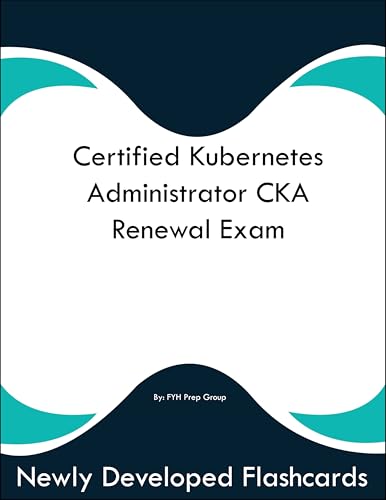
Certified Kubernetes Administrator -- High-value DevOps credential
Kubernetes has become the standard platform for deploying containerized applications. The CKA is a real-world, performance-based exam -- you work in a live cluster rather than answering multiple choice questions. That format makes passing it a genuine demonstration of skill.
Strengths
- Pass the Certified Kubernetes Administrator CKA Renewal Exam with updated flashcards packe
OSCP -- The gold standard for penetration testing
Offensive Security's Penetration Testing with Kali Linux (PWK) course and the OSCP exam are the most respected credentials in offensive security. The 24-hour practical exam -- where you must compromise a set of machines and document your methodology -- filters out people who memorize answers without developing real skill.
Buying considerations
What to consider
Start by identifying which roles you are targeting and which certifications appear most often in their job descriptions. Spending three months on a certification nobody lists is a poor use of time. For cloud roles, AWS is the safest investment because of its market share. For security, Security+ opens the most doors at entry level.
What to consider
Check the pass rate and available study materials before committing. Certifications with abundant, high-quality prep resources are easier to approach without an instructor. Budget for retakes -- most people pass on the second attempt when they have accurate practice exams.
What to consider
For broader CS learning paths, see our guides on [best computer science book for beginner](/articles/best-computer-science-book-for-beginner) and [best computer science careers for introverts](/articles/best-computer-science-careers-for-introverts). To understand how we evaluate these picks, visit our [methodology](/methodology) page.
Questions answered
Yes, for many roles. Cloud certifications from AWS, Google, and Microsoft carry genuine weight with hiring managers, especially for infrastructure and DevOps positions. Security certifications like CompTIA Security+ are required for many government contracts. For software development, a strong portfolio of projects often matters more than certifications alone.
Most entry-level certifications like CompTIA A+ or AWS Cloud Practitioner take 2 to 4 months of part-time study. Intermediate certifications like AWS Solutions Architect Associate or OSCP take 4 to 6 months. Professional-level certifications like CISSP typically require years of industry experience plus dedicated exam preparation of 3 to 6 months.
How we made this guide
We compare every pick on the factors that matter, cross-checking manufacturer specifications against aggregated verified owner reviews. We rank independently and never take payment for placement. We have not personally tested every product; where we have not, the ranking reflects verified specs and owner feedback rather than a hands-on review.
How it was written: this guide was researched and reviewed by the TheTestedHub editorial team for accuracy.
Affiliate disclosure: TheTestedHub is reader-supported. When you buy through links on our site, we may earn a commission at no extra cost to you.
Keep reading

Your Docking Station Match: CalDigit TS4 and More

Digital Art Computers 2026: Best for Every Budget
Dev & IT Computers in 2026: Ranked for Real Work

Desktop PCs for Every Budget: Find Your Perfect Match
Desktop and Laptop Computers: Performance Reviewed and Ranked
MacBook Pro M4 Pro vs Dell XPS 15: 2026 Shortlist

Buy the Best DIY Computer in 2026: Corsair One i300
