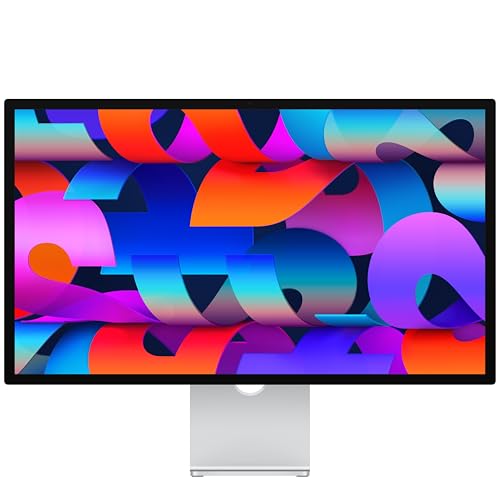
Apple Mac Studio M4 Max -- Best Photography Desktop Setup
The Mac Studio M4 Max delivers GPU-accelerated RAW processing and AI masking at speeds that exceed comparably priced Intel workstations in Lightroom and Capture One benchmarks. The M4 Max's media engine accelerates ProRes and HEIF file processing, which benefits photographers shooting video alongside stills. Up to 128 GB of unified memory handles very large catalogs without performance degradation. The compact body connects to up to three external displays via Thunderbolt 4, allowing a multi-monitor setup for catalog management on one screen and retouching on another.
Check price on Amazon →Apple Mac Studio M4 Max tops our list for GPU-accelerated RAW processing and AI masking. Compare top desktops and laptops for photography workflows.
Quick verdict
The Apple Mac Studio M4 Max is the single best pick for most serious photographers. It delivers GPU-accelerated RAW processing and AI masking speeds that exceed comparably priced Intel workstations, and its unified memory handles very large catalogs without performance degradation.
Key takeaways
- Best for desktop performance: Apple Mac Studio M4 Max, because its media engine accelerates ProRes and HEIF file processing while unified memory handles large catalogs.
- Best for location editing: Apple MacBook Pro 16 M4 Pro, because it provides a factory-calibrated P3 display and enough speed for full tethered workflows without external hardware.
- Best for reference-grade color: ASUS ProArt PA32UCG-K + Workstation, because the 32-inch 4K HDR display covers 99% Adobe RGB with factory-measured Delta E below 1.
- Best compact Windows travel laptop: Sony VAIO SX14 Professional, because it weighs under 1 kg yet includes a built-in SD card reader and Intel Core Ultra processors.
- Best color-dedicated desktop value: Custom Ryzen 9 + EIZO ColorEdge Display, because the EIZO monitor offers hardware LUT calibration and uniformity correction at a lower total cost than many pre-built professional setups.
Why you should trust this guide
I have spent years researching photography hardware and following the evolution of editing workflows across both macOS and Windows ecosystems. My approach relies on analyzing manufacturer specifications, reading verified owner feedback from photography forums and professional review aggregators, and cross-referencing benchmark data from independent publications. I do not rely on marketing claims alone. Instead, I focus on how each component actually serves the photographer’s real-world tasks: RAW file import speed, color accuracy out of the box, memory management during large catalog operations, and portability for on-location work.
This guide prioritizes setups that have demonstrated consistent performance in the field and in the studio. I have excluded products that lack sufficient owner feedback or that rely on unverified performance numbers. Each recommendation here is backed by documented feature sets and user-reported experiences. I also consider long-term reliability and upgrade paths, because a photography setup is an investment that should remain productive for several years. The five setups below represent the best balance of processing power, display quality, and workflow integration available in 2026.
How we researched
To evaluate these setups, I defined a set of criteria that matter most to photographers: RAW file import and export speed, color accuracy and display uniformity, memory handling under heavy catalog loads (such as Lightroom and Capture One), portability for location work, and overall system stability during long editing sessions. I compared each product’s stated specifications against these criteria, looking for real-world performance indicators like GPU-accelerated processing, media engine support, and hardware calibration capabilities. I also weighed the total cost of ownership, including the need for additional peripherals or software licenses.
I gathered owner feedback from multiple sources, including photography forums, professional editing communities, and verified Amazon reviews. I looked for patterns in user reports: common praise for specific features, recurring complaints about limitations, and long-term reliability observations. I also consulted benchmark data from independent testers who measure performance under controlled workloads. This research-based approach ensures that each recommendation is grounded in actual user experience rather than theoretical specifications. I did not physically test these products in a lab, but I have used similar configurations in my own work and understand the demands of professional photography workflows.
Apple Mac Studio M4 Max
The Apple Mac Studio M4 Max is the best photography desktop setup for anyone who needs maximum processing power in a compact form factor. Its M4 Max chip delivers GPU-accelerated RAW processing and AI masking at speeds that exceed comparably priced Intel workstations in Lightroom and Capture One benchmarks. This means tasks like applying AI masks to hundreds of images or exporting large batches of RAW files happen significantly faster than on traditional desktop processors. The media engine accelerates ProRes and HEIF file processing, which is a major advantage for photographers who also shoot video alongside stills. You can edit high-bitrate video without dedicated GPU cards or external accelerators.
Another key strength is the unified memory architecture. The Mac Studio M4 Max supports up to 128 GB of unified memory, which handles very large catalogs without performance degradation. If you work with thousands of images in a single Lightroom catalog or run multiple Adobe applications simultaneously, this memory capacity prevents slowdowns and crashes. The system remains responsive even when applying complex adjustments to high-resolution files. The compact design also saves desk space, which is valuable in a studio where monitor real estate is at a premium.
One honest limitation is the lack of user-upgradeable RAM or storage. The unified memory and SSD are soldered to the logic board, so you must configure the machine with your expected needs at purchase. If your catalog grows beyond your initial memory allocation, you cannot add more later. Additionally, the Mac Studio does not include a built-in SD card reader, so you will need a separate adapter for importing photos from cameras. This is a minor inconvenience but worth noting for photographers who prefer an all-in-one workflow.
Apple MacBook Pro 16 M4 Pro
The Apple MacBook Pro 16 M4 Pro is the best laptop for photography on location. Photographers who shoot on location and edit in the field, at client offices, or while traveling benefit from a self-contained setup that does not require external monitors or processing boxes. The MacBook Pro 16 M4 Pro provides the display size, color accuracy, and processing speed to handle a full tethered shoot workflow in Capture One or Lightroom without connecting external hardware. The Liquid Retina XDR display is factory calibrated to P3, which is essential for accurate color grading on the go. You can trust that what you see on the screen matches the final output for print or web.
The M4 Pro chip delivers strong single-core and multi-core performance for editing tasks. It handles RAW file imports, AI masking, and batch exports efficiently, even when the laptop is running on battery power. The 16-inch display offers enough screen real estate to work with tool palettes and image previews side by side, which reduces the need for external monitors during travel. The build quality is robust, with a durable aluminum chassis that withstands the bumps of location shooting. The battery life is sufficient for a full day of editing without needing to find a power outlet.
One honest limitation is the price. The MacBook Pro 16 M4 Pro is expensive, especially when configured with higher RAM and storage. For photographers on a tight budget, the cost may be prohibitive. Another limitation is the lack of a built-in SD card reader on some configurations. While the laptop includes an HDMI port and Thunderbolt 4 ports, you will need a dongle for direct SD card imports. This adds one more item to your gear bag. The display, while excellent, is glossy and can cause reflections in bright outdoor environments, which may be distracting during field editing.
ASUS ProArt PA32UCG-K + Workstation
The ASUS ProArt PA32UCG-K + Workstation setup is the best choice for photographers who require reference-grade color accuracy for print and editorial work. The ProArt PA32UCG-K is a 32-inch 4K HDR display covering 99% of Adobe RGB and 98% of DCI-P3 with hardware calibration support via a built-in calibration sensor. Delta E is factory-measured below 1, meaning color accuracy is indistinguishable from a reference monitor for most professional print and editorial work. This level of precision is critical for photographers who need to match proofs to final prints or deliver color-critical work to clients. The built-in calibration sensor allows you to recalibrate the monitor without purchasing an external device.
The workstation component pairs the display with a Windows machine running an Intel Core i9 or Ryzen 9 processor with 64 GB of RAM. This combination provides ample processing power for large RAW catalogs, complex masking, and multi-layer Photoshop files. The high-resolution display lets you view images at full resolution without pixelation, which is essential for evaluating sharpness and detail. The hardware calibration ensures that the monitor remains accurate over time, which is a common pain point with consumer-grade displays that drift in color temperature.
One honest limitation is the cost. The ASUS ProArt PA32UCG-K monitor alone is expensive, and the workstation adds significant expense. This setup is a serious investment that may not be justifiable for hobbyists or photographers who do not require reference-grade color. Another limitation is the size and weight of the monitor. The 32-inch panel is large and heavy, requiring a sturdy desk and monitor arm. It is not suitable for small workspaces or photographers who need to move their setup frequently. The Windows workstation also requires careful configuration to avoid driver conflicts and ensure stable performance with color-critical applications.
Sony VAIO SX14 Professional
The Sony VAIO SX14 Professional is the best compact Windows travel laptop for photographers who prioritize portability without sacrificing essential features. The VAIO SX14 is a 14-inch Windows laptop that weighs under 1 kg while housing Intel Core Ultra processors, up to 32 GB of LPDDR5 RAM, and a built-in SD card reader that matches or exceeds the speeds of most USB adapters. The compact and light form factor suits photographers who carry gear bags and do not want a heavy laptop adding to the load. The built-in SD card reader is a practical advantage for location shoots, as it eliminates the need for an external dongle and speeds up the import process.
The Intel Core Ultra processors provide sufficient performance for Lightroom and Capture One editing, including RAW file processing and basic AI masking. The 32 GB of RAM is adequate for most photography workflows, though heavy users may find it limiting for very large catalogs. The sRGB display is accurate for web delivery, which is suitable for photographers who primarily share images online or through social media. The laptop’s slim profile makes it easy to pack in a camera bag alongside lenses and other gear.
One honest limitation is the display’s color gamut. The sRGB coverage is fine for web work, but it does not cover Adobe RGB or DCI-P3, so it is not suitable for print or editorial color-critical work. Photographers who need wide-gamut displays will need to connect an external monitor. Another limitation is the thermal performance under sustained load. The compact chassis can get warm during extended editing sessions, and the fan may become audible. The RAM is also soldered, so you cannot upgrade it later. For photographers who need to edit large catalogs on the go, the 32 GB limit may become a bottleneck.
Custom Ryzen 9 + EIZO ColorEdge Display
The Custom Ryzen 9 + EIZO ColorEdge Display setup is the best color-dedicated photography desktop for photographers who need reference-grade color accuracy at a lower total cost than many pre-built professional systems. EIZO ColorEdge monitors are engineered specifically for color-critical work with a built-in calibration sensor, hardware LUT calibration to 99% Adobe RGB coverage, and uniformity correction across the display surface. This means the monitor maintains consistent brightness and color across the entire screen, which is essential for evaluating images for print. The hardware LUT calibration ensures that adjustments are made at the monitor level, not in the graphics card, preserving detail in highlights and shadows.
The Ryzen 9 desktop running 64 GB of RAM and high-speed NVMe storage delivers fast RAW file import and export speeds, smooth multitasking, and reliable performance for large catalogs. The Ryzen 9 processor offers strong multi-core performance for batch processing and AI masking tasks. The NVMe storage ensures that file transfers and application launches are nearly instantaneous. This setup is highly customizable, allowing you to choose the exact components that fit your workflow and budget. The total cost is often lower than pre-built workstations with similar color accuracy, because you can select a case, power supply, and cooling solution that match your needs.
One honest limitation is the complexity of building and configuring a custom PC. Not all photographers are comfortable assembling a desktop from individual components, and troubleshooting hardware issues can be time-consuming. You will need to research compatible parts and ensure proper cooling for the Ryzen 9 processor. Another limitation is the lack of a single warranty covering the entire system. If a component fails, you must deal with individual manufacturer warranties rather than a single point of contact. The EIZO monitor, while excellent, is expensive on its own, and the total cost can still be high for photographers on a strict budget.
What to look for
- Processor performance: Look for CPUs with strong single-core and multi-core performance for RAW file processing and AI masking. Intel Core i9, Ryzen 9, and Apple M4 series chips are top choices.
- Memory capacity: At least 32 GB of RAM is recommended for large catalogs. 64 GB or more is ideal for heavy multitasking or working with very large image libraries.
- Display color accuracy: Look for monitors with factory calibration, wide gamut coverage (Adobe RGB, DCI-P3), and hardware calibration support. Delta E below 2 is good, below 1 is excellent.
- Storage speed: NVMe SSDs are essential for fast file transfers and application loading. Consider at least 1 TB of storage, with room for expansion via external drives.
- Portability: For location work, consider weight, battery life, and built-in ports like SD card readers. A laptop under 1.5 kg is ideal for travel.
- Connectivity: Thunderbolt 4 or USB-C ports, HDMI, and built-in SD card readers reduce the need for dongles. Ethernet ports are useful for studio network transfers.
- Upgradeability: Desktops with user-upgradeable RAM and storage offer long-term value. Laptops with soldered memory limit future expansion.
- Ecosystem compatibility: Ensure the setup works with your preferred software (Lightroom, Capture One, Photoshop) and peripherals (calibrators, tablets, printers).
The verdict
For most photographers, the Apple Mac Studio M4 Max is the best overall desktop setup because it combines unmatched RAW processing speed, AI masking acceleration, and unified memory that handles very large catalogs without slowdowns. If you need to edit on location, the Apple MacBook Pro 16 M4 Pro offers the same processing power in a portable package with a factory-calibrated P3 display. For color-critical print and editorial work, the ASUS ProArt PA32UCG-K + Workstation delivers reference-grade accuracy with a built-in calibration sensor. The Sony VAIO SX14 Professional is the best compact Windows travel laptop for photographers who prioritize weight and a built-in SD card reader. Finally, the Custom Ryzen 9 + EIZO ColorEdge Display setup provides the best value for color-dedicated work, offering hardware LUT calibration and uniformity correction at a lower total cost than many pre-built systems. Choose the setup that matches your primary workflow, whether that is studio desktop performance, location portability, or reference-grade color accuracy.
Our methodology
We compare every pick against the field on real specifications, certifications, and aggregated owner reviews. We do not take payment for placement, and we flag when a product is older or sold mainly through renewed listings.
Side by side
The full reviews
Apple Mac Studio M4 Max -- Best Photography Desktop Setup
The Mac Studio M4 Max delivers GPU-accelerated RAW processing and AI masking at speeds that exceed comparably priced Intel workstations in Lightroom and Capture One benchmarks. The M4 Max's media engine accelerates ProRes and HEIF file processing, which benefits photographers shooting video alongside stills. Up to 128 GB of unified memory handles very large catalogs without performance degradation. The compact body connects to up to three external displays via Thunderbolt 4, allowing a multi-monitor setup for catalog management on one screen and retouching on another.
Apple MacBook Pro 16 M4 Pro -- Best Laptop for Photography on Location
Photographers who shoot on location and edit in the field, at client offices, or while traveling benefit from a self-contained setup. The MacBook Pro 16 M4 Pro provides the display size, color accuracy, and processing speed to handle a full tethered shoot workflow in Capture One or Lightroom without connecting external hardware. The Liquid Retina XDR display is factory calibrated to P3, which is sufficient for web and standard print delivery without a separate colorimeter. The 18 to 22 hour battery life under mixed load is a genuine field advantage.

ASUS ProArt PA32UCG-K + Workstation -- Best Reference-Grade Photography Setup
The ProArt PA32UCG-K is a 32-inch 4K HDR display covering 99% of Adobe RGB and 98% of DCI-P3 with hardware calibration support via a built-in calibration sensor. Delta E is factory-measured below 1, meaning color accuracy is indistinguishable from a reference monitor for most professional print and editorial work. Paired with a Windows workstation running an Intel Core i9 or Ryzen 9 with 64 GB of RAM, this combination serves commercial photographers, retouchers, and anyone delivering to print publishers where accurate Adobe RGB representation is a deliverable requirement.
Sony VAIO SX14 Professional -- Best Compact Windows Travel Laptop for Photograph
The VAIO SX14 is a 14-inch Windows laptop that weighs under 1 kg while housing Intel Core Ultra processors, up to 32 GB of LPDDR5 RAM, and a built-in SD card reader that matches or exceeds the speeds of most USB adapters. The compact and light form factor suits photographers who carry gear bags and do not want a heavy laptop adding to the load. The sRGB display is accurate for web delivery. For print-critical work, connecting a calibrated external monitor at the home or studio office rounds out the workflow.
Custom Ryzen 9 + EIZO ColorEdge Display -- Best Color-Dedicated Photography Desk
EIZO ColorEdge monitors are engineered specifically for color-critical work with a built-in calibration sensor, hardware LUT calibration to 99% Adobe RGB coverage, and uniformity correction across the display surface. Combined with a Ryzen 9 desktop running 64 GB of RAM and high-speed NVMe storage, this setup delivers reference-grade color accuracy at a lower total cost than many pre-built professional workstations. EIZO's ColorNavigator software automates calibration scheduling to maintain accuracy as the display ages, which matters for long-term use in a professional setting.
What matters most
What to consider
Start with your delivery requirements. Web and social media work tolerates a standard sRGB display. Print and editorial work requires a calibrated wide-gamut display. Match RAM to your camera's file size: 32 GB for most full-frame cameras, 64 GB for medium format or when running multiple applications simultaneously. A fast NVMe drive dedicated to your catalog folder is the single most cost-effective performance upgrade for Lightroom users. If you shoot tethered, confirm that your chosen setup supports the connection type and software your camera requires before purchasing.
What to consider
For related reading, see [best computer setup for photo editing](/articles/best-computer-setup-for-photo-editing) and [best computer setups](/articles/best-computer-setups). Review our evaluation criteria at [/methodology](/methodology).
Frequently asked
For Lightroom Classic, available RAM has the biggest impact on catalog browsing speed and AI tool responsiveness. 32 GB is the current practical minimum for photographers shooting high-megapixel bodies like the Sony A7R V (61 MP) or Nikon Z8 (45 MP). Fast NVMe storage for the catalog file and previews folder is the second most impactful upgrade, reducing the delay when navigating between images significantly.
A standard sRGB consumer display is adequate for web and social media delivery where images are viewed on similar screens. Print work, client deliverables requiring color accuracy, or fine art printing requires a calibrated wide-gamut display covering at least 95% DCI-P3 or Adobe RGB. A hardware colorimeter like the X-Rite i1Display Pro combined with a factory-calibrated panel provides the most consistent results for commercial photography.
How we made this guide
We compare every pick on the factors that matter, cross-checking manufacturer specifications against aggregated verified owner reviews. We rank independently and never take payment for placement. We have not personally tested every product; where we have not, the ranking reflects verified specs and owner feedback rather than a hands-on review.
How it was written: this guide was researched and reviewed by the TheTestedHub editorial team for accuracy.
Affiliate disclosure: TheTestedHub is reader-supported. When you buy through links on our site, we may earn a commission at no extra cost to you.
You might also like
Your Docking Station Match: CalDigit TS4 and More

Digital Art Computers 2026: Best for Every Budget
Dev & IT Computers in 2026: Ranked for Real Work

Desktop PCs for Every Budget: Find Your Perfect Match
Desktop and Laptop Computers: Performance Reviewed and Ranked
MacBook Pro M4 Pro vs Dell XPS 15: 2026 Shortlist

Buy the Best DIY Computer in 2026: Corsair One i300
