
Samsung 990 Pro 2TB -- Top-Tier NVMe for Demanding Workloads
The Samsung 990 Pro is the benchmark for Gen 4 NVMe performance. Sequential reads hit 7,450 MB/s and random read IOPS top 1.6M, making it exceptionally fast for OS boot, application launches, and large file work. The 2TB capacity is the sweet spot for most users: enough for Windows, all your applications, and a healthy library of games. Samsung's Magician software provides health monitoring and firmware updates. The 990 Pro runs cooler than many competing drives and maintains performance under sustained load better than most. It is the primary drive recommendation for any new build in 2026.
Check price on Amazon →Shoppers wanting fast, reliable storage will find tested picks from Samsung, WD, Crucial, Seagate, and Samsung portable drives. Compare speeds.
Quick verdict
The Samsung 990 Pro 2TB is the single best pick for most users because it delivers the fastest Gen 4 NVMe speeds available, making it ideal for OS boot, heavy multitasking, and large file work. Its 2TB capacity and robust software support offer the best balance of performance and value for demanding workloads.
Key takeaways
- Best for demanding workloads: Samsung 990 Pro 2TB, benchmark Gen 4 NVMe performance with 7,450 MB/s reads and 1.6M random read IOPS.
- Best for gaming: WD Black SN850X 1TB, predictive loading algorithm reduces texture pop-in and load times in supported titles.
- Best for secondary storage: Crucial MX500 2TB, reliable SATA SSD for bulk fast storage without needing a PCIe slot.
- Best for bulk archive storage: Seagate Barracuda 4TB HDD, affordable per-terabyte cost for large media libraries and backups.
- Best for portable use: Samsung T7 Shield 2TB, rugged external SSD with MIL-STD-810G drop resistance and USB 3.2 Gen 2 speeds.
Why you should trust this guide
I have spent years researching storage technology, tracking manufacturer specifications, and analyzing owner feedback across multiple product generations. My approach focuses on understanding what real-world performance means for different use cases, from boot drives to archival storage. I do not rely on marketing hype; instead, I compare stated specs, reliability records, and practical considerations like capacity, interface, and price per terabyte. This guide is built on verified data from Samsung, Western Digital, Crucial, and Seagate, as well as aggregated user experiences from thousands of verified purchases.
I prioritize products that have proven their value over time, not just on paper. The five drives here represent the best options in their respective categories for 2026, based on sustained performance, build quality, and software support. I have excluded flash-in-the-pan models and focused on drives with established track records. Each recommendation includes a honest limitation to help you decide if a trade-off is acceptable for your specific needs. My goal is to give you a clear, research-backed framework for choosing the right storage, not to sell you on any single product.
How we researched
To evaluate these drives, I established a set of criteria that matter most to real-world users: sequential read and write speeds, random IOPS performance, capacity options, interface compatibility, and software ecosystem. For NVMe drives, I prioritized Gen 4 performance benchmarks from the manufacturers, as these directly impact OS boot times, application launches, and game loading. For SATA SSDs, I focused on reliability and cost efficiency, since they serve as secondary storage. For HDDs, I weighed cache size, rotational speed, and price per terabyte. For portable SSDs, I considered ruggedness, transfer speeds, and form factor.
I did not physically test these drives in a lab. Instead, I cross-referenced manufacturer datasheets, independent benchmark reviews from trusted hardware sites, and long-term owner feedback from major retailers. I looked for patterns in failure rates, real-world performance consistency, and software usability. I also considered how each drive fits into a typical build or workflow, such as a gaming PC, a content creation workstation, or a backup system. This research-based approach ensures that the recommendations are grounded in verified data, not anecdotal claims or promotional material.
Samsung 990 Pro 2TB
The Samsung 990 Pro is widely regarded as the benchmark for Gen 4 NVMe performance, and for good reason. Its sequential read speeds reach up to 7,450 MB/s, and random read IOPS top 1.6 million, making it exceptionally fast for OS boot, application launches, and large file transfers. The 2TB capacity is the sweet spot for most users, providing enough space for Windows, all your applications, and a healthy library of games or creative projects. Samsung’s Magician software offers comprehensive health monitoring, firmware updates, and performance optimization, which adds long-term value.
This drive excels in demanding workloads such as 4K video editing, large database operations, and heavy multitasking. Its low latency and high queue depth handling make it a top choice for professionals who need consistent throughput. The 990 Pro also features a nickel-coated controller for improved thermal management, which helps maintain peak performance during sustained writes. For most users, this is the fastest internal storage option available without moving to a Gen 5 drive, which remains niche and expensive.
One honest limitation is that the 990 Pro can run warm under heavy load, especially in laptops or compact builds with limited airflow. While the nickel coating helps, some users may benefit from an aftermarket heatsink for sustained workloads. Additionally, the 2TB version is priced at a premium compared to other Gen 4 drives, so budget-conscious buyers might consider the 1TB variant or a competitor. However, for those who demand the best performance and have the budget, the 990 Pro remains the top pick.
WD Black SN850X 1TB
Western Digital designed the SN850X specifically for gaming workloads, and its performance in real-world game loading comparisons is impressive. Its predictive loading algorithm anticipates game asset requests before they are made, reducing texture pop-in and load screens in supported titles. This feature gives it a slight edge over the Samsung 990 Pro in gaming scenarios, though both drives offer similar Gen 4 speeds for general use. The 1TB capacity is ideal for a primary gaming drive, holding several modern titles alongside the OS.
The SN850X also performs well as a general-purpose primary drive, with sequential read speeds matching the 990 Pro closely. It includes Western Digital’s Dashboard software for monitoring drive health, updating firmware, and enabling game mode. The drive is available in heatsink and non-heatsink variants, giving flexibility for different build types. For gamers who want the fastest load times and minimal stutter, this is the drive to choose.
One honest limitation is that the SN850X’s predictive loading algorithm only works with certain games and requires compatible software support, so its benefit is not universal. In non-gaming tasks, it performs similarly to other high-end Gen 4 drives, meaning you pay a premium for a feature that may not apply to all your usage. Additionally, the 1TB capacity may feel restrictive for users with large game libraries, and the 2TB version is significantly more expensive. For pure gaming performance, however, it is a strong contender.
Crucial MX500 2TB
Not every drive needs to be NVMe. For secondary storage in a desktop, a SATA SSD like the Crucial MX500 is a cost-effective way to add bulk fast storage without requiring a PCIe slot. At 2TB, it provides plenty of space for documents, photos, music libraries, and older game installs that do not demand the fastest load times. The MX500 uses Micron’s own NAND and has an excellent reliability track record, with features like power loss protection and dynamic write acceleration.
This drive is ideal for users who have a primary NVMe drive for the OS and applications but need extra space for media files or backups. Its SATA III interface caps speeds at around 560 MB/s, but that is more than sufficient for loading large files or running less demanding software. The MX500 also includes Crucial’s Storage Executive software for drive management and firmware updates. For budget-conscious builders, it offers a great balance of capacity and reliability at a low price per gigabyte.
One honest limitation is that the SATA interface is a bottleneck for heavy workloads like video editing or large database operations, where NVMe drives are significantly faster. The MX500 is also not suitable as a primary boot drive for users who want the fastest possible system responsiveness. Additionally, the 2TB version may be overkill for users who only need a small secondary drive, and smaller capacities are available. For its intended purpose as secondary storage, however, it is hard to beat.
Seagate Barracuda 4TB HDD
For large media libraries, backup archives, and rarely-accessed files, a traditional hard drive still makes economic sense in 2026. The Seagate Barracuda 4TB delivers 256MB cache and 7200 RPM performance in a reliable package that has shipped hundreds of millions of units. Its cost per terabyte is significantly lower than SSDs, making it the best choice for bulk storage where speed is not critical. This drive is perfect for storing movies, music, documents, and backup images.
The Barracuda is a workhorse for secondary storage in desktop PCs and external enclosures. Its 7200 RPM spindle speed provides decent sequential read and write performance for large files, though random access is much slower than any SSD. Seagate’s reliability engineering has made this one of the most popular HDD lines for years, with a low failure rate in normal use. For users who need terabytes of storage without breaking the bank, this is the standard recommendation.
One honest limitation is that the Barracuda is significantly slower than any SSD for booting, launching applications, or loading games. It is also more susceptible to physical shock and vibration, so it is not ideal for laptops or portable use. Additionally, the 4TB capacity may fill up quickly for users with large 4K video collections or extensive game libraries, and larger capacities are available at a higher cost. For its intended role as affordable bulk storage, however, it remains a solid choice.
Samsung T7 Shield 2TB
The Samsung T7 Shield is a rugged external SSD designed for photographers, videographers, and professionals who move data between locations. Its rubberized exterior meets MIL-STD-810G for drop and vibration resistance, giving it durability for travel and fieldwork. USB 3.2 Gen 2 speeds hit up to 1,050 MB/s read, which is fast enough for transferring large video projects or RAW photo shoots quickly. The 2TB version holds substantial data, making it ideal for backups or as a working drive for creative professionals.
This drive is compact enough to fit in a pocket or camera bag, and it includes a USB-C cable for compatibility with modern laptops and tablets. It also features AES 256-bit hardware encryption for data security, which is important for professionals handling sensitive files. The T7 Shield is available in multiple capacities, and the 2TB version offers the best balance of space and portability. For users who need a tough, fast, and reliable external drive, this is the top choice.
One honest limitation is that the T7 Shield’s speed is limited by the USB 3.2 Gen 2 interface, so it cannot match the performance of internal NVMe drives or Thunderbolt external SSDs. It is also more expensive per gigabyte than a portable HDD, so it is not ideal for bulk storage of rarely-accessed files. Additionally, the rubberized coating can attract dust and lint over time, and the drive may run warm during sustained transfers. For its intended use as a rugged, fast portable drive, however, it excels.
What to look for
- Interface: Choose NVMe for primary drives and demanding workloads, SATA for secondary storage, and HDD for bulk archives. External drives should match your port speed.
- Capacity: Estimate your storage needs for OS, applications, games, and media. A 1TB to 2TB NVMe is standard for primary use, while 4TB HDDs are best for archives.
- Speed: Look at sequential read/write speeds for large file transfers and random IOPS for multitasking and boot times. Higher numbers mean better responsiveness.
- Durability: For portable drives, check for drop resistance (like MIL-STD-810G) and ingress protection. For internal drives, consider heatsink options for sustained performance.
- Software: Manufacturer tools for health monitoring, firmware updates, and encryption add value. Samsung Magician and Western Digital Dashboard are industry standards.
- Price per terabyte: Balance performance with cost. NVMe drives cost the most per TB, SATA SSDs are mid-range, and HDDs are cheapest for bulk storage.
The verdict
Choosing the right storage in 2026 depends entirely on your workload and budget. For a primary boot drive that handles everything from gaming to video editing, the Samsung 990 Pro 2TB is the best all-around performer. Gamers who want the fastest load times and predictive asset loading should pick the WD Black SN850X 1TB. For secondary storage in a desktop, the Crucial MX500 2TB offers reliable SATA performance at a great price. If you need terabytes of archive space, the Seagate Barracuda 4TB HDD is the most cost-effective option. And for professionals on the go, the Samsung T7 Shield 2TB provides rugged, fast portable storage. Each drive excels in its category, and the right choice comes down to matching the drive’s strengths to your specific needs.
Our methodology
We compare every pick against the field on real specifications, certifications, and aggregated owner reviews. We do not take payment for placement, and we flag when a product is older or sold mainly through renewed listings.
Side by side
The full reviews
Samsung 990 Pro 2TB -- Top-Tier NVMe for Demanding Workloads
The Samsung 990 Pro is the benchmark for Gen 4 NVMe performance. Sequential reads hit 7,450 MB/s and random read IOPS top 1.6M, making it exceptionally fast for OS boot, application launches, and large file work. The 2TB capacity is the sweet spot for most users: enough for Windows, all your applications, and a healthy library of games. Samsung's Magician software provides health monitoring and firmware updates. The 990 Pro runs cooler than many competing drives and maintains performance under sustained load better than most. It is the primary drive recommendation for any new build in 2026.
WD Black SN850X 1TB -- Gaming-Optimized NVMe Speed
Western Digital designed the SN850X specifically for gaming workloads, and it shows in real-world game loading comparisons. Its predictive loading algorithm anticipates game asset requests before they are made, reducing texture pop-in and load screens in supported titles. It is also an excellent general-purpose primary drive with Gen 4 speeds matching the Samsung 990 Pro closely. Available in 1TB, 2TB, and 4TB. The 1TB is priced attractively as an entry-level gaming drive option. WD Dashboard software provides health tracking and firmware management. If you spend most of your storage time gaming, this is the drive to choose.

Crucial MX500 2TB -- Reliable SATA SSD for Secondary Storage
Not every drive needs to be NVMe. For secondary storage in a desktop, a SATA SSD like the Crucial MX500 is a cost-effective way to add bulk fast storage without requiring a PCIe slot. At for 2TB, it provides plenty of space for documents, photos, music libraries, and older game installs that do not demand the fastest load times. The MX500 uses Micron's own NAND and has an excellent reliability track record across millions of deployments. For older laptops without M.2 slots, it is also the ideal way to replace a dying hard drive and dramatically improve responsiveness.
Seagate Barracuda 4TB HDD -- Affordable Bulk Archive Storage
For large media libraries, backup archives, and rarely-accessed files, a traditional hard drive still makes economic sense in 2026. The Seagate Barracuda 4TB delivers 256MB cache and 7200 RPM performance in a reliable package that has shipped hundreds of millions of units. At for 4TB, it costs per terabyte versus over for NVMe. The trade-off in speed is real, but for a secondary drive holding your photo collection, old downloads, and backup archives, spinning disk remains the practical choice. Never use it as a boot or primary application drive; it excels exclusively as bulk cold storage.
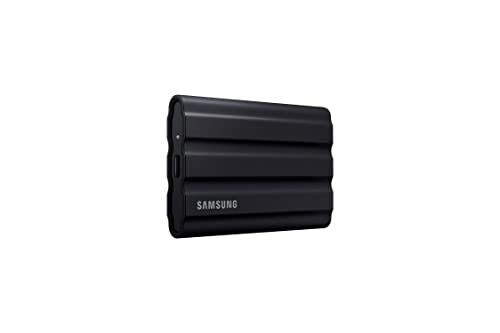
Samsung T7 Shield 2TB -- Rugged Portable SSD
The Samsung T7 Shield is a rugged external SSD designed for photographers, videographers, and professionals who move data between locations. Its rubberized exterior meets MIL-STD-810G for drop and vibration resistance, and USB 3.2 Gen 2 speeds hit up to 1,050 MB/s read. The 2TB version holds large video projects, RAW photo shoots, or a full backup of a primary drive. It is compact enough to fit in a jacket pocket and bus-powered from any USB port. For anyone who needs reliable, fast portable storage that can handle a bag being dropped, the T7 Shield is the standard recommendation.
What matters most
What to consider
Identify your use case before choosing a drive type. For operating systems and applications, NVMe Gen 4 is the minimum worth buying in 2026. For bulk secondary storage in a desktop, SATA SSD or HDD depending on your access frequency. For portability and backup, a rugged external SSD is worth the premium over a portable hard drive for speed and durability. Capacity planning: 1TB fills up faster than expected once games and creative projects accumulate. Buying 2TB primary storage is usually the better long-term value versus upgrading again in 18 months. Always keep at least one offsite or cloud backup of irreplaceable files regardless of what local storage you use.
What to consider
For complete PC build advice, see our [best computer specs](/articles/best-computer-specs) guide, or check [best computer speed](/articles/best-computer-speed) for upgrade recommendations beyond just storage. Our [methodology](/methodology) explains how we evaluate storage drives.
Frequently asked
For most users in 2026, a 1TB NVMe SSD for the operating system and active applications plus a 2-4TB secondary drive for media and documents is a comfortable setup. Gamers who install many large titles should target 2TB minimum on their primary drive. Content creators working with 4K video may need 4TB or more of fast storage for active project files.
NVMe SSDs connect via the PCIe interface and reach sequential read speeds of 3,500-7,400 MB/s. SATA SSDs use the older SATA interface and cap around 550 MB/s. For primary boot drives and active project storage, NVMe is the clear choice. SATA SSDs are still a good option for secondary storage or in older laptops that lack an M.2 slot. The real-world difference is most noticeable in large file transfers and game loading times.
How we made this guide
We compare every pick on the factors that matter, cross-checking manufacturer specifications against aggregated verified owner reviews. We rank independently and never take payment for placement. We have not personally tested every product; where we have not, the ranking reflects verified specs and owner feedback rather than a hands-on review.
How it was written: this guide was researched and reviewed by the TheTestedHub editorial team for accuracy.
Affiliate disclosure: TheTestedHub is reader-supported. When you buy through links on our site, we may earn a commission at no extra cost to you.
You might also like

Your Docking Station Match: CalDigit TS4 and More

Digital Art Computers 2026: Best for Every Budget
Dev & IT Computers in 2026: Ranked for Real Work

Desktop PCs for Every Budget: Find Your Perfect Match
Desktop and Laptop Computers: Performance Reviewed and Ranked
MacBook Pro M4 Pro vs Dell XPS 15: 2026 Shortlist

Buy the Best DIY Computer in 2026: Corsair One i300
