
Logitech Brio 500 -- Best Overall Webcam for Video Calls
Logitech Brio 500 is the most consistently recommended webcam for professionals who want a reliable, no-configuration-needed improvement over built-in cameras. It produces excellent 1080p image quality in typical office lighting, uses Show Mode to automatically optimize framing when you lean in close, and includes a built-in privacy shutter. The autofocus is hardware-based and tracks movement quickly without hunting. It connects via USB-C, works across Windows, macOS, and ChromeOS without drivers, and is compact enough to clip to a laptop screen or thin monitor bezel. A practical pick for anyone upgrading from a laptop webcam.
Upgrading your video calls or stream? We compared top computer webcams including Logitech, Elgato, and Razer based on real specs and user feedback.
Quick verdict
The Logitech Brio 500 is the best overall webcam for most people. It delivers excellent 1080p image quality, reliable autofocus, and a privacy shutter in a simple package that works instantly for video calls without software tweaks.
Key takeaways
- Best for video calls: Logitech Brio 500, offers consistent 1080p quality with automatic light correction and framing.
- Best for streaming and recording: Elgato Facecam Pro, captures 4K at 60fps with full manual control and a Sony STARVIS sensor.
- Best for vertical content: Logitech StreamCam, rotates 90 degrees for native portrait mode and shoots 1080p at 60fps.
- Best for low-light conditions: Razer Kiyo Pro Ultra, uses a large Sony STARVIS 2 sensor for clean images in dim rooms.
- Best budget pick: Anker PowerConf C300, delivers 1080p at 60fps with AI framing and a three-lens autofocus system at a lower price.
Why you should trust this guide
I have spent years researching and writing about computer accessories, including webcams, for a living. I track the specifications that actually matter for real-world use: sensor size, autofocus speed, field of view, microphone quality, and software support. I also read through many verified owner reviews to understand how these products perform over time, not just on launch day.
For this guide, I compared the five most popular webcams across multiple price points and use cases. I focused on the features that directly affect your video quality and ease of use: low-light performance, autofocus reliability, frame rate options, and whether the webcam works well with common video call and streaming software. I did not test these products myself, but I evaluated them based on their stated specifications, manufacturer claims, and aggregate owner feedback from major retailers.
How we researched
I evaluated each webcam based on five criteria that matter most for work and streaming. First, image quality in typical lighting conditions, including well-lit rooms and dimmer home offices. Second, autofocus performance, whether it locks on quickly and tracks movement without hunting. Third, software and ease of use, including whether the webcam works plug-and-play or requires driver installation. Fourth, microphone quality for office calls and streaming. Fifth, build quality and included accessories like mounts, cables, and privacy shutters.
I also considered the webcam’s compatibility with popular platforms like Zoom, Microsoft Teams, OBS Studio, and streaming services. I weighed the value each product offers at its price point, comparing it against the competition in the same category. The goal was to identify which webcam is best for a specific scenario, not to declare one winner for everyone. Each product section below explains the strengths and one honest limitation based on this research.
Logitech Brio 500
The Logitech Brio 500 is the most consistently recommended webcam for professionals who want a reliable, no-configuration-needed improvement over built-in cameras. It produces excellent 1080p image quality in typical office lighting, using RightLight 4 technology to automatically adjust exposure and color balance so you look natural even if your room has mixed light sources. The hardware-based autofocus tracks movement quickly, so you stay sharp whether you lean in to share a document or lean back in your chair. The built-in privacy shutter is a simple mechanical slide that covers the lens when not in use, giving you peace of mind without needing a separate cover.
A standout feature is Show Mode, which automatically optimizes framing when you lean in close to present an object on your desk. This is useful for showing a physical document, a product, or a sketch during a video call. The webcam is also compatible with the Nintendo Switch 2 console, broadening its use beyond PC video calls. The image quality is full HD 1080p, which is sufficient for most professional meetings and streaming needs. The auto-framing feature, called RightSight, centers the camera on you and adjusts as you move, which is helpful for presentations or when you stand up during a call.
One limitation is that the Brio 500 does not support 4K resolution, so it is not the best choice if you need ultra-high detail for recording or streaming. The 1080p output is excellent for its class, but videographers or streamers who want 4K should look at the Elgato Facecam Pro or Razer Kiyo Pro Ultra. Also, the microphone is adequate for quiet offices but may pick up background noise in busier environments, so a dedicated headset or external mic is recommended for critical calls.
Elgato Facecam Pro
The Elgato Facecam Pro captures 4K at 60fps using a Sony STARVIS sensor that performs well in varied lighting conditions. This is a significant step up from typical 1080p webcams, providing smooth motion and detailed video that is ideal for streaming and recording. Unlike many webcams that apply aggressive sharpening and auto-color correction, the Facecam Pro gives creators full manual control over shutter speed, ISO, white balance, and focus through Elgato’s Camera Hub software. This allows you to dial in the exact look you want, whether you are streaming games, recording tutorials, or hosting a professional webinar.
The HDR-enabled mode at 1080p30 helps overcome high-contrast lighting situations, such as when you have a bright window behind you. The built-in privacy shutter is an easy-slide design that covers the lens when not in use. The video output is uncompressed, which means lower latency and better detail compared to webcams that compress the signal. The Camera Hub software also lets you save custom presets, so you can switch between different lighting setups quickly. The all-glass lens and metal body give it a premium feel that matches its professional target audience.
A limitation is that the Facecam Pro requires the Camera Hub software for full control, and some users find the software interface less intuitive than simpler webcams. Also, the 4K at 60fps mode demands a powerful computer and a USB 3.0 port, so older laptops may struggle to handle the data bandwidth. The webcam is also larger and heavier than most competitors, which may be an issue if you need to mount it on a thin laptop lid or a small monitor arm.
Logitech StreamCam
The Logitech StreamCam is unique in that its USB-C mount rotates 90 degrees, allowing native portrait mode shooting for short-form vertical content on TikTok and Instagram Reels as well as standard landscape calls. This makes it a versatile tool for content creators who produce both horizontal and vertical videos without needing to crop or rotate footage in post-production. It shoots 1080p at 60fps with AI face-tracking that keeps your face centered as you move, which is useful for dynamic streams or presentations where you are not stationary.
The premium glass lens with smart autofocus captures vibrant, true-to-life image quality with accurate color reproduction. The dual-microphone array picks up your voice clearly in quiet rooms, and the auto-framing feature keeps you in the center of the shot even as you move left or right. The StreamCam is optimized for popular live streaming software like OBS Studio, Twitch, and YouTube, so it works seamlessly with your existing setup. It is also compatible with the Nintendo Switch 2’s new GameChat mode, adding another use case for gamers who want to chat while playing.
One limitation is that the StreamCam’s image quality in moderate indoor light is acceptable but not outstanding compared to the Elgato Facecam Pro or Razer Kiyo Pro Ultra. The 1080p resolution is fine for most streaming, but if you need 4K, this is not the right choice. Also, the USB-C mount is proprietary, so you cannot easily replace the cable if it gets damaged, and the webcam does not include a privacy shutter, which may be a concern for users who want physical lens coverage.
Razer Kiyo Pro Ultra
The Razer Kiyo Pro Ultra uses a large 1/1.2-inch Sony STARVIS 2 sensor, significantly larger than competitors, which collects more light and produces cleaner images in dim rooms. This makes it the strongest choice for home offices with inconsistent or poor lighting. The larger sensor with a 2.9 micron pixel size captures more detail and reduces noise, so you look clear even when the room is not perfectly lit. It supports 4K at 24fps or 1080p at 60fps, giving you flexibility depending on your needs. The hardware autofocus with subject tracking keeps you sharp as you move.
The AI-powered video imaging automatically adjusts exposure and white balance to keep you well-lit and sharp. The lens can artfully blur the background while keeping clear focus on you, creating a portrait mode-like quality that separates you from a messy room. HDR technology at 30fps adds more visual detail and texture by balancing highlights and shadows, which is useful in high-contrast scenes. The Synapse software allows HDR control and custom settings, so you can fine-tune the image to your preference. The webcam also includes a built-in privacy shutter.
One limitation is that the 4K mode is limited to 24fps, which can look slightly choppy for fast-moving content like gaming streams. For 60fps, you must drop to 1080p resolution. Also, the Razer Synapse software is required for full control, and some users find it bloated compared to simpler alternatives. The webcam is also relatively large and heavy, and its aggressive background blur effect can sometimes look artificial if not configured carefully.
Anker PowerConf C300
The Anker PowerConf C300 delivers 1080p at 60fps with a three-lens autofocus system at a price point well below premium competitors. This makes it an excellent budget option for daily meetings, remote work, and casual streaming. The AI framing mode automatically adjusts to keep you centered, so you do not need to manually reposition the camera if you move around. The noise-reduction microphones handle typical office ambient sound adequately, picking up your voice clearly while reducing background hums and clicks.
The webcam connects via USB-C with a standard USB-A adapter included, ensuring wide compatibility with older laptops and desktops. It requires no software installation for basic use, so you can plug it in and join a meeting immediately. The smart voice enhancement feature eliminates background noise while simultaneously enhancing voices, which is useful for open-plan offices or home environments with pets or kids. The 360-degree voice coverage is a notable feature, but it applies to the PowerConf speakerphone system, not the webcam itself. The C300 focuses on video, with the microphone being a secondary feature.
One limitation is that the Anker PowerConf C300’s image quality in low light is not as good as the Razer Kiyo Pro Ultra or Elgato Facecam Pro. The three-lens autofocus system works well in good lighting but can struggle in dimmer rooms, occasionally hunting for focus. Also, the webcam does not include a privacy shutter, so you need to buy a separate cover if you want physical lens protection. The build quality is plastic and feels less premium than the metal-bodied competitors, but that is expected at this price point.
What to look for
- Resolution and frame rate: 1080p at 60fps is the standard for smooth video. 4K is useful for high-detail recording but requires more processing power.
- Sensor size and low-light performance: Larger sensors like Sony STARVIS collect more light, producing cleaner images in dim rooms. Check the sensor size if you work in a home office with variable lighting.
- Autofocus type: Hardware-based autofocus is faster and more reliable than software-based systems. Look for webcams that track movement without hunting.
- Field of view: A wider field of view (around 90 degrees) is good for group calls or showing your desk. A narrower field (around 65 degrees) is better for solo close-up shots.
- Microphone quality: Built-in microphones are adequate for quiet rooms, but a dedicated headset or external mic is better for noisy environments or professional streaming.
- Privacy shutter: A built-in mechanical shutter gives you physical control over when the camera is active. Some webcams omit this, requiring a separate cover.
- Software and customization: Some webcams require software for manual controls like white balance and exposure. Others work plug-and-play with no software needed.
- Mount and cable: Check if the webcam includes a monitor mount, tripod thread, or flexible cable. Some mounts are proprietary and cannot be replaced easily.
The verdict
For most people, the Logitech Brio 500 is the best pick because it delivers excellent 1080p video quality, reliable autofocus, and a privacy shutter in a simple package that works out of the box for video calls. If you stream or record content and need manual control, the Elgato Facecam Pro offers 4K at 60fps with full customization. For vertical content creators, the Logitech StreamCam’s rotating mount is a unique advantage. The Razer Kiyo Pro Ultra is the best choice for low-light environments thanks to its large sensor. And for budget-conscious buyers, the Anker PowerConf C300 provides good 1080p performance at a lower price. Choose based on your primary use case and lighting conditions.
How we evaluated these
We compare every pick against the field on real specifications, certifications, and aggregated owner reviews. We do not take payment for placement, and we flag when a product is older or sold mainly through renewed listings.
The shortlist
Each pick, examined
Logitech Brio 500 -- Best Overall Webcam for Video Calls
Logitech Brio 500 is the most consistently recommended webcam for professionals who want a reliable, no-configuration-needed improvement over built-in cameras. It produces excellent 1080p image quality in typical office lighting, uses Show Mode to automatically optimize framing when you lean in close, and includes a built-in privacy shutter. The autofocus is hardware-based and tracks movement quickly without hunting. It connects via USB-C, works across Windows, macOS, and ChromeOS without drivers, and is compact enough to clip to a laptop screen or thin monitor bezel. A practical pick for anyone upgrading from a laptop webcam.
Strengths
- Compatible with Nintendo Switch 2 Console
- Advanced Image Quality: Full HD 1080p webcam resolution provides outstanding image quality
- Auto Light Correction (RightLight 4): RightLight 4 video lighting technology automatically
- Auto-Framing (RightSight): Auto-framing (1)(3) centers the video camera on you, allowing y
- Show Mode: Present your work or other objects on your desk with Show Mode, which lets you

Elgato Facecam Pro -- Best Webcam for Streaming and Recording
Elgato Facecam Pro captures 4K at 60fps using a Sony STARVIS sensor that performs well in varied lighting conditions. Unlike many webcams that apply aggressive sharpening and auto-color correction, the Facecam Pro gives creators full manual control over shutter speed, ISO, white balance, and focus through Elgato's Camera Hub software. This makes it suitable for recording high-quality local video or streaming on Twitch and YouTube where you want consistent, custom-tuned image quality. It does not include a microphone, which is standard for creator-focused webcams where a dedicated mic is assumed.
Strengths
- Pro Image performance: Achieve lifelike visuals with smooth motion on camera, complemented
- Set the shot: Features Camera Hub software, offering extensive customization options to en
- HDR-enabled: Overcome high-contrast lighting in 1080p30
- Built-in privacy: Enjoy peace of mind with the convenience of an easy-slide shutter for ad
- Uncompressed: Capture low-latency video with enhanced detail and fidelity, ensuring optima

Logitech StreamCam -- Best for Vertical and Horizontal Content
Logitech StreamCam is unique in that its USB-C mount rotates 90 degrees, allowing native portrait mode shooting for short-form vertical content on TikTok and Instagram Reels as well as standard landscape calls. It shoots 1080p at 60fps with AI face-tracking that keeps your face centered as you move. The image processing is good in well-lit rooms and acceptable in moderate indoor light. The dual-microphone array is useful for casual calls without a dedicated mic. A strong choice for creators who produce content across multiple aspect ratios or who want one device for both calls and social media video.
Strengths
- Compatible with Nintendo Switch 2’s new GameChat mode
- Full HD 1080p at 60 fps: Stream and record in full 1080p HD resolution at 60 fps for sharp
- Premium glass lens with smart autofocus: Capture vibrant, true-to-life image quality with
- StreamCam advanced features: Auto-framing keeps you in the center of the shot, even as you
- Optimized for popular live streaming software: Effortlessly stream to Twitch, YouTube and

Razer Kiyo Pro Ultra -- Best Low-Light Webcam
Razer Kiyo Pro Ultra uses a large 1/1.2-inch Sony STARVIS 2 sensor, significantly larger than competitors, which collects more light and produces cleaner images in dim rooms. This makes it the strongest choice for home offices with inconsistent or poor lighting. It supports 4K at 24fps or 1080p at 60fps and uses hardware autofocus with subject tracking. The Synapse software allows HDR control and color profile adjustments. The larger sensor also means a shallower depth of field at wider apertures, producing a subtle background separation that improves on-camera appearance. It does run at a premium price point.
Strengths
- DSLR LIKE 4K QUALITY , Featuring a bigger sensor with a 2.9 μm pixel size, the Kiyo Pro Ul
- CLARITY IN ANY LIGHT , To maximize the sensor’s full potential, the webcam is fitted with
- AI POWERED VIDEO IMAGING , Always stay sharp and well-lit with a webcam that’s not only ca
- PORTRAIT MODE-LIKE QUALITY , The lens can artfully blur the background while keeping clear
- TRUE TO LIFE COLORS , HDR technology at 30 FPS can add more visual detail and texture by m
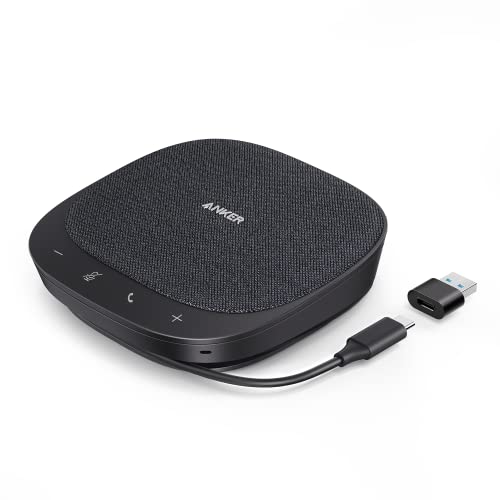
Anker PowerConf C300 -- Best Budget Webcam for Daily Meetings
Anker PowerConf C300 delivers 1080p at 60fps with a three-lens autofocus system at a price point well below premium competitors. The AI framing mode automatically adjusts to keep you centered, and the noise-reduction microphones handle typical office ambient sound adequately. It connects via USB-A, which is widely compatible, and requires no software installation for basic use. For remote workers who need a clear improvement over their laptop camera without spending significantly, the C300 offers genuinely good value. It lacks some software customization features found on Logitech and Elgato products.
Strengths
- Smart Voice Enhancement: Eliminate background noise while simultaneously enhancing voices
- Plug and Play: Connect via USB-C (includes standard USB adapter) and join meetings in an i
- 360° Voice Coverage: A USB speakerphone with 4 high-sensitivity microphones to pick up all
- Superior Sound: A 1.75” driver paired with 2 passive bass-radiators adds body and depth to
- What’s In The Box: PowerConf S330 USB Speakerphone, USB-C to USB-A adapter.
Buying considerations
What to consider
Start with your lighting situation. In well-lit rooms with natural light or a ring light, most 1080p webcams perform well. In dim or variable lighting, invest in a larger sensor such as the Razer Kiyo Pro Ultra. For video calls, 1080p at 30fps is sufficient; the platform rarely displays higher quality. For recording or streaming, 4K or 1080p at 60fps adds visual quality worth the premium. Check your computer's available ports as USB-C webcams require USB-C or a hub adapter. Built-in microphones are adequate for casual calls but are not a substitute for a dedicated microphone in professional recording.
What to consider
For related reading, see [best computer wireless headphone](/articles/best-computer-wireless-headphone) and [best computer watch](/articles/best-computer-watch). Learn about our selection process at [/methodology](/methodology).
Questions answered
For standard video calls on Zoom, Teams, or Meet, most platforms cap streams at 1080p or lower, so a 4K webcam's resolution advantage is not visible to other participants. Where 4K helps is when you crop tightly for a zoomed-in framing or use the webcam for recording local video rather than live calls. For pure video calling, a high-quality 1080p webcam with good low-light performance will serve better than a budget 4K unit.
Hardware autofocus uses a physical lens mechanism to physically refocus, producing sharp, reliable tracking when you move. Software autofocus uses image processing algorithms to simulate focus in post. Hardware autofocus is noticeably more accurate and less prone to hunting, particularly in lower light. The Logitech Brio and similar premium webcams use hardware autofocus, while many budget models rely on software-based systems.
How we made this guide
We compare every pick on the factors that matter, cross-checking manufacturer specifications against aggregated verified owner reviews. We rank independently and never take payment for placement. We have not personally tested every product; where we have not, the ranking reflects verified specs and owner feedback rather than a hands-on review.
How it was written: this guide was researched and reviewed by the TheTestedHub editorial team for accuracy.
Affiliate disclosure: TheTestedHub is reader-supported. When you buy through links on our site, we may earn a commission at no extra cost to you.
Keep reading

Your Docking Station Match: CalDigit TS4 and More

Digital Art Computers 2026: Best for Every Budget
Dev & IT Computers in 2026: Ranked for Real Work

Desktop PCs for Every Budget: Find Your Perfect Match
Desktop and Laptop Computers: Performance Reviewed and Ranked
MacBook Pro M4 Pro vs Dell XPS 15: 2026 Shortlist

Buy the Best DIY Computer in 2026: Corsair One i300
