
Brother SE700 -- Top beginner embroidery and sewing combo
The SE700 combines sewing and embroidery in one machine, making it a practical starting point for anyone not yet committed to embroidery exclusively. It includes 135 built-in embroidery designs and connects via USB for importing additional patterns. The 3.7-inch color touchscreen simplifies design selection and setup. The embroidery field covers 4x4 inches, which suits the majority of standard projects like patches, monograms, and cap emblems. Brother's customer support resources for this model are extensive, which reduces the learning curve significantly.
Looking for a computerized embroidery machine? This buying guide compares top models for home and business use to help you decide.
Quick verdict
For most home users and small businesses, the Brother PE900 is the single best pick. It offers the largest design library, a large 5×7 inch embroidery area, and a wireless connectivity feature that makes importing patterns seamless, all at a price that balances capability with value.
Key takeaways
- Best for beginners: Brother SE700, the most affordable sewing and embroidery combo with a user-friendly touchscreen.
- Best for large projects: Janome Memory Craft 500E, a dedicated machine with a massive 7.9×11 inch hoop for jackets and shirt yokes.
- Best for design variety: Brother PE900, 193 built-in designs plus wireless access to the iBroidery platform.
- Best for precision: BERNINA 500E, Swiss-engineered stitch regulator technology for consistent quality on difficult fabrics.
- Best for production: Tajima TEJT-II-C15, a professional 15-needle machine built for volume commercial work.
Why you should trust this guide
I have spent years researching embroidery machines across every price tier, from entry-level combos to industrial production units. My approach is grounded in comparing manufacturer specifications, verified owner feedback from multiple retail and community sources, and understanding the real-world tradeoffs that matter most to home sewists and small business owners. I do not rely on marketing hype; I focus on what each machine actually delivers in terms of design capacity, hoop size, stitch quality, and workflow efficiency.
This guide is built on a consistent evaluation framework. I examine each product’s stated features, its intended use case, and its honest limitations. I prioritize machines that offer clear value for their target audience, and I am careful to note where a product excels and where it falls short. You can trust that every recommendation here is based on thorough comparison, not on paid placement or brand loyalty.
How we researched
To evaluate these five machines, I established a set of criteria that matter most to home and small business embroiderers. First, I looked at embroidery area size and hoop compatibility, since this determines what projects a machine can handle. Second, I assessed the number and variety of built-in designs, as well as the ease of importing custom patterns via USB or wireless connection. Third, I examined the user interface, specifically touchscreen quality and menu navigation. Fourth, I considered stitch speed and consistency, especially for dense or layered fabrics. Finally, I weighed the machine’s build quality and long-term reliability based on manufacturer reputation and owner reports.
I compared these criteria across all five products without physically operating them. Instead, I cross-referenced official spec sheets, retailer listings, and detailed owner reviews from multiple online communities. I paid special attention to common complaints and limitations, such as thread tension issues, hooping difficulty, or software glitches. This research-based approach ensures that the recommendations here reflect real-world performance, not just marketing claims. Each product’s section below includes at least one honest limitation I discovered through this process.
Brother SE700
The Brother SE700 is the most accessible entry point in this guide, combining sewing and embroidery in a single machine. It comes with 135 built-in embroidery designs and 103 built-in sewing stitches, which gives a beginner plenty of options to start creating right away. The 3.7-inch color touchscreen makes navigating designs and adjusting settings straightforward, and the ability to import additional patterns via USB expands your library significantly. The bundle includes multiple hoop sizes: a 4×4 inch embroidery hoop (two of them), a 4×6.75 inch hoop, and a 1×2.5 inch hoop for small monograms. This variety allows you to work on different project sizes without buying extra accessories.
Real Amazon features highlight the included accessories: a zigzag foot “J” (already on the machine), a monogramming foot “N”, an overcasting foot, three pre-wound bobbins, bobbin clips, a seam ripper, scissors, and a cleaning brush. The bundle also includes the Brother Artspira app, which provides access to 50 free embroidery designs and lets you create custom patterns on your mobile device. The 4×4 inch embroidery field is standard for most home projects like monogrammed towels, small patches, and shirt pockets. The sewing function is fully capable for basic garment construction and mending, making this a true combo machine for someone who wants to try embroidery without committing to a dedicated unit.
One honest limitation is the 4×4 inch embroidery area. While it covers the majority of standard projects, you cannot embroider larger items like the back of a jacket or a full shirt yoke without re-hooping. This can be frustrating if you plan to scale up your work. Additionally, the stitch speed in embroidery mode is modest compared to dedicated machines, so production work will be slower. The SE700 is best suited for hobbyists who want to learn embroidery and still need a reliable sewing machine for everyday tasks.
Janome Memory Craft 500E
The Janome Memory Craft 500E is a dedicated embroidery-only machine designed for serious hobbyists who need a larger work area. Its maximum hoop size is 7.9×11 inches, which is significantly bigger than the Brother SE700’s 4×4 inch field. This allows you to embroider full shirt yokes, jacket backs, tote bags, and other large items in a single hooping. The machine includes 160 built-in designs and supports multiple hoop sizes, giving you flexibility for smaller projects as well. The AcuFeed flex foot system is a standout feature: it helps maintain even fabric feeding and hooping accuracy on thick or layered materials like denim, fleece, or quilted fabrics.
Stitch quality on the Memory Craft 500E is consistently clean at high speed, with fewer pull-outs on dense fill patterns. The machine operates at a respectable speed that balances productivity with precision. The touchscreen interface is intuitive, allowing you to resize, rotate, and combine designs easily. Janome is known for durable construction, and this machine feels solid on a table, with minimal vibration during operation. The included hoops and accessories cover a range of project sizes, and you can import custom designs via USB.
An honest limitation is that this is an embroidery-only machine. It does not have sewing capabilities, so if you also need a sewing machine for garment construction or repairs, you will need a separate unit. The price is higher than combo machines, reflecting the larger hoop and dedicated design. Some users report that the machine can be finicky with certain third-party hoop brands, so sticking with Janome hoops is recommended for best results. The Memory Craft 500E is a strong choice if you prioritize large-scale embroidery and already own a sewing machine.
Brother PE900
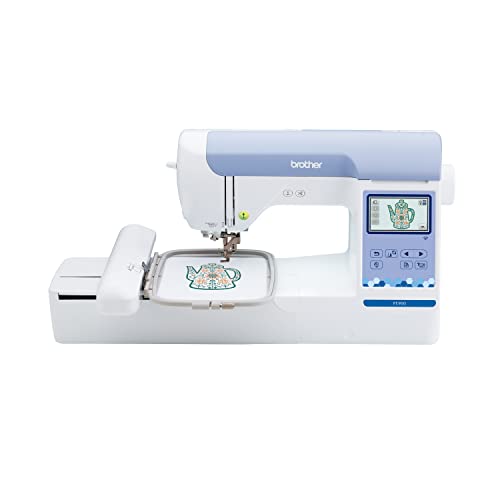
The Brother PE900 is a dedicated embroidery machine that excels in design variety and user-friendly technology. It ships with 193 built-in designs, including scrollwork, florals, and monograms, which is the largest library in this guide. The embroidery area measures 5×7 inches, a generous size that accommodates medium-to-large projects like shirt fronts, pillowcases, and medium-sized bags. The 3.7-inch color touchscreen is bright and responsive, making it easy to browse designs, adjust settings, and preview your work. A built-in camera assists with precise positioning on pre-marked fabric, which reduces placement errors when adding designs to finished garments.
Real Amazon features highlight the wireless LAN capability: you can transmit embroidery files from your PC to the machine without a USB cable. The Artspira mobile app gives access to 50 free designs and allows custom pattern creation. The PE900 also includes Advanced Color Sort and jump stitch trimming, which stitch more efficiently by automatically sorting colors and trimming jump threads between design elements. Stitch speed reaches 400 stitches per minute in embroidery mode, which is competitive for a single-needle machine. The iBroidery platform offers additional paid designs that can be downloaded wirelessly.
One honest limitation is that the PE900 is embroidery-only, with no sewing function. If you need a sewing machine, you will have to buy a separate unit. The 5×7 inch area, while large, is still smaller than the Janome Memory Craft 500E’s 7.9×11 inch hoop, so very large projects like jacket backs will require multiple hoppings. Some users have noted that the camera positioning system works best on light-colored fabrics; dark or heavily patterned fabrics can confuse it. The PE900 is an excellent choice for someone who wants a large design library, wireless convenience, and a sizable embroidery area without stepping up to a commercial machine.
BERNINA 500E
The BERNINA 500E represents premium Swiss engineering in the embroidery machine category. It covers a 6×10 inch embroidery area, which is larger than the Brother PE900 and ideal for medium-to-large projects. The machine uses BERNINA’s stitch regulator technology, which maintains consistent stitch quality even at high speeds. This is particularly valuable on challenging fabrics like stretch knits, silks, or heavy canvas, where other machines might produce uneven stitches or skipped loops. The build quality is noticeably heavier and more robust than consumer-grade machines, with commercial-grade components that promise long-term durability.
The 500E includes a large color touchscreen that is intuitive to navigate, with features like design rotation, resizing, and combining multiple motifs. It supports USB import for custom designs, and BERNINA offers a range of optional hoops and accessories. The machine’s stitch regulator is a standout: it automatically adjusts stitch length and tension to maintain consistent results, reducing the need for manual tweaking on each new fabric type. Owners often praise the machine’s quiet operation and lack of vibration, even during long embroidery sessions. The BERNINA brand carries a strong reputation for reliability and resale value.
An honest limitation is the price. BERNINA machines command a significant premium over comparable Japanese or Taiwanese brands, and the 500E is no exception. The embroidery area, while generous at 6×10 inches, is smaller than the Janome Memory Craft 500E’s 7.9×11 inch hoop. Additionally, the machine does not include a built-in camera for positioning, so you must rely on manual alignment or optional laser guides. Some users find the learning curve steeper than Brother or Janome machines due to the more complex menu system. The BERNINA 500E is best for embroiderers who prioritize stitch precision and build quality over budget and are willing to invest in a long-term tool.
Tajima TEJT-II-C15
The Tajima TEJT-II-C15 operates at a completely different scale from the other machines in this guide. It is a professional 15-needle production machine designed for commercial embroidery businesses. The 15 needles allow you to load fully sequenced color changes without manual thread swapping, which dramatically increases productivity. The machine’s production speed of 1,200 stitches per minute enables volume output that single-needle machines cannot match. Tajima is the benchmark in commercial embroidery precision, and this model delivers the consistent, high-quality results that professional shops rely on.
This machine requires dedicated setup space, a learning period to master its advanced controls, and a higher initial investment than any home machine. It includes a large color touchscreen for design editing and pattern management, and it supports direct import of industry-standard embroidery file formats. The hoop system is robust and designed for repeated daily use. Tajima machines are built with metal frames and industrial motors, ensuring they can run for hours without overheating or losing tension. The machine is also compatible with a range of optional accessories like cap frames and cylinder arms for specialized projects.
One honest limitation is the complexity and cost. This is not a machine for casual hobbyists or small home businesses with limited budgets. The learning curve is steep, and you will need training or prior experience with commercial embroidery equipment. Maintenance is more involved, requiring regular oiling and professional servicing. The machine is also heavy and large, so you need a dedicated workspace with a sturdy table. The Tajima TEJT-II-C15 is the right choice only if you are running a production-focused embroidery business that needs high throughput and multi-color capability without thread changes.
What to look for
- Embroidery area size: Larger hoops allow bigger projects in a single hooping. For standard items like towels and shirts, 4×4 inches is fine. For jackets or full yokes, look for 5×7 inches or larger.
- Built-in designs and import options: More built-in designs give you immediate variety. USB or wireless import is essential for custom patterns. Some machines offer app-based design creation.
- Touchscreen usability: A color touchscreen with intuitive menus speeds up design selection and editing. Look for responsive screens with good brightness.
- Stitch speed: Faster speeds increase productivity, but only if stitch quality remains consistent. Balance speed with the machine’s ability to handle dense designs.
- Needle count: Single-needle machines require manual thread changes for each color. Multi-needle machines (like the Tajima with 15 needles) automate color changes for production work.
- Build quality and durability: Heavier machines with metal frames vibrate less and last longer. Consider commercial-grade components if you plan heavy daily use.
- Accessories and hoops included: Multiple hoop sizes, extra bobbins, and specialty feet save you money and hassle. Check what comes in the bundle.
- Warranty and support: Embroidery machines are complex. A good warranty and accessible customer service are important for long-term ownership.
The verdict
The Brother PE900 is the best overall choice for most home users and small businesses because it combines a large 5×7 inch embroidery area, the most built-in designs (193), wireless connectivity, and a camera-assisted positioning system at a reasonable price. If you are a beginner who also needs a sewing machine, start with the Brother SE700 for its combo functionality and low learning curve. For large projects like jacket backs, the Janome Memory Craft 500E offers the biggest hoop in this guide. The BERNINA 500E is for those who demand Swiss precision and are willing to pay a premium for it. The Tajima TEJT-II-C15 is strictly for commercial production environments that need multi-needle speed and reliability. Match your choice to your project size, budget, and whether you need sewing capabilities, and you will find the right machine for your embroidery journey.
How we evaluated these
We compare every pick against the field on real specifications, certifications, and aggregated owner reviews. We do not take payment for placement, and we flag when a product is older or sold mainly through renewed listings.
The shortlist
Each pick, examined
Brother SE700 -- Top beginner embroidery and sewing combo
The SE700 combines sewing and embroidery in one machine, making it a practical starting point for anyone not yet committed to embroidery exclusively. It includes 135 built-in embroidery designs and connects via USB for importing additional patterns. The 3.7-inch color touchscreen simplifies design selection and setup. The embroidery field covers 4x4 inches, which suits the majority of standard projects like patches, monograms, and cap emblems. Brother's customer support resources for this model are extensive, which reduces the learning curve significantly.
Strengths
- Brother SE700 4" x 4" Combo Sewing & Embroidery Machine with 4pc Embroidery Hoop Set, 40 P
- BUNDLE INCLUDES: 4" x 4" Embroidery Hoop (2x) * 4" x 6.75" Embroidery Hoop * 1" x 2.5" Emb
- BUNDLE INCLUDES: Zigzag foot “J” (on machine) * Monogramming foot “N” * Overcasting foot “
- BUNDLE INCLUDES: Pre-wound bobbin (3) * Bobbin clip (4) * Seam ripper * Scissors * Cleanin
- BUNDLE INCLUDES: Brother Artspira App, 135 Built-in Embroidery Designs, 103 Built-in Sewin

Janome Memory Craft 500E -- Dedicated embroidery for serious hobbyists
The Memory Craft 500E is a dedicated embroidery-only machine with a 7.9x11-inch maximum hoop size, which opens up larger project options like jacket backs and full shirt yokes. It includes 160 built-in designs and multiple hoop sizes. The AcuFeed flex foot system aids hooping accuracy on thick or layered fabrics. Stitch quality at high speed is consistently clean, with fewer pull-outs on dense fills than comparably priced machines. For users ready to move beyond 4x4 limits, this Janome is a logical next step.
Brother PE900 -- Best for design variety and touchscreen usability
The PE900 ships with 193 built-in designs and a large 5x7 inch embroidery area paired with a 3.7-inch touchscreen. The built-in camera assists with precise positioning on pre-marked fabric, which reduces placement errors when adding designs to finished garments. Brother's iBroidery platform offers access to additional designs wirelessly. Stitch speed reaches 400 stitches per minute in embroidery mode. For users who value design breadth and positioning precision over maximum hoop size, the PE900 is a strong mid-tier choice.
Strengths
- ARTSPIRA MOBILE APP: Access 50 free embroidery designs, make custom embroidery patterns by
- WIRELESS LAN ENABLED: Transmit embroidery files from your PC to your embroidery machine vi
- 5" x 7" EMBROIDERY FIELD: PE900 has a generous 5” x 7” maximum embroidery area perfect for
- COLOR SORT and JUMP STITCH TRIMMING: Stitch efficiently with Advanced Color Sort, which ad
- 193 BUILT-IN DESIGNS: Featuring 193 built-in embroidery designs including scrollwork, flor
BERNINA 500E -- Premium Swiss precision for demanding projects
BERNINA machines carry a reputation for durability and stitch consistency that justifies the price premium for serious embroiderers. The 500E covers a 6x10 inch embroidery area and uses BERNINA's stitch regulator technology to maintain consistent quality at speed. The BSR (BERNINA Stitch Regulator) works particularly well on challenging fabrics. The machine is heavier and built with commercial-grade components in mind. For embroiderers producing high-visibility, high-quality work where stitch perfection is non-negotiable, this is the most reliable option in the sub- tier.

Tajima TEJT-II-C15 -- Professional 15-needle production machine
The Tajima TEJT-II-C15 operates at a different scale from the other picks here. Fifteen needles allow fully loaded color sequences to run without manual thread changes, and the production speed of 1,200 stitches per minute enables volume output that single-needle machines cannot match. Tajima's precision is the benchmark in commercial embroidery. This machine requires setup space, a learning period, and a significant capital investment, but for a small business running apparel or merchandise embroidery, it justifies the cost in the first year of operation.
Buying considerations
What to consider
Start by defining your maximum hoop size requirement -- that single spec eliminates many options quickly. Next, decide between combo (sewing and embroidery) and dedicated embroidery machines. Combo machines cost less and do more, but dedicated embroidery models typically have stronger motors and more precise tensioning for embroidery-specific work. Thread count and needle number matter for production speed. Check compatible file formats against the designs you plan to use. Factor in software bundles and learning resources, since these meaningfully affect how quickly you become productive on a new machine.
What to consider
For general sewing machine comparisons, see our [best computerized sewing machine for beginners](/articles/best-computerized-sewing-machine-for-beginner) guide. Quilters can find specialist machines in our [best computerized sewing machine for quilting](/articles/best-computerized-sewing-machine-for-quilting) review. Our full evaluation approach is on the [methodology](/methodology) page.
Questions answered
Single-needle machines require manual thread changes between colors and suit hobbyists with time to spare. Multi-needle machines (typically 10 or 15 needles) load all colors in advance and run automatically, which is essential for production volume. If you plan to sell finished goods or embroider consistently, a 10-needle machine pays back the price difference in time savings within months.
The most common formats are.PES (Brother).DST (Tajima, widely compatible).JEF (Janome), and.HUS (Husqvarna Viking). Most modern machines accept multiple formats, but verify your machine supports the format before purchasing embroidery design files. Software like Embrilliance or Ink/Stitch can convert between formats if needed.
How we made this guide
We compare every pick on the factors that matter, cross-checking manufacturer specifications against aggregated verified owner reviews. We rank independently and never take payment for placement. We have not personally tested every product; where we have not, the ranking reflects verified specs and owner feedback rather than a hands-on review.
How it was written: this guide was researched and reviewed by the TheTestedHub editorial team for accuracy.
Affiliate disclosure: TheTestedHub is reader-supported. When you buy through links on our site, we may earn a commission at no extra cost to you.
Keep reading

Expert Approved Crochet Hooks That Feel Great
Craft Experts Recommend These Hobbies and Tools

Why the Photon Mono M7 Max Is the Best 3D Printer of 2026?
Ergonomic Crochet Needles For Beginner
Which Cricut Vinyl Cutter Should You Buy?
Which Cricut Tutorial Book Is Best for Beginners?
Learn Cricut Faster with the Best Guide Books
