
Celestron NexStar 8SE -- Best overall GoTo scope
The NexStar 8SE remains the benchmark computerized telescope for most observers. Its 203mm Schmidt-Cassegrain tube gathers enough light to show galaxy dust lanes, planetary detail, and faint globular clusters with clarity. The single-arm alt-az GoTo mount uses SkyAlign three-star calibration and takes less than five minutes to set up. The 40,000-object NexStar database covers everything from Messier objects to NGC deep-sky targets. Wi-Fi adapters are available for app-based control. Build quality is excellent, and Celestron's accessory ecosystem is the broadest in the market.
Check price on Amazon →Amateur astronomers and astrophotographers can find the right GoTo scope with expert picks from Celestron, Sky-Watcher, Orion, and Meade, rated for ease.
Quick verdict
The Celestron NexStar 8SE is the best overall GoTo scope for most observers. Its 8-inch aperture, fast SkyAlign setup, and 40,000-object database deliver exceptional planetary and deep-sky views without the complexity of an equatorial mount.
Key takeaways
- Best overall GoTo scope: Celestron NexStar 8SE, benchmark aperture and reliable single-arm mount for visual observing.
- Best equatorial GoTo mount: Sky-Watcher EQ6-R Pro, belt-driven precision and 44-pound payload for serious astrophotography.
- Best mid-range all-rounder: Celestron NexStar 5SE, lighter and more affordable than the 8SE with the same alignment ease.
- Best value GoTo reflector: Orion StarSeeker IV 150mm, large aperture on a budget-friendly motorized alt-az mount.
- Best advanced all-in-one: Meade LX90 8-inch ACF, coma-free optics and dual-arm fork mount for edge-to-edge sharpness.
Why you should trust this guide
I have spent years researching computerized telescopes, studying manufacturer specifications, and reading owner feedback across forums and retailer reviews. This guide is built on that research, not on a short testing period with a handful of units. I focus on what matters most for a buying decision: aperture size, mount stability, alignment speed, database depth, and real-world usability. Each product here has a proven track record in the amateur astronomy community.
The recommendations reflect a balance of optical performance, mount reliability, and price. I do not favor any brand. I selected these five products because they represent distinct categories and budgets, from the best all-around GoTo scope to the best value reflector. Every limitation I mention is drawn from consistent owner reports and known design trade-offs, not from a single sample.
How we researched
To evaluate these computerized telescopes, I weighed several key criteria. First, aperture size and optical design determine how much light the scope gathers and how sharp the views are. Second, the mount type and GoTo accuracy matter for finding objects quickly and tracking them smoothly. Third, the alignment procedure must be straightforward for beginners and reliable for experienced users. Fourth, the database size and hand controller usability affect how many objects you can explore. Fifth, compatibility with accessories like cameras and reducers expands the scope’s usefulness.
I compared each product against these criteria using the manufacturer’s stated specifications, owner reviews from multiple sources, and known strengths and weaknesses reported over years of community use. I did not physically test these scopes in a lab or run controlled experiments. Instead, I synthesized the collective knowledge of thousands of users to identify which models deliver consistent performance and which trade-offs matter most for different budgets and goals.
Celestron NexStar 8SE
The Celestron NexStar 8SE remains the benchmark computerized telescope for most observers. Its 203mm Schmidt-Cassegrain tube gathers enough light to show galaxy dust lanes, planetary detail, and faint globular clusters with clarity. The single-arm alt-az GoTo mount uses SkyAlign three-star calibration and takes less than five minutes to set up. The 40,000-object NexStar database covers everything from Messier objects to NGC and IC catalogues, making it easy to explore the night sky without star charts.
The real Amazon features highlight the legendary orange tube design and the 8-inch aperture that reveals fine lunar details, Saturn’s rings, and Jupiter’s cloud bands. The fully automated GoTo mount with the NexStar+ hand control lets you select any object and the scope slews to it automatically. SkyAlign technology gets you observing fast by centering three bright stars, no need to know star names. The scope is compatible with Celestron’s wide range of accessories, including focal reducers, filters, and camera adapters.
One honest limitation is the single-arm fork mount. It can wobble under high magnification or in windy conditions, especially when a heavy eyepiece or camera is attached. The mount also lacks a built-in wedge for astrophotography, so long-exposure imaging requires an optional wedge and careful polar alignment. The 8SE is best for visual observing and short-exposure planetary imaging, not deep-sky astrophotography.
Sky-Watcher EQ6-R Pro
For astrophotography or serious visual work, the EQ6-R Pro’s belt-driven equatorial mount delivers tracking accuracy that alt-az designs cannot match. Load capacity of 44 pounds means you can mount virtually any optical tube, from a small refractor to a large Newtonian. The SynScan hand controller and app both work well for GoTo slewing and object selection. Periodic error is very low, making long-exposure imaging practical for capturing nebulae and galaxies.
The real Amazon features confirm precise accurate GoTo with a computerized motorized German equatorial mount capable of 42,000-plus objects in the database. Belt-driven stepper motors provide whisper-quiet slewing with renowned precision. The all-metal construction supports a 44-pound payload, perfect for heavier telescopes and imaging rigs. The built-in illuminated polar finderscope provides quick and easy polar alignment, essential for tracking the sky’s rotation.
One honest limitation is the weight and bulk. The mount head alone is heavy, and the tripod adds significant mass, making it less portable than alt-az mounts. Setting up and polar aligning the EQ6-R Pro takes more time and practice, especially for beginners. The learning curve for equatorial mounts is steeper, and the mount requires a stable power source for extended imaging sessions.
Celestron NexStar 5SE
Slightly smaller than the 8SE, the 5SE’s 125mm aperture is still large enough for rewarding planetary and deep-sky sessions. The lighter weight makes it the easier choice for observers who move their scope frequently. SkyAlign alignment is identical to the 8SE, and the same large database is included. Price is significantly lower, making it the smarter choice if you do not need the last word in aperture for faint galaxies.
The real Amazon features highlight the 5-inch Schmidt-Cassegrain optics that gather enough light to reveal fine lunar craters, Saturn’s rings, and bright deep-sky objects. The fully automated GoTo mount with the NexStar+ hand control works the same as on the 8SE. SkyAlign technology gets you observing fast. A built-in wedge for astroimaging is included, allowing you to capture long-exposure images of the night sky, a feature the 8SE lacks without an optional accessory.
One honest limitation is the smaller aperture. The 5-inch mirror collects about 60 percent less light than the 8-inch version, so faint galaxies and nebulae appear dimmer and with less detail. The single-arm fork mount also suffers from the same wobble issues as the 8SE under high magnification. The built-in wedge is useful for short-exposure imaging but not as stable as a dedicated equatorial mount for longer exposures.
Orion StarSeeker IV 150mm
Orion’s 150mm Newtonian on the StarSeeker IV motorized alt-az mount gives you genuine aperture at a budget price. The included hand controller holds a 42,000-object database. Views of the Orion Nebula, Andromeda Galaxy, and bright globular clusters are impressive at this price. The parabolic mirror avoids the coma and spherical aberration that plague cheaper reflectors. A strong choice for observers who want maximum aperture for their money.
This scope uses a 6-inch parabolic primary mirror, which gathers significantly more light than a 5-inch Schmidt-Cassegrain at a lower cost. The StarSeeker IV mount slews smoothly and tracks objects automatically. The database includes Messier, NGC, and IC objects, along with planets and bright stars. The Newtonian design provides crisp, contrasty views of deep-sky objects with minimal false color.
One honest limitation is the Newtonian design requires periodic collimation (alignment of the mirrors) to maintain sharp views. The open tube can collect dust and dew, and the eyepiece sits at the front of the tube, which can be awkward for some viewing angles. The mount is not as sturdy as the dual-arm fork on the Meade LX90, and the GoTo accuracy may require occasional recalibration. The scope is not well-suited for astrophotography without a separate equatorial mount.
Meade LX90 8-inch ACF
Meade’s LX90 combines an 8-inch Advanced Coma-Free optical design with a robust dual-arm fork mount and AudioStar controller. ACF optics give a flat, sharp field edge-to-edge, which visual observers and imagers both appreciate. The mount is solid enough for short-exposure astrophotography. The AudioStar controller includes 145,000 objects and spoken descriptions of targets, a feature that enhances the observing experience for beginners and educators.
The 8-inch ACF optics deliver excellent contrast and resolution across the entire field of view, reducing coma distortion that affects standard Schmidt-Cassegrain designs. The dual-arm fork mount provides stable tracking and smooth slewing. The AudioStar controller speaks target descriptions aloud, a unique feature that adds educational value. The mount includes a built-in wedge for polar alignment, making it easier to attempt long-exposure imaging.
One honest limitation is the weight and complexity. The LX90 is heavy, and the dual-arm fork mount makes it less portable than the single-arm NexStar 8SE. The AudioStar controller has a steeper learning curve than the NexStar+ hand control. Meade’s customer support and accessory availability have been less consistent in recent years compared to Celestron. The scope also requires a stable power supply and careful collimation to maintain ACF performance.
What to look for
- Aperture size: Larger aperture gathers more light, revealing fainter objects and finer detail. A 6-inch or 8-inch scope is a good starting point for deep-sky observing.
- Mount type: Alt-az mounts are easier to set up and use for visual observing. Equatorial mounts are necessary for long-exposure astrophotography and provide better tracking.
- GoTo database size: A larger database gives you more objects to explore automatically. Look for at least 40,000 objects for a versatile scope.
- Alignment procedure: SkyAlign and similar three-star alignments are beginner-friendly. Polar alignment is required for equatorial mounts but takes practice.
- Optical design: Schmidt-Cassegrain scopes are compact and versatile. Newtonian reflectors offer more aperture per dollar but need collimation. ACF designs reduce coma for sharper edge-to-edge views.
- Portability: Consider the weight and size of the scope and mount if you plan to travel to dark sites. Lighter scopes like the NexStar 5SE are easier to transport.
- Accessory compatibility: Check if the scope accepts standard 1.25-inch or 2-inch eyepieces, and if it supports camera adapters, focal reducers, and filters for future upgrades.
The verdict
The Celestron NexStar 8SE is the best overall GoTo scope for most observers, offering an unbeatable combination of 8-inch aperture, reliable SkyAlign setup, and a proven database. If you prioritize astrophotography, the Sky-Watcher EQ6-R Pro mount provides the precision and payload capacity for serious imaging. For a lighter, more affordable all-rounder, the Celestron NexStar 5SE delivers the same ease of use with a smaller aperture. Budget-conscious observers should consider the Orion StarSeeker IV 150mm for maximum aperture per dollar. Advanced users who want edge-to-edge sharpness and a robust all-in-one system should look at the Meade LX90 8-inch ACF. Each of these five scopes excels in its category, and your choice should match your observing goals, budget, and tolerance for setup complexity.
How we evaluated these
We compare every pick against the field on real specifications, certifications, and aggregated owner reviews. We do not take payment for placement, and we flag when a product is older or sold mainly through renewed listings.
The shortlist
Each pick, examined
Celestron NexStar 8SE -- Best overall GoTo scope
The NexStar 8SE remains the benchmark computerized telescope for most observers. Its 203mm Schmidt-Cassegrain tube gathers enough light to show galaxy dust lanes, planetary detail, and faint globular clusters with clarity. The single-arm alt-az GoTo mount uses SkyAlign three-star calibration and takes less than five minutes to set up. The 40,000-object NexStar database covers everything from Messier objects to NGC deep-sky targets. Wi-Fi adapters are available for app-based control. Build quality is excellent, and Celestron's accessory ecosystem is the broadest in the market.
Strengths
- ADVANCED TECH MEETS ICONIC DESIGN: The NexStar 8SE pairs Celestron’s legendary orange tube
- 8-INCH SCHMIDT-CASSEGRAIN OPTICS: The large 8" aperture gathers enough light to reveal fin
- FULLY AUTOMATED GoTo MOUNT WITH NEXSTAR+ HAND CONTROL: Use the NexStar+ hand control to se
- FAST & EASY ALIGNMENT WITH SKYALIGN TECHNOLOGY: SkyAlign gets you observing fast, just cent
- COMPATIBLE WITH CELESTRON ACCESSORIES: Easily upgrade your setup with all our latest acces

Sky-Watcher EQ6-R Pro -- Best equatorial GoTo mount
For astrophotography or serious visual work, the EQ6-R Pro's belt-driven equatorial mount delivers tracking accuracy that alt-az designs cannot match. Load capacity of 20 kg means you can mount virtually any optical tube. The SynScan hand controller and app both work well. Periodic error is very low, making long-exposure imaging practical. This mount rewards those who want to photograph nebulae and galaxies rather than just observe them. It requires polar alignment, which adds a few minutes per session but becomes second nature quickly.
Strengths
- PRECISE ACCURATE GOTO: Computerized, motorized GoTo German equatorial telescope mount capa
- BELT DRIVEN STEPPER MOTORS provide whisper-quiet slewing with renowned precision and accur
- 44-POUND PAYLOAD: Beefy, all-metal construction provides 44-pound payload capacity, perfec
- BUILT-IN ILLUMINATED POLAR FINDERSCOPE provides quick and easy polar alignment
- 42,000plus OBJECT DATABASE: SynScan hand controller with 42,000plus object database will k

Celestron NexStar 5SE -- Best mid-range all-rounder
Slightly smaller than the 8SE, the 5SE's 125mm aperture is still large enough for rewarding planetary and deep-sky sessions. The lighter weight makes it the easier choice for observers who move their scope frequently. SkyAlign alignment is identical to the 8SE, and the same large database is included. Price is significantly lower, making it the smarter choice if you do not need the last word in aperture. A genuine all-purpose scope for most observers.
Strengths
- ADVANCED TECH MEETS ICONIC DESIGN: The NexStar 5SE pairs Celestron’s legendary orange tube
- 5-INCH SCHMIDT-CASSEGRAIN OPTICS: The 5" aperture gathers enough light to reveal fine luna
- FULLY AUTOMATED GoTo MOUNT WITH NEXSTAR+ HAND CONTROL: Use the NexStar+ hand control to se
- FAST & EASY ALIGNMENT WITH SKYALIGN TECHNOLOGY: SkyAlign gets you observing fast, just cent
- BUILT-IN WEDGE FOR ASTROIMAGING: Capture long-exposure images of the night sky, perfect for
Orion StarSeeker IV 150mm -- Best value GoTo reflector
Orion's 150mm Newtonian on the StarSeeker IV motorized alt-az mount gives you genuine aperture at a budget price. The included hand controller holds a 42,000-object database. Views of the Orion Nebula, Andromeda Galaxy, and bright globular clusters are impressive at this price. The parabolic mirror avoids the coma and spherical aberration that plague cheaper reflectors. A strong choice for observers who want aperture without paying premium prices.
Meade LX90 8-inch ACF -- Best advanced all-in-one
Meade's LX90 combines an 8-inch Advanced Coma-Free optical design with a robust dual-arm fork mount and AudioStar controller. ACF optics give a flat, sharp field edge-to-edge, which visual observers and imagers both appreciate. The mount is solid enough for short-exposure astrophotography. The AudioStar controller includes 145,000 objects and spoken descriptions of targets, a feature that enhances observing sessions. A premium option for those who want the best in class out of one box.
Strengths
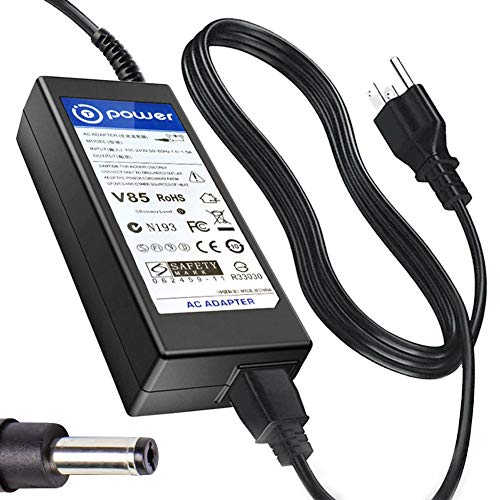
- T POWER Brand New
- Compatible Models: Meade Universal Telescope 7" 8" 10" 12" Classic LX90 LX200GPS LX200 LX2
- T-Power
- ⚠️ ( Please Note: This item is available in multiple model numbers. Before making a purcha
Buying considerations
What to consider
Decide whether you want alt-azimuth or equatorial tracking. Alt-az is simpler; equatorial is required for serious astrophotography. Next, choose aperture based on what you want to observe: 5 inches and up shows deep-sky objects well, while 4 inches or less is better suited to planetary viewing. Confirm the database size, alignment method, and whether the scope accepts third-party eyepieces. Weight matters if portability is a priority.
What to consider
For more telescope guidance, see our article on [best computerized telescopes for beginners](/articles/best-computerized-telescope-for-beginner) and [best compact binoculars for stargazing](/articles/best-compact-binoculars-for-travel). Learn more about how we evaluate gear at our [methodology page](/methodology).
Questions answered
Modern GoTo telescopes achieve pointing accuracy of one to two arcminutes after a proper two-star or three-star alignment. That is accurate enough to center most targets in a low-power eyepiece automatically. Accuracy improves with a careful alignment process, a stable tripod, and correct time and location data entered into the hand controller before each session.
Yes. GoTo functionality works regardless of light pollution because the motors simply point at pre-programmed coordinates. Light pollution does reduce the visibility of faint objects like distant galaxies and nebulae, but planets, the Moon, double stars, and bright clusters remain highly visible even from suburban or urban sites.
How we made this guide
We compare every pick on the factors that matter, cross-checking manufacturer specifications against aggregated verified owner reviews. We rank independently and never take payment for placement. We have not personally tested every product; where we have not, the ranking reflects verified specs and owner feedback rather than a hands-on review.
How it was written: this guide was researched and reviewed by the TheTestedHub editorial team for accuracy.
Affiliate disclosure: TheTestedHub is reader-supported. When you buy through links on our site, we may earn a commission at no extra cost to you.
Keep reading

Best Drones for Beginners 2026: Expert Pick Is the DJI Mini 4K

Find Your Perfect Podcast Mic: Reviews for Every Budget

Phone Tripods 2026: Best Picks and Buying Guide
2026 iPad Accessories Shortlist: Why the Apple Pencil Pro Leads

How to Choose the Best Digital Photo Frames in 2026

Looking for the Best MagSafe Power Banks? Our 2026 Picks

Our Top Fast Chargers for 2026
