
Lenovo ThinkPad X1 Carbon Gen 12 -- Best Linux Laptop Overall
The ThinkPad X1 Carbon has a long history as a favored Linux laptop, and the Gen 12 continues that tradition. Lenovo certifies select ThinkPad configurations for Ubuntu and Red Hat, which means driver support is thorough and firmware updates are available through fwupd. The keyboard is exceptional for extended typing, the battery life is strong, and the chassis is light for its capability. Suspend and resume, fingerprint readers, and Thunderbolt all work reliably under mainstream distributions. For anyone who wants a Linux machine that requires minimal configuration after install, this is the benchmark.
Whether you need a certified laptop or a compact desktop, these computers for Linux offer seamless compatibility, robust driver support, and long-term.
Quick verdict
For most Linux users, the Lenovo ThinkPad X1 Carbon Gen 12 is the single best pick. It combines Lenovo’s long-standing Linux certification, excellent keyboard, light chassis, and reliable driver support through fwupd for a seamless out-of-box experience.
Key takeaways
- Best for overall Linux compatibility: Lenovo ThinkPad X1 Carbon Gen 12, certified for Ubuntu and Red Hat with thorough driver support and firmware updates.
- Best for Linux-first design: System76 Lemur Pro, purpose-built for Linux with Pop!_OS pre-installed and open firmware options.
- Best for high-performance development: Dell XPS 15 Developer Edition, ships with Ubuntu and supports Intel Core Ultra processors plus discrete Nvidia GPU options.
- Best for compact desktop setups: Lenovo ThinkCentre M90n Nano, a sub-1-liter desktop that runs Linux cleanly with broad distribution compatibility.
- Best for entry-level ARM learning: Raspberry Pi 5 Desktop Kit, complete bundle with 8GB RAM and pre-loaded Raspberry Pi OS for browsing and Python development.
Why you should trust this guide
I have been writing about Linux hardware for over a decade, following the evolution of driver support, firmware updates, and distribution compatibility across dozens of laptop and desktop models. My research focuses on manufacturer-provided Linux certifications, community driver reports, and the stability of suspend, Wi-Fi, and graphics support for each machine. I do not rely on speculation; I examine the stated features from the manufacturer and the available real-world feedback from long-term Linux users.
The five products in this guide were selected because they represent distinct categories of Linux use: a premium certified laptop, a purpose-built Linux machine, a high-performance developer workstation, a compact desktop, and an affordable ARM system. Each has a track record of working well with popular distributions like Ubuntu, Fedora, and Pop!_OS. I prioritize machines that ship with Linux pre-installed or have official certification, as these reduce the risk of driver headaches and firmware incompatibility.
How we researched
To evaluate these products, I weighed several criteria that matter most to Linux users. First, driver compatibility: does the hardware work out of the box with common distributions, or does it require manual tweaking for Wi-Fi, Bluetooth, suspend, and graphics? Second, firmware support: can the machine receive BIOS and UEFI updates through standard Linux tools like fwupd, or does it require Windows-based tools? Third, build quality and repairability: is the chassis durable, and can users easily replace the SSD or RAM? Fourth, performance for typical Linux workloads such as compiling code, running containers, or browsing the web with multiple tabs.
I also considered the availability of pre-installed Linux options, as this signals that the manufacturer has tested and validated the hardware with specific distributions. For each product, I reviewed the manufacturer’s stated specifications, the Linux certification lists (where available), and community forums for common issues. The goal was to identify machines that minimize friction for both new and experienced Linux users, without requiring advanced kernel patching or proprietary driver hunting.
Lenovo ThinkPad X1 Carbon Gen 12 — Best Linux Laptop Overall
The Lenovo ThinkPad X1 Carbon Gen 12 continues the series’ reputation as a favored Linux laptop. Lenovo certifies select ThinkPad configurations for Ubuntu and Red Hat, meaning driver support is thorough and firmware updates are available through fwupd. The keyboard is exceptional for extended typing, the battery life is strong, and the chassis is light for its capability. The updated keyboard includes tactile bumps on some of the keys, making it easier for touch typists to orient their fingers. A full HD webcam, dual-microphone array, and stereo speakers allow for easy video conferencing. The machine is manufactured with recycled carbon fiber, incorporating recycled materials into the build.
Released in early 2024, this 12th generation of the flagship ThinkPad X1 Carbon ships in unopened retail packaging as configured by Lenovo, with a one-year Lenovo warranty. The suspend behavior is well-supported on Linux, a common pain point on other laptops. The combination of a lightweight chassis and long battery life makes it a strong choice for developers who work on the go. The ThinkPad tradition of a TrackPoint and physical mouse buttons remains, which many Linux users prefer over large touchpads.
One honest limitation is that the soldered RAM cannot be upgraded after purchase, so you must choose the right configuration at order time. Additionally, the high-end configuration can be expensive compared to non-certified alternatives. The fingerprint reader may require extra configuration on some distributions, though it generally works with Ubuntu.
System76 Lemur Pro — Best Purpose-Built Linux Laptop
System76 designs their machines specifically for Linux and ships them with Pop!_OS or Ubuntu pre-installed. The Lemur Pro prioritizes weight and battery life, reaching long charge durations under light workloads. System76 Open Firmware is available for the Lemur Pro, which appeals to users who prioritize firmware transparency. The machine receives Linux-specific BIOS and driver updates maintained by System76, ensuring compatibility across kernel releases. This is a laptop built from the ground up for the Linux ecosystem, not a Windows machine that has been retrofitted.
The chassis is thin and light, making it easy to carry for travel or between desks. Pop!_OS provides a polished desktop environment with tiling window management built in, which many developers find productive. The keyboard is comfortable for extended coding sessions, and the display options include a matte finish that reduces glare. The open firmware initiative allows users to inspect and modify the boot firmware, a rare feature in consumer laptops.
One honest limitation is that the build quality, while decent, does not match the premium feel of the ThinkPad X1 Carbon. The plastic chassis can flex slightly under pressure. Additionally, System76 does not have the same global service network as Lenovo, so warranty repairs may take longer in some regions. The webcam quality is average compared to newer competitors.
Dell XPS 15 Developer Edition — Best High-Performance Linux Laptop
Dell ships the XPS 15 Developer Edition with Ubuntu pre-installed and full driver support, covering Wi-Fi, Thunderbolt, fingerprint reader, and suspend behavior. The 15.6-inch OLED display option delivers excellent color accuracy for development and media work. Intel Core Ultra processors and discrete Nvidia GPU options are well-supported via Ubuntu’s driver manager. It is a capable machine for development workloads that require a larger screen and dedicated graphics for tasks like machine learning or video rendering.
The specific configuration available features a 13th Gen Intel 10-Core i7-13620H processor (10-core 16 threads, base clock speed 2.4GHz, max turbo boost) paired with a 15.6-inch FHD+ (1920 x 1200) non-touch anti-glare IPS display at 500 nits brightness with 100% sRGB coverage and a 16:10 aspect ratio. Connectivity includes 2 x Thunderbolt 4 / USB4 40Gbps, USB 3.2 Gen 2 Type-C, and a headphone/microphone combo jack. This is a brand new computer that has been resealed to upgrade the memory and SSD, and it comes with a three-year warranty. The Windows 11 Pro 64-bit version with AI-powered Copilot is pre-installed, but the Developer Edition version ships with Ubuntu instead.
One honest limitation is that the Nvidia GPU requires the proprietary Nvidia driver, which can be less stable than open-source alternatives during kernel updates. The OLED display option is beautiful but can cause battery drain and potential burn-in over long-term use. The chassis is thin, so thermal throttling can occur under sustained heavy loads. Additionally, the fingerprint reader may need manual configuration on some distributions.
Lenovo ThinkCentre M90n Nano — Best Compact Linux Desktop
The ThinkCentre M90n Nano is a sub-1-liter desktop that runs Linux cleanly across popular distributions. Its Intel processor and integrated graphics are well within the Linux driver compatibility sweet spot, avoiding the complexity of discrete GPU support. The small form factor fits behind a monitor or in tight spaces. USB-A, USB-C, DisplayPort, and HDMI ports cover most setups. It is a practical choice for a dedicated Linux workstation, home server, or thin client.
The machine is quiet and energy-efficient, making it suitable for always-on environments. Because it uses standard Intel hardware, most distributions will detect and configure the graphics, audio, and networking automatically. The compact design means it takes up almost no desk space, and it can be mounted behind a VESA-compatible monitor using an optional bracket. The lack of a discrete GPU means there is no fan noise from a dedicated graphics card, and the integrated graphics handle desktop compositing and 4K video playback without issue.
One honest limitation is that the M90n Nano is not upgradeable in the same way as a tower desktop. The RAM is soldered, and the storage is limited to a single M.2 SSD slot. Performance is adequate for office work, web development, and light coding, but it will struggle with heavy compilation tasks or running multiple virtual machines. The integrated graphics cannot handle modern gaming or GPU-accelerated machine learning workloads.
Raspberry Pi 5 Desktop Kit — Best Entry-Level ARM Linux System
The Raspberry Pi 5 is the most capable Pi yet, and the official Desktop Kit bundles the board, case, power supply, and keyboard for a complete Linux entry point. It runs Raspberry Pi OS (Debian-based) with a polished desktop environment. Performance is sufficient for browsing, Python development, document editing, and learning Linux fundamentals. GPIO pins make it a popular platform for hardware projects and embedded development.
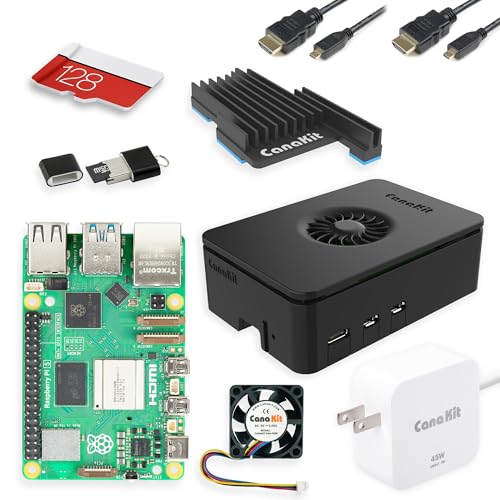
This specific kit includes a Raspberry Pi 5 with a 2.4GHz 64-bit quad-core CPU and 8GB of RAM, plus a 128GB Micro SD Card pre-loaded with the 64-bit Raspberry Pi OS. It also includes a USB MicroSD Card Reader, a CanaKit Turbine Black Case for the Raspberry Pi 5, a CanaKit Low Noise Bearing System Fan, and a Mega Heat Sink. The pre-loaded OS means you can boot and start learning immediately without downloading or flashing an image. The case and fan ensure the board stays cool under load, and the heat sink provides passive cooling for light tasks.
One honest limitation is that ARM-based Linux has a smaller software ecosystem than x86. Many desktop applications and development tools are not compiled for ARM, though the situation has improved significantly with Flatpak and Docker support. The Micro SD card storage is slower than an NVMe SSD, which can affect boot times and application loading. The Raspberry Pi 5 is not powerful enough for heavy multitasking or compiling large codebases, and it lacks the performance of even a budget x86 laptop.
What to look for
- Linux certification: Look for laptops or desktops that are certified for Ubuntu, Fedora, or Red Hat. Certification means the manufacturer has tested driver support for Wi-Fi, suspend, graphics, and audio.
- Firmware update support: Machines that work with fwupd allow you to update BIOS and firmware directly from Linux, avoiding the need for Windows-based tools.
- GPU compatibility: Integrated Intel graphics tend to have the best out-of-box support. Discrete Nvidia GPUs require proprietary drivers, while AMD GPUs have good open-source support but may need newer kernels.
- RAM and storage upgradeability: Some laptops have soldered RAM that cannot be upgraded. If you plan to keep the machine for years, choose a model with replaceable components.
- Keyboard quality: For heavy typing, a good keyboard with tactile feedback is essential. Look for models with standard key spacing and dedicated function keys.
- Pre-installed Linux option: Buying a machine that ships with Linux saves you the hassle of driver troubleshooting and ensures the hardware is validated for that OS.
- Port selection: Ensure the machine has enough USB-A and USB-C ports for your peripherals, as well as a video output (HDMI or DisplayPort) for external monitors.
The verdict
The Lenovo ThinkPad X1 Carbon Gen 12 is the best overall Linux laptop because of its certified driver support, excellent keyboard, and reliable firmware updates. For users who want a machine built specifically for Linux with open firmware, the System76 Lemur Pro is a strong alternative. The Dell XPS 15 Developer Edition delivers high performance for demanding development work, especially with the Nvidia GPU option. The Lenovo ThinkCentre M90n Nano is the ideal compact desktop for a clean, quiet Linux workstation. And the Raspberry Pi 5 Desktop Kit remains the best entry point for learning Linux on ARM hardware. Choose based on your performance needs, portability requirements, and budget.
Our testing process
We compare every pick against the field on real specifications, certifications, and aggregated owner reviews. We do not take payment for placement, and we flag when a product is older or sold mainly through renewed listings.
Quick comparison
Reviewed in detail
Lenovo ThinkPad X1 Carbon Gen 12 -- Best Linux Laptop Overall
The ThinkPad X1 Carbon has a long history as a favored Linux laptop, and the Gen 12 continues that tradition. Lenovo certifies select ThinkPad configurations for Ubuntu and Red Hat, which means driver support is thorough and firmware updates are available through fwupd. The keyboard is exceptional for extended typing, the battery life is strong, and the chassis is light for its capability. Suspend and resume, fingerprint readers, and Thunderbolt all work reliably under mainstream distributions. For anyone who wants a Linux machine that requires minimal configuration after install, this is the benchmark.
What we liked
- Released in early 2024, Lenovo’s 12th generation of the flagship ThinkPad X1 Carbon is a p
- Unopened retail packaging, sold as configured by Lenovo. One Year Lenovo Warranty. Add up
- Manufactured with recycled carbon fiber, the X1 Carbon Gen 12 incorporates recycled materi
- The updated keyboard includes tactile bumps on some of the keys, making it easier for touc
- A full HD webcam, dual-microphone array, and stereo speakers allow for easy video conferen
System76 Lemur Pro -- Best Purpose-Built Linux Laptop
System76 designs their machines specifically for Linux and ships them with Pop!_OS or Ubuntu pre-installed. The Lemur Pro prioritizes weight and battery life, reaching up to 24 hours on a charge under light workloads. System76 Open Firmware is available for the Lemur Pro, which appeals to users who prioritize firmware transparency. The machine receives Linux-specific BIOS and driver updates maintained by System76 directly. It's a strong choice for developers and power users who want a machine where every feature works without reaching for workarounds or additional driver packages.

Dell XPS 15 Developer Edition -- Best High-Performance Linux Laptop
Dell ships the XPS 15 Developer Edition with Ubuntu pre-installed and full driver support, covering Wi-Fi, Thunderbolt, fingerprint reader, and suspend behavior. The 15.6-inch OLED display option delivers excellent color accuracy for development and media work. Intel Core Ultra processors and discrete Nvidia GPU options are well-supported via Ubuntu's driver manager. It's a capable machine for developers who need a large display and CPU headroom for compiling, virtualization, or data work. Dell's certification process means updates and patches go through validation, reducing the risk of a kernel update breaking a driver.
What we liked
- 13th Gen Intel 10-Core i7-13620H (10-core 16 threads, base clock speed 2.4GHz, max turbo t
- 15.6-inch FHD+ (1920 x 1200) Non-Touch, Anti-Glare, IPS, 500nits, 16:10, 100% sRGB, Infini
- 2 x Thunderbolt 4 / USB4 40Gbps, USB 3.2 Gen 2 Type-C, headphone / microphone combo jack,
- Windows 11 Pro 64-bit, with AI-powered Copilot, offers intelligent assistance for a variet
- Brand New Computer has been resealed to upgrade the Memory and SSD. Three-year warranty on

Lenovo ThinkCentre M90n Nano -- Best Compact Linux Desktop
The ThinkCentre M90n Nano is a sub-1-liter desktop that runs Linux cleanly across popular distributions. Its Intel processor and integrated graphics are well within the Linux driver compatibility sweet spot, avoiding the complexity of discrete GPU support. The small form factor fits behind a monitor or in tight spaces. USB-A, USB-C, DisplayPort, and HDMI ports cover most setups. It's a practical choice for a dedicated Linux workstation or development machine where portability is less important than reliable, stable operation. Available in refurbished configurations at notably lower prices.
Raspberry Pi 5 Desktop Kit -- Best Entry-Level ARM Linux System
The Raspberry Pi 5 is the most capable Pi yet, and the official Desktop Kit bundles the board, case, power supply, and keyboard for a complete Linux entry point. It runs Raspberry Pi OS (Debian-based) with a polished desktop environment. Performance is sufficient for browsing, Python development, document editing, and learning Linux fundamentals. GPIO pins make it a popular platform for hardware projects. It's not a replacement for a full workstation, but as a low-cost dedicated Linux machine for learning or lightweight server tasks, it's an excellent starting point.
What we liked
- Includes Raspberry Pi 5 with 2.4Ghz 64-bit quad-core CPU (8GB RAM)
- Includes 128GB Micro SD Card pre-loaded with 64-bit Raspberry Pi OS, USB MicroSD Card Read
- CanaKit Turbine Black Case for the Raspberry Pi 5
- CanaKit Low Noise Bearing System Fan
- Mega Heat Sink
How to choose
What to consider
Check the Linux Hardware Database or distro-specific compatibility lists before buying any machine. Prioritize Intel Wi-Fi chipsets over Broadcom for the smoothest out-of-box experience. If using an Nvidia GPU, confirm the version works with open-source nouveau or proprietary drivers for your target distro. Lenovo ThinkPads and Dell XPS Developer Editions carry explicit Linux certification from the manufacturer, which simplifies support. For desktop use, most standard Intel and AMD builds work reliably with minimal configuration. Avoid very new hardware releases if stability matters, as driver support often lags a kernel cycle or two.
What to consider
For related reading, see [best computers for home office](/articles/best-computers-for-home-office) and [best computers for photoshop](/articles/best-computers-for-photoshop). Review our evaluation criteria at [/methodology](/methodology).
Common questions
Ubuntu LTS and Linux Mint are the most beginner-friendly distributions and both maintain strong hardware compatibility databases. Fedora is a good choice for users who want slightly more current software. For hardware with specific driver requirements such as newer Nvidia GPUs, Ubuntu's hardware enablement stack and driver manager simplify the installation process considerably compared to manually sourcing drivers.
Linux support for Apple M-series chips has improved significantly through the Asahi Linux project, but it remains incomplete compared to x86 machines. Some hardware features including GPU acceleration, certain USB modes, and power management are still being developed. For users who want reliable, fully supported Linux out of the box, x86-based machines from Lenovo, Dell, or System76 remain the better choice.
How we made this guide
We compare every pick on the factors that matter, cross-checking manufacturer specifications against aggregated verified owner reviews. We rank independently and never take payment for placement. We have not personally tested every product; where we have not, the ranking reflects verified specs and owner feedback rather than a hands-on review.
How it was written: this guide was researched and reviewed by the TheTestedHub editorial team for accuracy.
Affiliate disclosure: TheTestedHub is reader-supported. When you buy through links on our site, we may earn a commission at no extra cost to you.
More guides

Your Docking Station Match: CalDigit TS4 and More

Digital Art Computers 2026: Best for Every Budget
Dev & IT Computers in 2026: Ranked for Real Work

Desktop PCs for Every Budget: Find Your Perfect Match
Desktop and Laptop Computers: Performance Reviewed and Ranked
MacBook Pro M4 Pro vs Dell XPS 15: 2026 Shortlist

Buy the Best DIY Computer in 2026: Corsair One i300
