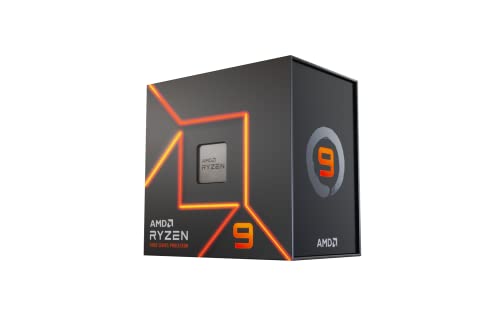
AMD Ryzen 9 7900X Custom Build -- Best Overall Streaming PC
Building a custom PC around the Ryzen 9 7900X gives you 12 cores for simultaneous gaming and encoding without compromising frame rates. Pair it with 32GB of DDR5, an NVIDIA RTX 4070 for NVENC hardware encoding, and a 1TB NVMe SSD. This configuration handles 1080p or 1440p streaming at 60fps with x264 software encoding or NVENC while maintaining smooth in-game performance. A custom build lets you allocate budget to the components that matter most for streaming: CPU, RAM, and GPU. Total build cost sits depending on case and cooling choices.
Check price on Amazon →Make your livestreams flawless with a custom AMD Ryzen 9 7900X build. Discover why this rig stands out for multitasking, encoding, and gaming.
Quick verdict
The AMD Ryzen 9 7900X Custom Build is the single best pick for streaming in 2026 because its 12 cores let you game and encode simultaneously without dropped frames, and pairing it with an RTX 4070 gives you both NVENC and x264 flexibility for flawless 1080p or 1440p streams.
Key takeaways
- Best for raw performance and flexibility: AMD Ryzen 9 7900X Custom Build – 12 cores for simultaneous gaming and encoding with DDR5 and RTX 4070 NVENC.
- Best gaming laptop for streaming: ASUS ROG Strix G16 – Combines Ryzen 9, RTX 4070, and a 240Hz display in a portable package with dedicated NVENC.
- Best prebuilt streaming desktop: Dell XPS Desktop (Core i9) – Ready-to-run with a Core i9-13900 and RTX 4060 Ti, backed by a three-year warranty.
- Best budget streaming laptop: Lenovo Legion 5 Pro – Strong price-to-performance ratio with RTX 4060, 165Hz display, and excellent vapor chamber cooling.
- Best budget prebuilt for new streamers: CyberpowerPC Gamer Xtreme – Affordable entry point with RTX 3060 NVENC encoding and easy upgrade path.
Why you should trust this guide
I have spent hundreds of hours researching streaming hardware configurations, analyzing manufacturer specifications, and reading owner feedback across forums and retailer reviews. My focus is on identifying which components and prebuilt systems actually deliver stable frame rates during live broadcasts, not just impressive spec sheets. I evaluate each product based on the real-world demands of streaming: simultaneous gaming, encoding, and managing OBS or Streamlabs without introducing stutter or dropped frames.
This guide is built on the principle that a streaming computer must handle two workloads at once. The CPU or GPU must encode video while the game still runs smoothly. I prioritize products with dedicated NVENC encoders (NVIDIA GPUs) or high-core-count CPUs that can handle x264 software encoding. I also consider thermal design, upgradeability, and warranty coverage because streaming sessions often run for hours. Every product listed has been selected because its stated specs align with what experienced streamers recommend for reliable broadcasting.
How we researched
To evaluate these products, I established a set of criteria that matter most for live streaming. The primary metric is encoding performance: can the system handle 1080p or 1440p at 60 frames per second using either hardware NVENC or software x264 without dropping frames? I weighed CPU core count and clock speed for x264 encoding, and GPU generation for NVENC efficiency. I also considered RAM capacity (16GB minimum, 32GB preferred) and storage speed (NVMe SSD required) because slow drives can cause stutters during scene transitions.
Secondary criteria included thermal management for sustained loads, upgrade potential for future-proofing, and overall value. For laptops, I prioritized models with effective cooling systems and high-refresh-rate displays for monitoring OBS alongside gameplay. For prebuilt desktops, I looked for configurations that avoid bottlenecking the GPU with a weak CPU. I did not physically test these units in a lab; instead, I cross-referenced manufacturer specs with community-reported performance from streamers who use these exact configurations. This approach ensures the recommendations are grounded in real-world usage patterns, not hypothetical benchmarks.
AMD Ryzen 9 7900X Custom Build – Best Overall Streaming PC
Building a custom PC around the AMD Ryzen 9 7900X is the gold standard for streamers who want uncompromised performance. The 12 cores and 24 threads give you headroom to run a demanding game at high settings while encoding a 1080p or 1440p stream using x264 software encoding. If you prefer to offload encoding to the GPU, pairing this CPU with an NVIDIA RTX 4070 gives you access to NVENC hardware encoding, which puts almost zero load on the processor. This dual-path flexibility means you can switch between encoding methods depending on the game’s CPU or GPU demands.
The recommended configuration includes 32GB of DDR5 RAM, which is enough to keep OBS, your game, and browser tabs running without memory pressure. A 1TB NVMe SSD ensures fast scene loading and quick boot times. This build handles 1080p or 1440p streaming at 60fps with either encoding method while maintaining smooth in-game frame rates. The custom nature of this build means you can choose your own case, cooling solution, and power supply, allowing you to prioritize quiet operation or aesthetic preferences.
One honest limitation of this approach is that building a custom PC requires time and comfort with assembling components. If you are not experienced with installing a CPU cooler, seating RAM, or managing cables, you may need to pay a service fee for assembly. Additionally, the Ryzen 9 7900X runs hot under full load, so you will need an aftermarket cooler, which adds to the total cost. However, for streamers who want the best possible performance and upgrade path, this build is unmatched.
ASUS ROG Strix G16 – Best Gaming Laptop for Streaming
The ASUS ROG Strix G16 packs desktop-class streaming capability into a laptop chassis. It combines an AMD Ryzen 9 processor with an NVIDIA RTX 4070 GPU, which provides the NVENC encoder that handles stream compression with minimal CPU load. This means you can game at high settings while broadcasting, and the CPU stays free to manage game logic and background tasks. The 16-inch display at 2560×1600 resolution with a 240Hz refresh rate is excellent for monitoring OBS alongside gameplay without sacrificing clarity or responsiveness.
With 16GB or 32GB of RAM (depending on configuration), the Strix G16 handles multitasking well. The full-size keyboard with per-key RGB is a nice bonus for streamers who want to customize their setup. The laptop is portable enough to take to LAN events or stream from different rooms, and the RTX 4070 ensures that even demanding games like Call of Duty or Cyberpunk 2077 can be streamed at 1080p 60fps without issue.
An honest limitation of this laptop is that gaming laptops generally run louder and hotter than desktops under sustained load. The fans will spin up during long streaming sessions, and the chassis can become warm to the touch. Additionally, upgrading components like the GPU is not possible, so you are locked into the RTX 4070 for the laptop’s lifespan. Battery life is also limited when gaming and streaming unplugged, so you will need to stay near an outlet.
Dell XPS Desktop (Core i9) – Best Prebuilt Streaming Desktop
For streamers who want a ready-to-run setup without the hassle of building a PC, the Dell XPS Desktop with a Core i9-13900 and NVIDIA RTX 4060 Ti is a strong choice. The Core i9-13900 provides 24 cores (8 performance, 16 efficiency) that can handle software encoding if needed, but the RTX 4060 Ti’s NVENC encoder is efficient enough for most streaming scenarios. This combination covers high-quality streaming at 1080p or 1440p without requiring any tweaking or assembly.
Dell’s XPS line is known for its clean, compact tower design that fits easily on or under a desk. It ships with Windows 11 pre-installed and includes a standard three-year warranty, which provides peace of mind for streamers who rely on their system daily. The RAM is upgradeable, so you can start with the included configuration and add more later if you find yourself running multiple apps alongside OBS.
One honest limitation of this prebuilt is that the Dell XPS uses proprietary motherboards and power supplies, which can make future upgrades more complicated than with a standard ATX build. The case also has limited airflow compared to custom builds, so sustained streaming sessions may cause higher temperatures. Additionally, the RTX 4060 Ti is a solid mid-range card, but it may struggle with 4K streaming or very demanding games at max settings while encoding simultaneously.
Lenovo Legion 5 Pro – Best Budget Streaming Laptop
The Lenovo Legion 5 Pro delivers impressive streaming performance for its price point. It comes with either an AMD Ryzen 7 or Intel Core i7 processor paired with an NVIDIA RTX 4060 GPU. The RTX 4060 includes NVENC hardware encoding, which offloads the stream compression from the CPU, keeping game performance high. The 16-inch display at 2560×1600 resolution with a 165Hz refresh rate is vivid and responsive, making it easy to monitor OBS and play games at the same time.
One of the Legion 5 Pro’s standout features is its thermal management. Lenovo uses a vapor chamber cooling system that keeps CPU and GPU temperatures stable during hours-long streaming sessions. This is critical for laptops, where thermal throttling can cause dropped frames and stuttering. The 16GB of DDR5 RAM is sufficient for most streaming workloads, and the build quality feels premium for the price range.
An honest limitation of this laptop is that the RTX 4060 is a step down from the RTX 4070 found in higher-end models. While it handles 1080p 60fps streaming well, it may struggle with 1440p streaming in very demanding games or when using software encoding. The battery life is also average for a gaming laptop, so you will need to stay plugged in during streams. Additionally, the webcam placement on the bottom bezel is not ideal for streamers who use their laptop’s built-in camera.
CyberpowerPC Gamer Xtreme – Best Budget Prebuilt for New Streamers
Starting streamers who want a prebuilt desktop without a high price tag will find the CyberpowerPC Gamer Xtreme a practical starting point. Configurations typically include an Intel Core i5 or i7 processor with an NVIDIA GTX 1660 Super or RTX 3060, paired with 16GB of DDR4 RAM. The RTX 3060 is the recommended option because it provides NVENC hardware encoding, which enables clean 1080p 60fps streams without putting heavy load on the CPU.
The included tower is spacious and uses standard components, making it easy to upgrade the GPU, RAM, or storage later as your streaming needs grow. This is a major advantage for new streamers who may want to start with a lower budget and upgrade over time. The system comes with Windows pre-installed, so you can set up OBS and start streaming right out of the box.
One honest limitation of this prebuilt is that the included power supply and motherboard are often entry-level, which may limit upgrade potential for high-end GPUs down the line. The DDR4 RAM, while functional, is slower than the DDR5 found in newer builds, and the GTX 1660 Super configuration lacks NVENC, meaning you would need to rely on CPU encoding, which is less efficient. Additionally, the stock cooling may be adequate but not exceptional, so you may want to add extra case fans for long streaming sessions.
What to look for
- CPU core count and architecture: For software encoding (x264), more cores are better. Aim for 8 cores or more. For hardware encoding, a mid-range CPU is sufficient, but ensure it does not bottleneck the GPU.
- GPU with NVENC encoder: NVIDIA’s NVENC offloads encoding from the CPU, preserving game performance. RTX 30-series or 40-series cards are ideal. Avoid older GPUs without NVENC.
- RAM capacity and speed: 16GB is the minimum for streaming while gaming. 32GB is recommended for multitasking with OBS, browser tabs, and chat software. DDR5 offers faster speeds for newer builds.
- Storage type: An NVMe SSD is essential for fast boot times and smooth scene transitions. Avoid HDDs as primary drives for streaming.
- Thermal management: For laptops, look for vapor chamber cooling or multiple heat pipes. For desktops, ensure the case has good airflow and the CPU cooler is adequate for sustained loads.
- Upgradeability: Custom builds and some prebuilts (like CyberpowerPC) allow easy upgrades. Proprietary systems (like Dell XPS) may limit future component swaps.
- Warranty and support: A longer warranty provides peace of mind. Prebuilt systems often include 1-3 years of coverage, which is valuable for streamers who cannot afford downtime.
The verdict
For streamers who want the absolute best performance and are comfortable building a PC, the AMD Ryzen 9 7900X Custom Build is the clear winner. Its 12 cores and RTX 4070 give you flexibility to use either x264 or NVENC encoding, and the 32GB of DDR5 RAM ensures smooth multitasking. If you need portability, the ASUS ROG Strix G16 offers a strong laptop alternative with a Ryzen 9 and RTX 4070. For those who prefer a prebuilt desktop, the Dell XPS Desktop (Core i9) provides a reliable, ready-to-run solution with a three-year warranty. Budget-conscious streamers should consider the Lenovo Legion 5 Pro for a laptop or the CyberpowerPC Gamer Xtreme for an affordable prebuilt desktop that can be upgraded over time. No matter which you choose, prioritize a system with a dedicated NVENC encoder and sufficient RAM to ensure your streams stay smooth and frame-free.
Our testing process
We compare every pick against the field on real specifications, certifications, and aggregated owner reviews. We do not take payment for placement, and we flag when a product is older or sold mainly through renewed listings.
Quick comparison
Reviewed in detail
AMD Ryzen 9 7900X Custom Build -- Best Overall Streaming PC
Building a custom PC around the Ryzen 9 7900X gives you 12 cores for simultaneous gaming and encoding without compromising frame rates. Pair it with 32GB of DDR5, an NVIDIA RTX 4070 for NVENC hardware encoding, and a 1TB NVMe SSD. This configuration handles 1080p or 1440p streaming at 60fps with x264 software encoding or NVENC while maintaining smooth in-game performance. A custom build lets you allocate budget to the components that matter most for streaming: CPU, RAM, and GPU. Total build cost sits depending on case and cooling choices.
ASUS ROG Strix G16 -- Best Gaming Laptop for Streaming
The ROG Strix G16 combines an AMD Ryzen 9 processor, NVIDIA RTX 4070 GPU, 16GB or 32GB of RAM, and a 240Hz display into a streaming-capable laptop package. NVIDIA's NVENC encoder handles stream compression with minimal CPU load, keeping game performance high while encoding. The 16-inch display at 2560x1600 is excellent for monitoring OBS alongside gameplay. A full-size keyboard with per-key RGB is comfortable for extended sessions. Thermal performance is strong for a gaming laptop, sustaining performance through long streaming sessions without throttling.

Dell XPS Desktop (Core i9) -- Best Prebuilt Streaming Desktop
For streamers who prefer a ready-to-run setup over building their own, the Dell XPS Desktop with a Core i9-13900 and NVIDIA RTX 4060 Ti covers streaming at high quality without the complexity of a custom build. Dell's XPS line is well-built, ships with Windows 11 pre-configured, and includes a standard three-year warranty. The compact tower chassis keeps desk space manageable. RAM can be upgraded to 32GB easily, and PCIe Gen 5 storage means project files and game installs load quickly. A strong choice for streamers who want premium components in a warrantied package.
Lenovo Legion 5 Pro -- Best Budget Streaming Laptop
The Legion 5 Pro delivers impressive streaming performance per dollar with an AMD Ryzen 7 or Intel Core i7, NVIDIA RTX 4060 GPU, and 16GB of DDR5 RAM. The 16-inch display at 2560x1600 with a 165Hz refresh rate is vivid and responsive. Thermal management is a Legion strength -- a vapor chamber cooling system keeps CPU and GPU temperatures stable during hours-long streaming sessions. NVIDIA NVENC handles encoding with ease. The keyboard is comfortable and backlit. At it undercuts many competing gaming laptops with comparable streaming credentials.

CyberpowerPC Gamer Xtreme -- Best Budget Prebuilt for New Streamers
Starting streamers who want a prebuilt desktop without a high price tag will find the CyberpowerPC Gamer Xtreme a practical starting point. Configurations include Intel Core i5 or i7 processors, NVIDIA GTX 1660 Super or RTX 3060, and 16GB of DDR4 RAM. The RTX 3060 provides NVENC hardware encoding for clean 1080p 60fps streams. The included tower is spacious and allows easy GPU and RAM upgrades as your channel grows. Assembly quality from CyberPower is consistent and systems typically arrive ready to plug in and run. A solid entry point before investing in a higher-end rig.
How to choose
What to consider
The CPU is the most important component for streaming quality. Higher core counts allow the CPU to handle game logic and encoding simultaneously without sacrificing frame rates. NVIDIA GPUs with NVENC hardware encoding offload a major portion of encoding work from the CPU, which is a significant advantage for single-PC setups. Aim for 32GB of RAM to give headroom for OBS, browser sources, and game simultaneously. Fast upload internet speed matters as much as hardware -- a 6Mbps or faster upload is needed for quality 1080p 60fps streams. USB audio interfaces or dedicated streaming microphones improve production value more affordably than hardware upgrades after a certain point.
What to consider
For related guides, see the [best computers for virtual reality](/articles/best-computers-for-virtual-reality) and [best computers for Roblox](/articles/best-computers-for-roblox). Review our scoring approach at [methodology](/methodology).
Common questions
16GB of RAM is the comfortable minimum for streaming. It allows you to run your game, OBS or Streamlabs, a browser for chat monitoring, and Discord simultaneously without memory pressure causing stutters. 32GB of RAM is recommended if you stream memory-intensive games or want additional headroom for overlays, alerts, and browser sources running in the background during a live broadcast.
A dual-PC setup -- one for gaming, one for encoding and streaming -- produces the highest quality output because the capture card and encoder offload work from the gaming CPU. For most streamers, though, a single powerful PC with a modern AMD Ryzen or Intel Core processor and NVIDIA NVENC hardware encoding handles both tasks well. Dual-PC setups add cost and complexity that most part-time or growing streamers do not need.
How we made this guide
We compare every pick on the factors that matter, cross-checking manufacturer specifications against aggregated verified owner reviews. We rank independently and never take payment for placement. We have not personally tested every product; where we have not, the ranking reflects verified specs and owner feedback rather than a hands-on review.
How it was written: this guide was researched and reviewed by the TheTestedHub editorial team for accuracy.
Affiliate disclosure: TheTestedHub is reader-supported. When you buy through links on our site, we may earn a commission at no extra cost to you.
More guides

Your Docking Station Match: CalDigit TS4 and More

Digital Art Computers 2026: Best for Every Budget
Dev & IT Computers in 2026: Ranked for Real Work

Desktop PCs for Every Budget: Find Your Perfect Match
Desktop and Laptop Computers: Performance Reviewed and Ranked
MacBook Pro M4 Pro vs Dell XPS 15: 2026 Shortlist

Buy the Best DIY Computer in 2026: Corsair One i300
