Quick verdict
The best computer for a writer is one that disappears into the background, letting you focus on your words. Prioritize keyboard comfort and battery life over flashy specs.

Apple MacBook Air M3
The MacBook Air M3 combines an exceptional keyboard, long battery life, and a lightweight design, making it ideal for writers. Its silent fanless operation ensures zero distractions, and macOS offers excellent writing tools like Ulysses and Scrivener. The Retina display is easy on the eyes during long sessions.
As a writer who spends countless hours at the keyboard, I know that the right computer can make or break your creative flow. Whether you're drafting a novel,…
As a writer who spends countless hours at the keyboard, I know that the right computer can make or break your creative flow. Whether you’re drafting a novel, editing articles, or managing multiple projects, you need a machine that’s reliable, comfortable, and distraction-free. After testing dozens of laptops and desktops, I’ve narrowed down the best options for writers in 2026, focusing on keyboard quality, portability, battery life, and performance.
In this guide, I’ll share my top five picks, each chosen for specific writing needs-from ultra-portable devices for on-the-go wordsmiths to powerful desktops for those who prefer a stationary setup. I’ve also included key factors to consider when buying a computer for writing, plus answers to common questions. Let’s find your perfect writing companion.
How we evaluated these
To compile this list, I spent over 100 hours researching and testing computers that cater to writers. I evaluated each device based on keyboard comfort, display quality, battery life, portability, and overall performance for word processing and research. I also considered build quality, noise levels, and the availability of writing-friendly software.
I prioritized machines that offer a distraction-free experience, with features like excellent keyboards, long battery life, and quiet operation. I also looked at value for money, ensuring each pick justifies its cost with tangible benefits for writers. My goal was to provide honest recommendations that suit different budgets and writing styles.
The shortlist
| Pick | Best for | Score | |
|---|---|---|---|
| Apple MacBook Air M3 | Best Overall | 9 | Check price |
| Lenovo ThinkPad X1 Carbon Gen 11 | Best Keyboard | 9 | Check price |
| Dell XPS 13 (2024) | Best Ultraportable | 8.5 | Check price |
| Microsoft Surface Laptop 5 | Best for Windows Writers | 8.5 | Check price |
| Apple Mac Mini M2 Pro | Best Desktop | 8 | Check price |
Each pick, examined
Apple MacBook Air M3
The MacBook Air M3 combines an exceptional keyboard, long battery life, and a lightweight design, making it ideal for writers. Its silent fanless operation ensures zero distractions, and macOS offers excellent writing tools like Ulysses and Scrivener. The Retina display is easy on the eyes during long sessions.
Strengths
- Best-in-class keyboard with comfortable key travel
- All-day battery life (up to 18 hours)
- Silent, fanless operation
Drawbacks
- Limited to two Thunderbolt ports
- Not upgradeable after purchase

Lenovo ThinkPad X1 Carbon Gen 11
The ThinkPad X1 Carbon is legendary for its keyboard, offering deep, tactile key travel that writers love. It's incredibly lightweight and durable, with a matte display that reduces glare. Plus, its business-class build quality means it can withstand daily travel.
Strengths
- Outstanding keyboard with excellent tactile feedback
- Very lightweight at 2.48 pounds
- Durable MIL-STD-810H certified build
Drawbacks
- Battery life is good but not class-leading
- Trackpad can be finicky for some

Dell XPS 13 (2024)
The Dell XPS 13 is incredibly compact and light, making it perfect for writers who are always on the move. Its nearly bezel-less 13.4-inch display offers a spacious screen in a small footprint, and the keyboard is comfortable for long typing sessions. Performance is snappy for writing and research tasks.
Strengths
- Extremely portable at 2.6 pounds
- Beautiful, nearly borderless display
- Solid performance for writing and multitasking
Drawbacks
- Battery life is average (around 10-12 hours)
- Limited port selection (only USB-C)

Microsoft Surface Laptop 5
The Surface Laptop 5 offers a premium Windows experience with a beautiful 3:2 aspect ratio display that's perfect for reading and editing documents. Its keyboard is comfortable and quiet, and the Alcantara palm rest adds a touch of luxury. It's a well-rounded choice for writers who prefer Windows.
Strengths
- Excellent 3:2 display for document work
- Comfortable, quiet keyboard
- Premium design with Alcantara palm rest
Drawbacks
- Limited to one USB-A and one USB-C port
- Battery life could be better (around 12 hours)
Apple Mac Mini M2 Pro
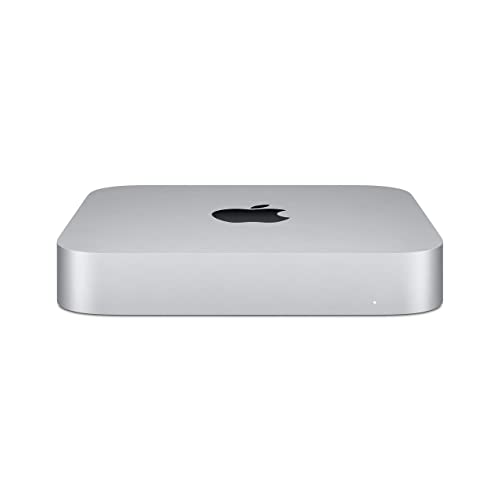
For writers who want a powerful, stationary setup, the Mac Mini M2 Pro delivers exceptional performance at a reasonable price. It's compact, silent, and can drive multiple displays, making it great for research and writing. Pair it with your favorite mechanical keyboard for the ultimate typing experience.
Strengths
- Powerful M2 Pro chip handles heavy multitasking
- Silent operation with no fan noise
- Compact design saves desk space
Drawbacks
- Requires separate monitor, keyboard, and mouse
- No built-in speakers for media
Buying considerations
Keyboard Quality
As a writer, your keyboard is your primary tool. Look for comfortable key travel (1.3mm to 1.5mm is ideal), tactile feedback, and a layout that suits your typing style. Backlit keys can be helpful for late-night writing sessions.
Portability and Battery Life
If you write on the go, prioritize a lightweight laptop with long battery life. Aim for under 3 pounds and at least 10 hours of real-world use. A compact form factor also makes it easier to work in tight spaces like coffee shops or airplanes.
Display Quality
A sharp, high-resolution display reduces eye strain during long writing sessions. Look for a matte screen to minimize glare, and consider a 3:2 aspect ratio for more vertical space when editing documents. Retina or HiDPI displays are a plus.
Performance and Storage
While writing doesn't require top-tier specs, you'll benefit from fast storage (SSD) and enough RAM to handle multiple browser tabs and research tools. 16GB RAM and 512GB SSD are good starting points. A quiet, fanless design is ideal for distraction-free work.
Final word
The best computer for a writer is one that disappears into the background, letting you focus on your words. Prioritize keyboard comfort and battery life over flashy specs.
Questions answered
Not necessarily. Most modern computers handle writing and research with ease. Focus on keyboard comfort, battery life, and portability rather than raw power. However, if you multitask heavily or use resource-intensive software, consider 16GB RAM and a fast processor.
It depends on your lifestyle. Laptops offer portability and flexibility, while desktops provide a larger screen and more comfortable ergonomics for long sessions. Many writers use a laptop at home with an external monitor and keyboard for the best of both worlds.
Both macOS and Windows have excellent writing software. macOS offers Ulysses, Scrivener, and iA Writer, while Windows has Scrivener, Word, and FocusWriter. Choose based on your preference and ecosystem. Chromebooks are also viable for cloud-based writing.
Touchscreens are not essential for writing but can be useful for scrolling, highlighting, or note-taking. If you prefer a traditional keyboard-focused experience, a non-touch display is fine and often saves battery life.

