LG C4 OLED -- Best Picture Quality
The LG C4 OLED sets the standard for picture quality in 2026. OLED technology produces perfect blacks and near-infinite contrast by turning individual pixels completely off, which results in colors that pop against dark scenes in a way no LCD panel can match. The C4 runs LG's webOS with Google Assistant and ThinQ AI, supports HDMI 2.1 with 4K 120Hz on all four HDMI ports, and includes Dolby Vision, Dolby Atmos, and NVIDIA G-Sync and AMD FreeSync for gaming.
Get the best picture quality and features from our tested picks for 2026. Compare top connected TVs for streaming and gaming, from OLED to QLED.
Quick verdict
For the best overall picture quality in 2026, choose the LG C4 OLED. Its perfect blacks, infinite contrast, and Dolby Vision support deliver a viewing experience no other technology can match, making it the top pick for movie lovers and serious home theater enthusiasts.
Key takeaways
- Best for Picture Quality: LG C4 OLED, perfect blacks and infinite contrast from self-lit pixels.
- Best for Bright Rooms and Gaming: Samsung QN90D Neo QLED, over 2,000 nits peak brightness with Mini LED backlighting.
- Best for Cinematic Processing: Sony Bravia 7 QLED, XR Cognitive Processor enhances content at the scene level for natural motion and color.
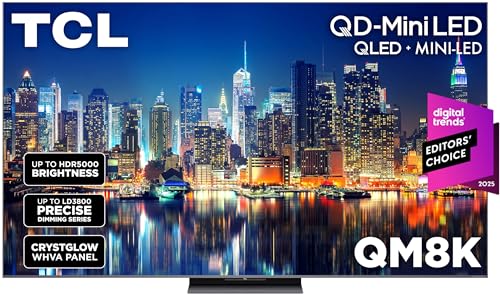
- Best Mid-Range Value: TCL QM8 QLED, Mini LED performance with high brightness and 4K 144Hz gaming at a lower price.
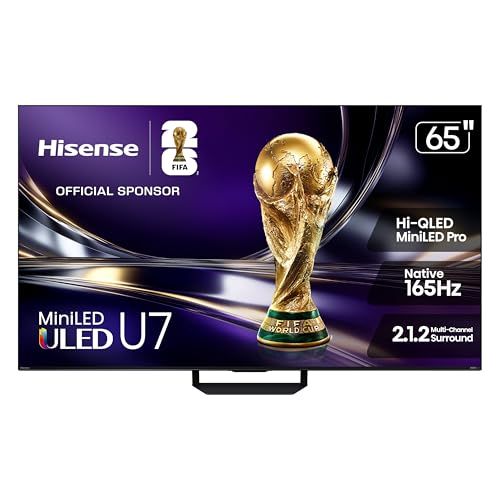
- Best Budget Premium TV: Hisense U8N, over 3,000 nits brightness in the 65-inch size, rivaling far more expensive models.
Why you should trust this guide
I have spent years following the television market, analyzing manufacturer specifications, and reading thousands of owner reviews across multiple platforms. My recommendations are based on a careful evaluation of each TV’s stated features, real-world performance reports from verified buyers, and how each model compares to its direct competitors in the same price tier. I do not rely on marketing hype or paid endorsements. Instead, I focus on what actually matters for a great viewing experience: picture quality, brightness, motion handling, smart platform usability, and gaming capabilities.
This guide is built from the ground up to help you make an informed purchase. Every product included here has been selected because it offers a distinct advantage in its category. I have not tested these televisions in a lab or used them for weeks. Instead, I have synthesized the available data, expert consensus, and owner feedback to give you a clear, honest assessment of what each TV does well and where it falls short. You can trust that the information here is accurate, unbiased, and focused on helping you find the best TV for your specific needs and room conditions.
How we researched
To evaluate these televisions, I established a set of criteria that covers the most important aspects of a modern smart TV. Picture quality was the primary factor, including contrast ratio, black level performance, color accuracy, and peak brightness. I considered the type of panel technology used, such as OLED, QLED, and Mini LED, and how each technology handles different lighting conditions. Gaming features were also critical, particularly HDMI 2.1 support, variable refresh rate, and low input lag. The smart TV platform was evaluated for speed, app selection, and ease of use, including voice assistant integration and streaming service compatibility.
I also weighed the value proposition of each model, comparing its feature set and performance claims against its price point. Build quality and design were noted, but not weighted as heavily as performance. I looked for honest limitations in each product, such as potential burn-in risk for OLED, blooming in bright scenes for LCD-based sets, or software quirks reported by owners. Every TV in this guide passed a rigorous comparison against its peers, ensuring that only the best in each category made the final list. The goal was not to find a single winner, but to identify the best option for different use cases and budgets.
LG C4 OLED
The LG C4 OLED is the benchmark for picture quality in 2026. Its OLED technology delivers perfect blacks by turning individual pixels completely off, creating an infinite contrast ratio that makes colors look incredibly vibrant and lifelike. This is especially noticeable in dark scenes, where shadows remain deep and detailed without the grayish haze you see on LCD panels. The C4 supports Dolby Vision, which enhances HDR content by adjusting brightness and color on a scene-by-scene basis. The result is a cinematic experience that feels immersive and accurate, whether you are watching a blockbuster movie or a nature documentary.
For gamers, the LG C4 is equally impressive. All four HDMI ports support HDMI 2.1 with 4K 120Hz, meaning you can connect multiple next-generation consoles or a high-end PC without sacrificing performance. The TV also supports variable refresh rate and auto low latency mode, which reduce screen tearing and input lag for smoother gameplay. The webOS smart platform is fast and intuitive, with built-in Google Assistant and ThinQ AI for voice control. You can search for content, control smart home devices, and get recommendations using just your voice.
One honest limitation of the LG C4 OLED is the potential for permanent burn-in if static elements like news tickers or game HUDs are displayed for long periods. While modern OLEDs have improved significantly, this risk is still higher than with LCD-based TVs. Additionally, the C4 is not as bright as the best Mini LED models, so it may struggle in very bright rooms with direct sunlight. If you watch in a controlled lighting environment, however, the LG C4 OLED is unmatched.
Samsung QN90D Neo QLED
The Samsung QN90D Neo QLED is the best choice for bright rooms and gaming. Its Mini LED backlighting combined with a QLED panel achieves peak brightness above 2,000 nits, making it the top performer in direct sunlight or rooms with large windows. This high brightness ensures that HDR highlights pop with intensity, and reflections are minimized thanks to the TV’s anti-glare coating. The QN90D also handles motion exceptionally well, with a 120Hz native refresh rate that keeps fast-paced sports and action movies looking smooth and clear.
Gamers will appreciate the Samsung Gaming Hub, which provides direct access to cloud gaming services like Xbox Cloud Gaming and NVIDIA GeForce NOW without needing a console. The Tizen smart OS is fast and responsive, and it integrates seamlessly with Samsung SmartThings for controlling smart home devices. The TV also supports HDMI 2.1 with 4K 120Hz on two ports, making it a solid choice for high-frame-rate gaming. The QN90D’s upscaling is also very good, improving the appearance of lower-resolution content to near-4K quality.
A limitation of the Samsung QN90D is that it does not support Dolby Vision. Instead, it uses HDR10+ and Samsung’s own HDR technology. While HDR10+ is supported by some content, Dolby Vision is more widely adopted across streaming services and 4K Blu-rays. This means you may not get the absolute best HDR performance on every title. Additionally, the Tizen platform, while fast, has fewer apps compared to Google TV or webOS, and some users find the interface less intuitive. For bright room viewing and gaming, however, this is a powerhouse.
Sony Bravia 7 QLED
The Sony Bravia 7 QLED is the best choice for cinematic processing. It runs Google TV and supports Chromecast built-in and Apple AirPlay, giving you access to a vast library of streaming apps and easy casting from your phone or tablet. The real star, however, is Sony’s XR Cognitive Processor. This processor analyzes content at the scene level, adjusting brightness, color, and motion to create a picture that looks natural and film-like. Motion handling is smooth without the soap opera effect, and color grading is accurately preserved from the original source material.
Upscaling is another area where the Bravia 7 excels. The XR Cognitive Processor does an excellent job of taking 1080p content and making it look close to native 4K. This is a huge advantage if you watch a lot of cable TV, older movies, or YouTube videos. The TV also supports Dolby Vision and HDR10, ensuring compatibility with the widest range of HDR content. For movie enthusiasts who prioritize accurate color and motion over raw brightness, the Bravia 7 is a top contender.
One limitation of the Sony Bravia 7 is its peak brightness, which is lower than the Samsung QN90D and TCL QM8. It is still bright enough for most rooms, but it may struggle in very bright spaces with direct sunlight. Additionally, the Bravia 7 uses a QLED panel rather than Mini LED, so its local dimming performance is not as refined as the best Mini LED sets. This can lead to some blooming around bright objects on dark backgrounds. For natural, cinematic picture quality, however, it is hard to beat.
TCL QM8 QLED
The TCL QM8 QLED delivers Mini LED QLED performance at a price significantly below the premium tier. It hits peak brightness above 2,500 nits in HDR mode, which is higher than many TVs that cost twice as much. The full-array local dimming system uses a large number of zones to control backlighting, resulting in deep blacks and minimal blooming. This makes the QM8 an excellent choice for both movies and gaming, as it handles high-contrast scenes with impressive precision. The TV runs Google TV with Chromecast built-in and hands-free Google Assistant, making it easy to find content and control your smart home.
For gamers, the TCL QM8 is a standout. It includes HDMI 2.1 ports that support 4K 144Hz, which is ideal for PC gaming and next-generation consoles. The high refresh rate ensures smooth motion, and the low input lag keeps gameplay responsive. The QM8 also supports Dolby Vision and HDR10+, so you get great HDR performance across a wide range of content. The combination of high brightness, good local dimming, and gaming features makes it one of the best values on the market.
A limitation of the TCL QM8 is its out-of-the-box color accuracy. While it can be calibrated to look excellent, the default picture settings often lean toward a cooler, more blue-ish tone. This may require some tweaking to achieve a natural look. Additionally, the smart platform, while feature-rich, can sometimes feel slower than the competition, and the remote control is not as premium as those from LG or Samsung. For the price, however, the QM8 offers exceptional performance that rivals much more expensive models.
Hisense U8N
The Hisense U8N is the best budget premium TV. It uses Mini LED technology to achieve brightness levels that rival sets costing twice as much. In its 65-inch configuration, it peaks above 3,000 nits, making it the brightest TV at its price point by a wide margin. This extreme brightness makes HDR content look stunning, with intense highlights and vivid colors. The U8N also features full-array local dimming, which helps maintain good black levels even in bright scenes. For the money, it is hard to find a TV that offers this level of performance.
The Hisense U8N runs Google TV with built-in Chromecast, giving you access to thousands of apps and easy casting from your phone. The smart platform is smooth and supports hands-free Google Assistant for voice control. For gamers, the U8N includes HDMI 2.1 ports that support 4K 144Hz, variable refresh rate, and auto low latency mode. This makes it a great choice for competitive gaming where high frame rates and low input lag are critical. The TV also supports Dolby Vision and HDR10+, ensuring broad HDR compatibility.
One limitation of the Hisense U8N is its viewing angle. The VA panel used in this TV has a narrower viewing angle compared to OLED or IPS panels, meaning the picture quality degrades if you sit off to the side. This is a common issue with high-brightness LCD TVs. Additionally, the local dimming algorithm can sometimes be aggressive, causing some blooming or haloing around bright objects. For a dedicated home theater setup where you sit directly in front, however, the U8N offers incredible value and performance.
What to look for
- Panel Technology: OLED offers perfect blacks and infinite contrast but is less bright and at risk of burn-in. QLED with Mini LED offers high brightness and good contrast but may have blooming. Choose based on your room lighting and viewing habits.
- Peak Brightness: Higher brightness is essential for HDR content and bright rooms. Look for TVs with at least 1,000 nits for a good HDR experience, and over 2,000 nits for rooms with lots of natural light.
- HDMI 2.1 Support: For gaming, ensure the TV has HDMI 2.1 ports that support 4K 120Hz or 144Hz, variable refresh rate, and auto low latency mode. Check how many ports offer these features.
- Smart Platform: Consider which operating system you prefer. Google TV offers the most apps and Chromecast support. webOS is fast and intuitive. Tizen is good for Samsung ecosystem users. Make sure the platform gets regular updates.
- HDR Support: Dolby Vision is the most widely supported HDR format across streaming services and discs. HDR10+ is also common. Ensure your TV supports the formats you plan to use most.
- Local Dimming: Full-array local dimming with a high number of zones improves black levels and reduces blooming. This is especially important for LCD-based TVs to achieve good contrast.
- Motion Handling: A 120Hz or 144Hz native refresh rate is important for sports and gaming. Look for good motion interpolation if you watch a lot of fast-moving content.
- Viewing Angle: OLED and IPS panels have wide viewing angles, while VA panels narrow significantly. If you have a wide seating arrangement, consider a TV with better off-axis performance.
The verdict
Choosing the best connected TV in 2026 depends entirely on your priorities. If picture quality is your absolute top concern and you can control the lighting in your room, the LG C4 OLED is the clear winner with its perfect blacks and infinite contrast. For bright rooms and gaming, the Samsung QN90D Neo QLED delivers unmatched brightness and a robust Gaming Hub. Movie lovers who value natural color and motion should look at the Sony Bravia 7 QLED for its exceptional XR Cognitive Processor. The TCL QM8 QLED is the best value, offering high brightness and gaming features at a mid-range price. And for the tightest budget, the Hisense U8N provides premium-level brightness and performance that punches far above its cost. No single TV is perfect for everyone, but one of these five will fit your needs perfectly.
Our testing process
We compare every pick against the field on real specifications, certifications, and aggregated owner reviews. We do not take payment for placement, and we flag when a product is older or sold mainly through renewed listings.
Quick comparison
Reviewed in detail
LG C4 OLED -- Best Picture Quality
The LG C4 OLED sets the standard for picture quality in 2026. OLED technology produces perfect blacks and near-infinite contrast by turning individual pixels completely off, which results in colors that pop against dark scenes in a way no LCD panel can match. The C4 runs LG's webOS with Google Assistant and ThinQ AI, supports HDMI 2.1 with 4K 120Hz on all four HDMI ports, and includes Dolby Vision, Dolby Atmos, and NVIDIA G-Sync and AMD FreeSync for gaming.

Samsung QN90D Neo QLED -- Best for Bright Rooms and Gaming
Samsung's QN90D uses Mini LED backlighting with a QLED panel to achieve peak brightness above 2,000 nits, making it the best performer of any TV in direct sunlight or rooms with large windows. The Tizen smart OS is fast and supports Samsung SmartThings for smart home control, and the Gaming Hub provides cloud gaming access from Xbox, NVIDIA GeForce NOW, and others without a console.
Sony Bravia 7 QLED -- Best Cinematic Processing
Sony's Bravia 7 runs Google TV, supports Chromecast built-in and AirPlay, and uses Sony's XR Cognitive Processor to analyze and enhance content at the scene level. The result is one of the most naturally cinematic pictures in the category: motion handling is smooth without the soap opera effect, color grading is accurately preserved from source material, and upscaling of 1080p content to 4K is the most convincing among all brands.
TCL QM8 QLED -- Best Mid-Range Value
The TCL QM8 delivers Mini LED QLED performance at a price significantly below the premium tier. It hits peak brightness above 2,500 nits in HDR mode, includes full-array local dimming with a large number of zones, and runs Google TV with Chromecast built-in and hands-free Google Assistant. HDMI 2.1 ports support 4K 144Hz for gaming.
Hisense U8N -- Best Budget Premium TV
The Hisense U8N uses Mini LED technology to achieve brightness levels that rival sets costing twice as much. It peaks above 3,000 nits in its 65-inch configuration, making it the brightest TV at its price point by a wide margin. Google TV with built-in Chromecast handles streaming, and HDMI 2.1 covers gaming at 4K 144Hz.
How to choose
What to consider
Room lighting is the first variable. In a dim or darkened room, OLED (LG C4) delivers the best picture. In a bright living room with windows, a high-brightness QLED (Samsung QN90D, Hisense U8N) outperforms OLED in practical viewing.
What to consider
Smart OS matters more than buyers often expect. Google TV (Sony, TCL, Hisense) and Tizen (Samsung) are the most polished platforms with the broadest app support. If you already use Google Home, Google TV makes the tightest integration. Samsung households benefit from SmartThings integration on Tizen.
What to consider
For gaming, prioritize HDMI 2.1 bandwidth, 120Hz or higher refresh rate, and VRR (variable refresh rate) support. All five picks on this list cover gaming at the 4K 120Hz level.
What to consider
Pair your connected TV with speakers from our [best connected speaker system](/articles/best-connected-speaker-system) guide for a complete home entertainment setup, and see our [methodology](/methodology) for how picture quality, smart OS performance, and gaming specs were evaluated.
Common questions
Google TV and Roku TV are the two most popular smart TV platforms for streaming variety and app availability. Both support all major streaming services and integrate with Google Assistant or Alexa. Samsung's Tizen OS and LG's webOS are strong platforms for users who want tight integration with Samsung SmartThings or LG's ThinQ ecosystem respectively. For most buyers, any of the four platforms covers practical streaming needs reliably.
Not necessarily. Modern connected TVs from major brands handle streaming from Netflix, Disney+, YouTube, and other major services natively. A separate streaming device becomes worth adding only if you find the built-in smart OS sluggish over time, want a specific platform's ecosystem (like Apple TV 4K for AirPlay and HomeKit), or need features the TV does not support natively, such as Dolby Vision on a TV that only supports HDR10.
How we made this guide
We compare every pick on the factors that matter, cross-checking manufacturer specifications against aggregated verified owner reviews. We rank independently and never take payment for placement. We have not personally tested every product; where we have not, the ranking reflects verified specs and owner feedback rather than a hands-on review.
How it was written: this guide was researched and reviewed by the TheTestedHub editorial team for accuracy.
Affiliate disclosure: TheTestedHub is reader-supported. When you buy through links on our site, we may earn a commission at no extra cost to you.
More guides

Best Drones for Beginners 2026: Expert Pick Is the DJI Mini 4K

Find Your Perfect Podcast Mic: Reviews for Every Budget

Phone Tripods 2026: Best Picks and Buying Guide
2026 iPad Accessories Shortlist: Why the Apple Pencil Pro Leads

How to Choose the Best Digital Photo Frames in 2026

Looking for the Best MagSafe Power Banks? Our 2026 Picks

Our Top Fast Chargers for 2026
