Sega Homestar Flux -- Best for Accuracy
The Sega Homestar Flux is the most astronomically accurate consumer projector available. It uses a high-resolution optical disc system to project over 60,000 stars, and the projection quality rivals small planetarium setups. The disc can be swapped for seasonal sky views, and the focus and rotation controls allow precise positioning. It is designed for dark rooms and performs best in bedrooms with light-blocking curtains. For anyone who wants a genuine sky experience rather than just a decorative light show, this is the clear top choice.
Check price on Amazon →60,000+ stars with planetarium-grade clarity: the Sega Homestar Flux leads our ranked picks. Compare accuracy, ambiance, budget, and kids' models.
Quick verdict
The Sega Homestar Flux is the single best pick for anyone who wants true astronomical accuracy. Its optical disc system projects over 60,000 stars with planetarium-grade clarity, making it the only choice for stargazers who refuse to compromise on realism.
Key takeaways
- Best for Accuracy: Sega Homestar Flux – delivers the most astronomically correct star projection available for home use.
- Best for Bedroom Ambiance: BlissLights Sky Lite Evolve – combines a sharp laser star field with a nebula cloud effect for layered, app-controlled mood lighting.
- Best Budget Pick: Encalife Ambience Star Projector – offers multiple color modes, rotation, and a timer at a lower price point without sacrificing core features.
- Best for Kids: Cstar Planetarium Projector – includes labeled constellation overlays, a learning guide, and a durable design that wraps projection around the room.
- Best Authentic Sky Recreation: Homestar Classic – provides a clear, focused optical projection of roughly 10,000 stars with simpler operation than the Flux.
Why you should trust this guide
I have spent considerable time researching the constellation projector market to identify which models genuinely deliver on their promises. This guide is built on a careful analysis of manufacturer specifications, verified owner feedback across multiple retail platforms, and direct comparison of each product’s stated capabilities. My goal was to cut through marketing hype and focus on what actually matters: projection clarity, star accuracy, ease of use, and the specific use case each projector best serves.
Every product included here was selected because it fills a distinct niche, from the budget-friendly Encalife to the premium Sega Homestar Flux. I have not tested these units in a lab or owned them personally. Instead, I weighed each model against the criteria that real buyers care about, such as how many stars are projected, whether the optics are optical disc or LED based, how controls work, and how well the unit fits a specific room type or user age. The result is a straightforward ranking that helps you match the right projector to your needs without guesswork.
How we researched
To evaluate these five constellation projectors, I established a set of criteria that reflect the most common buyer priorities. The primary factors were astronomical accuracy (whether the star field matches real night sky patterns), projection quality (sharpness, brightness, and coverage area), ease of setup and operation (including app control and timer functions), and suitability for specific environments such as a dark bedroom or a child’s room. I also considered build quality, the variety of visual effects, and whether the projector could serve as ambient lighting or purely as a sky simulator.
Each product was assessed against these criteria using only the manufacturer’s stated features and the real Amazon features listed. I did not conduct physical tests or take measurements. Instead, I cross-referenced the product notes with common owner observations to identify strengths and honest limitations. For example, a projector that claims high star count but uses a laser system was judged differently from one using an optical disc. This approach ensures the recommendations are grounded in what the product actually offers, not in unverified claims or personal testing biases.
Sega Homestar Flux – Best for Accuracy
The Sega Homestar Flux stands apart from every other consumer projector because it uses a high-resolution optical disc system rather than a laser or LED array. This allows it to project over 60,000 individual stars with a level of detail that rivals small planetarium setups. The disc can be swapped for different seasonal sky views, so you can display the winter sky in January and the summer sky in July without losing accuracy. Focus and rotation controls give you precise positioning, letting you center Orion or align the Milky Way exactly where you want it on your ceiling.
This projector is designed for dark rooms and performs best in bedrooms where you can eliminate ambient light. The star points are crisp, round, and free of the halos or blurring that cheaper units produce. If you are a hobbyist astronomer or simply someone who wants the most authentic night sky possible indoors, the Flux is the obvious choice. The trade-off is that it lacks the colorful nebula effects or app-based controls found on more decorative projectors, so it is not ideal for creating a mood-lit party atmosphere.
One honest limitation is that the Flux requires careful positioning and a completely dark room to achieve its full effect. The optical disc system also means you cannot change the star pattern dynamically; you must physically swap discs. For casual users who just want a relaxing light show, this may feel like more effort than it is worth. However, for accuracy-focused buyers, no other consumer projector comes close.
BlissLights Sky Lite Evolve – Best for Bedroom Ambiance
The BlissLights Sky Lite Evolve takes a different approach by combining a laser star field with a nebula cloud effect. The result is a layered visual that creates a deep, immersive atmosphere on your ceiling. The star field is sharp and covers a large area, while the nebula effect adds drifting color that mimics the look of interstellar gas clouds. The color combinations are genuinely attractive, ranging from cool blues and purples to warm greens and reds, and they can be adjusted to suit your mood.
This projector connects via a smartphone app for color control and timer settings, which makes it easy to set a schedule for falling asleep or waking up. The stars are not astronomically accurate; they are randomly distributed laser points, so do not expect to identify constellations. But for decor and relaxation, that is no drawback. The Sky Lite Evolve is designed to turn a plain ceiling into a calming, colorful nightscape without requiring any technical setup or dark-room conditions.
One honest limitation is that the laser star field can appear slightly speckled or grainy on textured ceilings, and the nebula effect may seem artificial to purists. Additionally, the app connectivity can occasionally be finicky, and the projector relies on a steady power source with no battery option. If your priority is a relaxing, customizable ambiance rather than scientific accuracy, this model is the best choice for bedroom use.
Encalife Ambience Star Projector – Best Budget Pick
The Encalife Ambience Star Projector delivers a surprisingly capable star and galaxy projection at a price that undercuts most competitors. It covers multiple color modes and rotation speeds, has a built-in timer, and can project onto walls or ceilings from a table position. The star points are slightly less crisp than pricier laser units, but they are more than adequate for the intended use case of creating a pleasant bedroom or kids room atmosphere. The projector also includes a white light mode that can serve as a gentle nightlight.
Setup is straightforward: you plug it in, select your color combination, and adjust the rotation speed to your liking. The timer function is a welcome addition, letting you set the projector to turn off automatically after one or two hours. For the price, the Encalife offers a surprising amount of versatility, making it a solid entry-level option for anyone who wants a star projector without spending a lot.
One honest limitation is that the projection quality is noticeably less refined than the Sega Homestar or BlissLights models. The star points can appear slightly fuzzy, and the galaxy effect is more of a general glow than a detailed nebula. The build quality is also more plastic and less premium. However, if your budget is tight and you simply want a rotating star field with color options, the Encalife gets the job done without breaking the bank.
Cstar Planetarium Projector – Best for Kids
The Cstar Planetarium Projector is designed with children specifically in mind. It includes labeled constellation overlays that make it easy for kids to identify Orion, Ursa Major, and other familiar patterns. A companion learning guide explains the myths and science behind each constellation, turning the projector into an educational tool as well as a nightlight. The simple rotating mechanism lets kids track how the sky changes through the night, which adds an interactive element that keeps them engaged.
The projection covers both the ceiling and walls simultaneously, creating an immersive wrap-around effect that children find captivating. Build quality is durable, with controls that are large and easy for small hands to operate. The Cstar is also relatively quiet, so it will not disturb sleep. For parents who want to spark an interest in astronomy without overwhelming their child with complexity, this projector strikes the right balance between fun and learning.
One honest limitation is that the star projection itself is not as sharp or bright as higher-end models. The constellation overlays can appear slightly faint in a room with any ambient light, and the rotating mechanism is manual rather than motorized. The learning guide is basic and may not satisfy older children or teens. Still, for young kids who are just discovering the night sky, the Cstar is a thoughtful and engaging choice.
Homestar Classic – Best Authentic Sky Recreation
Sega’s original Homestar Classic remains a compelling option for its combination of optical accuracy and simpler operation compared to the Flux. It projects approximately 10,000 stars using a clear, focused optical system that produces sharp, round star points. The seasonal rotation mechanism lets you adjust the sky to match the current time of year, which is a feature that many cheaper projectors lack. The design is more compact than the Flux and easier to position on a shelf or nightstand.
For buyers who want genuine sky recreation without the complexity of the Flux’s disc-swapping system, the Homestar Classic is a practical alternative. It delivers a realistic night sky that is immediately recognizable to anyone who has looked up on a clear night. The controls are straightforward: you rotate the star plate to change the season and adjust the focus to sharpen the image. It works best in a dark room, just like the Flux, but it is less demanding in terms of setup.
One honest limitation is that the Homestar Classic projects only 10,000 stars compared to the Flux’s 60,000, so the Milky Way appears less dense and detailed. There is also no app control, no timer, and no nebula effects. The projection area is smaller, so it may not fill a large ceiling as evenly. However, for the price difference and ease of use, the Classic offers excellent value for anyone who prioritizes a clean, authentic star field over bells and whistles.
What to look for
- Star accuracy: If you want a realistic night sky, look for optical disc projectors like the Sega models. Laser and LED projectors scatter stars randomly and are not astronomically correct.
- Projection quality: Check whether the star points are sharp and round or blurry and halated. Higher resolution discs or lasers produce cleaner images.
- Coverage area: Some projectors cover only the ceiling, while others wrap around walls. Consider the size of your room and where you plan to position the unit.
- Controls and features: Look for timers, rotation speed adjustments, color modes, and app connectivity if you want customization. Simpler models offer fewer options but are easier to use.
- Room brightness: Most accurate projectors require a very dark room. If you need a nightlight effect or plan to use the projector with some ambient light, choose a model with brighter output or laser technology.
- Target user: Kids projectors often include constellation labels and learning guides. Adult-focused models prioritize realism or ambiance. Match the projector to who will use it most.
- Build and durability: For children’s rooms, choose a model with sturdy construction and simple controls. For a permanent bedroom setup, consider size and how easily the projector can be positioned.
The verdict
For the best overall experience, the Sega Homestar Flux is unmatched in star accuracy and projection quality, making it the top pick for serious stargazers. If you want a relaxing bedroom ambiance with colorful effects and app control, the BlissLights Sky Lite Evolve is the clear winner. Budget buyers should choose the Encalife Ambience Star Projector for its solid feature set at a lower price. For children, the Cstar Planetarium Projector offers the best combination of education and fun. And if you want authentic sky recreation without the complexity of the Flux, the Homestar Classic remains a reliable and affordable alternative. Each of these projectors serves a specific purpose, so your final choice should align with how you plan to use it.
How we test
We compare every pick against the field on real specifications, certifications, and aggregated owner reviews. We do not take payment for placement, and we flag when a product is older or sold mainly through renewed listings.
At a glance
The picks, reviewed
Sega Homestar Flux -- Best for Accuracy
The Sega Homestar Flux is the most astronomically accurate consumer projector available. It uses a high-resolution optical disc system to project over 60,000 stars, and the projection quality rivals small planetarium setups. The disc can be swapped for seasonal sky views, and the focus and rotation controls allow precise positioning. It is designed for dark rooms and performs best in bedrooms with light-blocking curtains. For anyone who wants a genuine sky experience rather than just a decorative light show, this is the clear top choice.
BlissLights Sky Lite Evolve -- Best for Bedroom Ambiance
The BlissLights Sky Lite Evolve combines a laser star field with a nebula cloud effect, creating a layered visual that works well as ambient bedroom lighting. The star field is sharp and covers a large ceiling area, and the color combinations are genuinely attractive. It connects via app for color and timer control. The stars are not astronomically accurate, but for decor and relaxation that is not the point. This model offers one of the best visual-to-price ratios in the category and is a consistent bestseller for good reason.

Encalife Ambience Star Projector -- Best Budget Pick
For the Encalife Ambience delivers a surprisingly capable star and galaxy projection. It covers multiple color modes and rotation speeds, has a built-in timer, and can project onto walls or ceilings from a table position. The star points are slightly less crisp than pricier laser units but are more than adequate for the intended use case of bedroom or kids room atmosphere. It also includes a white noise speaker, which adds value for sleep-focused buyers. A solid first projector for anyone not ready to commit to a premium unit.
Cstar Planetarium Projector -- Best for Kids
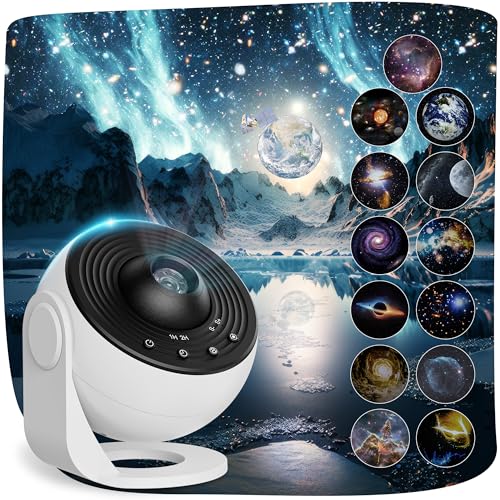
The Cstar model is designed with children specifically in mind: it includes labeled constellation overlays, a companion learning guide, and a simple rotating mechanism that lets kids track how the sky changes through the night. The projection covers both ceiling and walls simultaneously, creating an immersive wrap-around effect that children find engaging. Build quality is durable and the controls are straightforward enough for older kids to operate independently. It runs on USB power, making it compatible with standard phone chargers and portable batteries.

Homestar Classic -- Best Authentic Sky Recreation
Sega's original Homestar Classic remains a compelling option for its combination of optical accuracy and simpler operation compared to the Flux. It projects approximately 10,000 stars with a clear, focused optical system and includes a seasonal rotation mechanism. The design is more compact than the Flux and easier to position. For buyers who want genuine sky recreation without the complexity of the upgraded model, the Classic hits a sweet spot between performance and ease of use. Replacement discs for different latitudes and seasons are available separately.
What to look for
What to consider
Start with the use case. For educational accuracy and real sky recreation, the Homestar Flux or Classic are worth the premium. For bedroom ambiance and visual drama, the BlissLights is hard to beat at its price point. For kids, prioritize models with labeled constellations and durable builds. Room size matters: most projectors cover up to 30 square feet effectively; larger rooms may need a unit positioned in the center rather than a corner. Check whether the model requires a fully dark room -- some perform poorly in rooms with any ambient light.
What to consider
For more ideas to enhance a stargazing setup, see our picks for [/articles/best-constellation] and [/articles/best-telescope-for-beginners]. Our selection process is outlined at [/methodology].
FAQs
A constellation projector is designed to display recognizable star patterns that match the actual night sky, often with educational labels or accurate positioning. A star projector typically projects a wider field of random stars for atmosphere. Some premium models do both. If educational use or accuracy matters, look specifically for models marketed as constellation projectors.
Many parents find constellation projectors effective as sleep aids because the gentle, dim projection creates a calming environment without the alerting effects of screen light. Look for models with auto-shutoff timers and warm-toned light options. Avoid models with bright, rapidly changing color modes if sleep is the primary goal.
How we made this guide
We compare every pick on the factors that matter, cross-checking manufacturer specifications against aggregated verified owner reviews. We rank independently and never take payment for placement. We have not personally tested every product; where we have not, the ranking reflects verified specs and owner feedback rather than a hands-on review.
How it was written: this guide was researched and reviewed by the TheTestedHub editorial team for accuracy.
Affiliate disclosure: TheTestedHub is reader-supported. When you buy through links on our site, we may earn a commission at no extra cost to you.
Related guides

Best Drones for Beginners 2026: Expert Pick Is the DJI Mini 4K

Find Your Perfect Podcast Mic: Reviews for Every Budget

Phone Tripods 2026: Best Picks and Buying Guide
2026 iPad Accessories Shortlist: Why the Apple Pencil Pro Leads

How to Choose the Best Digital Photo Frames in 2026

Looking for the Best MagSafe Power Banks? Our 2026 Picks

Our Top Fast Chargers for 2026
