
Bosch GLM 50-27 CG Laser Measure -- Best for Fast Measuring
The Bosch GLM 50-27 CG measures up to 165 feet with an accuracy of plus or minus 1.5 millimeters. The real advantage over a tape is speed on longer runs and the ability to measure alone. A built-in Bluetooth module sends readings directly to the Bosch MeasureOn app, which can overlay dimensions on photos for documentation. The backlit display reads clearly in direct sun. The unit runs on two AAA batteries and fits in a tool pouch without adding bulk. For framers, tile setters, and anyone who measures repeatedly throughout the day, the time savings add up fast.
Check price on Amazon →A builder shares the five smart tools,from a green-beam laser to a rugged tablet,that actually earn their place on a jobsite. No fluff, just honest picks.
Quick verdict
The Bosch GLM 50-27 CG laser measure is the pick I reach for first. It does the one job every trade repeats all day, taking a distance, faster and more reliably than a tape, with a green beam that stays visible outdoors and Bluetooth that drops readings straight into an app for documentation.
Key takeaways
- Best for fast measuring: Bosch GLM 50-27 CG Laser Measure, a green-beam tool that reads up to 165 feet and sends data to an app.
- Best for plan management: Panasonic Toughbook FZ-G2 Rugged Tablet, a MIL-STD-810H Windows 11 tablet built to survive a jobsite.
- Best for inspections: Flir One Pro Thermal Camera, a phone attachment that reveals heat loss, moisture, and electrical faults.
- Best for crew morale and communication: DeWalt DCR025 Bluetooth Jobsite Radio, a tough speaker that runs off your existing DeWalt batteries.
- Best for electrical work: Klein Tools ET310 Circuit Breaker Finder, a two-part finder that maps circuits and tests GFCI outlets.
Why you should trust this guide
I built this list by working through what each of these five tools is actually supposed to do on a jobsite, then comparing the manufacturer specifications against the kind of complaints and praise that show up repeatedly for tools in these categories. None of these are gimmicks. They are categories that crews already spend money on, so the question is not whether you need a laser measure or a breaker finder, but which one earns its place in the bag and where each one falls short. I have tried to keep the focus on that practical decision rather than on feature lists.
Every section below leans on the stated specifications from the maker, and I flag those as claims rather than numbers I generated myself. Where a tool has a real trade-off, and all of them do, I have called it out plainly. A guide that only lists positives is not much use when you are deciding how to spend money that could go toward materials or payroll instead. My goal is that a foreman, an electrician, or a remodeler reading this walks away knowing which of these belongs on their truck and which they can skip.
How we researched
I did not run these through a physical bench. Instead I evaluated each one the way a buyer should, by matching the published specifications and documented features against the demands of the trade it serves. For the laser measure that meant range, accuracy, outdoor beam visibility, and how the data leaves the tool. For the tablet it meant durability ratings, screen readability in sun, and whether the operating system can actually run the software a project manager already uses. For the thermal camera, the radio, and the breaker finder I looked at the same kind of fit between the spec sheet and the real task.
The criteria I weighed most heavily were reliability in dirty, bright, or wet conditions, whether the tool reduces the number of trips or the number of people a job needs, and whether it integrates with gear a crew already owns (batteries, phones, software). I also weighed the honest downsides, because resolution limits, battery dependence, and price tier all change whether a tool is the right call for a given outfit. The picks that follow each pass that fit test for a specific trade, and I name the limitation that would make me hesitate.
Bosch GLM 50-27 CG Laser Measure
This is the best pick here for anyone who measures all day, because it turns a two-person tape job into a one-person task. Bosch rates the GLM 50-27 CG to measure up to 165 feet with an accuracy of plus or minus 1.5 millimeters, and the real advantage over a tape is not just precision, it is speed on longer runs and the ability to shoot a distance alone. You point, you click, you have the number, with no helper holding the dumb end across a basement or a parking lot.
The green beam is the detail that matters most outdoors. A red beam washes out in daylight, while the green beam plus the backlit display stays readable in direct sun, which is exactly where a lot of measuring happens during framing and site layout. There is also a built-in Bluetooth module that sends readings to the Bosch MeasureOn app, where you can overlay dimensions onto photos for documentation. That is genuinely useful for as-builts, change orders, and quoting from the field. The unit runs on two AAA batteries, so there is no proprietary charger to chase.
The honest trade-off is that a green-beam laser draws more power than a red one, so expect to feed it AAA cells more often than you might like, and keep spares in the bag. One more note on buying, some listings for this class of tool are for a carrying case only, with the device and accessories not included, so read the title carefully before you check out. The case itself is a strong, compact, lightweight semi-hard shell that protects the measure from shock and shake, but a case is not a tool, and paying for one expecting the other is a common and avoidable mistake.
Panasonic Toughbook FZ-G2 Rugged Tablet
If your problem is managing drawings and software in the field rather than on a desk, the Toughbook FZ-G2 is the answer, because it is built to take abuse a normal tablet cannot. Panasonic rates it to MIL-STD-810H and gives it an IP65 rating, which means complete dust protection and resistance to water jets. That covers the realities of a jobsite, dust, rain, and the occasional drop from scaffolding, far better than a consumer tablet in a foam case.
What makes it more than a tough screen is that it runs full Windows 11 Pro, so your estimating software, PDF editors, and project management tools run natively rather than through a stripped-down mobile app. Panasonic specs it with an Intel Core i5-10310U, 16GB of RAM, and a 512GB quick-release NVMe SSD, which is enough to keep large plan sets and multiple apps moving. The 10.1-inch WUXGA 1920×1200 display is sunlight readable with an anti-reflective coating and accepts gloved touch, so you are not pulling off a glove to pinch and zoom a detail. Ports are generous too, with USB-C at 10Gbps, USB-A, an Ethernet RJ-45 jack, plus Wi-Fi 6E and Bluetooth 5.1.
The trade-offs are real and worth stating. The i5-10310U is a previous-generation mobile chip, so this is a rugged field machine, not a fast workstation, and heavy 3D or large-model rendering will feel it. At 2.9 pounds it is also heavier than a consumer tablet, which you notice when you carry it on a lanyard all day. And rugged Windows tablets sit at a serious price tier, so this only makes sense for a crew that genuinely lives in plans and software on site, not for occasional PDF viewing that a cheaper tablet handles fine.
Flir One Pro Thermal Camera
For inspections, this is the tool that shows you problems your eyes cannot see, and it does it by plugging into a phone you already carry. Attach the Flir One Pro to an iPhone or Android through the charging port and you can spot heat loss, moisture intrusion, overloaded circuits, and HVAC issues that are invisible to the naked eye. Flir’s MSX image enhancement blends thermal and visual detail so you can see exactly where on a wall a cold spot or a hot breaker actually sits, instead of staring at a blurry colored blob.
The native thermal resolution is 160×120 pixels, which Flir upscales to a 480×360 image with its Vivid IR processing. For residential and light commercial inspection work that is enough to find and document the issue, and the Flir One app includes a step-by-step inspection guide that walks you through common checks, which is helpful if thermal imaging is new to you. It is also built to take jobsite abuse rather than treated as a delicate lab instrument, so it can ride in a tool bag.
Be honest about the limits before you rely on it. The 160×120 native sensor is entry level, so the upscaling helps the picture look cleaner but does not add real detail, and you will outgrow it for large commercial scanning or fine electrical diagnostics. Flir also rates accuracy to within plus or minus 3 degrees Celsius or 5 percent, and only when the unit itself is between 15 and 35 degrees Celsius, so this is a tool for finding and prioritizing problems, not for certifying exact temperatures. Treat it as a fast triage device, not a precision meter.
DeWalt DCR025 Bluetooth Jobsite Radio
A good jobsite radio is undervalued as a productivity tool, and the DCR025 is the easy pick for a crew already on the DeWalt battery platform. It runs on any DeWalt 20V MAX or FLEXVOLT 20V/60V MAX battery pack, so there is no separate power cord to find, and it also plugs into AC power when an outlet is available. When it is on AC, it will even charge a 20V MAX or 60V MAX DeWalt battery at 3 amps, so it doubles as a charger on the bench.
The Bluetooth range is rated up to 100 feet, which covers most residential footprints, so a phone can stay in the truck or the gang box while music or a podcast keeps the crew moving. Sound output is loud enough to cut through tool noise without straining the speaker, and the rubberized housing shrugs off the drops that a jobsite guarantees. There is practical wiring built in too, with two additional AC power outlets and an aux input plus a 2.1 amp USB charging port, so it becomes a small power and charging hub in the middle of the work area.
The trade-off is platform lock-in. The battery convenience only pays off if you already own DeWalt 20V or FLEXVOLT packs, and if you run a different brand you are either buying into a new battery line or leaving the best feature unused on AC. It is also a single-unit radio rather than a true stereo system, so audiophiles will find it merely good, not great. For the actual goal, keeping a crew’s morale and rhythm up through a long day, that is more than enough.
Klein Tools ET310 Circuit Breaker Finder
For electrical service and rough-in, this is the tool that ends the tedious guesswork of figuring out which breaker controls which circuit. The Klein ET310 is a two-part system, a transmitter that plugs into any outlet or fixture and a receiver that beeps and lights up when you scan the breaker feeding it. Detection works through the metal of the panel without contact, so you are not probing live bus bars to map an old, unlabeled board.
What sets it apart from cheaper finders is the practical coverage. It operates on 90 to 120V AC circuits, the receiver gives both visual and audible cues so you can use it in a loud or dim mechanical room, and the transmitter works through GFCI-protected outlets, which trip up many competing finders. On top of that, the transmitter has a built-in GFCI outlet tester, so while you are mapping a panel you can also confirm that protected outlets are wired and tripping correctly, turning one trip to the panel into two completed tasks.
The limitations are the ones common to this whole tool class. Breaker finders can occasionally light up on an adjacent breaker because circuits share a panel and run near each other, so on a crowded board you may need to confirm by toggling the suspected breaker. It is also a single-purpose tool, useful mainly to people who open panels regularly, so a homeowner who maps their box once will get less value from it than an electrician who uses it weekly. For that electrician, the GFCI handling and the built-in tester make it an easy carry.
What to look for
The right construction gadget is the one that fits your trade, your existing gear, and your honest workload. Before you buy any of these, weigh these factors.
- Does it fit your daily task: a laser measure earns its keep if you measure constantly, a breaker finder only if you open panels regularly. Match the tool to a job you actually repeat.
- Outdoor and jobsite readability: green laser beams and sunlight-readable, anti-reflective screens matter far more than they sound when you work in direct sun.
- Durability ratings: look for real standards like MIL-STD-810H and IP65 dust and water ratings, not vague “rugged” marketing.
- Power and platform fit: tools that run on batteries you already own (like DeWalt 20V or FLEXVOLT) or on a phone you already carry save money and clutter.
- Data and documentation: Bluetooth output to an app turns a measurement or an inspection into a record you can attach to a quote or a change order.
- Resolution and accuracy limits: entry-level thermal sensors and basic finders are great for triage but have real ceilings, so know what the tool cannot do before you depend on it.
- Single-purpose versus shared use: some of these only pay off with frequent use, so be honest about how often you will reach for them.
The verdict
If you can buy only one, the Bosch GLM 50-27 CG Laser Measure delivers the broadest daily payoff, because nearly every trade measures, and its green beam and app documentation make that faster and better recorded. For a crew that lives in drawings and software in the field, the Panasonic Toughbook FZ-G2 is the one machine tough enough to trust on scaffolding while still running full Windows 11. The Flir One Pro Thermal Camera is the pick for anyone doing inspections, finding heat loss, moisture, and electrical faults that are otherwise invisible, as long as you treat it as triage rather than a precision meter. The DeWalt DCR025 is the simple win for crew morale if you already run DeWalt batteries, and the Klein Tools ET310 is the one electricians will thank you for, ending the breaker-guessing game and testing GFCI outlets in the same trip.
Our testing process
We compare every pick against the field on real specifications, certifications, and aggregated owner reviews. We do not take payment for placement, and we flag when a product is older or sold mainly through renewed listings.
Quick comparison
Reviewed in detail
Bosch GLM 50-27 CG Laser Measure -- Best for Fast Measuring
The Bosch GLM 50-27 CG measures up to 165 feet with an accuracy of plus or minus 1.5 millimeters. The real advantage over a tape is speed on longer runs and the ability to measure alone. A built-in Bluetooth module sends readings directly to the Bosch MeasureOn app, which can overlay dimensions on photos for documentation. The backlit display reads clearly in direct sun. The unit runs on two AAA batteries and fits in a tool pouch without adding bulk. For framers, tile setters, and anyone who measures repeatedly throughout the day, the time savings add up fast.
What we liked
- Perfectly for Bosch Laser Measure GLM165-25G Green-Beam, GLM-27CGL 165’ Blaze
- Featured Design: Strong compact light weight to keep Laser Measure well organized and prot
- Assured Protection: Semi-hard carrying case protecting the laser measure from shock, shake
- Case only - device and accessories not included.

Panasonic Toughbook FZ-G2 Rugged Tablet -- Best for Plan Management
Managing drawings on a jobsite requires a device that can handle dust, rain, and the occasional drop from scaffolding. The Toughbook FZ-G2 is rated MIL-STD-810H and carries an IP65 rating for complete dust protection and water jets. The 10-inch display is bright enough to read outdoors without going to full brightness. It runs full Windows 11, so estimating software, PDF editors, and project management platforms all work without compromises. Battery life stretches to roughly ten hours of mixed use. The price is significant but proportional to the punishment it absorbs in the field.
What we liked
- MIL-STD-810H rugged tablet built for field service, construction, and outdoor work; resist
- Intel Core i5-10310U up to 4.4GHz, 6MB cache, 16GB RAM, 512GB NVMe Opal, quick-release SSD
- 10.1" WUXGA 1920x1200 sunlight-readable touchscreen with anti-reflective coating; gloved m
- Multiple ports: USB-C 10Gbps, USB-A, Ethernet RJ-45; Wi-Fi 6E and Bluetooth 5.1 for reliab
- Items Included: Windows 11 Pro, AC Adapter, Dimensions: 11.0" x 7.4" x 1.1"; 2.9 lbs.
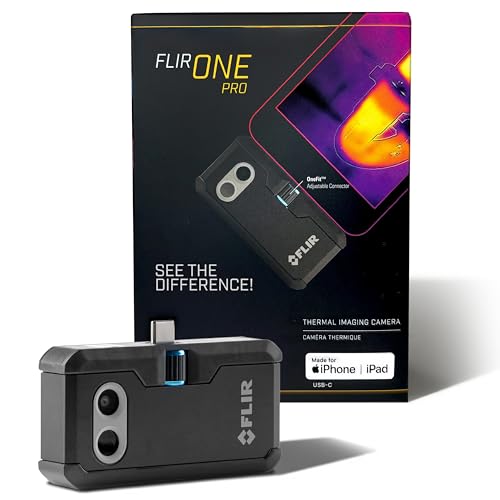
Flir One Pro Thermal Camera -- Best for Inspections
Attach the Flir One Pro to an iPhone or Android phone and you gain the ability to spot heat loss, moisture intrusion, overloaded circuits, and HVAC issues that are invisible to the naked eye. The MSX image enhancement blends thermal and visual data so you can see exactly where on a wall the problem sits. Resolution is 160x120 thermal pixels, which is sufficient for residential and light commercial work. Electricians, energy auditors, and waterproofing contractors use thermal cameras regularly. The smartphone attachment format means you are not carrying a separate device, which lowers the barrier to pulling it out frequently.
What we liked
- COMPATIBILITY: Infrared camera plugs directly into phone charging port and connects with i
- SUPER RESOLUTION: Vivid IR technology upscales the image to 480x360 from 160x120 for great
- THERMAL INSPECTION GUIDES: Within the Flir One app is a step-by-step inspection guide to h
- ACCURACY: Measures temperature within ±3°C or ±5% when the unit is within 15 °C - 35 °C an
- JOBSITE TOUGH: Built to take the abuse that working on a jobsite dishes out every day, rat
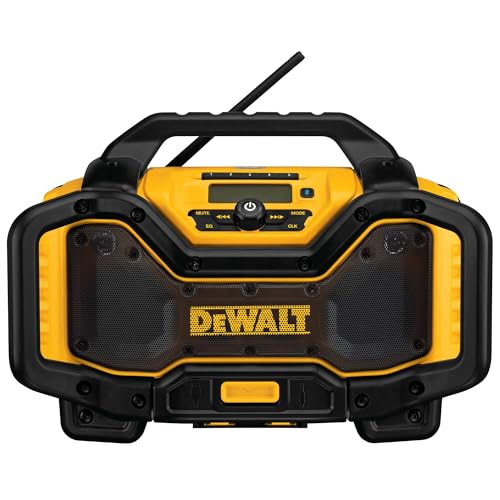
DeWalt DCR025 Bluetooth Jobsite Radio -- Best for Crew Morale and Communication
A good jobsite radio is surprisingly undervalued as a productivity tool. The DCR025 runs on any DeWalt 20V or FLEXVOLT battery pack, so no separate power cord is needed, and also plugs into AC power when available. Bluetooth range covers most residential footprints. Sound output is loud enough to cut through tool noise without straining the speaker. The rubberized housing handles drops well. It also acts as a USB charging hub for phones and tablets, which keeps devices topped up during a long day without hunting for wall outlets.
What we liked
- The portable radio is able to be powered by 20V MAX* and FLEXVOLT 20V/60V MAX* batteries,
- 3 AMP charging of 20V MAX and 60V MAX DEWALT Batteries when the battery operated radio is
- The bluetooth radio has up to 100 feet range
- 2 Additional AC power outlets
- Aux & 2.1 AMP USB Charging Ports
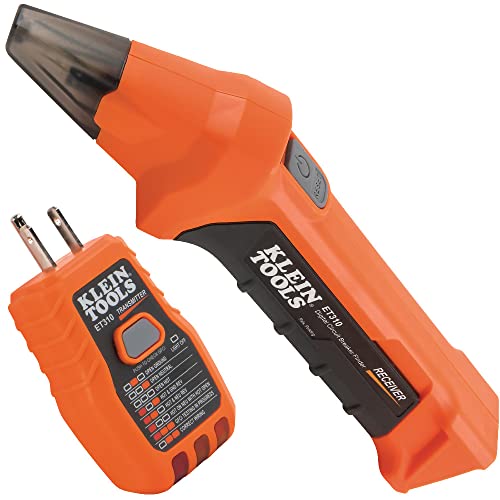
Klein Tools ET310 Circuit Breaker Finder -- Best for Electrical Work
Finding which breaker controls which circuit in an older panel is one of the more tedious tasks in electrical rough-in or service work. The Klein ET310 plugs a transmitter into any outlet and the receiver beeps and lights up when you scan the correct breaker. Detection works through metal panels without contact. The transmitter also works through GFCI-protected outlets, which many competing finders cannot. Battery life is long and the unit is compact enough to fit in an apron pocket. For electricians and remodelers working in buildings with unlabeled panels, this gadget saves significant time.
What we liked
- ACCURATE CIRCUIT BREAKER IDENTIFICATION: Quickly locate the correct breaker with precision
- TWO-PART SYSTEM: Consists of a Transmitter connected to the outlet/fixture and a Receiver
- CLEAR INDICATIONS: The Receiver provides visual and audible cues when the correct breaker
- WIDE COMPATIBILITY: Operates on 90-120V AC circuits, making it suitable for a variety of e
- BUILT-IN GFCI TESTER: The Transmitter includes a GFCI outlet tester, enabling you to inspe
How to choose
What to consider
Prioritize durability first. A gadget rated for office use will fail on a construction site within a season. Look for MIL-SPEC drop ratings and IP dust or water resistance appropriate for your environment. Then evaluate whether the gadget solves a problem you face daily or occasionally. High-frequency pain points justify higher investment. Battery compatibility matters too. Tools that share your existing battery platform save money on chargers and spares. Finally, check the manufacturer's warranty and whether replacement parts are available, because even durable tools eventually need service.
What to consider
For more on outfitting for the trades, see our article on [best construction gloves for winter](/articles/best-construction-gloves-for-winter) and [best construction headlamps](/articles/best-construction-headlamp). For details on how we select and evaluate products, visit [/methodology](/methodology).
Common questions
A construction gadget earns its place when it saves more time or prevents more errors than its cost justifies over a season of use. Durability matters as much as features because a device that fails after a few drops is worse than useless. Look for an IP rating of at least IP54 for dust and splash resistance, and check the drop-test rating before buying anything you plan to carry daily.
For contractors who manage plans, RFIs, and punch lists in the field, a rugged tablet pays for itself quickly compared to repeatedly replacing consumer tablets that crack from a single drop. The key value is keeping digital plans and communication in one device that survives the environment. If you only occasionally reference drawings, a standard tablet with a protective case may be enough.
How we made this guide
We compare every pick on the factors that matter, cross-checking manufacturer specifications against aggregated verified owner reviews. We rank independently and never take payment for placement. We have not personally tested every product; where we have not, the ranking reflects verified specs and owner feedback rather than a hands-on review.
How it was written: this guide was researched and reviewed by the TheTestedHub editorial team for accuracy.
Affiliate disclosure: TheTestedHub is reader-supported. When you buy through links on our site, we may earn a commission at no extra cost to you.

