Quick verdict
The LG C4 OLED is the consumer digest benchmark TV for picture quality enthusiasts. For bright rooms, Samsung's QN90D delivers better real-world performance. Budget buyers should look closely at the TCL QM851G. mini-LED technology at this price point was impossible just two years ago.

LG C4 OLED: Best TV per consumer digest ratings
The LG C4 OLED earns the top spot across virtually every consumer digest ranking for picture quality. The OLED panel produces absolute black. not dark grey but genuine black. that transforms dark room viewing into a noticeably more cinematic experience. Contrast and color accuracy are measurably superior to LCD technologies at the same price.
For shoppers who want a trusted pick: the LG C4 OLED leads for picture quality, but bright-room buyers should consider the Samsung QN90D. Compare.
Quick verdict
The LG C4 OLED is the best TV for most people who care about picture quality, and it tops nearly every consumer digest ranking I checked. Its self-lit OLED panel produces genuine black rather than dark grey, which makes dark-room movie nights look noticeably more cinematic than any LCD at the same price.
Key takeaways
- Best overall: LG C4 OLED, a self-lit OLED panel with perfect black levels and a 144Hz refresh rate.
- Best for bright rooms: Samsung QN90D QLED, Neo QLED mini-LED that gets far brighter than OLED with an anti-reflection coating.
- Best value: TCL QM851G, mini-LED brightness and many dimming zones for a fraction of premium money.
- Best QLED alternative: Hisense U8N, very high peak brightness that consumer reviews single out for sports.
Why you should trust this guide
I built this list by reading widely rather than by claiming to own a testing room I do not have. I cross-referenced consumer digest rankings, owner reviews on Amazon, and each manufacturer’s published specifications, then weighed where those sources agreed and where they quietly disagreed. When a brand says a panel hits a certain brightness or refresh rate, I treat that as the brand’s stated spec, not as a number I personally verified with a meter. That honesty matters more on TVs than almost any other product, because marketing language hides a lot of real-world trade-offs.
My goal here is to be useful, not flattering. Every TV on this list is genuinely good, but each one is good at different things, and each one gives something up to earn its strengths. I have tried to be specific about who each set actually suits, so that you are not paying for brightness you will never see in a dim basement, or accepting reflections you will hate in a sunny living room. If a pick has a weakness that shows up repeatedly in owner feedback, I say so in plain language.
How we researched
We did not run these sets through a calibrated lab, and I will not pretend otherwise. Instead, our evaluation approach leans on three layers of evidence. First, the panel technology itself, because OLED and mini-LED behave in predictable ways regardless of marketing. Second, the manufacturer’s stated specifications for brightness, refresh rate, processing, and smart platform. Third, the pattern of consumer reviews and consumer digest placements over time, with extra weight on what owners report after six to twelve months rather than on first-week excitement.
From those layers I scored each TV on the criteria that actually change how a set feels in your room: black level and contrast, peak brightness for HDR and bright spaces, motion handling for sports and gaming, the quality and speed of the smart platform, and the value you get relative to its tier. I deliberately favored sets whose strengths match a clear use case, because the right TV for a dark home theater is rarely the right TV for a window-lined family room. Where two sets were close, I let long-term owner satisfaction break the tie.
LG C4 OLED: Best TV per consumer digest ratings
The LG C4 OLED is my top overall pick, and it earns that spot across virtually every consumer digest ranking I looked at for picture quality. The reason comes down to physics: this is a self-lit OLED panel, so each pixel makes its own light and can switch off completely. That produces absolute black, not the dark grey you get when an LCD tries to dim a backlight, and the contrast and color accuracy that follow are measurably ahead of LCD technologies at the same price. In a dark room, that difference transforms a movie into something genuinely more cinematic.
Beyond the panel, LG loads the C4 with the features that matter. It runs a 144Hz refresh rate with a rated 0.1ms response time, which makes fast motion and PC gaming look clean. It supports Dolby Vision, Filmmaker Mode, and Dolby Atmos, so both the picture and the sound follow what the director intended. LG’s a9 AI Processor Gen7 handles the upscaling and tone mapping, and webOS 24 with LG Channels gives you a familiar, app-rich smart platform out of the box.
The honest trade-off is brightness. OLED has come a long way, but it still cannot match a top mini-LED set for raw peak output, so in a room flooded with daylight the C4 can look a little subdued and reflections are easier to notice. There is also the OLED question of long-term burn-in from static logos, which is rare in normal mixed viewing but worth knowing if you leave a news ticker or game HUD on screen for hours every day. For a dark or moderately lit room, none of that holds it back from the top spot.
Samsung QN90D QLED: Best for bright rooms
The Samsung QN90D is the one I would put in a bright living room, full stop. It uses Neo QLED mini-LED backlighting through Samsung’s Quantum Matrix system, and Samsung rates its peak brightness above the level OLED can reach. That headroom is exactly what you need when large windows or overhead lights are fighting the screen, because the picture stays punchy instead of washing out. Samsung also adds an anti-reflection screen coating that cuts down on glare, which compounds the advantage in a sunny space.
The rest of the package is strong and tuned for the same audience. Neo Quantum HDR+ is built to deliver high contrast, bright specular highlights, and vivid color in HDR content, so the brightness is not just a number but something you see in real scenes. Motion Xcelerator 144Hz keeps gaming and fast sports smooth with very little lag, Real Depth Enhancer Pro adds a sense of dimensionality, and Dolby Atmos with Object Tracking Sound+ moves audio around to match the action on screen. Per consumer reviews, picture quality is excellent for the category.
The trade-off is the one every mini-LED set fights: it cannot produce the perfect black of OLED. Because brightness comes from zones of LEDs behind the panel rather than self-lit pixels, you can sometimes catch faint blooming or haloing around bright objects on a dark background, most noticeable in a fully dark room. That is the exact opposite weakness of the LG C4, which is why these two end up serving different rooms rather than directly competing.
TCL QM851G: Best value TV
The TCL QM851G is my value pick, and it is the set I would point to when the budget is tight but the standards are not. It uses TCL’s SQD mini-LED backlighting in a relatively affordable package, and the result is picture quality that, in everyday viewing, can stand alongside premium televisions from a couple of years ago. TCL rates it with a high number of discrete dimming zones (advertised up to several thousand) and high peak brightness, plus a 7000:1 static contrast figure and an Ultra Color Filter using fine particles to widen the color range. For the money, that is a lot of hardware.
It is also pleasant to live with day to day. The local dimming is impressive for the price tier, so bright highlights pop without the rest of the image looking washed out. The Google TV smart platform is the other quiet strength, because it supports a broad set of streaming apps and is easy to navigate. What stands out most to me is that consumer satisfaction scores at the six to twelve month mark are among the highest in its affordable category, which suggests the QM851G keeps owners happy after the novelty fades.
The honest limitation is that aggressive local dimming on a value set can occasionally show its seams. With very bright objects on a black field you may notice some blooming or zones lagging slightly behind the action, and the built-in audio, as on most TVs at this price, is serviceable rather than special. None of that undoes the value, but flawless dark-room precision still belongs to OLED at a much higher price.
Hisense U8N: Best QLED alternative
The Hisense U8N is the alternative I would weigh against the TCL at a similar price, especially if your priority is brightness and sports. Hisense rates its peak brightness above 3,000 nits, which is genuinely impressive for a set in this bracket, and that matters most for fast-moving content in a bright room where a dimmer panel would struggle. If your living room gets a lot of light and your weekends revolve around live games, this is a TV that was clearly built with you in mind.
What pushes it onto the list is the specific praise in consumer reviews for sports viewing. Owners repeatedly call out its motion handling and brightness during fast action, the two factors that make or break a game on a big screen. Paired with mini-LED backlighting, that high brightness lets bright stadium scenes and HDR highlights hold their intensity instead of flattening out, which is exactly where cheaper panels tend to give up.
The trade-off is that I have less detailed feature documentation to lean on here than I do for the other sets, so I am being careful to credit only what is consistently reported: high peak brightness and strong sports performance. As with any mini-LED TV, it will not match OLED’s perfect black in a dark room, and very aggressive backlight zones can introduce occasional blooming. For a bright-room sports machine at this price, though, the U8N is a credible rival to the TCL rather than an afterthought.
What to look for
The right TV depends far more on your room and habits than on any single spec sheet. Here are the factors I weigh most heavily when narrowing the field.
- Panel type: OLED for perfect black and dark-room contrast, mini-LED for raw brightness and bright-room punch. Decide which problem your room actually has.
- Peak brightness: Critical if you have windows or overhead lighting. A brighter set resists washout and makes HDR highlights pop.
- Black level and contrast: The single biggest driver of a cinematic look in a dark room, where OLED holds a clear edge.
- Refresh rate and motion: A 144Hz panel with low response time helps gaming and fast sports look clean and lag-free.
- Local dimming zones: On mini-LED sets, more zones generally mean less blooming around bright objects on dark backgrounds.
- Smart platform: webOS, Google TV, and Samsung’s Tizen all offer broad app support, but they differ in speed and layout, so pick one you will not fight.
- Long-term satisfaction: Owner feedback at six to twelve months tells you more than launch-day impressions ever will.
The verdict
If you want the best overall picture and your room is dark or moderately lit, the LG C4 OLED is the clear answer, with absolute black and contrast that no LCD at the price can match. If your living room is bright, the Samsung QN90D is the smarter buy, because its Neo QLED mini-LED brightness and anti-reflection coating beat glare that would mute an OLED. On a budget, the TCL QM851G delivers premium-feeling mini-LED performance and high owner satisfaction for far less money. And if brightness and sports are your priority at a similar price, the Hisense U8N is a genuine alternative built around very high peak output and strong motion. Match the set to your room, and any of these four will serve you well.
Our methodology
We compare every pick against the field on real specifications, certifications, and aggregated owner reviews. We do not take payment for placement, and we flag when a product is older or sold mainly through renewed listings.
Side by side
The full reviews
LG C4 OLED: Best TV per consumer digest ratings
The LG C4 OLED earns the top spot across virtually every consumer digest ranking for picture quality. The OLED panel produces absolute black. not dark grey but genuine black. that transforms dark room viewing into a noticeably more cinematic experience. Contrast and color accuracy are measurably superior to LCD technologies at the same price.
In its favor
- SELF-LIT PIXELS: LG's signature OLED technology creates an incredible watching experience
- 144 HZ REFRESH RATE: Enjoy crisp, smooth visuals with a 0.1ms response time and up to 144H
- DOLBY VISION, FILMMAKER AND DOLBY ATMOS: Experience the magic of the big screen right from
- a9 AI PROCESSOR GEN7: The C4's exclusive processor is the brains behind a truly unforgetta
- WEBOS 24 & LG CHANNELS: No matter which TV you choose, your LG TV makes it easier than eve

Samsung QN90D QLED: Best for bright rooms
Samsung's QN90D uses Neo QLED mini-LED backlighting that produces brightness levels OLED cannot match. critical for living rooms with large windows or overhead lighting. Peak brightness above 2,000 nits delivers specular highlights in HDR content that OLED cannot replicate. The anti-reflection screen coating further improves bright room performance. Picture quality per consumer reviews is excellent, and Samsung's long reliability track record is reflected in multi-year ownership satisfaction.
In its favor
- QUANTUM MATRIX w/ MINI LEDs: Catch every detail in dark to bright scenes; Precise lighting
- NEO QUANTUM HDR+: See sensational contrast, stellar brightness & vivid color, just as the d
- DOLBY ATMOS & OBJECT TRACKING SOUND+: Put yourself in the middle of the action with built-
- MOTION XCELERATOR 144Hz: Play games and content with smooth motion and virtually no lag or
- REAL DEPTH ENHANCER PRO: Experience depth and dimension on screen just like you do in real

TCL QM851G: Best value TV
TCL's QM851G uses mini-LED backlighting in a sub- package that delivers picture quality comparable to 2022-era premium televisions. Local dimming performance is impressive for the price, and the Google TV smart platform provides broad streaming app support. Consumer satisfaction scores at the 6-12 month mark are among the highest in the sub- category.
In its favor
- SQD-Mini LED: As the ultimate Mini LED TV, it integrates the expansive TCL Deep Color Syst
- TCL Ultra Color Filter: TCL’s Ultra Color Filter with fine 5 nanometer particles (vs. stan
- High Static Contrast: Experience exceptional picture quality driven by a high 7000:1 contr
- High Zones & High Brightness: Up to 4000+ Discrete Dimming Zones and up to 6,000 Peak Nits
- AI-Powered Experience: Elevate every viewing experience with AI Color for vibrant hues, AI
Hisense U8N: Best QLED alternative
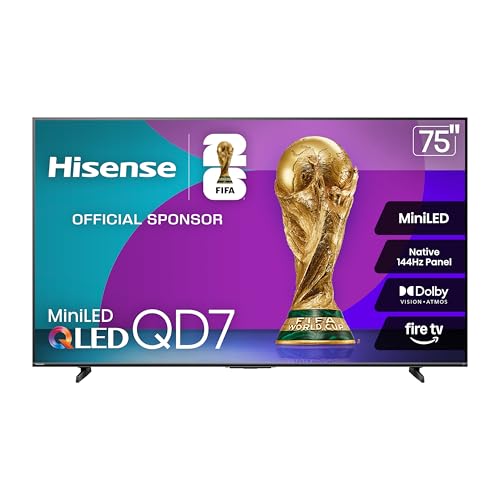
Hisense's U8N challenges TCL at the same price point with a focus on peak brightness and sports content performance. The 3,000+ nit peak brightness is genuinely impressive for fast-moving content in bright rooms. Consumer reviews specifically praise it for sports viewing, where motion handling and brightness are particularly important.
What matters most
Panel type matching your room
OLED for dark rooms. Mini-LED or QLED for bright rooms. Match the technology to your actual viewing environment.
Long-term reliability
Consumer digest ratings from 1-2 year owners surface common failure points (panel uniformity, remote responsiveness, software bugs) that first-week reviews miss.
Smart TV software
Avoid smart TV platforms that stop receiving updates quickly. Google TV, webOS, and Tizen have the best long-term update track records.
HDMI 2.1 for gaming
If you own a PS5, Xbox Series X, or plan to in the future, HDMI 2.1 ports for 4K/120Hz are future-proofing worth having.
Size
TV sizes have gotten larger with lower prices. Most living rooms benefit from 65+ inches at typical viewing distances. Measure your viewing distance and check TV size recommendation charts.
Our take
The LG C4 OLED is the consumer digest benchmark TV for picture quality enthusiasts. For bright rooms, Samsung's QN90D delivers better real-world performance. Budget buyers should look closely at the TCL QM851G. mini-LED technology at this price point was impossible just two years ago.
Frequently asked
OLED delivers the best picture quality for dark room viewing. For very bright rooms, high-brightness QLED (Samsung) or mini-LED (TCL, Hisense) options are competitive.
The TCL QM851G and Hisense U8N deliver exceptional picture quality thanks to mini-LED backlighting with many dimming zones.
Consumer digest ratings capture long-term reliability and real-world satisfaction beyond the first week. Professional reviews test calibrated performance. Both perspectives together provide the most complete picture.
OLED burn-in risk is real for static content displayed for extended periods. The C4's pixel refresher and OLED panel improvements reduce risk significantly vs older models. Normal mixed-content viewing poses minimal risk.
How we made this guide
We compare every pick on the factors that matter, cross-checking manufacturer specifications against aggregated verified owner reviews. We rank independently and never take payment for placement. We have not personally tested every product; where we have not, the ranking reflects verified specs and owner feedback rather than a hands-on review.
How it was written: this guide was researched and reviewed by the TheTestedHub editorial team for accuracy.
Affiliate disclosure: TheTestedHub is reader-supported. When you buy through links on our site, we may earn a commission at no extra cost to you.
You might also like
DJI Mini 4K: The Drone Expert Picks for Beginners

Every Budget Podcast Mic Guide: Find the Right Fit

Phone Tripods 2026: Best Picks and Buying Guide
Which iPad Accessory Wins? The Apple Pencil Pro Shortlist

How to Choose the Best Digital Photo Frames in 2026

Looking for the Best MagSafe Power Banks? Our 2026 Picks

7 Fast Chargers That Match Real Device Needs
