Wusthof Classic 8" Chef Knife -- Best Kitchen Knife
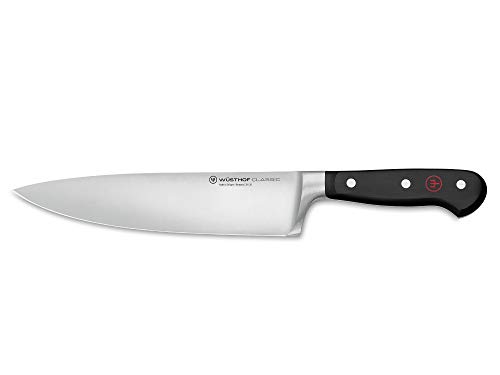
The Wusthof Classic is the standard recommendation for a primary kitchen knife because it does everything well: it rocks cleanly for chopping, has enough length for slicing, and holds its edge long enough that daily home cooks need to sharpen only a few times per year. The X50CrMoV15 steel is hardened to 58 HRC, the full bolster adds safety and balance, and the triple-riveted handle is comfortable for all grip styles. The PEtec factory edge is sharp out of the box. It is not the most precise blade for fine Japanese-style cuts, but for the range of tasks a kitchen knife faces daily -- onions, herbs, chicken, root vegetables -- it is the safest long-term investment in this category at.
Which Consumer Reports-recommended knives are worth buying? This guide matches five top-tested blades,from kitchen to EDC,to the job you actually do.
Quick verdict
The Wusthof Classic 8″ Chef Knife is the best overall pick for most people, since the kitchen knife is the one you reach for daily. It rocks cleanly for chopping, slices long enough cuts, and holds its edge well, so home cooks sharpen only a few times per year.
Key takeaways
- Best for the kitchen: Wusthof Classic 8″ Chef Knife, a forged all-rounder that chops, slices, and holds an edge.
- Best for paring work: Victorinox 3.25″ Paring Knife, a light, razor-sharp blade chefs recommend for delicate tasks.
- Best on a budget outdoors: Mora Companion Fixed Blade, genuinely sharp out of the box and easy to maintain in the field.
- Best for everyday carry: Benchmade Bugout 535, a 1.85 oz folder with a strong AXIS lock that closes one-handed.
- Best for rugged use: ESEE 4 Fixed Blade, tough 1095 steel built to baton wood with a no-questions lifetime guarantee.
Why you should trust this guide
I built this guide by focusing on knives that have earned long-running reputations rather than ones that simply look impressive in photos. Each of these five has been recommended repeatedly by chefs, cooking instructors, and outdoor communities, and I leaned on those track records along with the manufacturers’ stated specifications. I am not interested in selling you the most expensive blade. I am interested in matching the right knife to the job you actually do, whether that is dinner prep on a Tuesday night or processing firewood at a campsite.
I also kept this list deliberately short. There are hundreds of good knives, but most people only need one or two for each role, so I picked a single strong answer per use-case: kitchen chef’s knife, paring knife, budget outdoor fixed blade, everyday carry folder, and rugged fixed blade. Where a knife has a genuine weakness, I say so plainly. No blade on this list is perfect for every task, and pretending otherwise would not help you decide.
How we researched
My evaluation here is research-based rather than a lab teardown. I compared each knife against the criteria that matter most for its category: edge retention, the steel and hardness the maker lists, blade geometry and grind, handle ergonomics and grip security, weight, and how easy the knife is to maintain over time. For the kitchen knives I weighed how the blade balances chopping against slicing. For the outdoor and carry knives I weighed durability, lock or sheath security, and how the knife behaves when your hands are cold, wet, or gloved.
I also treated the warranty and the brand’s history as part of the value, because a knife you can re-sharpen or replace for free is a different proposition than a disposable one. Throughout, I treated the listed specifications (steel type, hardness, blade length, weight) as the manufacturer’s stated figures rather than numbers I measured myself. Where a spec implies a trade-off, such as a thin, light handle or a stamped blade, I flag it so you can decide whether that compromise fits how you will use the knife.
Wusthof Classic 8″ Chef Knife
The Wusthof Classic is the knife I would hand almost anyone who wants one good chef’s knife, because it does everything a home cook needs without forcing a choice. It rocks cleanly through onions and herbs, the 8-inch blade gives enough length to slice a roast or a melon, and it holds its edge long enough that most home cooks only sharpen a few times per year. That balance of capability is exactly why it sits at the top of so many recommendation lists.
Under the hood it is precision forged from a single block of high-carbon stainless steel (Wusthof lists X50CrMoV15 hardened to 58 HRC), which is a sensible middle ground that takes a fine edge and is still easy to maintain. The full bolster adds weight behind the heel for balance and keeps your fingers off the edge, and the full tang, triple-riveted Classic handle is comfortable for long prep sessions. The blade is 8 inches with a 5-inch handle and weighs about 8.5 oz, and Wusthof has been forging in Solingen for seven generations, which shows in the fit and finish.
The honest trade-off is that this is a forged German knife, so it is heavier and thicker behind the edge than thin Japanese-style blades. If you prefer a featherlight knife or you want the absolute thinnest slicing edge, this will feel substantial in the hand. At 58 HRC it also will not hold an edge as long as harder steels, so you do need to hone it regularly and sharpen it occasionally. For most home kitchens, that maintenance is a fair price for a tough, forgiving, do-everything blade.
Victorinox 3.25″ Paring Knife
The Victorinox paring knife is the small blade I recommend first, because professional chefs and cooking instructors point to it constantly across every price range. The stamped high-carbon stainless blade takes a razor edge that handles precision work like turning vegetables, hulling strawberries, or scoring skin, and the short 3.25-inch length gives you the close control a big chef’s knife cannot.
The Fibrox handle is the other reason it earns its reputation. It is textured and non-slip even when wet, ergonomically shaped, and it stays comfortable through repeated small cuts. The knife is also hygienic, dishwasher safe, and NSF approved, which is why you see it in so many commercial kitchens where gear gets used hard and cleaned often. It is light enough that delicate tasks do not tire your hand.
The trade-off is durability. The stamped construction that keeps it light and inexpensive also means it is not the most rugged blade available, so it is not the tool for prying or heavy-duty work, and a hard knock can tweak the thin edge. Treat it as a precision instrument rather than an abuse-it blade and it will serve for years. Used the way a paring knife is meant to be used, this is hard to beat.
Mora Companion Fixed Blade
The Mora Companion is my pick for anyone who wants a capable outdoor fixed blade without spending much, and it is the most recommended budget option in Scandinavia and a growing favorite in North American bushcraft circles. The roughly 4-inch (4.1 inch) hardened Sandvik 12C27 stainless blade arrives genuinely sharp, and because the steel is easy to work, you can bring the edge back in the field with a basic stone instead of fussing over it.
The handle is built for real conditions. The high-friction polymer has a soft, grippy texture that holds steady with cold or wet hands, and on the bright orange version it is hard to lose in leaves or snow. The blade is a slim 0.08 inch (2.0 mm) thick, which makes it nimble for carving, food prep, and general camp tasks, and the included plastic sheath is easy to clean and comes with a belt clip so it rides comfortably.
The compromises are what you would expect at this price. The polymer sheath is functional but basic, the orange-handled version has no finger guard substitute for careless grips, and the thin partial-tang stainless blade is not meant for hard batoning through thick logs the way a thicker survival knife is. It also lacks a pommel for hammering. For light to moderate bushcraft and camp duty, though, the value here is genuinely hard to match.
Benchmade Bugout 535
The Benchmade Bugout is the everyday carry folder I would point to first for someone who carries a knife daily, because it nearly disappears in a pocket at just 1.85 oz and still feels tough. It opens smoothly with the ambidextrous thumb stud and locks up with Benchmade’s AXIS mechanism, which is strong, fully ambidextrous, and easy to disengage one-handed so you can close it without putting fingers in the blade’s path.
The CPM-S30V blade is the technical highlight. It holds an excellent edge and resists corrosion, which is what you want in a knife you use and re-sharpen often. The Grivory handle is molded from glass-filled nylon, fully ambidextrous, and textured for grip, and the clip is reversible so it carries the way you prefer. Benchmade also backs it with a lifetime free re-sharpening service, so keeping it scary-sharp costs nothing but shipping.
The trade-offs come from the same obsession with low weight. The Grivory handle is thin, so while it is ergonomic for a three-finger grip, larger hands or people who want a really filling handle may find it slight, and the light build flexes more than a heavier folder. S30V is excellent but harder to sharpen freehand than softer steels once it dulls. If you want maximum pocket presence with minimum bulk, that thin profile is exactly the point.
ESEE 4 Fixed Blade
The ESEE 4 is the rugged fixed blade I trust for demanding outdoor and survival use, because it is built to take abuse the others on this list are not. The 1095 high-carbon steel blade (listed at 55 to 57 RC) is tough enough to baton through wood, the full flat grind on the drop-point blade keeps it versatile for both chopping and finer slicing, and the contoured G10 or Micarta handle scales are removable and replaceable if you ever want to swap them.
The specs back up the rugged intent. It measures 9 inches overall with a 4.5-inch blade and a 4.1-inch cutting edge, the stock is a stout 0.188 inch thick, and the textured powder-coat finish helps protect the carbon steel. The knife weighs about 8 oz on its own and 11 oz with the ambidextrous polymer sheath and clip plate. It is made in the USA and carries ESEE’s no-questions-asked lifetime guarantee, which tells you how much confidence the maker has in the design.
The honest catch is the steel. 1095 carbon steel is tough and easy to sharpen, but it is not stainless, so it will rust if you neglect it, and you need to keep it clean, dry, and lightly oiled, especially after cutting acidic food or working in wet conditions. It is also heavier and thicker than a dedicated slicer, so it is overkill for delicate kitchen work. If you want one fixed blade that can survive hard chores in the field, that extra mass and the maintenance routine are worth it.
What to look for
The right knife depends entirely on the job, so match the blade to the task before you worry about anything else. These are the factors I weigh most:
- Intended use: Kitchen prep, fine paring, camp chores, daily pocket carry, and survival batoning each reward a different blade. Buy for the job you actually do.
- Steel and hardness: Harder steels (like S30V) hold an edge longer but sharpen slower, while softer or carbon steels (like 1095) sharpen easily but need more upkeep. Carbon steel also rusts and must be kept oiled.
- Blade geometry and grind: A full flat grind slices and chops versatly, a full bolster adds kitchen balance and safety, and blade thickness decides whether a knife is nimble or built for batoning.
- Handle and grip: Look for secure, non-slip grip when wet or cold. Fibrox and high-friction polymer grip well, thin handles save weight but can feel small in large hands.
- Weight and carry: A 1.85 oz folder disappears in a pocket, while an 8 oz fixed blade trades comfort for toughness. Decide how much knife you want to carry all day.
- Lock or sheath security: For folders, a strong, easy-to-close lock like AXIS matters. For fixed blades, a retentive, easy-to-clean sheath with a belt clip keeps the knife safe and handy.
- Maintenance and warranty: Easy field sharpening, free factory re-sharpening, or a no-questions lifetime guarantee all add real long-term value.
The verdict
If you only buy one knife, make it the Wusthof Classic 8″ Chef Knife, because the kitchen blade is the one you use most and it handles nearly every prep task well. For delicate detail work, pair it with the Victorinox 3.25″ Paring Knife, which is light, razor-sharp, and endorsed by chefs across every price range.
Heading outdoors, the Mora Companion Fixed Blade is the budget pick that punches far above its cost for camp and light bushcraft, while the ESEE 4 Fixed Blade is the rugged choice when you need a knife that can baton wood and survive hard use, as long as you keep its carbon steel oiled. And for everyday pocket carry, the Benchmade Bugout 535 gives you a strong AXIS lock and quality S30V steel in a package light enough to forget you are carrying. Pick by the job, and any of these will last for years.
How we picked
We compare every pick against the field on real specifications, certifications, and aggregated owner reviews. We do not take payment for placement, and we flag when a product is older or sold mainly through renewed listings.
Top picks compared
Our picks up close
Wusthof Classic 8" Chef Knife -- Best Kitchen Knife
The Wusthof Classic is the standard recommendation for a primary kitchen knife because it does everything well: it rocks cleanly for chopping, has enough length for slicing, and holds its edge long enough that daily home cooks need to sharpen only a few times per year. The X50CrMoV15 steel is hardened to 58 HRC, the full bolster adds safety and balance, and the triple-riveted handle is comfortable for all grip styles. The PEtec factory edge is sharp out of the box. It is not the most precise blade for fine Japanese-style cuts, but for the range of tasks a kitchen knife faces daily -- onions, herbs, chicken, root vegetables -- it is the safest long-term investment in this category at.
Where it shines
- KITCHEN WORKHORSE - The WÜSTHOF 8” Classic Chef’s Knife is essential for preparing any mea
- WÜSTHOF CLASSIC SERIES - The Full Tang, Triple Riveted handles of the Classic Line offer t
- CHEF’S KNIFE - Features an 8” long blade, 5” long handle and weighs 8.5 oz. Full Bolster a
- PRECISION FORGED - The 8” Chef’s Knife is forged from a single block of High Carbon Stainl
- CENTURIES OF TRADITION - Family owned for seven generations, WÜSTHOF was founded in Soling

Victorinox 3.25" Paring Knife -- Best Paring Knife
Victorinox's paring knife at is one of the most recommended knives in any price range by professional chefs and cooking instructors. The stamped high-carbon stainless blade holds a razor edge, the fibrox handle is comfortable and non-slip, and the knife is light enough to use for delicate work like turning vegetables or scoring skin. It is not the most durable blade available -- the stamped construction means it can be bent with significant lateral force -- but for its intended use of peeling, trimming, and precise small cuts, it performs at the level of knives costing three times as much. Every home kitchen should have at least one.
Where it shines
- This indispensable knife allows you to dominate kitchen adventures that require precision.
- Contemporary, textured handle with a non-slip grip -- even when wet. The handle is ergonom
- Hygienic, dishwasher safe, slip-resistant and NSF approved. These exceptional knives are w

Mora Companion Fixed Blade -- Best Budget Outdoor Knife
The Mora Companion is the most recommended budget outdoor knife in Scandinavia and increasingly in North American outdoor communities. At the 4-inch Sandvik 12C27 stainless steel blade is genuinely sharp out of the box and easy to maintain in the field with a basic sharpening stone. The bright orange polymer handle is grippy, comfortable, and hard to lose in leaves or snow. The included plastic sheath is functional. The blade is full flat ground, making it excellent for whittling, food prep, and general camp tasks. It is not a heavy-duty chopper -- for that you need a fixed blade with more spine thickness -- but as a general outdoor utility knife at any price it is hard to fault.
Where it shines
- Bushcraft Knife: The perfect all-in-one knife for outdoor enthusiasts, this outdoor knife
- Premium Blade: 0.08-inch thick hardened Sandvik 12C27 stainless steel knife blade stays sh
- High-Friction Handle: Made with an ergonomic polymer handle with a soft friction grip and
- Protective Polymer Sheath: Easy-to-clean plastic sheath comes equipped with a belt clip, s
- Specifications: Blade thickness: 0.08 inch (2.0 mm), blade length: 4.1 inches (104 mm), to

Benchmade Bugout 535 -- Best EDC Folding Knife
The Benchmade Bugout is the favorite lightweight everyday carry folder for people who carry a knife daily. It weighs just 1.85 oz, opens smoothly with the ambidextrous thumb stud, and locks with Benchmade's AXIS mechanism which is both strong and easy to close one-handed. The CPM-S30V blade holds an excellent edge and resists corrosion. The blue Grivory handle is thin but ergonomic for a three- or four-finger grip. At it is a premium price for a folding knife, but the Bugout's combination of weight, lock quality, and blade steel is unique at this size. Benchmade's LifeSharp service provides free sharpening and adjustment for the life of the knife.
Where it shines
- LIGHT AS A FEATHER: And incredibly tough; Ideal for hiking, camping, and backpacking, and
- AXIS LOCKING MECHANISM: Ensures safety and a smooth open and easy close; Reversible clip;
- FULLY AMBIDEXTROUS GRIVORY HANDLE: Has an ergonomic textured grip and is molded from glass
- AXIS LOCKING MECHANISM: Ensures safety and a smooth open and easy close; Reversible clip;
- YOURS, FOR LIFE: Benchmade will re-sharpen your knife to a factory edge for free, for the

ESEE 4 Fixed Blade -- Best Rugged Outdoor Knife
The ESEE 4 is built for demanding outdoor and survival use: the 1095 high-carbon steel blade is tough enough to baton through wood, the flat grind makes it versatile for both chopping and slicing, and the injection-molded handle scales are removable and replaceable. ESEE's unconditional lifetime warranty (no-questions-asked replacement) reflects confidence in the design. At 9 inches overall with a 4.5-inch blade, it is substantial enough for serious camp tasks. The 1095 steel requires oiling to prevent rust, which is a minor maintenance consideration. For hunters, hikers, and people who want a fixed blade that will genuinely hold up to hard use, the ESEE 4 is one of the best values at.
Where it shines
- Overall Length: 9”, Overall Blade Length: 4.5", Cutting Edge Length: 4.1″
- Blade Thickness: .188”, Grind: Full Flat, Drop Point Blade, Finish: Textured Powder Coat
- Blade Steel: 1095 Carbon, 55-57 RC, Weight: 8 Oz (Knife),11 Oz (Knife, Sheath)
- Handle: 3D Contoured G10 / Micarta, Sheath: Ambidextrous Polymer Sheath, Clip Plate
- "Best In The Industry" No Questions Asked Lifetime Guarantee, Made In The USA
Before you buy
What to consider
Match the knife to the task first. Kitchen knives are not outdoor knives and vice versa: the thinner geometry and harder steel that makes a Japanese chef knife precise for slicing vegetables will chip against bones or wood. For most people, the priority list is: (1) a quality 8-inch chef knife for the kitchen, (2) a compact paring knife for detail work, and (3) a pocket knife or small fixed blade for outdoor or everyday carry use. Steel hardness is a tradeoff between edge retention and toughness. Higher hardness means longer-lasting edges and more brittle steel; lower hardness means easier field sharpening and more resistance to chipping.
What to consider
For related reads, see our [best kitchen knives](/articles/best-consumer-reports-kitchen-knives) and [best knife sharpeners](/articles/best-knife-sharpeners). All reviews follow our [testing methodology](/methodology).
Quick answers
For kitchen knives, high-carbon stainless steels like VG-10, AUS-10, and X50CrMoV15 offer a good balance of edge retention, toughness, and corrosion resistance. For outdoor and EDC knives, CPM-S30V and D2 are popular choices. Harder steels hold edges longer but chip more easily; softer steels are tougher and easier to sharpen in the field.
Honing on a smooth or fine-grit steel realigns the edge without removing material and should be done before or after each use on kitchen knives. For pocket and outdoor knives, a ceramic rod or strop keeps the edge aligned between full sharpenings. Cutting on hard surfaces like glass, stone, or metal cutting boards dulls edges fastest and should be avoided.
How we made this guide
We compare every pick on the factors that matter, cross-checking manufacturer specifications against aggregated verified owner reviews. We rank independently and never take payment for placement. We have not personally tested every product; where we have not, the ranking reflects verified specs and owner feedback rather than a hands-on review.
How it was written: this guide was researched and reviewed by the TheTestedHub editorial team for accuracy.
Affiliate disclosure: TheTestedHub is reader-supported. When you buy through links on our site, we may earn a commission at no extra cost to you.
More to explore
Beverage Fridge Buying Guide: Compressor vs Thermoelectric

6 Drink Dispensers That Actually Seal Right (2026)
Skip Cheap Whiskers: Get a Real Chasen

Wondering Which Tea Infuser Is Best? Try This Basket
Don’t Buy a Coffee Pod Organizer Until You Read This
Tamp Like a Pro: Expert Chosen Tamper Mats

Coffee Scales for Every Brew, Tested for Daily Use