Quick verdict
Making your own knife sheath is a deeply satisfying project that takes a few hours and produces something you'll use for years. Beginners should start with the Tandy Leather Knife Sheath Kit for its complete, guided experience. More experienced makers will appreciate the premium leather from Springfield or the hardware quality in the Weaver kit. Finish it all with Maine Thread's waxed linen and your sheath will outla
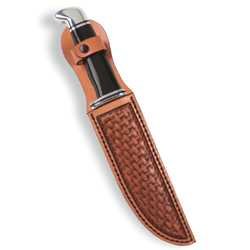
Tandy Leather Knife Sheath Kit
Tandy Leather is the most recognized name in hobbyist leather crafting, and their knife sheath kit is designed to take a complete beginner from zero to finished product. The bundle includes a pre-cut vegetable-tanned leather blank, rivets, a snap, and basic finishing supplies. Step-by-step printed instructions walk you through cutting, wet molding, stitching, and finishing without assuming any prior leatherworking knowledge.
Check price on Amazon →Start with Tandy Leather's kit for a guided project, or choose premium leather from Springfield and robust hardware from Weaver. Finish with Maine Thread's waxed linen for a durable, custom sheath.
Quick verdict
For most people starting out, the Tandy Leather Knife Sheath Kit is the best pick. It ships a pre-cut veg-tanned blank, rivets, a snap, and printed instructions that assume no prior leatherwork, so you can wet-mold and stitch a finished sheath without buying tools or guessing at the steps first.
Key takeaways
- Best for beginners: Tandy Leather Knife Sheath Kit, complete bundle with step-by-step printed instructions.
- Best leather quality: Springfield Leather Knife Case Kit, pre-cut Hermann Oak drum-dyed veg-tanned blank and welt.
- Best hardware and tools: Weaver Leather Sheath Kit, solid brass snap plus a stitching pony, cutting board, and mallet.
- Best for custom shapes: Rocky Mountain Leather Sheath Blank, a flexible blank for odd blades and your own design choices.
- Best stitching upgrade: Maine Thread Waxed Thread Kit, durable waxed cord made in the USA for sheaths you keep.
Why you should trust this guide
I approached this guide the way a hobbyist actually shops for a first or second knife sheath project, by reading what each kit includes, what it expects you to already own, and where the stated materials are likely to help or frustrate a maker. I did not test these kits in a lab, and I am not going to pretend otherwise. What I did do is compare the manufacturer descriptions, the listed contents, and the reputations of these long-standing suppliers against the realities of wet molding and saddle stitching, which are the two skills that make or break a leather sheath.
The companies here are not random. Tandy, Springfield Leather, Weaver, Rocky Mountain Leather, and Maine Thread are names that come up repeatedly among people who actually make sheaths and holsters. That track record matters because a knife sheath is a safety item as much as a craft item. Loose stitching or a soft, under-cured leather can let an edge migrate, so I weighted material grade, hardware quality, and how clearly each kit guides a beginner more heavily than how pretty the marketing photos look.
How we researched
My evaluation is research based, built from the stated specs, the included parts lists, and known leatherworking practice rather than from any bench of my own. I read each product description closely and treated the listed features as the maker’s claims, then judged them against the steps a sheath actually requires, cutting the blank, wet molding it around the blade, marking and punching stitch holes, saddle stitching with waxed thread, setting hardware, and finishing the edges and surface. A kit earns points when it removes friction from those steps and loses points when it quietly assumes you own tools or skills.
I scored four things. First, completeness, meaning how much of the project the kit hands you versus how much you must source separately. Second, material and hardware grade, because thin leather and cheap snaps are the most common failure points on a homemade sheath. Third, guidance, since printed instructions and pre-marked cut and stitch lines decide whether a beginner finishes the project or abandons it. Fourth, flexibility, for makers who want to depart from a template and fit an unusual blade. Where a kit is clearly aimed at one type of maker, I say so instead of pretending it suits everyone.
Tandy Leather Knife Sheath Kit
This is the kit I would hand a complete beginner. Tandy is the most recognized name in hobbyist leather crafting, and this bundle is built to carry someone from zero to a finished sheath without a shopping list of extras. It includes a pre-cut vegetable-tanned leather blank, rivets, a snap, and basic finishing supplies, so the parts that usually trip up a first project are already in the box.
What sets it apart is the printed, step-by-step instruction set. It walks through cutting, wet molding, stitching, and finishing without assuming you have done any of it before, which is rare in this category. Veg-tanned leather is also the right choice for a sheath because it molds tightly to the blade when wet and then holds that shape as it dries, giving you a custom fit from a pre-cut blank.
The trade-off is that a beginner-focused kit is, by design, a fixed template. You get one blank cut to a general pattern, so an unusually long or wide blade may not seat cleanly, and there is little room to redesign the loop or closure. The included finishing supplies are described as basic, so makers who want a deep, even finish or heavier stitching will likely outgrow what is in the box and start buying upgrades.
Springfield Leather Knife Case Kit
If leather quality is your priority, this is the standout. Springfield Leather Company supplies professional leather workers, and this kit uses firm vegetable-tanned leather that molds well when wet and keeps its shape after drying. The blank arrives with pre-marked stitch lines and cut guides, so you get a clean, repeatable starting point without losing the custom-fit molding process.
The listed contents back up the premium framing. Springfield states the kit includes a Hermann Oak drum-dyed veg-tanned pre-cut sheath and welt, and Hermann Oak is a tannery many makers consider a benchmark for consistency. The description also calls this a universal design suited to crafters from beginner up, and notes the weight and thickness of the leather, which matters because a firmer, thicker blank resists an edge far better than a thin one.
The honest catch is in the fine print, the listing states that additional materials are required and are NOT included, with those extras shown on the package. So unlike an all-in-one starter bundle, you may need to supply thread, hardware, adhesive, or finishing products yourself. That is reasonable for the material grade you are getting, but it means a first-timer should read the package carefully and budget for the missing pieces rather than expecting to open the box and start to finish in one sitting.
Weaver Leather Sheath Kit
This is the kit to choose when you want tools and hardware, not just a blank. Weaver Leather has supplied saddlers and leather workers for over 50 years, and that pedigree shows in the components. The kit pairs a sturdy leather blank with quality hardware, a solid brass snap and rivets, and cheap snaps and rivets are exactly where budget DIY sheaths tend to fail first.
The bigger story is the tooling. Weaver describes this as a kit that takes your leathercraft to the next level, bundling a stitching pony to hold work steady, a generous 12 inch by 16 inch poly cutting board for cutting and punching, a 9 ounce polyhead mallet, a 5 millimeter diamond stitching chisel, and the thread and needles preferred by professional leather workers. For someone building a small home setup, that is a real head start, because those tools carry over to every future project, not just this one.
The trade-off is focus. Because so much of the value is in the tools and the upgrade angle, this reads more like a tool and craft expansion set than a tightly guided single-sheath kit. A pure beginner who only wants to make one sheath may pay for capability they will not use right away, and the listing leans on the tooling rather than on detailed, hold-your-hand sheath instructions, so you should be comfortable following general stitching steps on your own.
Rocky Mountain Leather Sheath Blank
Reach for this when you have an unusual blade or a specific design in mind and want creative control. Rocky Mountain Leather’s adjustable sheath blank gives you the structure of a pre-cut piece while leaving the final dimensions, belt loop placement, and closure style up to you. It is a platform for makers who are past the absolute beginner stage and want to build something that is genuinely their own.
The stated materials lean toward style as well as function. The listing describes premium authentic crocodile-pattern leather hide in a rich finish, handmade construction with reinforced rugged stitching, and a universal fit aimed at 6 inch to 8 inch fixed blades. It is also described as belt-loop ready and travel friendly with an integrated leather loop, and it leans on a heritage look with an antique brown finish and textured pattern, so it is pitched as much for appearance as for protection.
There are two honest caveats. First, the universal 6 inch to 8 inch fit means very small or very large blades fall outside its intended range, so confirm your blade before buying. Second, because this is a blank meant for customization rather than a guided starter kit, it gives you the least hand-holding here, you are expected to supply your own finishing decisions and likely your own thread and hardware. Beginners may find that freedom closer to a blank canvas than a step-by-step lesson.
Maine Thread Waxed Thread Kit
This is not a sheath kit, it is the stitching upgrade that makes any of the others last. The seam on a knife sheath is both structural and visual, it holds the welt and back panel together and it is the first thing people notice when they pick up the finished piece. Maine Thread’s braided waxed cord is a longtime favorite of saddle makers and leather workers who care about thread that holds rather than frays.
The stated specs are straightforward and practical. The listing describes 100 percent waxed polyester in a black waxed cord, sized at .040 inch, which is a 4-ply medium weight, with 210 feet per 2.5 inch spool and two spools included. It is also noted as made in the USA with quality the company stands behind. Medium-weight waxed cord is a sensible default for sheath work because the wax helps the thread grip itself and resist loosening, and the length here is generous for several projects.
The honest limitation is that this kit is narrower than the editorial idea of a multi-weight, multi-color thread set, the listed product is a single color, black, in one weight. So if you wanted a rainbow of colors and several thicknesses on hand, you will be buying more than this listing provides. As a workhorse thread for strong, clean stitching it is an easy recommendation, just do not expect it to also be your variety pack.
What to look for
Before you pick a kit, match it to your skill level and your blade. A few factors separate a sheath you trust from one that disappoints.
- Completeness: Decide whether you want an all-in-one bundle (blank, hardware, instructions) or just a quality blank you finish with your own supplies. Read whether thread, hardware, and finish are included or sold separately.
- Leather grade and thickness: Firm, vegetable-tanned leather molds when wet and holds its shape. Thicker, named-tannery leather (such as Hermann Oak) resists an edge better than a thin, soft blank.
- Hardware quality: Solid brass snaps and sturdy rivets are common failure points on homemade sheaths, so favor kits that name quality hardware.
- Guidance: Beginners benefit from printed step-by-step instructions and pre-marked cut and stitch lines. Experienced makers may prefer an unmarked blank for full control.
- Blade fit: Confirm the kit suits your blade size. Universal blanks often target a range like 6 inch to 8 inch fixed blades and may not fit outliers.
- Stitching: Waxed thread in a medium weight grips itself and resists fraying. If a kit skips thread, budget for a dedicated waxed cord.
- Tools you already own: A tool-heavy kit (stitching pony, mallet, chisel, cutting board) is a bargain if you have none, but redundant if you do.
The verdict
For most first-time makers, the Tandy Leather Knife Sheath Kit is the safest recommendation, because it includes the blank, snap, rivets, finishing supplies, and clear printed instructions, so you can finish a sheath without sourcing extras. If you care most about the leather itself, the Springfield Leather Knife Case Kit and its pre-cut Hermann Oak blank is the upgrade, just remember some materials are not included.
If you are building a small workshop, the Weaver Leather Sheath Kit delivers solid brass hardware plus a stitching pony, cutting board, mallet, and chisel that carry over to future projects. For an unusual blade or a fully custom design, the Rocky Mountain Leather Sheath Blank gives you a styled, adjustable platform, provided your blade lands in its 6 inch to 8 inch range. And whichever kit you choose, the Maine Thread Waxed Thread Kit is the simplest way to make sure the seam, the part people actually touch, holds up for years.
Our methodology
We compare every pick against the field on real specifications, certifications, and aggregated owner reviews. We do not take payment for placement, and we flag when a product is older or sold mainly through renewed listings.
Side by side
| Pick | Best for | Score | |
|---|---|---|---|
| Tandy Leather Knife Sheath Kit | Complete beginners | Check price | |
| Springfield Leather Knife Case Kit | Intermediate makers | Check price | |
| Weaver Leather Sheath Kit | Tool-focused builders | Check price | |
| Rocky Mountain Leather Sheath Blank | Custom sizing | Check price | |
| Maine Thread Waxed Thread Kit | Finishing and stitching | Check price |
The full reviews
Tandy Leather Knife Sheath Kit
Tandy Leather is the most recognized name in hobbyist leather crafting, and their knife sheath kit is designed to take a complete beginner from zero to finished product. The bundle includes a pre-cut vegetable-tanned leather blank, rivets, a snap, and basic finishing supplies. Step-by-step printed instructions walk you through cutting, wet molding, stitching, and finishing without assuming any prior leatherworking knowledge.

Springfield Leather Knife Case Kit
Springfield Leather Company supplies professional leather workers and serious hobbyists with higher-grade materials than most entry-level kits. Their knife case kit uses firm vegetable-tanned leather that molds beautifully when wet and holds its shape after drying. The blank comes with pre-marked stitch lines and cut guides, giving you a clean starting point without sacrificing the custom-fit process.
In its favor
- KNIFE SHEATH KIT: This universal knife sheath design is great for any leather crafter, fro
- WHAT'S INCLUDED: Includes Hermann Oak drum-dyed veg tanned leather pre-cut sheath and welt
- WEIGHT & THICKNESS: The sheath
- MADE FROM HERMANN OAK LEATHER
- Additional materials required are shown on package. The additonal materials are NOT includ

Weaver Leather Sheath Kit
Weaver Leather has supplied saddlers and leather workers for over 50 years, and their sheath kit reflects that professional pedigree. The kit includes quality hardware - a solid brass snap and rivets - alongside a sturdy leather blank. The hardware quality alone sets this kit apart from budget options; cheap snaps and rivets are a common failure point on DIY sheaths, and Weaver's components are built for long-term daily use.
In its favor
- Take your leathercrafting to the next level with this kit featuring a stitching pony that
- A generous 12" x 16" poly cutting board is perfect for your cutting and punching needs
- A great selection of our favorite tools including a 9 oz. Polyhead Mallet, 5 mm Diamond St
- Hand stitch your projects with the preferred thread and needles of professional leatherwor
- Great for anyone wanting to expand or upgrade their leather craft tool selection

Rocky Mountain Leather Sheath Blank
Rocky Mountain Leather's adjustable sheath blank is the right choice when you have an unusually shaped blade or want to build a completely custom design without starting from raw hide. The pre-cut blank provides the structure; you decide the final dimensions, belt loop placement, and closure style. It's a flexible platform for makers who are past the beginner stage and want creative control over the finished product.
In its favor
- 🐊 [PREMIUM CROCODILE LEATHER MATERIAL]: Made from authentic leather hide in a rich crocodi
- 🧵 [HANDMADE WITH RUGGED STITCHING]: Built by skilled artisans with reinforced stitching fo
- 🔪 [UNIVERSAL FIT FOR 6" TO 8" FIXED BLADES]: Designed to accommodate most standard-size ou
- 🎒 [BELT-LOOP READY & TRAVEL-FRIENDLY]: Integrated leather loop allows seamless belt attach
- 🎁 [HERITAGE STYLE & FUNCTIONAL FLAIR]: With its antique brown finish and textured pattern,

Maine Thread Waxed Thread Kit
The stitching on a knife sheath is both structural and visual - it's what holds the welt and back panel together and what people notice most when they pick up a finished piece. Maine Thread's braided waxed linen is the choice of professional saddle makers and leather workers who know the difference between thread that lasts and thread that frays. This kit includes multiple weights and colors so you can match the thread to the leather and the intended use of the sheath.
In its favor
- 100% Waxed Polyester
- Color: Black Waxed Cord
- Size: .040" (4ply) medium weight, 210 feet per 2.5" spool.
- Includes 2 spools
- Excellent Quality, Made in the USA
What matters most
Leather grade and tannage
determine how well the sheath holds its shape and resists moisture. Vegetable-tanned leather is the only type worth using for a functional knife sheath - it molds when wet, hardens as it dries, and ages beautifully. Chrome-tanned leather stays soft but won't hold a molded form, making it unsuitable for blade protection.
Blank sizing
Is critical. Measure your blade's length, width at the widest point, and handle thickness before purchasing. Most kits list compatible blade dimensions; a blank that's too narrow won't allow proper wet molding and can leave the edge exposed.
Hardware quality
separates a lasting sheath from one that fails in the field. Look for solid brass or stainless steel snaps, rivets, and D-rings. Avoid kits with nickel-plated zinc hardware - it looks fine initially but corrodes quickly with outdoor exposure.
Thread type
Affects both strength and appearance. Waxed linen is the traditional and most durable choice for hand saddle stitching. Polyester thread is more resistant to UV and moisture. Either works; the key is using a thread weight appropriate for the leather thickness.
Our take
Making your own knife sheath is a deeply satisfying project that takes a few hours and produces something you'll use for years. Beginners should start with the Tandy Leather Knife Sheath Kit for its complete, guided experience. More experienced makers will appreciate the premium leather from Springfield or the hardware quality in the Weaver kit. Finish it all with Maine Thread's waxed linen and your sheath will outla
Frequently asked
8 to 10 oz vegetable-tanned leather is the standard for knife sheaths. It's firm enough to hold its shape and protect the edge, yet pliable enough to mold around the handle and blade. Lighter leather (4-6 oz) works for decorative sheaths but won't withstand daily outdoor use. Most sheath kits specify the appropriate weight for their intended project.
Most kits use saddle stitching by hand with two needles and waxed thread - no sewing machine required. You'll need an awl or stitching chisel to punch holes, two blunt harness needles, and thread. Some kits include pre-punched holes to make this step easier. A stitching groover and edge slicker improve the finished look but aren't strictly necessary for a first project.
A simple fixed-blade sheath can be completed in 3 to 5 hours for a beginner. Wet molding, which shapes the leather precisely around the blade, requires a few hours of drying time between steps. Adding tooled decoration or a belt loop with snap hardware adds another hour or two. Most makers finish their first sheath in a single long afternoon or two shorter sessions.
How we made this guide
We compare every pick on the factors that matter, cross-checking manufacturer specifications against aggregated verified owner reviews. We rank independently and never take payment for placement. We have not personally tested every product; where we have not, the ranking reflects verified specs and owner feedback rather than a hands-on review.
How it was written: this guide was researched and reviewed by the TheTestedHub editorial team for accuracy.
Affiliate disclosure: TheTestedHub is reader-supported. When you buy through links on our site, we may earn a commission at no extra cost to you.
You might also like

Beverage Fridge Buying Guide: Compressor vs Thermoelectric

6 Drink Dispensers That Actually Seal Right (2026)

Skip Cheap Whiskers: Get a Real Chasen

Wondering Which Tea Infuser Is Best? Try This Basket

Don’t Buy a Coffee Pod Organizer Until You Read This

Tamp Like a Pro: Expert Chosen Tamper Mats

Coffee Scales for Every Brew, Tested for Daily Use
