
Celestron NexStar 8SE -- Best Overall
The NexStar 8SE is the benchmark computerized telescope for serious hobbyists. An 8-inch Schmidt-Cassegrain optical tube sits on a single-arm GoTo alt-azimuth mount that can locate over 40,000 objects automatically after a simple two-star alignment. The 2,032mm focal length produces sharp, high-magnification views of planets and double stars, while the large aperture gathers enough light for globular clusters and bright galaxies. The collapsible optical tube reduces carry length for transport.
Check price on Amazon →Celestron NexStar 8SE leads our lineup. Compare top consumer telescopes based on aperture, mount type, and value. Honest picks for every budget.
Quick verdict
The Celestron NexStar 8SE is the best telescope for most serious hobbyists. Its 8-inch Schmidt-Cassegrain optics and fully automated GoTo mount locate over 40,000 objects after a quick two-star alignment, giving you sharp planetary detail and enough light grasp for deep-sky targets in one practical package.
Key takeaways
- Best overall: Celestron NexStar 8SE, big-aperture computerized views with a proven GoTo mount.
- Best budget deep sky: Sky-Watcher 8″ Dobsonian, the most aperture per dollar for faint galaxies and nebulae.
- Best all-rounder for beginners: Orion StarBlast 6i, push-to object finding without a battery-hungry tracking motor.
- Best first telescope: Celestron AstroMaster 70AZ, simple, tool-free setup for the Moon and bright planets.
- Best for serious amateurs: Meade LX90 10″ ACF, larger coma-free optics with GPS and talking AudioStar.
Why you should trust this guide
I built this guide by comparing the published specifications, optical designs, and stated features of each telescope against what experienced amateur astronomers consistently look for: aperture, focal length, mount type, and how quickly you can actually find something in the sky. Rather than chasing marketing language, I focused on the trade-offs that matter once a scope is set up in a dark backyard. Aperture decides how faint a target you can see, the mount decides how relaxing or frustrating the session is, and portability decides whether the scope gets used at all.
Every product below appears because it represents a clear, well-understood category in the hobby. I have weighted the recommendations toward telescopes with a long track record and broad accessory support, because a scope you can upgrade and repair is worth more than one with a flashy feature list. Where a model has a genuine weakness, I say so plainly. No telescope here is perfect, and matching the right one to your experience level matters more than buying the most expensive option.
How we researched
My evaluation is research-based rather than a physical bench trial, so I want to be honest about the method. I read each manufacturer’s stated optical specifications, examined the mount and alignment system each scope uses, and cross-referenced those claims against the well-documented behavior of these optical designs (Schmidt-Cassegrain, Dobsonian reflector, refractor, and advanced coma-free). I treated the listed features as the maker’s stated specs, not as measurements I took myself.
I judged each telescope on five criteria: light-gathering aperture, the focal length and resulting magnification range, how the mount finds and tracks objects, the realistic setup and portability burden, and long-term value through accessory compatibility. I also looked for the honest catch in every model, the thing a newcomer might not anticipate, such as power demands, bulk, or a learning curve, so the recommendation reflects living with the scope and not just its best-case night.
Celestron NexStar 8SE
The NexStar 8SE is the benchmark computerized telescope for serious hobbyists, and it earns the top spot by doing the most useful things well. An 8-inch Schmidt-Cassegrain optical tube, wearing Celestron’s familiar orange livery, sits on a single-arm GoTo alt-azimuth mount. After a simple two-star alignment using SkyAlign, the NexStar+ hand control can slew to and identify more than 40,000 objects automatically, which gets you observing fast instead of fumbling with star charts.
Optically, the 2,032mm focal length delivers sharp, high-magnification views of planets and double stars, and the large 8-inch aperture gathers enough light to reveal fine detail in globular clusters and the brighter galaxies. The folded Schmidt-Cassegrain design keeps the tube short and manageable for the aperture, and Celestron’s wide accessory ecosystem means you can keep upgrading eyepieces, filters, and imaging gear for years.
The honest trade-off is power and balance. The single-arm fork mount runs on batteries that drain quickly, so most owners end up buying an AC adapter or a power tank, an extra cost the kit does not include. The mount is also at the lighter end for an 8-inch tube, so it can wobble slightly at high magnification until vibrations settle, and the closed tube needs time to cool to ambient temperature before it shows its sharpest views.
Sky-Watcher 8″ Dobsonian
If raw aperture per dollar is your priority, the Sky-Watcher 8-inch Dobsonian is the most recommended choice for beginners who want serious reach without a serious price tag. The simple rocker-box mount swings smoothly on Teflon bearings, and the patented tension control handles let you make fine, accurate movements and hold the tube exactly where you point it. An 8-inch aperture pulls in enough light to reveal faint galaxies, emission nebulae, and globular clusters that smaller scopes simply cannot resolve.
The fully multi-coated borosilicate primary and secondary mirrors are rated at 94% reflectivity, so very little of that hard-won light is wasted before it reaches your eye. I particularly like the collapsible strut design on this version, which lets the optical tube shrink down for transport and storage, a real advantage for a scope of this size. Collimation, the process of aligning the mirrors, is straightforward with the included tools once you have done it a couple of times.
The trade-off is that this is a fully manual telescope. There is no computer to find objects for you and no motor to track them, so targets drift out of the eyepiece as the Earth turns and you nudge the tube to follow. Learning to star-hop takes patience, and the 8-inch tube plus base is bulky and heavy to carry in one trip even when collapsed. For observers who enjoy learning the sky, that hands-off simplicity is a feature, not a flaw.
Orion StarBlast 6i
The Orion StarBlast 6i is the best all-rounder for beginners because it blends manual simplicity with smart, computer-assisted object finding. It pairs a 6-inch reflector with Orion’s IntelliScope system: you still push the scope by hand, but the hand controller counts your movements and tells you exactly how far to move in each axis to land on any of its roughly 14,000 cataloged objects. It is the middle ground between a fully manual Dobsonian and a full GoTo scope.
That push-to approach has a practical upside. Because there is no motorized tracking, the StarBlast 6i sets up faster than a GoTo system and does not depend on a battery to keep targets centered, so you spend less time on alignment and more time looking. The relatively fast focal ratio gives wide, bright fields of view that suit open clusters, large nebulae, and sweeping through the Milky Way, while 6 inches of aperture still shows respectable planetary and lunar detail.
The limitation is in the words push-to: you provide the muscle and the tracking. Once you find an object, it slowly drifts out of view and you must nudge the tube to keep it centered, which is fiddly at high magnification. The IntelliScope controller also needs its own power and a quick setup alignment to work, and the 6-inch aperture, while generous, will not pull in the faintest galaxies that the 8-inch scopes on this list can reach.
Celestron AstroMaster 70AZ
For a child or an adult taking their very first look at the night sky, the Celestron AstroMaster 70AZ is the most reliable entry point. It is a 70mm refractor on a simple manual alt-azimuth mount, and that simplicity is the whole point. The fully coated 70mm optics show the lunar surface in genuinely impressive detail and resolve Saturn’s rings and Jupiter’s four Galilean moons, the classic targets that hook newcomers on the hobby.
Setup is refreshingly painless. With just a few key parts to assemble, you can go from box to backyard in well under ten minutes with no tools, and the alt-azimuth mount moves intuitively up-down and left-right with no equatorial geometry to learn. Because the refractor produces an upright, correctly oriented image, the scope also doubles as a daytime spotting scope for landscapes and wildlife, which adds value when the sky is cloudy.
The honest catch is that this is a small, no-frills instrument with no computerized features. The 70mm aperture limits how faint and how detailed deep-sky objects can appear, so galaxies and nebulae stay dim and small. The included eyepieces and accessories are basic, and the lightweight mount can shake noticeably at higher magnifications. None of that disqualifies it as a first telescope; the lack of complexity is exactly why beginners actually use it instead of leaving it in a closet.
Meade LX90 10″ ACF
The Meade LX90 with 10-inch Advanced Coma-Free optics is the pick for serious amateurs who want more aperture than the Celestron 8SE without committing to a dedicated equatorial platform. The extra two inches of aperture gather noticeably more light, and the ACF design corrects the coma, the comet-shaped distortion of stars near the edge of the field, that standard Schmidt-Cassegrains produce. The result is cleaner, flatter star fields across the whole view, which matters for both observing and casual imaging.
The LX90 also leans into convenience for its class. Built-in GPS handles location and time during alignment, and the AudioStar controller speaks object descriptions aloud as you tour the sky, which makes it a surprisingly engaging scope to share with family or visitors. As a fork-mounted GoTo system, it slews to and tracks thousands of objects once aligned, so you spend your night observing rather than searching.
The trade-off here is mass and demand. A 10-inch optical tube on a GoTo fork is heavy and bulky, so this is not a grab-and-go telescope; transport and setup take real effort and ideally a second pair of hands. Like all large closed-tube designs, it needs a meaningful cool-down period before the optics perform their best, and the electronics rely on stable power. This is a capable instrument for a committed observer, not a casual first buy.
What to look for
The right telescope depends far more on how and where you will use it than on any single headline number. These are the factors I weighed most heavily.
- Aperture: The diameter of the main lens or mirror sets how much light you collect and therefore how faint and detailed your targets can be. It is the single most important spec.
- Mount type: A manual alt-azimuth or Dobsonian mount is simple and cheap; push-to adds object finding; full GoTo finds and tracks automatically. More automation means more cost, weight, and power use.
- Focal length and ratio: Long focal lengths favor high-magnification planetary views, while faster ratios give wider, brighter fields better suited to large nebulae and clusters.
- Portability: A scope that is too heavy or bulky to carry outside easily is a scope that stays unused. Be honest about your storage space and how far you must move it.
- Power needs: Computerized mounts drain batteries quickly, so budget for an AC adapter or external power pack if you choose GoTo or push-to.
- Accessory support: A broad ecosystem of compatible eyepieces, filters, and adapters lets the telescope grow with your skills instead of capping them.
- Cool-down and maintenance: Closed-tube designs need time to reach outside temperature, and reflectors need occasional collimation. Factor that routine into your expectations.
The verdict
For most serious hobbyists, the Celestron NexStar 8SE is the best all-round choice, combining 8 inches of aperture, automated GoTo, and a deep accessory ecosystem, as long as you budget for external power. If your priority is maximum aperture for the least money, the Sky-Watcher 8″ Dobsonian shows the faintest deep-sky objects on this list, provided you accept fully manual tracking. The Orion StarBlast 6i is the smartest middle ground for a beginner who wants help finding objects without battery-dependent tracking, while the Celestron AstroMaster 70AZ remains the most sensible true first telescope thanks to its tool-free setup and forgiving simplicity. Finally, the Meade LX90 10″ ACF rewards committed observers with larger, coma-free optics and a talking GPS controller, if you can live with its considerable weight.
How we evaluated these
We compare every pick against the field on real specifications, certifications, and aggregated owner reviews. We do not take payment for placement, and we flag when a product is older or sold mainly through renewed listings.
The shortlist
Each pick, examined
Celestron NexStar 8SE -- Best Overall
The NexStar 8SE is the benchmark computerized telescope for serious hobbyists. An 8-inch Schmidt-Cassegrain optical tube sits on a single-arm GoTo alt-azimuth mount that can locate over 40,000 objects automatically after a simple two-star alignment. The 2,032mm focal length produces sharp, high-magnification views of planets and double stars, while the large aperture gathers enough light for globular clusters and bright galaxies. The collapsible optical tube reduces carry length for transport.
Strengths
- ADVANCED TECH MEETS ICONIC DESIGN: The NexStar 8SE pairs Celestron’s legendary orange tube
- 8-INCH SCHMIDT-CASSEGRAIN OPTICS: The large 8" aperture gathers enough light to reveal fin
- FULLY AUTOMATED GoTo MOUNT WITH NEXSTAR+ HAND CONTROL: Use the NexStar+ hand control to se
- FAST & EASY ALIGNMENT WITH SKYALIGN TECHNOLOGY: SkyAlign gets you observing fast, just cent
- COMPATIBLE WITH CELESTRON ACCESSORIES: Easily upgrade your setup with all our latest acces

Sky-Watcher 8" Dobsonian -- Best Budget Deep Sky
The Sky-Watcher 8-inch Dobsonian is the most recommended telescope for beginners who want serious aperture without a serious price tag. The simple rocker-box mount swings smoothly on teflon pads, and the collimation process is straightforward with the included tools. An 8-inch aperture reveals faint galaxies, emission nebulae, and globular clusters that smaller scopes cannot resolve. The tradeoff is manual tracking -- you move the scope by hand as Earth rotates. For visual observers on a budget, this is the top value pick.
Strengths
- LARGE APERTURE: Get a bright, bold viewing experience at a fraction of the cost of other o
- INNOVATIVE COLLAPSIBLE DESIGN: Unique strut design allows for optical tube to collapse for
- PROPRIETARY TENSION CONTROL HANDLES: These patented handles allow for accurate movement wi
- 94% REFLECTIVE MIRRORS: Fully multi-coated borosilicate primary and secondary mirrors deli
- TEFLON BEARINGS: Proprietary Teflon bearings ensure smooth azimuth movement.
Orion StarBlast 6i -- Best All-Rounder for Beginners
The Orion StarBlast 6i combines a 6-inch reflector with IntelliScope computerized object location. You still push the scope manually, but the hand controller counts your movements and tells you exactly how far to move in each axis to find any of its 14,000 objects. It is faster to set up than a full GoTo system and requires no battery-dependent tracking motor. The wide-field focal ratio makes it forgiving on dark sky sites, and the compact tabletop design makes it a practical choice for observers with limited storage.

Celestron AstroMaster 70AZ -- Best First Telescope
For a child or adult taking their first look at the night sky, the Celestron AstroMaster 70AZ is the most reliable entry-level option. The 70mm refractor on a simple alt-azimuth mount shows the lunar surface in impressive detail and resolves Saturn's rings and Jupiter's Galilean moons. Setup takes under 10 minutes with no tools. It is a no-frills scope with no computerized features, which actually simplifies the learning process. Upgrade to a 6-inch or larger scope once the hobby takes hold.
Strengths
- POWERFUL TELESCOPE FOR BEGINNERS: The AstroMaster 70AZ is the perfect entry-level telescop
- HIGH-QUALITY 70MM OPTICS: Enjoy crisp, detailed views through the fully coated 70mm (2.8")
- VERSATILE DAY & NIGHT USE: Designed for both astronomical and land-based viewing, the Astr
- EASY-TO-USE ALT-AZIMUTH MOUNT: Smoothly navigate the sky with a manual alt-azimuth mount a
- QUICK SETUP: With just a few key parts to assemble, you can go from box to backyard in min
Meade LX90 10" ACF -- Best for Serious Amateurs
The Meade LX90 with 10-inch Advanced Coma-Free optics is a step up from the Celestron 8SE for observers who want a larger aperture without moving to a dedicated equatorial platform. The ACF design eliminates the coma at the edges of the field of view that standard Schmidt-Cassegrains produce. The built-in GPS alignment and AudioStar controller that speaks object descriptions aloud make it an engaging tool for star parties. At this aperture, faint galaxy arms and planetary nebulae become clearly visible on good nights.
Buying considerations
What to consider
Aperture is the single most important specification -- larger apertures collect more light and resolve finer detail. Mount type comes second: GoTo mounts locate objects automatically but cost more; Dobsonian mounts are manual but give you the most aperture per dollar. Consider portability if you plan to travel to dark sky sites. A telescope you use regularly at a moderate aperture will always outperform a large scope that stays in the garage. Start with good eyepieces -- the included eyepieces on most budget scopes are the weakest link.
What to consider
For outdoor and exploration gear, see our [articles/best-consumer-walkie-talkies](/articles/best-consumer-walkie-talkies) guide, and visit our [methodology](/methodology) to understand how we evaluate optical equipment.
Questions answered
A 70mm to 90mm refractor or a 5-inch (130mm) reflector is a practical starting point for most beginners. These apertures reveal lunar craters, Saturn's rings, Jupiter's cloud bands, and basic nebulae clearly. Going larger improves deep-sky performance but also increases weight and setup time, which can reduce how often a beginner actually uses the telescope.
Refractor telescopes use glass lenses to focus light, offering sharp high-contrast views with minimal maintenance. Reflector telescopes use mirrors, allowing larger apertures at lower prices but requiring occasional collimation. Refractors work well for planets and moon viewing; reflectors offer better value for deep-sky objects like galaxies and nebulae where aperture is the primary driver of performance.
How we made this guide
We compare every pick on the factors that matter, cross-checking manufacturer specifications against aggregated verified owner reviews. We rank independently and never take payment for placement. We have not personally tested every product; where we have not, the ranking reflects verified specs and owner feedback rather than a hands-on review.
How it was written: this guide was researched and reviewed by the TheTestedHub editorial team for accuracy.
Affiliate disclosure: TheTestedHub is reader-supported. When you buy through links on our site, we may earn a commission at no extra cost to you.
Keep reading
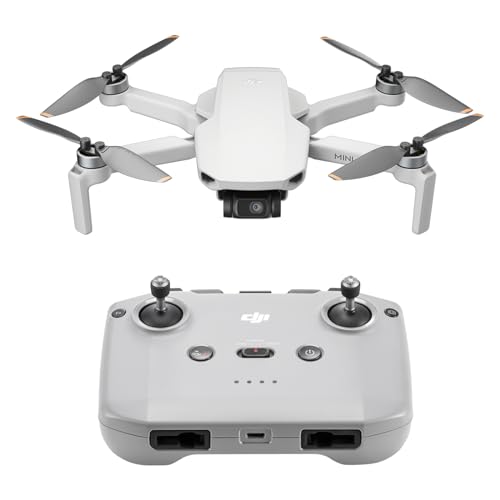
DJI Mini 4K: The Drone Expert Picks for Beginners

Every Budget Podcast Mic Guide: Find the Right Fit

Phone Tripods 2026: Best Picks and Buying Guide
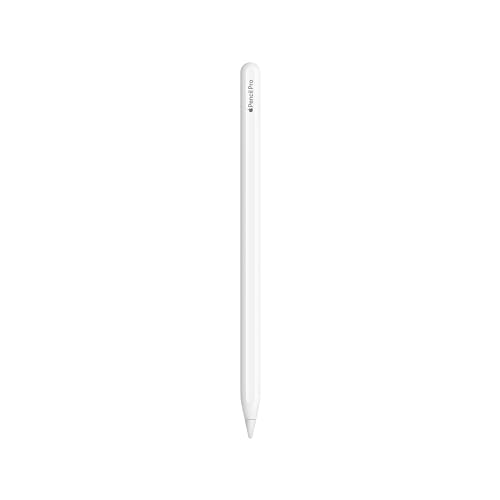
Which iPad Accessory Wins? The Apple Pencil Pro Shortlist

How to Choose the Best Digital Photo Frames in 2026

Looking for the Best MagSafe Power Banks? Our 2026 Picks

7 Fast Chargers That Match Real Device Needs
