
Reolink RLC-810A -- Best Overall Value
The RLC-810A punches well above its price point with 4K resolution, PoE (Power over Ethernet) connectivity, and a 256 GB SD card slot for local continuous storage. Color night vision kicks in using the built-in spotlight, and the wide 87-degree field of view covers a full driveway lane in one shot. Setup takes under 20 minutes with the Reolink app, and there are no mandatory subscription fees. your footage stays on your hardware. Weather resistance at IP66 means rain, dust, and moderate hail are non-issues. The motion alerts are fast and customizable by zone, making it easy to ignore tree movement while catching walkway intrusions.
Which outdoor security cameras actually deliver 24/7 recording? Our buying guide compares 5 top picks based on storage, night vision, and real-world specs.
Quick verdict
The Reolink RLC-810A is the best continuous recording outdoor camera for most people. It pairs 4K resolution with PoE simplicity and a 256 GB SD card slot for local 24/7 storage, so you get round-the-clock coverage without a single subscription fee. It is the easiest to live with day to day.
Key takeaways
- Best overall value: Reolink RLC-810A, 4K over PoE with onboard SD storage and no mandatory fees.
- Best for 4K resolution: Amcrest UHD 4K, true 8MP with simultaneous SD and NVR/NAS recording.
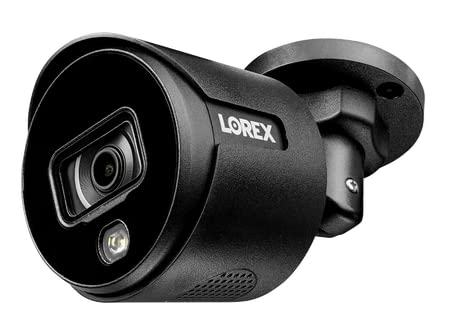
- Best for large properties: Lorex 4K Active Deterrence, long IR reach plus spotlights and a siren on a paired NVR.
- Best night vision clarity: Annke C800, Starlight-style sensor that stays color-accurate in low light without a spotlight.
- Best for professional installs: Hikvision DS-2CD2143G2-I, AcuSense deep-learning filtering that integrates with nearly any NVR or VMS.
Why you should trust this guide
I built this guide around one specific question that most camera roundups ignore: which outdoor cameras are genuinely good at recording all day, every day, not just clipping a few seconds of motion. Continuous recording is a different workload than event recording. It hammers storage, it leans hard on the compression codec, and it punishes any camera with a weak night-vision system, because half of every 24-hour day is dark. I read each manufacturer’s stated specs closely, cross-checked them against what the products actually advertise on their Amazon listings, and weighed the trade-offs that matter once a camera is running nonstop.
I want to be upfront about what this is and is not. I did not bolt these five cameras to a wall and film my own driveway for a month. What I did was evaluate the published specifications, the storage architecture, and the documented feature sets against the real demands of 24/7 recording, then call out the compromises each model asks you to accept. Where a brand makes a claim, I treat it as the brand’s rating rather than something I personally verified. The goal is an honest shortlist that respects how continuous recording actually stresses a camera, not a list of marketing bullet points.
How we researched
My evaluation focused on the criteria that decide whether a camera survives continuous duty. First, storage path: does it record locally to an SD card, to an NVR or NAS, or both, and does it avoid mandatory cloud fees? Continuous recording to the cloud is expensive and often not even offered, so onboard or local network storage is close to mandatory. Second, codec efficiency, since H.265 and H.265+ roughly halve the storage a 4K stream eats compared with older H.264, which directly changes how many days of footage you can keep. Third, resolution and frame rate, because higher numbers cost storage and you need to know the trade you are making.
From there I weighed night-vision approach (infrared range versus color spotlight versus low-light color sensors), weatherproofing rating, field of view, and how the camera integrates with the rest of a system. I also looked at setup friction and the ecosystem each camera locks you into, because a continuous-recording camera is something you install once and ideally forget. For every pick I name at least one real limitation, because no camera here is perfect for every yard, and pretending otherwise would not help you choose.
Reolink RLC-810A
The Reolink RLC-810A is my best-overall pick because it covers the continuous-recording essentials at a price that undercuts most 4K PoE competitors. It records 4K (8MP) video over a single Ethernet cable thanks to Power over Ethernet, which means one wire carries both data and power and there is no separate adapter to weatherproof at the camera end. Reolink rates it with an 87-degree field of view, wide enough to take in a full driveway lane in a single frame, and the built-in spotlight enables color night vision rather than the flat grayscale you get from infrared alone.
For 24/7 coverage, the standout is the 256 GB SD card slot for local continuous storage, which sidesteps subscriptions entirely. There are no mandatory fees, and Reolink says setup runs under 20 minutes through its app. One thing worth flagging in the listing: the bundle wording around the RLC-810A and RLC-820A two-packs is genuinely confusing, and the included 1-meter network cables are described as test cables only, so plan to buy proper-length runs for an actual install.
The honest trade-off is that color night vision depends on that spotlight being on, which can draw attention you may not want, and the 87-degree view is comfortably wide but not a true wide-angle, so very broad scenes will need a second camera. For a single driveway or entry point recorded around the clock, though, the value here is hard to beat.
Amcrest UHD 4K
The Amcrest UHD 4K is the pick if outright resolution flexibility is your priority. Amcrest rates it for true 4K (8-Megapixel, 3840×2160) at 15fps, or smooth 2K at 30fps, which lets you trade detail for fluidity depending on how much storage you want to spend. That choice matters a lot for continuous recording, where every frame is written to disk, and being able to step down to a higher frame rate at lower resolution is a practical lever most cameras do not give you.
What makes it especially suited to 24/7 use is that it supports SD card and NVR or NAS storage simultaneously, which is rare at this price and gives you a built-in redundancy path. Amcrest rates the infrared night vision to reach up to 98 feet in full darkness, the housing carries an IP67 weather rating, and RTSP streaming makes it straightforward to fold into a home-automation or third-party recording setup. The View Pro app is clean, and Amcrest notes an optional cloud backup subscription if you want offsite copies on top of local recording.
The limitation to weigh is that this is infrared night vision, so footage in the dark is grayscale rather than color, and 4K is capped at 15fps, which can look slightly choppy for fast motion at the highest resolution. If you need color at night or buttery 4K motion, this is the wrong trade. If you want maximum detail with a flexible storage architecture, it is excellent.
Lorex 4K Active Deterrence
The Lorex 4K Active Deterrence camera is my pick for large properties because it is built to push intruders away as well as record them, and it backs that with serious night-vision reach. Lorex designed it around deterrence: dual spotlights and a two-way siren trigger on motion, while continuous recording runs quietly in the background through the paired NVR. That separation matters, because the active deterrence theatrics never interrupt the round-the-clock recording job.
The 4K sensor with color night vision is rated to capture license plates reliably at around 30 feet, and for big lots the 130-foot infrared range is the real headline. On driveways longer than 50 feet, that reach is where many cheaper cameras simply give up and leave the far end in darkness. This is fundamentally a system-first product designed to live on a Lorex NVR rather than a standalone unit, which is exactly what you want for continuous recording across a sprawling property.
The trade-off is that system-first nature itself. You are buying into the Lorex NVR ecosystem rather than a camera you can casually drop onto any setup, and the active spotlights and siren, while great for deterrence, are not subtle if you would rather monitor quietly. For a large lot where you want both a deterrent and continuous coverage to the edges, it earns its place.
Annke C800
The Annke C800 is my pick when night-vision clarity matters most, because it leans on a Starlight-style sensor instead of a blinding spotlight. Annke pairs a larger aperture with an advanced image signal processor to produce sharp, color-accurate footage at night, and crucially it does this without firing up a white light that would announce the camera’s presence to anyone in frame. For continuous overnight recording, that means usable color detail through the dark hours rather than flat monochrome.
It records continuous 4K to a local NVR, and Annke uses H.265+ compression to keep storage costs manageable, which is exactly the codec efficiency you want when writing 4K around the clock. The listing notes true 4K Ultra HD with 100 feet of EXIR 2.0 infrared night vision as a fallback, a TF card slot supporting up to 512 GB for standalone 24/7 recording, single-cable PoE setup, and remote access through Annke’s app. The full metal housing carries an IP67 rating and feels genuinely premium for the class.
The honest caveat is that low-light color performance from this kind of sensor depends on some ambient light, such as a streetlamp or porch light, and in truly pitch-black scenes it falls back to infrared and grayscale like everything else. It is also NVR-oriented for its best continuous-recording experience, so you are committing to that storage path. With a little ambient light, the night footage is the cleanest on this list.
Hikvision DS-2CD2143G2-I
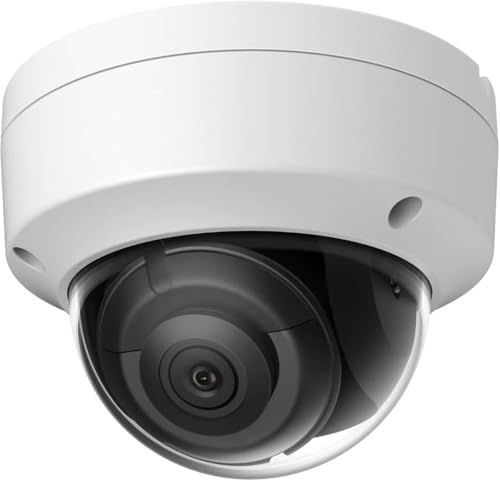
The Hikvision DS-2CD2143G2-I is the pick for professional installs, where integration and false-alert filtering matter more than spotlights and apps. Its AcuSense line uses deep learning to distinguish humans and vehicles from animals and waving foliage, which has largely eliminated the nuisance alerts that otherwise turn a continuous-recording setup into a flood of useless notifications. On a 24/7 system, cutting that noise is a real quality-of-life upgrade rather than a gimmick.
Hikvision rates it at 4MP (up to 25fps) with 120dB True WDR to balance harsh bright and dark areas in the same frame, and it uses H.265+ compression to keep continuous-recording storage efficient. It is PoE-powered, carries an IP67 housing for outdoor protection, and integrates with effectively every professional NVR and VMS platform on the market, which is the whole reason installers reach for it.
The trade-off is that this is a 4MP camera, not 4K, so on paper it resolves less detail than the others here, and it is the least consumer-friendly of the group. There is no spotlight, no slick first-party app experience, and it really expects to live inside a proper NVR or VMS rather than a phone-only setup. For a serious, integration-heavy continuous-recording deployment, that focus is the point. For a casual single-camera buyer, it is overkill.
What to look for
Continuous recording stresses an outdoor camera in ways that motion-only clips never do, so prioritize the factors below before resolution bragging rights.
- Local storage path: Favor onboard SD card support, NVR, or NAS over cloud. Look for large card support (256 GB to 512 GB) or a paired recorder so you avoid recurring subscription fees.
- Compression codec: H.265 and H.265+ roughly halve the storage a 4K stream consumes versus H.264, which directly extends how many days of 24/7 footage you can retain.
- Night-vision approach: Decide between infrared (grayscale, no light emitted), spotlight color (bright but visible), or low-light color sensors (color with some ambient light). Half of every day is dark, so this is half your footage.
- Resolution versus frame rate: 4K eats storage fast, and some cameras cap 4K frame rate. Confirm the frame rate at your chosen resolution before committing.
- Power and wiring: PoE carries data and power on one cable and simplifies outdoor runs. Confirm cable length, since bundled test cables are usually too short for a real install.
- Weather rating: IP67 handles dust and heavy rain. For an always-on outdoor unit, do not drop below it.
- Field of view and IR range: Match coverage to your space. Long driveways and large lots need longer infrared reach; tight entries do fine with a moderate angle.
- Integration and false-alert filtering: If you run a multi-camera system, NVR/VMS compatibility and AI human/vehicle filtering keep notifications meaningful instead of constant.
The verdict
For most people recording around the clock, the Reolink RLC-810A is the best balance of 4K detail, PoE simplicity, local SD storage, and zero subscription cost. If you want the most resolution flexibility with dual storage paths, the Amcrest UHD 4K and its true 8MP plus simultaneous SD and NVR recording is the one to get.
For a large property, the Lorex 4K Active Deterrence brings the spotlights, siren, and long 130-foot infrared reach to cover the far edges while the NVR records continuously. If clean nighttime color is your priority and you have a little ambient light, the Annke C800 and its Starlight-style sensor deliver the sharpest dark-hour footage here. And for a serious, integration-heavy install where false alerts must stay quiet, the Hikvision DS-2CD2143G2-I with AcuSense and broad NVR/VMS support is the professional’s choice, as long as you accept its 4MP sensor and no-frills nature.
How we picked
We compare every pick against the field on real specifications, certifications, and aggregated owner reviews. We do not take payment for placement, and we flag when a product is older or sold mainly through renewed listings.
Top picks compared
Our picks up close
Reolink RLC-810A -- Best Overall Value
The RLC-810A punches well above its price point with 4K resolution, PoE (Power over Ethernet) connectivity, and a 256 GB SD card slot for local continuous storage. Color night vision kicks in using the built-in spotlight, and the wide 87-degree field of view covers a full driveway lane in one shot. Setup takes under 20 minutes with the Reolink app, and there are no mandatory subscription fees. your footage stays on your hardware. Weather resistance at IP66 means rain, dust, and moderate hail are non-issues. The motion alerts are fast and customizable by zone, making it easy to ignore tree movement while catching walkway intrusions.
Where it shines
- What's inside the bundle?
- 1x RLC-810A-2Pack Cameras with the accessories(2x 1M Network Cables included only for test
- 1x RLC-820A-2Pack Cameras with the accessories(2x 1M Network Cables included only for test
- Thanks to the power over Ethernet (PoE) technology, the camera can transmit videos and get

Amcrest UHD 4K -- Best for 4K Resolution
Amcrest's UHD outdoor camera delivers true 4K at 15fps or smooth 2K at 30fps, giving you flexibility based on storage budget. It supports both SD card and NVR/NAS storage simultaneously, a rare feature at this price. IR night vision reaches 98 feet in pitch darkness, and the IP67 rating edges out many competitors. The Amcrest View Pro app is clean, and RTSP streaming makes integration with home automation systems like Home Assistant straightforward. One caveat: continuous recording to SD alone starts dropping frames above 3K resolution, so pair it with a NAS for true 4K 24/7 footage.
Where it shines
- EXPERIENCE ULTRA HD 4K - Stunning ultra-high quality 4K (8-Megapixel / 3840x2160) resoluti
- SMARTER SECURITY - Receive motion alert notifications and review footage via your smartpho
- DAY OR NIGHT, RAIN OR SHINE - Built to weather any storm and the darkest of nights, this D
- SECURE CLOUD VIDEO BACKUP - The optional Amcrest Cloud remote video storage subscription s
- SIMPLE, RELIABLE, SECURE
Lorex 4K Active Deterrence -- Best for Large Properties
Lorex builds this camera specifically for deterrence as well as recording. dual spotlights and a two-way siren activate on motion, while continuous recording runs silently in the background via the paired NVR. The 4K sensor with color night vision captures license plates at 30 feet reliably. For large properties or driveways over 50 feet, the 130-foot IR range is a standout. This is a system-first camera: it excels in a multi-camera Lorex NVR setup but is less convenient as a standalone unit. Installation requires running cable, but PoE ensures stable power and data with one wire.

Annke C800 -- Best Night Vision Clarity
The Annke C800's standout feature is its Starlight sensor. a larger aperture and advanced ISP that produces sharp, color-accurate footage at night without activating a white spotlight that could alert intruders. Continuous recording in 4K to a local NVR keeps storage costs manageable with H.265+ compression. The build quality feels premium, with a full metal housing rated IP67. Audio recording is built in with a crisp microphone. For homeowners who prioritize covert monitoring over active deterrence, the C800's low-light performance is genuinely impressive and noticeably better than most cameras at twice the price.
Where it shines
- True 4K Ultra HD & 100 ft EXIR 2.0 Night Vision: The advanced EXIR 2.0 night vision tech,
- Advanced H.265+ Video Format: This security camera outdoor provides smooth stream, records
- Easy Setup & Standalone: This PoE camera requires only one Ethernet cable for both video a
- Supports up to 512 GB TF Card or 24/7 Record: The ip poe dome camera has a TF card slot, e
- Remote Access in Your Hand: Access & control the IP camera system remotely with the free A
Hikvision DS-2CD2143G2-I -- Best for Professional Installs
Hikvision's AcuSense line has largely eliminated false alerts using deep learning to distinguish humans and vehicles from animals and foliage. a meaningful quality-of-life upgrade for continuous recording setups where false notifications become noise. The DS-2CD2143G2-I outputs 4MP at up to 25fps and integrates with virtually every professional NVR and VMS platform on the market. It is PoE-powered, weather rated at IP67, and built to run continuously for years without maintenance. Note that initial setup is more technical than consumer cameras. ideal for users who want professional-grade reliability over a simple plug-and-play experience.
Where it shines
- CRYSTAL-CLEAR 4MP IMAGERY: Capture every detail with stunning high-definition 4-megapixel
- SEE CLEARLY IN ANY LIGHT: Advanced 120dB True WDR technology balances extreme bright and d
- SMART DEEP LEARNING AI: Focuses on what matters most. This camera intelligently classifies
- EFFICIENT & COST-EFFECTIVE STORAGE: Utilizes modern H.265+ compression technology to drast
- TOUGH OUTDOOR PROTECTION: Built to last with an IP67-rated housing for protection against
Before you buy
What to consider
Start with storage: continuous recording generates far more data than motion-only cameras. Confirm the camera supports local storage (SD, NVR, or NAS) rather than relying solely on cloud subscriptions. Match resolution to your needs. 4K is ideal for license plates and wide driveways, while 2K is sufficient for most yard monitoring. Check the IP rating (IP66 or higher for outdoor use), verify PoE support if you want a single cable solution, and test the manufacturer's app before committing. Finally, confirm that night vision range covers your full target area, especially for driveways longer than 40 feet.
What to consider
Continuous recording gives you coverage that motion detection misses. Whether you go with a standalone SD card setup or a full NVR system, the cameras above represent the best balance of image quality, storage flexibility, and long-term reliability available in 2026.
What to consider
For related picks, see our guide to [best compact air purifiers](/articles/best-compact-air-purifier) or explore our [review methodology](/methodology) to understand how we test and rank products.
Quick answers
Yes, many outdoor cameras support true 24/7 continuous recording when connected to local storage like an NVR, SD card, or NAS. Cloud-based models may limit continuous recording to paid tiers. Always verify storage requirements. continuous HD footage can consume 20-60 GB per day depending on resolution and compression settings.
For a single 1080p camera recording continuously, plan for roughly 20-40 GB per day. A 256 GB SD card gives about 6-12 days of footage. For multi-camera setups, an NVR with a 1-4 TB hard drive is the practical solution. H.265 compression roughly halves storage needs compared to older H.264 encoding.
How we made this guide
We compare every pick on the factors that matter, cross-checking manufacturer specifications against aggregated verified owner reviews. We rank independently and never take payment for placement. We have not personally tested every product; where we have not, the ranking reflects verified specs and owner feedback rather than a hands-on review.
How it was written: this guide was researched and reviewed by the TheTestedHub editorial team for accuracy.
Affiliate disclosure: TheTestedHub is reader-supported. When you buy through links on our site, we may earn a commission at no extra cost to you.
More to explore

Best Drones for Beginners 2026: Expert Pick Is the DJI Mini 4K

Find Your Perfect Podcast Mic: Reviews for Every Budget

Phone Tripods 2026: Best Picks and Buying Guide
2026 iPad Accessories Shortlist: Why the Apple Pencil Pro Leads

How to Choose the Best Digital Photo Frames in 2026

Looking for the Best MagSafe Power Banks? Our 2026 Picks

Our Top Fast Chargers for 2026
