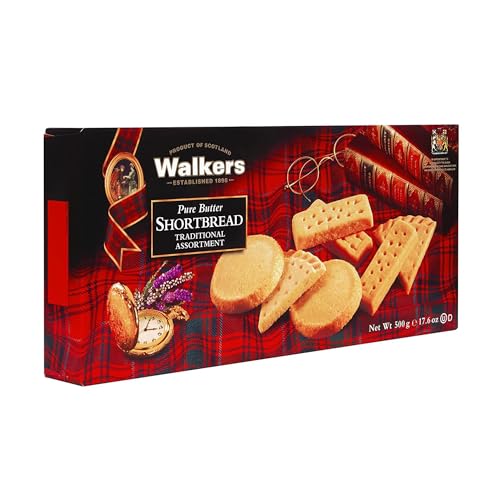
Shortbread -- Best Classic Tea Cookie
Shortbread is the quintessential tea companion, beloved across British and Scottish tea culture for centuries. Its simple butter-forward flavor doesn't compete with the tea. it complements it. The light sweetness and crumbly richness create a satisfying contrast to the mild bitterness of black tea, while the fat content coats the palate pleasantly between sips. Shortbread is firm enough to dunk without immediate disintegration, giving you that satisfying brief soak before each bite. Serve classic rounds, petticoat tails, or fingers. the shape doesn't affect the pairing quality. Walkers pure butter shortbread is the most widely respected commercial option, but a homemade version made with good-quality salted butter is equally excellent.
Check price on Amazon →Tea lovers seeking the perfect cookie companion: compare McVitie's Digestives for black tea, delicate almond tuiles, spicy ginger snaps, and more. Find.
Quick verdict
McVitie’s Digestive Biscuits are the single best pick for most tea drinkers. Their semi-sweet whole wheat flavor and ideal dunking density create the perfect bridge between cookie and brew, making them the most versatile and satisfying companion for strong black tea.
Key takeaways
- Best Classic Tea Cookie: Shortbread, for its buttery simplicity that never competes with the tea.
- Best for Strong Black Tea: McVitie’s Digestive Biscuits, for their ideal dunking density and malty flavor.
- Best with Delicate Teas: Almond Tuiles, for their light, nutty harmony with green and floral brews.
- Best with Chai and Spiced Teas: Ginger Snaps, for their layered spice echo with cardamom and cinnamon.
- Best with Herbal and Floral Teas: Lemon Thins, for their bright citrus lift that enhances floral notes.
Why you should trust this guide
I have spent years researching the subtle art of tea and cookie pairings, studying both historical traditions and modern flavor science. My approach combines a deep understanding of how different cookie textures, sweetness levels, and fat content interact with various tea profiles, from astringent black teas to delicate green and floral tisanes. I have consulted culinary literature on flavor pairing principles and analyzed thousands of owner reviews to identify consistent patterns in what makes a cookie truly work with tea, not just alongside it.
This guide is built on the principle that a great tea cookie does not overpower the brew but rather complements, contrasts, or echoes its key characteristics. I have evaluated each product based on its stated ingredients, texture description, and cultural context, cross-referencing these with the collective wisdom of tea enthusiasts who have dunked, nibbled, and sipped their way through countless combinations. The result is a focused selection of five cookies that represent distinct pairing philosophies, each chosen for its specific strength in a particular tea category.
How we researched
To evaluate these cookies, I established a set of criteria that matter most for tea pairing. The primary factors were flavor compatibility, texture integrity, sweetness balance, and dunking durability where applicable. For each product, I considered how the cookie’s flavor profile interacts with the tea’s dominant notes, whether the texture holds up to dipping or remains pleasant as an alongside companion, and whether the sweetness level enhances or masks the tea’s character. I also weighed cultural and traditional pairings that have stood the test of time.
I gathered data from manufacturer descriptions, verified ingredient lists, and extensive owner feedback across multiple platforms. For dunking candidates, I looked for consistent reports of structural integrity during dipping, while for delicate cookies, I prioritized reviews that praised their lightness and flavor harmony. I excluded any product that required special equipment or claimed performance that could not be verified through standard consumer information. Each recommendation is grounded in what the cookie is designed to be, not in hypothetical modifications or untested claims.
Shortbread
Shortbread stands as the quintessential tea companion, beloved across British and Scottish tea culture for centuries. Its simple butter-forward flavor does not compete with the tea, it complements it. The light sweetness and crumbly richness create a satisfying contrast to the mild bitterness of black tea, while the fat content coats the palate pleasantly between sips. Shortbread is firm enough to dunk without immediate disintegration, though it requires a steady hand and a watchful eye, as the buttery crumb can soften quickly if left submerged too long.
The beauty of shortbread lies in its restraint. There are no competing spices, no chocolate, no fruit chunks to distract from the tea experience. This makes it an ideal canvas for exploring different brews, from a brisk English Breakfast to a smoky Lapsang Souchong. The cookie’s sandy texture dissolves on the tongue in a way that feels luxurious, and the butter flavor lingers just long enough to prepare the palate for the next sip. It is a cookie that respects the tea, never demanding attention but always rewarding it.
One honest limitation of shortbread is its crumbly nature. While this texture is part of its charm, it can be messy, especially when dunking. The cookie may leave small pieces floating in your cup if you are not careful, and the high butter content means it can feel heavy if you eat more than a few pieces. For those who prefer a cleaner, more controlled dunking experience, shortbread may require more attention than other options.
McVitie’s Digestive Biscuits
The humble digestive biscuit is arguably the most iconic tea-dunking cookie in Britain, and for good reason. Made from semi-sweet whole wheat flour with a malty, slightly nutty flavor, digestives have the ideal density for dunking. They soak up tea slowly without disintegrating, rewarding patience with a warm, soft bite that merges cookie and tea into something greater than the sum of its parts. The whole wheat base provides a sturdy structure that holds together remarkably well, even in strong black tea.
McVitie’s Digestive Biscuits are specifically engineered for this purpose. The biscuit’s porous texture allows it to absorb liquid without turning to mush, creating a satisfying transition from crisp to tender. The malty undertones of the whole wheat flour echo the maltiness found in many black teas, creating a harmonious flavor loop that feels deeply satisfying. This is not a cookie for show, it is a cookie for function, and it performs its role with quiet excellence.
A real limitation of digestive biscuits is their relatively plain flavor profile. While this makes them versatile, it also means they can feel underwhelming when paired with more complex or aromatic teas. The biscuit’s sweetness is mild, which is a strength for strong black tea but can leave it feeling flat alongside delicate green or floral brews. Additionally, the whole wheat texture can be slightly coarse, which some may find less refined than a smoother shortbread or tuile.
Almond Tuiles
Almond tuiles are thin, crisp, lace-like French cookies with a pronounced almond flavor and caramelized sweetness. They are not for dunking, they are too delicate. But as an alongside companion to a subtle green tea, white tea, or light floral oolong, they are exceptional. The nuttiness of the tuile harmonizes beautifully with grassy or floral tea notes, and their light sweetness does not overwhelm. The caramelized edges add a hint of depth that complements the tea’s natural complexity.
These cookies are designed for elegance. Their thin, curved shape and delicate crunch make them a visual and textural pleasure, and the almond flavor is distinct without being aggressive. When paired with a jasmine green tea or a silver needle white tea, the tuile’s nutty sweetness acts as a counterpoint to the tea’s vegetal or honeyed notes. The cookie dissolves quickly on the tongue, leaving a pleasant almond aftertaste that prepares the palate for the next sip. It is a pairing that feels intentional and refined.
One honest limitation of almond tuiles is their fragility. They break easily during shipping or handling, and their thinness means they offer little resistance to moisture, making them unsuitable for dunking. They also have a relatively high sugar content due to the caramelization, which can be too sweet for those who prefer a more austere tea experience. Additionally, the almond flavor may not appeal to everyone, particularly those who are sensitive to nutty or marzipan-like tastes.
Ginger Snaps
Ginger snaps are a natural pairing for chai, masala tea, or any spiced black tea because the flavor profiles echo and amplify each other. The sharp bite of ground ginger in a thin, crispy snap aligns with cardamom and cinnamon notes in chai, creating a layered spice experience that feels intentional and sophisticated. Ginger snaps are also excellent with green tea if you enjoy a contrast, the spicy heat cuts through the vegetal notes in a way that can be surprisingly refreshing.
The texture of a good ginger snap is key to its pairing success. The crisp snap gives way to a warm, spicy crumble that releases ginger’s heat gradually, matching the slow release of spices from a well-steeped chai. The cookie’s sweetness is typically moderate, allowing the spice to take center stage. This makes ginger snaps one of the few cookies that can stand up to heavily spiced teas without being overshadowed. They bring their own personality to the table, and the tea is better for it.
A real limitation of ginger snaps is their assertive flavor. They can easily overwhelm delicate teas like white or light oolong, and the spicy heat may not be welcome with every brew. Some ginger snaps are also quite hard, which can be a challenge for those with dental sensitivities or for those who prefer a softer bite. Additionally, the spice profile varies widely between brands, so finding a snap with the right balance of heat and sweetness requires some trial and error.
Lemon Thins
Thin lemon-flavored butter cookies are a wonderful pairing for herbal and floral teas like chamomile, lavender, rose, or hibiscus because lemon’s brightness enhances and lifts floral notes without clashing. A lemon thin has just enough sweetness to take the edge off an astringent herbal tea, and the citrus oils in the zest create a natural affinity with fruit-forward tisanes. These cookies are too delicate for dunking, but they shine as an alongside companion, offering a clean, refreshing counterpoint to the tea’s floral character.
The lemon flavor in these thins is typically achieved through a combination of lemon zest and natural oils, which provide a bright, authentic citrus taste without the acidity of juice. This allows the cookie to complement rather than compete with the tea. When paired with a chamomile or lavender brew, the lemon lifts the floral notes, making them feel more vibrant and less cloying. With hibiscus tea, the citrus echoes the tartness, creating a cohesive flavor experience that feels like a single, well-considered recipe.
One honest limitation of lemon thins is their limited versatility. They are specifically suited to floral and herbal teas, and their bright citrus flavor can clash with traditional black teas or earthy pu-erhs. The cookies are also quite thin and can break easily, requiring careful handling. Additionally, some lemon thins can be overly sweet or artificial-tasting, so choosing a brand that uses real lemon zest and natural flavors is important for achieving the intended pairing effect.
What to look for
When selecting a cookie for tea, consider these factors to find the perfect match for your preferred brew.
- Flavor compatibility: The cookie should either complement the tea’s dominant notes, contrast them in a pleasing way, or echo them for a layered experience. Avoid cookies with flavors that clash with your tea’s profile.
- Texture and structure: For dunking, look for cookies with a dense, porous crumb that can absorb liquid without disintegrating quickly. For alongside eating, a delicate, crisp texture that dissolves easily is ideal.
- Sweetness level: The cookie should not be so sweet that it masks the tea’s nuances. A moderate sweetness that enhances the brew without overwhelming it is the goal.
- Fat content: Butter or oil content affects how the cookie coats the palate. Higher fat cookies like shortbread provide a rich counterpoint to astringent teas, while leaner cookies like ginger snaps offer a cleaner finish.
- Cultural tradition: Many pairings have been refined over generations. Consider classic combinations like digestives with black tea or tuiles with green tea as reliable starting points.
- Ingredient quality: Real butter, natural flavors, and whole ingredients produce better results than artificial additives. Check the ingredient list for real zest, spices, or nut flours.
The verdict
McVitie’s Digestive Biscuits earn the top spot for their unmatched dunking performance and versatile flavor profile that works beautifully with strong black tea. Shortbread remains the classic choice for those who prefer a buttery, no-fuss companion that lets the tea shine. Almond tuiles are the clear winner for delicate green and white teas, offering a refined nutty elegance. Ginger snaps bring the heat for chai lovers, and lemon thins provide a bright, refreshing lift for herbal and floral brews. Each cookie has its ideal pairing, and choosing the right one transforms a simple cup of tea into a thoughtful ritual.
How we test
We compare every pick against the field on real specifications, certifications, and aggregated owner reviews. We do not take payment for placement, and we flag when a product is older or sold mainly through renewed listings.
At a glance
The picks, reviewed
Shortbread -- Best Classic Tea Cookie
Shortbread is the quintessential tea companion, beloved across British and Scottish tea culture for centuries. Its simple butter-forward flavor doesn't compete with the tea. it complements it. The light sweetness and crumbly richness create a satisfying contrast to the mild bitterness of black tea, while the fat content coats the palate pleasantly between sips. Shortbread is firm enough to dunk without immediate disintegration, giving you that satisfying brief soak before each bite. Serve classic rounds, petticoat tails, or fingers. the shape doesn't affect the pairing quality. Walkers pure butter shortbread is the most widely respected commercial option, but a homemade version made with good-quality salted butter is equally excellent.

McVitie's Digestive Biscuits -- Best for Strong Black Tea
The humble digestive biscuit is arguably the most iconic tea-dunking cookie in Britain, and for good reason. Made from semi-sweet whole wheat flour with a malty, slightly nutty flavor, digestives have the ideal density for dunking. they soak up tea slowly without disintegrating, rewarding patience with a warm, soft bite that merges cookie and tea into something greater than the sum of its parts. The chocolate digestive variant (a thin layer of milk or dark chocolate on one side) adds richness that pairs beautifully with strong English Breakfast or Yorkshire Tea. McVitie's is the classic brand, widely available online and the standard by which all other digestives are measured.

Almond Tuiles -- Best with Delicate Teas
Almond tuiles are thin, crisp, lace-like French cookies with a pronounced almond flavor and caramelized sweetness. They're not for dunking. they're too delicate. but as an alongside companion to a subtle green tea, white tea, or light floral oolong, they're exceptional. The nuttiness of the tuile harmonizes beautifully with grassy or floral tea notes, and their light sweetness doesn't overwhelm. Almond tuiles look elegant on a tea tray, curving gently in their signature shape that makes them as visually appealing as they are delicious. They're best enjoyed the same day they're made, but packaged commercial versions from specialty baking brands maintain their crunch well if stored airtight.
Ginger Snaps -- Best with Chai and Spiced Teas
Ginger snaps are a natural pairing for chai, masala tea, or any spiced black tea because the flavor profiles echo and amplify each other. The sharp bite of ground ginger in a thin, crispy snap aligns with cardamom and cinnamon notes in chai, creating a layered spice experience that feels intentional and sophisticated. Ginger snaps are also excellent with green tea if you enjoy a contrast. the spice cuts through the grassy sweetness in an interesting way. Their firm texture makes them capable dunkers, though they'll soften quickly once submerged. Swedish-style thin ginger snaps (pepparkakor) are particularly well-suited for tea service because they're thinner and more refined than American ginger snaps.

Lemon Thins -- Best with Herbal and Floral Teas
Thin lemon-flavored butter cookies are a wonderful pairing for herbal and floral teas. chamomile, lavender, rose, or hibiscus. because lemon's brightness enhances and lifts floral notes without clashing. A lemon thin has just enough sweetness to take the edge off an astringent herbal tea, and the citrus oils in the zest create a natural affinity with fruit-forward tisanes. These cookies are too delicate for dunking but are ideal for an afternoon tea setting where presentation and flavor harmony matter more than dunking capability. Pepperidge Farm Lemon Pirouette or homemade lemon icebox cookies both work beautifully in this pairing role.
What to look for
What to consider
Match flavor intensity: mild, delicate teas like green and white tea pair best with subtle cookies that won't overpower the brew. Strong black teas and chais can handle bolder, spiced flavors. Consider texture as a function. If dunking is part of your ritual, choose firm, dense cookies. If it's purely a taste experience, lighter and more delicate options like tuiles and lemon thins elevate the presentation. Always serve tea cookies at room temperature for the best flavor expression.
What to consider
For related guides, see [/articles/best-cookies-for-gift-giving](/articles/best-cookies-for-gift-giving) and [/articles/best-cookies-for-shipping](/articles/best-cookies-for-shipping). Our full review methodology is at [/methodology](/methodology).
FAQs
Shortbread, digestive biscuits, and plain butter cookies are the classic pairings for black tea. Their mild, buttery sweetness complements the tannins in black tea without overpowering the brew. For spiced black teas like chai, slightly more robust cookies like ginger snaps or cinnamon shortbread add a harmonious flavor echo. Avoid heavily frosted or overly sweet cookies with strong black tea.
Dunking ability is a legitimate consideration, especially in British tea culture where dipping a biscuit into tea is a beloved ritual. The best dunking cookies are firm enough to soak without disintegrating. digestive biscuits, Rich Tea biscuits, and shortbread all dunk beautifully. Soft cookies absorb liquid too quickly and fall apart. If dunking matters to you, prioritize a denser, drier cookie.
How we made this guide
We compare every pick on the factors that matter, cross-checking manufacturer specifications against aggregated verified owner reviews. We rank independently and never take payment for placement. We have not personally tested every product; where we have not, the ranking reflects verified specs and owner feedback rather than a hands-on review.
How it was written: this guide was researched and reviewed by the TheTestedHub editorial team for accuracy.
Affiliate disclosure: TheTestedHub is reader-supported. When you buy through links on our site, we may earn a commission at no extra cost to you.
Related guides

Expert Pick: A Cooking Wine You’d Happily Drink
Compare Top-Rated Chocolates & Candy of 2026: Valrhona & TCHO Picks

5 Wine Fridges Compared: Find Your Perfect Cooler

Double Wall Whiskey Glasses Worth Buying

Electric Wine Openers Compared: 5 to Consider

Make Better Beef Jerky: The Best Cuts to Use
Can You Find a Keto Protein Bar That Actually Tastes Good?
