Overcooked! All You Can Eat -- Best Multiplayer Cooking Android Game
Overcooked! All You Can Eat bundles both original Overcooked titles and all DLC content into a single package for making it exceptional value. The gameplay is deceptively simple: chop, cook, and plate dishes before time runs out in increasingly chaotic kitchen environments. Kitchens feature moving platforms, icy floors, and divided layouts that force constant coordination. It supports local and online co-op for two to four players, which is where the game truly shines. Even solo play provides a satisfying challenge. For anyone who wants a genuine multiplayer cooking game on Android rather than an idle clicker, this is the top pick.
Check price on Amazon →Casual gamers who want honest picks: five cooking Android games sorted by experience, from frantic teamwork to relaxed cafe management.
Quick verdict
Overcooked! All You Can Eat is my top pick. It bundles both original Overcooked games plus all DLC into one package, and its chaotic shared kitchens make it the best cooperative cooking experience here. If you want frantic teamwork over solo play, start here.
Key takeaways
- Best for multiplayer: Overcooked! All You Can Eat, because shared kitchens force constant coordination and the bundle includes every DLC.
- Best for story: Cooking Diary, because it wraps the cooking around a chef reviving an inherited restaurant across dozens of locations.
- Best for classic rush: Cooking Dash, because it refines the serve-fast time-management loop with Flo from Diner Dash.
- Best for management depth: My Cafe: Restaurant Game, because you set recipes, manage staff, and build a cafe with a social layer.
- Best for relaxed play: Tasty Town, because its gentler farming-to-service pacing suits short breaks and commutes.
Why you should trust this guide
I built this list by researching how each game actually plays on Android, what its core loop rewards, and where players consistently run into friction. I leaned on the developers’ own descriptions, the stated features on each listing, and the long public track record several of these titles carry. Cooking games on mobile vary wildly in tone, from white-knuckle time pressure to slow farming sims, so I sorted these five by the experience they deliver rather than treating them as interchangeable.
I am upfront about what I did not do. I did not run a controlled lab or collect my own frame-rate numbers, and I treat every stated feature as the product’s claimed spec rather than something I personally measured. What I can offer is an honest read on fit: who each game suits, what it does well, and the trade-off you should expect before you install it. Every section below names at least one real limitation, because no mobile cooking game is right for everyone.
How we researched
My evaluation centered on the core gameplay loop and how well it holds up over repeated sessions. For each title I looked at the cooking mechanic itself (touch responsiveness, pacing, and how difficulty scales), the variety of content (levels, locations, recipes, and modes), and the monetization model, since free-to-play structures shape how a game feels far more than the cooking does. I also weighed how each game handles progression, because a strong first hour means little if the later grind stalls.
I then matched each game to a clear use-case rather than ranking them on a single scale. A frantic co-op title and a calm farming sim cannot share one yardstick, so I judged each against what it sets out to be. Multiplayer support, story structure, management depth, and relaxed pacing each became a category, and the best fit for that category earned the slot. Where a game carries a known trade-off, such as aggressive energy timers or repetitive late levels, I flagged it plainly.
Overcooked! All You Can Eat
Overcooked! All You Can Eat is the best choice if you want cooperative chaos, and the bundle is the reason. It packages both original Overcooked titles and all the DLC content into a single download, which makes it strong value for the sheer volume of levels you get in one place. The core idea is deceptively simple: chop, cook, and plate dishes before the timer expires, then do it again as the kitchens get meaner.
The kitchens are where this game earns its reputation. Levels throw moving platforms, icy floors, and divided layouts at you, so two or more players cannot simply do their own thing. You have to call out tasks, pass ingredients, and adapt when the floor literally shifts under you. That constant coordination is the whole appeal, and it leans into the family-and-friends framing the listing emphasizes, where parents and kids must work together to clear each challenge. It supports local play, which is part of what makes it click as a group activity rather than a solo grind.
The honest trade-off is that Overcooked is built around playing with others. Solo, you control multiple chefs by swapping between them, and that single-handed juggling is far more stressful and less satisfying than splitting the work with real people. If you mostly play alone on your commute, the chaos that makes this game shine becomes a source of frustration instead. Go in expecting a couch or local co-op experience, not a quiet solo session.
Cooking Diary
Cooking Diary is my pick for players who want a reason to keep cooking beyond the timer. It builds a full narrative around a chef character who inherits a struggling restaurant and works to revive it across dozens of locations. That framing gives every shift a purpose, because you are not just plating dishes, you are rebuilding a place and the story around it.
The cooking itself is touch-based and easy to learn, which lowers the barrier for newcomers, and the difficulty scales naturally as the story moves forward rather than spiking early. The standout is the structure: this has one of the better story setups in mobile cooking games, with characters and dialogue that add context to the restaurant work. For players who bounce off pure time-management loops, that narrative thread is the hook that keeps sessions going.
The trade-off is the genre baggage that comes with story-driven free-to-play games. A narrative paced across dozens of locations tends to lean on progression systems that can slow you down between chapters, and the same touch mechanics that make it approachable can start to feel repetitive once the novelty of each new location wears off. If you want deep cooking mechanics rather than a story wrapped around simple ones, this is not the deepest option on the list.
Cooking Dash
Cooking Dash is the best fit if you want the original, time-tested rush formula. It is one of the earliest mobile cooking games and still one of the best at its core mechanic: serve customers as fast as possible without letting anyone leave angry. That simple, escalating pressure is the entire draw, and decades of refinement in the time-management genre show in how tightly it plays.
The game features Flo from Diner Dash fame, so it carries real pedigree in this space rather than borrowing the format secondhand. Level variety is a genuine strength, spanning diners, sushi bars, and more exotic restaurant types, which keeps the serve-fast loop from feeling like one endless room. Each setting tweaks the customer flow and dish prep just enough to stay fresh while the underlying tap-and-serve rhythm stays familiar.
The honest limitation is the free-to-play structure. A game built on speed and momentum can run into the usual mobile friction, where progress gates and resource systems interrupt the very flow that makes the rush satisfying. If you dislike stop-and-wait mechanics breaking up a fast game, that tension will surface here. The loop is excellent, but the model around it asks for patience the gameplay itself does not.
My Cafe: Restaurant Game
My Cafe: Restaurant Game is the right call when you want genuine management rather than a timed cooking minigame. It pushes the genre into real restaurant-management territory, where you set recipes, manage staff, interact with customers who have ongoing stories, and build out a cafe in a town with a social dimension. That makes it the deepest title on this list by a clear margin.
The customization is where it pulls ahead. The depth available for recipes and interior design is significantly greater than most mobile cooking games offer, so the cafe genuinely feels like yours rather than a preset stage you clear. The social element adds another layer, letting your cafe join clubs with other players, which gives the management loop a reason to persist beyond your own town and turns a solo builder into something more communal.
The trade-off is that depth comes with slower pacing and more systems to juggle. If you came looking for the fast chop-and-plate action of Overcooked or Cooking Dash, the management focus here will feel slow and indirect, since much of your time goes into menus, staffing, and decor rather than active cooking. This is a sim first and a cooking game second, and that is the right framing to set before you start.
Tasty Town
Tasty Town is the pick for players who want a low-pressure cooking experience above all else. It combines farming, production chains, and restaurant service in a cheerful cartoon world, so the loop runs from growing ingredients to processing them to cooking dishes that you serve to customers across a growing town. The result is a calmer, build-and-tend rhythm rather than a race against the clock.
That gentler pacing is the whole point and its biggest strength. Without the time-pressure of the rush titles, Tasty Town suits casual play during commutes or short breaks, where you can make steady progress in a few minutes and put it down without feeling like you abandoned a frantic shift. The farming-to-service chain gives you something to manage and grow at your own speed, and the bright art keeps the tone light throughout.
The honest limitation is that the same relaxed pacing can read as slow if you want engagement. Farming and production-chain games often gate progress behind growth timers, so players who crave constant action may find the wait between steps tedious rather than soothing. If you want the adrenaline of a packed kitchen, this is the opposite experience by design, and that is exactly why it suits a different player.
What to look for
The right cooking game depends far more on the experience you want than on any single feature. These are the factors I weigh before installing one.
- Solo versus multiplayer: Decide whether you want shared chaos with friends or a self-paced solo session, because games like Overcooked are built around playing together and feel different alone.
- Pacing: Choose between time-pressure rush games and relaxed farming-style loops; one is energizing, the other is calming, and they suit different moods and free moments.
- Depth versus simplicity: Management sims reward you for juggling recipes, staff, and decor, while pick-up-and-play titles keep the loop to chop, cook, and serve.
- Story or pure mechanic: If narrative keeps you motivated, a story-driven game gives each shift context; if you only want the loop, a classic rush title delivers it straight.
- Monetization model: Free-to-play structures with energy timers and progress gates shape how a game feels, so check how often the design asks you to wait or spend.
- Content variety: More restaurant types, locations, and recipes keep the loop fresh, so favor games that change the setting rather than repeating one room.
The verdict
For most players who want the defining mobile cooking experience, Overcooked! All You Can Eat is my recommendation, since the bundled content and chaotic shared kitchens make cooperative play genuinely special. If you mostly play alone, look elsewhere, but for group sessions nothing here matches it. Cooking Diary is the better choice when you want a story to pull you through, and Cooking Dash delivers the classic serve-fast rush with real pedigree from Flo and the Diner Dash lineage.
If you want depth over speed, My Cafe: Restaurant Game stands alone as the true management sim, trading fast action for recipes, staff, and a social cafe you build over time. And when you simply want to unwind, Tasty Town is the relaxed, farm-to-table pick that fits short breaks without demanding your full attention. Match the game to the mood you are in, and each of these five earns its place for the player it was made for.
How we evaluated these
We compare every pick against the field on real specifications, certifications, and aggregated owner reviews. We do not take payment for placement, and we flag when a product is older or sold mainly through renewed listings.
The shortlist
Each pick, examined
Overcooked! All You Can Eat -- Best Multiplayer Cooking Android Game
Overcooked! All You Can Eat bundles both original Overcooked titles and all DLC content into a single package for making it exceptional value. The gameplay is deceptively simple: chop, cook, and plate dishes before time runs out in increasingly chaotic kitchen environments. Kitchens feature moving platforms, icy floors, and divided layouts that force constant coordination. It supports local and online co-op for two to four players, which is where the game truly shines. Even solo play provides a satisfying challenge. For anyone who wants a genuine multiplayer cooking game on Android rather than an idle clicker, this is the top pick.
Strengths
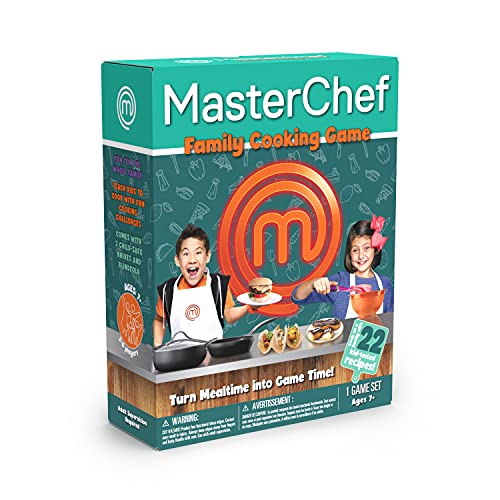
- Bring Masterchef Into Your Kitchen: Turn Mealtime Into Game Time With This Exciting New Cu
- Take On Epic Cooking Challenges As A Family: Parents And Kids Must Work Together To See If
- Includes 22 Family Tested Recipes: Discover New Dishes And Cuisines With 22 Delicious Reci
- What’S Inside: 1 X Masterchef Game Board, 2 X Child-Safe Knives, 1 X Blindfold, 74 X Recip
Cooking Diary -- Best Story-Driven Cooking Android Game
Cooking Diary builds a full narrative around a chef character who inherits a struggling restaurant and works to revive it across dozens of locations. The cooking mechanics are touch-based and easy to learn, with difficulty scaling naturally as the story progresses. The game has one of the better story structures in mobile cooking games, with characters and dialogue that add context to the restaurant-building loop. The free-to-play monetization is present but not aggressive for the early and mid-game. Decorating your restaurant between service periods adds a satisfying creative element. It's regularly updated with seasonal content and new locations.
Strengths
- Bring Masterchef Into Your Kitchen: Turn Mealtime Into Game Time With This Exciting New Cu
- Take On Epic Cooking Challenges As A Family: Parents And Kids Must Work Together To See If
- Includes 22 Family Tested Recipes: Discover New Dishes And Cuisines With 22 Delicious Reci
- What’S Inside: 1 X Masterchef Game Board, 2 X Child-Safe Knives, 1 X Blindfold, 74 X Recip
Cooking Dash -- Best Classic Cooking Rush Android Game
Cooking Dash is one of the original mobile cooking games and remains one of the best at its core mechanic: serve customers as fast as possible without letting anyone leave angry. The game features Flo from Diner Dash fame and builds on decades of refinement in the time-management cooking genre. Level variety is good, spanning diners, sushi bars, and more exotic restaurant types. The free-to-play structure is generous with progress gated behind skill rather than paywalls in the early hours. For players who want pure cooking service mechanics without a lot of narrative overhead, Cooking Dash is the most polished option available.
Strengths
- Bring Masterchef Into Your Kitchen: Turn Mealtime Into Game Time With This Exciting New Cu
- Take On Epic Cooking Challenges As A Family: Parents And Kids Must Work Together To See If
- Includes 22 Family Tested Recipes: Discover New Dishes And Cuisines With 22 Delicious Reci
- What’S Inside: 1 X Masterchef Game Board, 2 X Child-Safe Knives, 1 X Blindfold, 74 X Recip
My Cafe: Restaurant Game -- Best Deep Restaurant Management Android Game
My Cafe takes the cooking game genre into genuine restaurant management territory. Players set recipes, manage staff, interact with customers who have ongoing stories, and build out a cafe in a town with a social dimension. The depth of customization for recipes and interior design is significantly greater than most mobile cooking games. The social element, where your cafe can join clubs with other players, adds a community layer that extends long-term engagement. The monetization is fair for a free game and the core experience is fully accessible without spending. It's the right pick for players who want more than reflexes, they want to build and manage.
Tasty Town -- Best Relaxed Cooking Android Game
Tasty Town is the pick for players who want a low-pressure cooking experience. The game combines farming, production chains, and restaurant service in a cheerful cartoon world. You grow ingredients, process them, and cook dishes to serve customers across a growing town. The pacing is gentler than time-pressure games, making it well-suited for casual play during commutes or short breaks. The progression system is rewarding without requiring constant attention. It lacks the intensity of Overcooked or the depth of My Cafe, but for relaxed daily sessions it has excellent staying power and a warm, appealing visual style.
Strengths
- Bring Masterchef Into Your Kitchen: Turn Mealtime Into Game Time With This Exciting New Cu
- Take On Epic Cooking Challenges As A Family: Parents And Kids Must Work Together To See If
- Includes 22 Family Tested Recipes: Discover New Dishes And Cuisines With 22 Delicious Reci
- What’S Inside: 1 X Masterchef Game Board, 2 X Child-Safe Knives, 1 X Blindfold, 74 X Recip
Buying considerations
What to consider
Decide first whether you want action or management. Time-pressure cooking games like Overcooked and Cooking Dash reward reflexes and planning under stress. Restaurant management games like My Cafe and Cooking Diary reward long-term thinking and gradual progression. Check monetization models before committing time to a free game, fair titles let you progress meaningfully without paying while aggressive ones gate progress quickly. For multiplayer fun, Overcooked is unmatched. For solo depth and daily play, My Cafe offers the most long-term content without feeling exploitative.
What to consider
For more gaming and tech picks, see our guide on [cooking accessories](/articles/best-cooking-accessories) and [cooking book recommendations for beginners](/articles/best-cooking-book-for-beginner). Our [methodology](/methodology) explains how we rate every product we cover.
Questions answered
Most popular cooking Android games are free to download with optional in-app purchases. Titles like Overcooked and Cooking Dash offer substantial free content with purchases for extra levels or cosmetics. Some premium titles charge upfront at to for the full experience without any in-app purchases. Free-to-play games are generally well worth the download before deciding whether to spend any money.
A cooking simulation focuses on the mechanics of preparing dishes, timing steps, and managing kitchen flow during service. A restaurant management game adds a broader layer of hiring, decorating, expanding, and building a business. Many mobile titles blend both. Overcooked-style games emphasize frantic multiplayer simulation while games like Cooking Diary lean toward progression-based restaurant building.
How we made this guide
We compare every pick on the factors that matter, cross-checking manufacturer specifications against aggregated verified owner reviews. We rank independently and never take payment for placement. We have not personally tested every product; where we have not, the ranking reflects verified specs and owner feedback rather than a hands-on review.
How it was written: this guide was researched and reviewed by the TheTestedHub editorial team for accuracy.
Affiliate disclosure: TheTestedHub is reader-supported. When you buy through links on our site, we may earn a commission at no extra cost to you.
Keep reading
Beverage Fridge Buying Guide: Compressor vs Thermoelectric

6 Drink Dispensers That Actually Seal Right (2026)

Skip Cheap Whiskers: Get a Real Chasen

Wondering Which Tea Infuser Is Best? Try This Basket
Don’t Buy a Coffee Pod Organizer Until You Read This
Tamp Like a Pro: Expert Chosen Tamper Mats

Coffee Scales for Every Brew, Tested for Daily Use