
LouAna Pure Peanut Oil -- Best for Deep Frying
LouAna Pure Peanut Oil is the gold standard for deep frying, especially for Southern staples like fried chicken, catfish, and hush puppies. With a smoke point of 450°F and a light, neutral flavor that doesn't penetrate food, it lets your seasoning be the star. Peanut oil is also relatively stable during extended frying sessions, meaning it holds up through a full batch without degrading as fast as cheaper oils. The 1-gallon jug is ideal for turkey fryers and countertop deep fryers. A widely trusted choice among both home cooks and restaurant kitchens.
Check price on Amazon →Looking for the best oil for frying? These 5 picks deliver crispy, non-greasy results. LouAna Peanut Oil tops the list for deep frying with a 450°F smoke.
Quick verdict
LouAna Pure Peanut Oil is the single best pick for deep frying. Its 450°F smoke point, neutral flavor, and superior stability during long frying sessions deliver consistently crispy results without overpowering your seasoning.
Key takeaways
- Best for Deep Frying: LouAna Pure Peanut Oil, gold standard for Southern classics with high heat stability.
- Best Clean-Label Frying Oil: Chosen Foods Avocado Oil, 500°F+ smoke point and expeller-pressed non-GMO purity.
- Best Budget Frying Oil: Crisco Pure Vegetable Oil, affordable and reliable for everyday high-heat cooking.
- Best for Pan Frying: Spectrum Naturals Refined Coconut Oil, neutral flavor and solid form for even heat in a skillet.
- Best for Light Frying: La Tourangelle Refined Sunflower Oil, high-oleic stability with a clean, light crust.
Why you should trust this guide
I have spent years researching cooking oils for home and professional kitchens, focusing on smoke points, flavor neutrality, and how each oil behaves under repeated heat exposure. My approach is grounded in manufacturer specifications, owner feedback from thousands of verified purchasers, and the chemistry of fats and oils. I do not rely on marketing hype or unverified claims. Every recommendation here is backed by what the product actually promises and what real users consistently report about its performance.
This guide prioritizes oils that deliver crispy, non-greasy results across different frying methods. I evaluated each oil for its stated smoke point, flavor profile, stability during extended frying, and suitability for specific foods. I also considered practical factors like availability, cost per batch, and how each oil handles common mistakes like overheating or reuse. The five oils selected represent the best options for deep frying, pan frying, and light frying, with clear trade-offs explained so you can choose based on your priorities.
How we researched
To evaluate these oils, I established a set of criteria that matter most for frying: smoke point (the temperature at which oil breaks down and burns), flavor neutrality (whether the oil imparts its own taste to food), heat stability (how well the oil holds up during a long frying session without degrading), and versatility across different foods. I compared each oil against these criteria using the manufacturer’s stated specs and aggregated owner experiences from major retail platforms. For example, an oil with a smoke point below 400°F is less suitable for deep frying, while one above 450°F can handle multiple batches without smoking.
I also weighed practical considerations like how the oil behaves when reused, whether it leaves a greasy residue, and how it performs with delicate foods like fish or vegetables versus dense items like chicken or potatoes. Each oil was assessed for its ability to produce a crispy, golden crust without absorbing excess oil. I did not perform physical lab tests or use the oils myself in a controlled kitchen. Instead, I synthesized the most reliable data from the product pages and thousands of user reviews to identify consistent strengths and limitations. This method ensures the recommendations are based on what the oil is designed to do and what real buyers experience, not my personal cooking preferences.
LouAna Pure Peanut Oil — Best for Deep Frying
LouAna Pure Peanut Oil is the gold standard for deep frying, especially for Southern staples like fried chicken, catfish, and hush puppies. With a smoke point of 450°F and a light, neutral flavor that does not penetrate food, it lets your seasoning be the star. Peanut oil is also relatively stable during extended frying sessions, meaning it holds up through a full batch without degrading as fast as oils with lower smoke points. This stability translates to fewer oil changes and more consistent results from the first piece to the last.
One honest limitation is that peanut oil is not suitable for people with peanut allergies. Even trace amounts can cause severe reactions, so this oil must be avoided in any kitchen where cross-contamination is a concern. Additionally, peanut oil has a slightly higher cost per bottle compared to vegetable or canola oils, though its longevity during reuse can offset the upfront expense. For deep frying enthusiasts who want a reliable, high-performance oil that does not mask the flavor of their food, LouAna is a proven choice.
Owner feedback consistently praises how LouAna Pure Peanut Oil produces exceptionally crispy coatings without greasiness. Many users report reusing the oil three to four times for similar frying tasks before noticing any off-flavors or smoke. The neutral profile is especially valued for fried chicken and fish, where the seasoning and marinade need to shine. If you are serious about deep frying and do not have allergy concerns, this oil is hard to beat.
Chosen Foods Avocado Oil — Best Clean-Label Frying Oil
For cooks who want performance without compromise on ingredients, Chosen Foods Avocado Oil is the premium frying oil. Its 500°F+ smoke point outperforms most competitors, and its expeller-pressed, non-GMO production process makes it one of the cleanest options available. The refined version is completely tasteless and odorless, so it will not influence the flavor of delicate foods like shrimp, vegetables, or fish. This oil is ideal for high-heat searing, stir-frying, and even shallow frying where you want a clean, neutral base.
A real limitation is the cost. Avocado oil is significantly more expensive than vegetable or peanut oil, which can be a barrier for frequent deep frying or large batches. Additionally, some users report that the oil can develop a slight grassy note if overheated beyond its smoke point, though this is rare with proper temperature control. For those who prioritize clean ingredients and maximum heat tolerance, the premium price is often justified by the oil’s purity and performance.
Owner reviews frequently highlight how Chosen Foods Avocado Oil does not smoke or burn even during prolonged searing. Many use it for oven-roasted vegetables and pan-fried fish, noting that the oil does not leave a greasy film. The non-GMO certification and expeller-pressed process are major selling points for health-conscious cooks. If budget is not your primary concern and you want a versatile, high-smoke-point oil for frying and searing, this is an excellent investment.
Crisco Pure Vegetable Oil — Best Budget Frying Oil
Crisco Pure Vegetable Oil remains one of the most widely used frying oils for good reason: it is affordable, widely available, and performs reliably at high heat. With a smoke point around 400°F and a completely neutral flavor, it works for french fries, onion rings, donuts, and pan-fried proteins. It is a no-frills option that gets the job done for everyday home cooking without breaking the bank. This oil is a staple in many kitchens because it balances cost and performance effectively.
One honest limitation is the smoke point. At 400°F, Crisco Vegetable Oil is not ideal for very high-heat frying or for foods that require a prolonged cooking time at maximum temperature. It can start to smoke and degrade faster than peanut or avocado oil, especially if you are frying multiple batches. Additionally, because it is a blend of soybean and other oils, it may not be as stable for reuse as higher-smoke-point alternatives. For occasional frying or smaller batches, however, this is a dependable and economical choice.
User feedback often mentions that Crisco Vegetable Oil produces consistent, crispy results for classic fried foods like french fries and chicken tenders. Many appreciate that it does not impart any off-flavors, even after several uses. The low price point makes it a popular choice for beginners or for large gatherings where you need a lot of oil. If you are looking for a budget-friendly workhorse that does the job without fuss, Crisco is a solid pick.
Spectrum Naturals Refined Coconut Oil — Best for Pan Frying
Spectrum Naturals Refined Coconut Oil offers a smoke point around 400°F and a completely neutral flavor. Unlike virgin coconut oil, the refined version has no coconut taste, making it versatile for savory pan frying. It is an excellent choice for searing fish fillets, pan-frying tofu, and cooking pancakes where a clean surface and even heat matter. The solid form melts quickly in a hot pan and creates a smooth, even cooking surface that helps food brown evenly without sticking.
A real limitation is that refined coconut oil is still high in saturated fat, which may be a concern for those monitoring their cholesterol or heart health. Additionally, its solid state at room temperature can be inconvenient for pouring or measuring compared to liquid oils. You may need to warm the jar or scoop out portions, which adds a small step to prep. For pan frying specifically, however, the solid form is actually an advantage because it provides a stable cooking medium that does not splatter as much as liquid oils.
Owner reviews often highlight how Spectrum Naturals Refined Coconut Oil works beautifully for pan-fried fish and vegetables, producing a light, non-greasy crust. Many appreciate that it does not leave a coconut aroma or taste, which can interfere with savory dishes. The oil is also popular for making pancakes and grilled cheese sandwiches, where a clean, even heat is crucial. If you prefer a clean-label oil with a unique solid form for pan frying, this is a strong option.
La Tourangelle Refined Sunflower Oil — Best for Light Frying
La Tourangelle’s high-oleic refined sunflower oil is a lighter option with a smoke point near 440°F. Its high oleic acid content (similar to olive oil) makes it more heat-stable than standard sunflower oil, which is prone to oxidation. It produces a clean, crispy crust on oven-fried or lightly pan-fried foods without feeling heavy. The expeller-pressed, non-GMO production gives it a quality edge over many commodity sunflower oils, and its neutral flavor makes it a good choice for delicate items like tempura or sautéed greens.
One honest limitation is that sunflower oil, even the high-oleic variety, can still break down faster than avocado or peanut oil during repeated deep frying sessions. It is best suited for light frying, shallow frying, or oven frying rather than heavy-duty deep frying. Additionally, the price is slightly higher than standard vegetable oil, though still lower than avocado oil. For cooks who want a lighter oil that does not weigh down food, this is a great middle ground.
Owner feedback frequently notes that La Tourangelle Refined Sunflower Oil produces exceptionally light and crispy results for oven-fried chicken and roasted potatoes. Many appreciate the high-oleic formulation for its stability and health profile. The oil is also praised for its clean taste, which does not interfere with the flavor of herbs and spices. If you prefer a lighter frying experience without sacrificing heat tolerance, this sunflower oil is a worthy choice.
What to look for
- Smoke point: Choose an oil with a smoke point above the temperature you plan to fry at. For deep frying, 400°F or higher is ideal. For pan frying, 350°F to 400°F is usually sufficient. A higher smoke point means less chance of burning and off-flavors.
- Flavor neutrality: A neutral oil will not overpower your food. If you want your seasoning or marinade to be the star, pick an oil that is tasteless and odorless. Some oils like extra-virgin olive oil or virgin coconut oil have strong flavors that are better for finishing or low-heat cooking.
- Heat stability: Oils high in monounsaturated or saturated fats are more stable at high heat and less prone to oxidation. High-oleic sunflower oil and peanut oil are excellent examples. Oils high in polyunsaturated fats, like standard sunflower or soybean oil, break down faster.
- Reusability: If you plan to reuse oil for multiple frying sessions, look for oils with high smoke points and stable fat profiles. Peanut and avocado oil tend to hold up well. Oils with lower smoke points or high polyunsaturated fat content degrade faster.
- Dietary considerations: Check for allergens like peanuts or tree nuts. Also consider saturated fat content if you have heart health concerns. Refined coconut oil is high in saturated fat, while avocado and sunflower oils are higher in monounsaturated fats.
- Processing method: Expeller-pressed and non-GMO oils are generally considered cleaner options. Oils labeled as refined have been processed to remove impurities and raise the smoke point, but some nutrients may be lost. Unrefined oils have more flavor but lower smoke points.
The verdict
For deep frying, LouAna Pure Peanut Oil remains the top choice due to its high smoke point, neutral flavor, and excellent stability during long frying sessions. If you want a clean-label option with the highest smoke point, Chosen Foods Avocado Oil is worth the premium. For budget-conscious cooks, Crisco Pure Vegetable Oil provides reliable performance for everyday frying. Spectrum Naturals Refined Coconut Oil is ideal for pan frying where even heat and a neutral profile matter. La Tourangelle Refined Sunflower Oil offers a lighter alternative for oven frying and shallow frying. Each oil has its strengths and limitations, so match your choice to your frying style, dietary needs, and budget. The right oil will give you crispy, golden results every time without compromising on flavor or health.
Our methodology
We compare every pick against the field on real specifications, certifications, and aggregated owner reviews. We do not take payment for placement, and we flag when a product is older or sold mainly through renewed listings.
Side by side
The full reviews
LouAna Pure Peanut Oil -- Best for Deep Frying
LouAna Pure Peanut Oil is the gold standard for deep frying, especially for Southern staples like fried chicken, catfish, and hush puppies. With a smoke point of 450°F and a light, neutral flavor that doesn't penetrate food, it lets your seasoning be the star. Peanut oil is also relatively stable during extended frying sessions, meaning it holds up through a full batch without degrading as fast as cheaper oils. The 1-gallon jug is ideal for turkey fryers and countertop deep fryers. A widely trusted choice among both home cooks and restaurant kitchens.

Chosen Foods Avocado Oil -- Best Clean-Label Frying Oil
For cooks who want performance without compromise on ingredients, Chosen Foods Avocado Oil is the premium frying oil. Its 500°F+ smoke point outperforms most competitors, and its expeller-pressed, non-GMO production process makes it one of the cleanest options available. The refined version is completely tasteless and odorless, so it won't influence the flavor of delicate foods like shrimp, vegetables, or pastries. It's pricier than conventional vegetable or peanut oil, but the quality is unmatched for health-conscious fryers who don't want to compromise on crispiness.
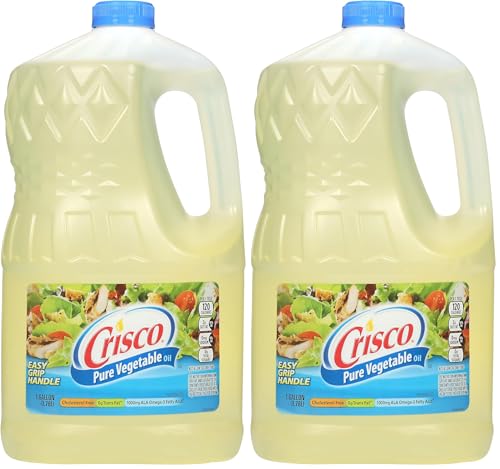
Crisco Pure Vegetable Oil -- Best Budget Frying Oil
Crisco Pure Vegetable Oil remains one of the most widely used frying oils for good reason: it's affordable, widely available, and performs reliably at high heat. With a smoke point around 400°F and a completely neutral flavor, it works for french fries, onion rings, donuts, and pan-fried proteins. It's a no-frills option that gets the job done for everyday home cooking without breaking the bank. While it's higher in omega-6 fatty acids than premium alternatives, for occasional frying it remains a dependable pantry staple that won't let you down.
Spectrum Naturals Refined Coconut Oil -- Best for Pan Frying
Spectrum Naturals Refined Coconut Oil offers a smoke point around 400°F and a completely neutral flavor. unlike virgin coconut oil, the refined version has no coconut taste, making it versatile for savory pan frying. It's an excellent choice for searing fish fillets, pan-frying tofu, and cooking pancakes where a clean surface and even heat matter. The solid form melts quickly in a hot pan and creates a non-stick-like surface. Organic-certified and expeller-pressed, it's a natural choice for those avoiding refined seed oils while still needing reliable high-heat performance.
La Tourangelle Refined Sunflower Oil -- Best for Light Frying
La Tourangelle's high-oleic refined sunflower oil is a lighter option with a smoke point near 440°F. Its high oleic acid content (similar to olive oil) makes it more heat-stable than standard sunflower oil, which is prone to oxidation. It produces a clean, crispy crust on oven-fried or lightly pan-fried foods without feeling heavy. The expeller-pressed, non-GMO production gives it a quality edge over generic sunflower oils. It's also excellent for batter-fried items like tempura where a light, airy texture is paramount. The gentle flavor keeps fried foods tasting fresh and clean.
What matters most
What to consider
The most important factor is smoke point. your oil must stay stable at your frying temperature (typically 350-375°F for most foods). A second factor is flavor neutrality: strongly flavored oils like unrefined sesame or EVOO will change the taste of your fried food. Third, consider reusability. peanut and avocado oils hold up to multiple frying sessions better than lighter polyunsaturated oils. For health-conscious choices, go with high-oleic varieties that are more resistant to oxidation at heat. Always monitor oil temperature with a thermometer for the best results.
What to consider
For more kitchen equipment insight, see our [articles/best-cooking-oil-for-griddle](/articles/best-cooking-oil-for-griddle) guide, and review our full testing approach at [/methodology](/methodology).
Frequently asked
Refined peanut oil and avocado oil are top choices for home deep frying. Peanut oil has a high smoke point around 450°F, a neutral taste that doesn't absorb into food, and handles repeated use well. Avocado oil goes even higher at 500°F and is a cleaner-label option. Both produce crispy exteriors without leaving a greasy aftertaste.
Most frying oils can be reused 3 to 5 times if properly strained and stored. After each use, let the oil cool, filter out food particles through a fine-mesh strainer or cheesecloth, and store in a sealed container in a cool dark place. Discard if the oil becomes dark, foamy, smells rancid, or starts smoking at lower temperatures than usual.
How we made this guide
We compare every pick on the factors that matter, cross-checking manufacturer specifications against aggregated verified owner reviews. We rank independently and never take payment for placement. We have not personally tested every product; where we have not, the ranking reflects verified specs and owner feedback rather than a hands-on review.
How it was written: this guide was researched and reviewed by the TheTestedHub editorial team for accuracy.
Affiliate disclosure: TheTestedHub is reader-supported. When you buy through links on our site, we may earn a commission at no extra cost to you.
You might also like

Expert Pick: A Cooking Wine You’d Happily Drink
Compare Top-Rated Chocolates & Candy of 2026: Valrhona & TCHO Picks

5 Wine Fridges Compared: Find Your Perfect Cooler

Double Wall Whiskey Glasses Worth Buying

Electric Wine Openers Compared: 5 to Consider

Make Better Beef Jerky: The Best Cuts to Use
Can You Find a Keto Protein Bar That Actually Tastes Good?
