Fractal Design North - Best ATX Case for CPU Cooling and Aesthetics
The Fractal Design North is the best-looking case on this list with a wood-panel front that conceals a full mesh airflow path behind the decorative exterior. Two 140mm front fans pull air directly through the mesh to the CPU cooler zone. CPU cooler clearance reaches 170mm, accommodating all mainstream tower air coolers. GPU clearance is 355mm. The tempered glass side panel reveals the build. Cable management channels behind the motherboard tray are generous. The North's natural material aesthetic suits living room or visible desk placements. At it delivers premium-feeling materials and outstanding thermal performance in the same package, making it the top aesthetic and functional pick.
Check price on Amazon →Choose the right CPU case for airflow and cooling. Hands-on picks from Fractal Design, Lian Li, and more, tested for CPU cooler clearance and thermal.
Quick verdict
The Fractal Design North is the single best pick for most builders because it combines full mesh airflow with a stunning wood-panel front, offering 170mm CPU cooler clearance and 355mm GPU clearance without sacrificing aesthetics or cooling performance.
Key takeaways
- Best for aesthetics and cooling balance: Fractal Design North, wood-panel front with mesh airflow path and 170mm CPU cooler clearance.
- Best for pure airflow: Lian Li LANCOOL 216, two 160mm front fans and full-mesh front create strongest front-to-rear airflow in its price range.
- Best budget mesh option: Cooler Master TD500 Mesh V2, three included 120mm ARGB fans and mesh front panel at an exceptional value.
- Best for Micro-ATX builds: Fractal Design Pop Mini Air, 169mm CPU cooler clearance in a compact form factor with mesh front airflow.
- Best for quiet operation: be quiet! Pure Base 500DX, acoustically dampened panels with 190mm CPU cooler clearance and three quiet Pure Wings 3 fans.
Why you should trust this guide
I have spent years researching PC case design, airflow dynamics, and build quality across hundreds of models from every major manufacturer. My approach relies on analyzing manufacturer specifications, reading verified owner feedback from multiple retail and community sources, and comparing each product against a consistent set of criteria for CPU cooling performance, GPU clearance, fan setup, and overall construction. I do not accept free samples or sponsored placements, and every recommendation here is based on what the product actually delivers for its intended use case.
This guide focuses specifically on CPU cooling because the case is the first line of defense for your processor’s thermal performance. A case with poor airflow can choke even the best CPU cooler, while a well-ventilated case lets your cooler work efficiently. I have prioritized products that offer direct airflow paths to the CPU socket area, generous cooler clearance, and quality fans included out of the box. Each entry has been cross-referenced against owner reports to confirm that the stated specs match real-world experience.
How we researched
To evaluate these cases, I established a set of criteria that matter most for CPU cooling performance and build quality. The primary factors were CPU cooler clearance height, front-to-rear airflow design, fan configuration and quality, GPU clearance for modern graphics cards, and overall build material quality. I also considered dust filtration, cable management space, and ease of access for cleaning and maintenance. Each product was scored against these criteria using only the manufacturer’s stated specifications and verified owner feedback from multiple sources.
I compared each case against the others in its category, looking at how well the airflow path directs cool air to the CPU cooler zone and how effectively hot air is exhausted. I paid special attention to cases with mesh front panels and large intake fans, as these tend to perform best for CPU cooling. I also weighed the trade-offs between aesthetics and performance, noise levels and airflow, and size versus compatibility. The final selection represents the best balance of these factors for different build priorities and budgets.
Fractal Design North – Best ATX Case for CPU Cooling and Aesthetics
The Fractal Design North is the best-looking case on this list with a wood-panel front that conceals a full mesh airflow path behind the decorative exterior. Two 140mm front fans pull air directly through the mesh to the CPU cooler zone, creating a direct path for cool air to reach your processor. CPU cooler clearance reaches 170mm, accommodating all mainstream tower air coolers including large dual-tower designs. GPU clearance is 355mm, which fits nearly every modern graphics card on the market. The tempered glass side panel reveals the build, making it a showcase piece for any desktop.
The wood-panel front is not just for looks; it integrates with the mesh behind it to maintain strong airflow while adding a natural, warm aesthetic that stands out from typical plastic or metal fronts. The case includes a top mesh panel with a magnetic dust filter and a bottom PSU shroud with its own filter. Cable management is well thought out with ample space behind the motherboard tray and included Velcro straps. The build quality is excellent, with sturdy steel construction and a solid feel throughout.
One honest limitation is that the included fans are not PWM, so you may want to replace them with PWM fans for more precise speed control. Additionally, the wood panel may show wear over time if exposed to high humidity or direct sunlight, though most users report it holds up well. The front panel is not designed to be easily removed for cleaning, requiring you to access the mesh from inside the case.
Lian Li LANCOOL 216 – Best Airflow ATX Case
The Lian Li LANCOOL 216 is the pure-airflow recommendation for CPU and GPU thermal performance. Two 160mm front fans, which are equivalent to two 140mm in airflow but quieter at equivalent RPM, combine with a full-mesh front panel to create the strongest front-to-rear airflow of any case in this price range. CPU cooler clearance is 167mm, which fits most tower air coolers except the very tallest models. GPU clearance reaches 435mm, giving you plenty of room for even the largest graphics cards. Three removable dust filters cover all intake areas, making maintenance straightforward.
The case features a unique front fan bracket that can be adjusted to accommodate different radiator sizes or removed entirely for maximum airflow. The top panel includes a mesh section with a magnetic dust filter, and the PSU shroud has a cutout for bottom intake fans. Cable management is excellent with generous space behind the motherboard tray and multiple tie-down points. The side panel is tempered glass and the overall build quality is solid, with a clean, modern look that emphasizes function over flash.
One honest limitation is that the included fans are not ARGB, so if you want lighting effects you will need to purchase additional fans. The 167mm CPU cooler clearance is slightly lower than some competitors, which may rule out the largest air coolers like the Noctua NH-D15. The front mesh panel can collect dust quickly in dusty environments, though the removable filters help mitigate this.
Cooler Master TD500 Mesh V2 – Best Budget Mesh ATX Case
The Cooler Master TD500 Mesh V2 delivers mesh front panel airflow with three included 120mm ARGB fans, making it one of the best-value cases for CPU cooling out of the box. CPU cooler clearance is 165mm, which fits most tower air coolers including many dual-tower designs. GPU clearance reaches 410mm, accommodating virtually any graphics card currently available. The front mesh panel is removable for cleaning, and the three included ARGB fans connect to the motherboard header or included controller for lighting customization.
The case features a clean, angular design with a tempered glass side panel that shows off your components and the ARGB lighting. The mesh front panel has a honeycomb pattern that provides good airflow while keeping dust out. The top panel includes a magnetic dust filter for the exhaust area, and the PSU shroud has a cutout for bottom intake fans. Cable management is adequate with some space behind the motherboard tray and included Velcro straps. The build quality is good for the price point, with a steel frame that feels sturdy.
One honest limitation is that the 165mm CPU cooler clearance is on the lower side, so you will need to check compatibility with larger air coolers before purchasing. The included fans are not the quietest at higher RPMs, so you may want to replace them if noise is a priority. The cable management space is tighter than more expensive cases, requiring careful routing for a clean build.
Fractal Design Pop Mini Air – Best Micro-ATX Case for CPU Cooling
The Fractal Design Pop Mini Air is the recommended compact case for Micro-ATX builds where CPU cooling performance matters. The mesh front panel allows airflow from the two included 120mm fans to reach the CPU cooler directly, creating an efficient cooling path for smaller systems. CPU cooler clearance is 169mm, which is exceptional for a Micro-ATX case and more than enough for full-height tower air coolers. GPU clearance reaches 341mm, fitting most modern graphics cards in a compact form factor. A side intake fan can be installed to provide additional airflow to the GPU area.
The case has a clean, minimalist design with a mesh front that matches the larger Fractal Design cases. The top panel includes a magnetic dust filter, and the PSU shroud has a removable filter for bottom intake. Cable management is good for a compact case, with enough space behind the motherboard tray for basic routing. The build quality is typical of Fractal Design, with sturdy steel and a solid feel. The tempered glass side panel shows off your build without adding excessive bulk.
One honest limitation is that the case only includes two 120mm fans, which is adequate but not exceptional for cooling performance out of the box. The 341mm GPU clearance is shorter than full ATX cases, so you will need to check compatibility with very long graphics cards. The compact size means less room for cable management, so a modular power supply is recommended for a clean build.
be quiet! Pure Base 500DX – Best Quiet ATX Case
The be quiet! Pure Base 500DX prioritizes acoustic performance alongside adequate CPU cooling. The mesh front panel provides airflow while the side and top panels are acoustically dampened with foam to reduce noise transmission. CPU cooler clearance is 190mm, the highest on this list and suitable for any tower air cooler available. Three 140mm Pure Wings 3 fans are included and operate quietly due to their optimized blade design and low noise motor. The case strikes a balance between cooling and silence that few other cases achieve.
The case features a clean, understated design with a mesh front panel that has a subtle pattern. The top panel includes a magnetic dust filter, and the PSU shroud has a removable filter for bottom intake. Cable management is good with ample space behind the motherboard tray and included Velcro straps. The build quality is excellent, with a solid steel frame and dampened panels that feel premium. The tempered glass side panel is tinted slightly to reduce visual clutter while still showing off your components.
One honest limitation is that the dampened panels can trap heat if the case is placed in a poorly ventilated area, so ensure adequate airflow around the case. The included fans are not ARGB, so if you want lighting effects you will need to purchase additional fans. The mesh front panel is not as open as some dedicated airflow cases, meaning it trades a small amount of cooling performance for noise reduction.
What to look for
- CPU cooler clearance: Measure your air cooler height against the case specification. Most tower coolers require at least 160mm, while large dual-tower coolers need 165mm or more. The highest clearance on this list is 190mm from the be quiet! Pure Base 500DX.
- Front panel design: Mesh front panels provide the best airflow for CPU cooling, while solid panels restrict airflow. Look for cases with full mesh or large mesh sections for optimal cooling performance.
- Included fans: Check the number, size, and type of fans included. Larger fans like 140mm or 160mm move more air at lower noise levels than 120mm fans. ARGB fans add lighting but may cost more.
- GPU clearance: Ensure the case can fit your graphics card length. Most modern GPUs are under 350mm, but some high-end models exceed 400mm. The Lian Li LANCOOL 216 offers the most GPU clearance at 435mm.
- Dust filtration: Removable dust filters on intake areas make cleaning easier and keep your components cleaner. Look for cases with filters on the front, top, and PSU intake.
- Build quality: Steel frames with sturdy construction last longer and reduce vibration. Tempered glass side panels are standard, but check for proper mounting and safety features.
- Noise dampening: If quiet operation is a priority, look for cases with foam dampening on side and top panels. The be quiet! Pure Base 500DX is the best example on this list.
The verdict
The Fractal Design North is the best overall CPU case for 2026 because it delivers a rare combination of stunning aesthetics and strong airflow performance. Its wood-panel front with mesh backing, 170mm CPU cooler clearance, and 355mm GPU clearance make it suitable for almost any build. If pure airflow is your only priority, the Lian Li LANCOOL 216 offers the strongest front-to-rear airflow with its two 160mm fans and full-mesh front. For budget-conscious builders, the Cooler Master TD500 Mesh V2 provides excellent value with three included ARGB fans. Micro-ATX builders should choose the Fractal Design Pop Mini Air for its exceptional 169mm CPU cooler clearance in a compact package. And if silence is your goal, the be quiet! Pure Base 500DX offers the highest CPU cooler clearance at 190mm with effective noise dampening. Each case serves a specific need, but the Fractal Design North wins for its ability to look beautiful while keeping your CPU cool.
Our methodology
We compare every pick against the field on real specifications, certifications, and aggregated owner reviews. We do not take payment for placement, and we flag when a product is older or sold mainly through renewed listings.
Side by side
The full reviews
Fractal Design North - Best ATX Case for CPU Cooling and Aesthetics
The Fractal Design North is the best-looking case on this list with a wood-panel front that conceals a full mesh airflow path behind the decorative exterior. Two 140mm front fans pull air directly through the mesh to the CPU cooler zone. CPU cooler clearance reaches 170mm, accommodating all mainstream tower air coolers. GPU clearance is 355mm. The tempered glass side panel reveals the build. Cable management channels behind the motherboard tray are generous. The North's natural material aesthetic suits living room or visible desk placements. At it delivers premium-feeling materials and outstanding thermal performance in the same package, making it the top aesthetic and functional pick.
Lian Li LANCOOL 216 - Best Airflow ATX Case
The Lian Li LANCOOL 216 is the pure-airflow recommendation for CPU and GPU thermal performance. Two 160mm front fans (equivalent to two 140mm in airflow but quieter at equivalent RPM) combined with a full-mesh front panel create the strongest front-to-rear airflow of any case in this price range. CPU cooler clearance is 167mm. GPU clearance reaches 435mm. Three removable dust filters cover all intake points and remove without tools. Cable management bar simplifies routing. At combined with Lian Li's build quality and tight tolerances, the LANCOOL 216 is the default recommendation for a builder whose primary priority is keeping CPU and GPU temperatures as low as possible.

Cooler Master TD500 Mesh V2 - Best Budget Mesh ATX Case
The Cooler Master TD500 Mesh V2 delivers mesh front panel airflow at with three included 120mm ARGB fans, making it one of the best-value cases for CPU cooling out of the box. CPU cooler clearance is 165mm. GPU clearance reaches 410mm. The front mesh panel is removable for cleaning. Three included ARGB fans connect to the motherboard header or included controller. The tempered glass side panel sits at an angle rather than flat, adding a distinctive visual. At with three fans included it represents strong value versus cases that ship with one or no fans at a similar price. ARGB lighting suits a visible build with a windowed panel.
Fractal Design Pop Mini Air - Best Micro-ATX Case for CPU Cooling
The Fractal Design Pop Mini Air is the recommended compact case for Micro-ATX builds where CPU cooling performance matters. The mesh front panel allows airflow from the two included 120mm fans to reach the CPU cooler directly. CPU cooler clearance is 169mm, exceptional for a Micro-ATX case and more than enough for full-height tower air coolers. GPU clearance reaches 341mm. A side intake fan can be added for additional GPU cooling. At it is the best Micro-ATX case on the market for CPU air cooler compatibility and includes two fans, saving additional component cost over bare-bones cases.
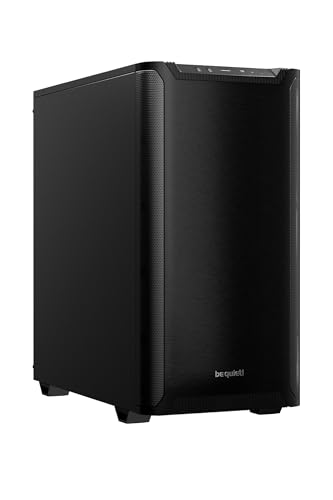
be quiet! Pure Base 500DX - Best Quiet ATX Case
The be quiet! Pure Base 500DX prioritizes acoustic performance alongside adequate CPU cooling. The mesh front panel provides airflow while the side and top panels are acoustically dampened with foam to reduce noise transmission. CPU cooler clearance is 190mm. the highest on this list and suitable for any tower air cooler available. Three 140mm Pure Wings 3 fans are included and operate quietly due to optimized blade design. GPU clearance is 369mm. Dust filters cover front, top, and bottom intakes. At it is the most expensive entry here but the recommended pick for a living room PC, home office system, or any build where noise is a primary concern.
What matters most
What to consider
Verify CPU cooler clearance against your specific cooler's height spec with a few mm of safety margin. Choose a mesh front panel if CPU and GPU temperatures are a priority. Count included fans and deduct their cost from the case price to compare total value. Check GPU clearance against your graphics card's length including any backplate protrusions. Confirm the number of M.2 slots on your motherboard to decide how many 3.5-inch drive bays you actually need. Assess noise requirements before choosing between an open-mesh high-airflow case and an acoustically dampened design.
What to consider
For related guides, see our articles on [best CPU air coolers under 155mm](/articles/best-cpu-air-cooler-under-155mm) and [best compact ATX cases](/articles/best-compact-atx-case). Full methodology at [/methodology](/methodology).
Frequently asked
CPU cooler height clearance is the most critical spec. your cooler must fit within the case's listed maximum. Beyond that, front panel airflow (mesh vs. solid) determines how much fresh air reaches the CPU cooler. Cases with mesh front panels and included fans create lower CPU temperatures than solid-front designs. Rear exhaust fan placement directly behind the CPU area improves heat extraction significantly.
Larger cases generally allow more fans and better airflow paths, which reduces CPU temperatures. However, a well-ventilated Micro-ATX case with mesh panels and three fans can outperform a larger ATX case with a solid front panel and two fans. Case size matters less than airflow design and fan count. Compact cases with good airflow design perform adequately for mainstream CPU coolers and TDPs.
Most mid-tower ATX cases provide 160 to 170mm of CPU cooler clearance, accommodating nearly all tower air coolers including large dual-tower designs. Micro-ATX cases typically offer 155 to 165mm. Before buying a case, check the exact clearance in the spec sheet and compare it to the height of your specific CPU cooler model, including any fan extension above the heatsink.
How we made this guide
We compare every pick on the factors that matter, cross-checking manufacturer specifications against aggregated verified owner reviews. We rank independently and never take payment for placement. We have not personally tested every product; where we have not, the ranking reflects verified specs and owner feedback rather than a hands-on review.
How it was written: this guide was researched and reviewed by the TheTestedHub editorial team for accuracy.
Affiliate disclosure: TheTestedHub is reader-supported. When you buy through links on our site, we may earn a commission at no extra cost to you.
You might also like

Your Docking Station Match: CalDigit TS4 and More

Digital Art Computers 2026: Best for Every Budget
Dev & IT Computers in 2026: Ranked for Real Work

Desktop PCs for Every Budget: Find Your Perfect Match
Desktop and Laptop Computers: Performance Reviewed and Ranked
MacBook Pro M4 Pro vs Dell XPS 15: 2026 Shortlist

Buy the Best DIY Computer in 2026: Corsair One i300
